Texas Jail Time Reality Check: What Is the Minimum Jail Time for DUI‑style DWI Charges Here and Can Any of It Be Avoided?
Short answer: the minimum jail time for DUI‑style DWI in Texas is 72 hours for a first DWI, six days if an open container was in the vehicle, and 30 days minimum if you have one prior DWI. Third or subsequent DWIs are felonies with prison ranges, and some of those minimums cannot be avoided if a straight jail sentence is imposed. Many first‑time drivers in Houston avoid serving that minimum through community supervision, deferred adjudication, or credit for time already spent in custody, but it depends on facts, your history, and the judge.
If you were just arrested in Harris County, you need a clear view of two clocks. First, the criminal case clock that controls whether any jail is required. Second, the DMV‑style clock that can suspend your license even before the criminal case ends. This guide gives you practical expectations for both, with a special focus on the minimum jail time for DUI in Texas and realistic ways judges handle or suspend jail time in Houston‑area courts.
Quick context: “DUI” vs. “DWI” in Texas
Texas uses DWI for adults under Penal Code Chapter 49. “DUI” usually refers to the separate minor‑only offense under the Alcoholic Beverage Code. Most Houston searches for “DUI jail time” are really asking about adult DWI, so this article speaks to adult DWI. Where needed, we use “DUI‑style DWI” as shorthand so searchers can find the right information.
Texas DWI minimum jail requirements at a glance
Let’s start with the statute. Under Section 49.04 of the Texas Penal Code, a first‑offense DWI is a Class B misdemeanor with a minimum term of confinement of 72 hours. If there was an open container, the minimum term is six days. If your alcohol concentration was 0.15 or more, the offense is a Class A misdemeanor with a punishment range up to one year in county jail. If you have prior DWI convictions, Section 49.09 enhances penalties, including a minimum 30 days in jail for one prior and a third‑degree felony for two priors. You can read the text in Texas Penal Code Chapter 49 (DWI statutes and penalties).
For a plain‑English walkthrough of ranges, see this firm’s overview of Texas DWI statutory minimums and penalties, and this deeper Butler‑owned post with a full explanation of Texas DWI sentencing ranges.
| Charge level | Statutory minimum jail | Key notes that affect whether you serve it |
|---|---|---|
| First DWI, Class B | 72 hours minimum | Courts often suspend jail in favor of community supervision if facts are modest. Booking time usually counts as “time served” if a straight jail sentence is imposed at the end. |
| First DWI with open container, Class B | 6 days minimum | The 6‑day minimum applies to straight jail sentences. With community supervision, judges can suspend confinement, then set conditions like classes, interlock, or community service. |
| First DWI with BAC 0.15+, Class A | No specific day minimum, up to 1 year | Still eligible for probation in many courts. Some judges require a few days in jail as a condition but it is not a mandatory statewide minimum. |
| Second DWI, Class A | 30 days minimum | Enhanced under Penal Code 49.09. If the court grants community supervision, Article 42A.401 requires at least 72 hours of continuous confinement as a condition. |
| Third or more DWI, third‑degree felony | 2 to 10 years in prison | Felony supervision options exist but are more limited. Custody exposure is serious. |
| DWI with child passenger, state jail felony | 180 days to 2 years state jail | Community supervision may be available in some cases, but courts scrutinize facts closely. |
| Intoxication assault | 2 to 10 years | Separate offense. Significant custody exposure with mandatory conditions if probation is granted. |
| Intoxication manslaughter | 2 to 20 years | Prison‑range felony. Jail avoidance is highly unlikely. |
Statutory language for the 72‑hour, 6‑day, and 30‑day minimums appears in Penal Code Sections 49.04 and 49.09, and the probation‑specific jail requirements for enhanced cases appear in Code of Criminal Procedure Article 42A.401.
Common misconception to correct
Myth: Every first‑offense DWI in Texas requires at least three days in jail no matter what. Reality: The 72 hours is the minimum for a straight jail sentence, but judges can suspend confinement by granting community supervision. For many first‑offense, non‑aggravated cases in Houston courts, defendants serve no additional post‑sentence jail beyond the initial booking time if the court orders probation or deferred adjudication.
Houston reality check: time in custody after a DWI arrest
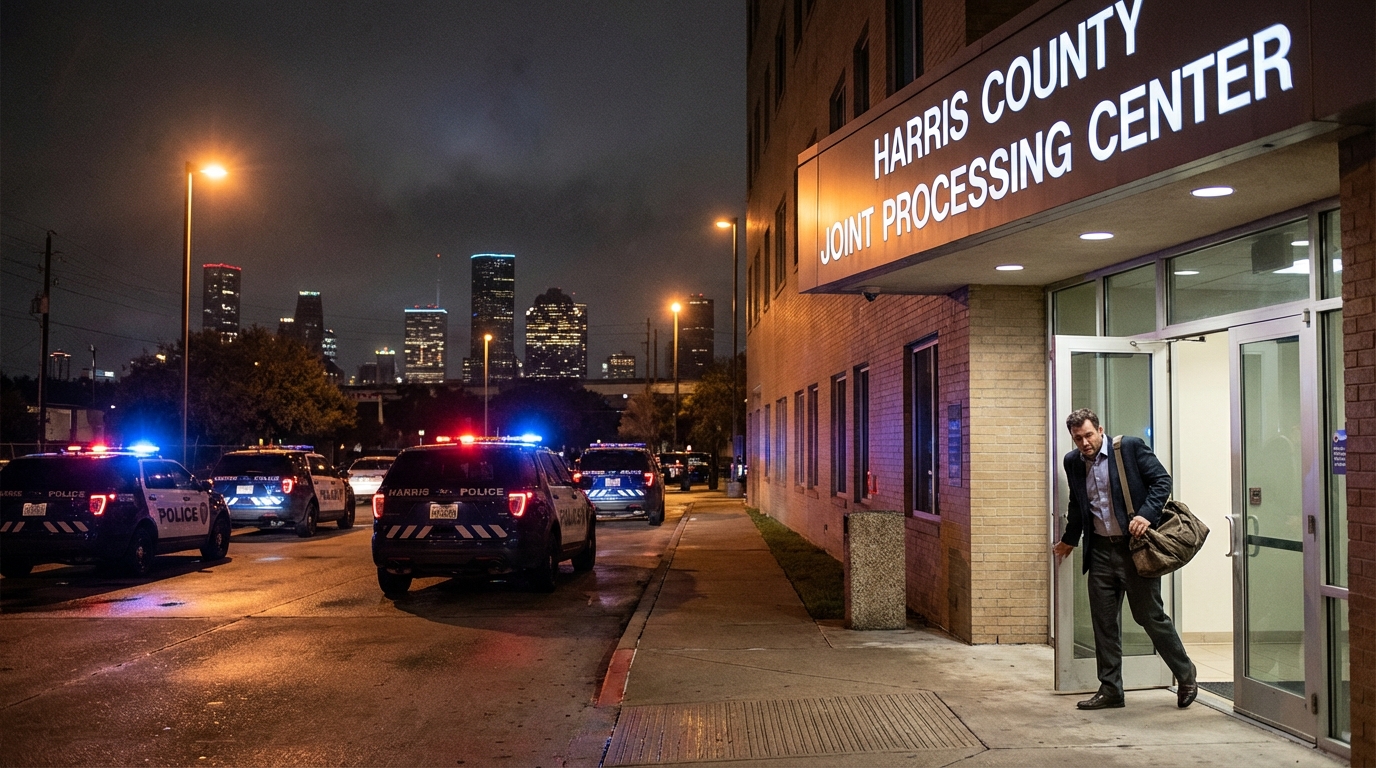
If you were arrested in Houston, you will likely be booked at the Harris County Joint Processing Center. The two biggest variables are how fast you see a magistrate and how quickly a bond is approved and posted. Many first‑time arrestees are released in 8 to 24 hours after the magistrate sets conditions. Weekends and high‑volume nights take longer. Blood‑draw cases can also slow things down.
For practical preparation, see our plain‑English guide on what to expect during booking and time in custody after arrest. It covers roadside to release, including what to have ready for family or a bondsman.
Here is the typical Houston sequence you can expect:
- Arrest and transport to the Joint Processing Center.
- Inventory, fingerprints, and basic medical screening.
- Probable cause review and magistrate advisement. Texas law aims for this within roughly 24 to 48 hours.
- Bond decision and release processing. Personal bonds are possible in some first‑offense cases, though conditions like ignition interlock may be added later by the court.
Booking time matters. If your case ever results in a straight jail sentence, those hours are typically credited as “time served.” If the court instead orders community supervision or deferred adjudication, you may not serve any new jail time at sentencing unless the judge requires a short jail condition.
Can you avoid serving the minimum jail time?
For many first‑offense DWI cases with no crash, no child passenger, and a moderate test result, the practical answer in Houston is often yes. Courts commonly suspend the jail sentence and place you on community supervision. The judge then sets conditions like classes, community service, interlock, treatment, or alcohol monitoring instead of sending you back to jail.
There is one important exception baked into the law. If your case is an enhanced DWI under Section 49.09, certain minimum jail days become mandatory if the judge gives you probation. Article 42A.401 requires continuous jail time as a condition of supervision for enhanced DWI levels such as second offenses and some aggravated cases. For a first‑offense Class B DWI that is not enhanced under 49.09, that probation‑condition jail is not mandatory statewide, though a judge can still require a short jail condition in their discretion.
Also consider deferred adjudication for eligible first‑offense DWIs. Since a 2019 law change, first‑time DWI defendants without high BAC and other disqualifiers may be considered for deferred adjudication community supervision. Successful completion avoids a final conviction, and some people later qualify for a nondisclosure order that seals most public access to the case. Eligibility and timing are rule‑heavy and fact‑specific.
Micro‑story from a common Houston scenario
Imagine a 38‑year‑old project manager stopped in the Heights after dinner. Breath test reads 0.11. He spends 17 hours in the Joint Processing Center, then bonds out on Sunday afternoon. Months later, his lawyer negotiates deferred adjudication with interlock and classes. The judge accepts it. He serves no additional jail beyond his original booking time. That is a real‑world outcome we see in non‑aggravated cases, but it is never guaranteed.
First offense DWI jail vs probation in practice
If this is your first arrest, this section is for you. Judges in Harris County often weigh these checkpoints when deciding whether to suspend jail in favor of probation and how strict the conditions should be:
- Test result and signs of impairment on video.
- Any crash, injuries, or child passenger.
- Your criminal and driving history.
- How fast you address risk factors, for example early alcohol education or voluntary interlock installation.
- Work and caregiving obligations that support supervision success.
If you get probation, expect 12 to 18 months of supervision on a typical first‑offense case in Houston courts. Conditions may include a DWI education course, a Victim Impact Panel, 24 to 80 hours of community service, and an ignition interlock for at least a few months if your BAC tested high or the court has safety concerns. Some courts allow early discharge if you finish everything quickly and stay violation‑free. Your job and family schedule can often be accommodated with weekend classes or remote check‑ins if allowed.
If you are that working professional worried about your job, the takeaway is simple. Many first‑offense DWIs end with probation rather than jail time served. What you do in the first 30 to 45 days often shapes the options. Document treatment steps, line up transportation, and stay off social media about the case. For employment impact context, here is a short read on what a DWI can mean for your employment.
How aggravated facts change minimums
Some facts convert a manageable first case into one where jail becomes far harder to avoid. Here are the common triggers and how they affect the minimum jail time question:
- Prior DWI convictions. One prior elevates a new DWI to a Class A with a minimum 30 days. Two priors make the new case a third‑degree felony with a 2 to 10 year prison range. If probation is granted in an enhanced case, Article 42A.401 requires some continuous jail time as a condition.
- Open container. On a first case, the minimum term jumps from 72 hours to six days if you receive a straight jail sentence. With probation, judges may still suspend confinement and add stricter conditions.
- BAC of 0.15 or higher. The offense is Class A with punishment up to one year. There is no extra statewide minimum day count, but courts often increase conditions and may add a short jail condition.
- Child passenger. This is a state jail felony with 180 days to 2 years and up to a $10,000 fine. Expect tighter monitoring and increased custody risk.
- Crash with injury or fatality. These are separate crimes with felony ranges and specialized probation rules if probation is even possible.
If any of these facts are present, expect the judge to be far less willing to suspend confinement completely. You can still mitigate, but you should plan for some custody exposure.
Time in custody after DWI arrest, then ALR: the civil license track
Texas runs a second, civil process called Administrative License Revocation. It starts when the officer serves a notice of suspension after a breath refusal or failure, or later by mail after a blood result. You generally have 15 days from notice to request a hearing, and if no hearing is requested, the suspension starts on the 40th day. Suspension periods are typically 180 days for a first refusal and 90 days for a first failure. See the official Texas DPS ALR program overview and hearing timelines for details and updates.
ALR is separate from the criminal case. Many people continue to drive legally for weeks or months while they wait for a hearing, and some qualify for an occupational license if suspended. The ALR hearing is a valuable discovery tool for the criminal case since testimony is recorded under oath.
How judges suspend or probate jail in DWI cases
This is where most readers breathe easier. For non‑enhanced first cases, judges can suspend a jail sentence and place you on community supervision. That means no additional jail served if you follow the rules. Judges also use creative conditions that help public safety without pulling you out of work:
- Interlock and monitoring. Ignition interlock, SCRAM alcohol monitoring, and random tests are common.
- Education and treatment. DWI education programs and counseling can fill the role punishment would have filled while reducing risk.
- Community service or donations in lieu where allowed. Hours are often targeted at traffic safety or community needs.
- Weekend or night court compliance. Some tasks can be completed without missing weekday shifts.
- Short jail as a condition. In tougher first cases, some judges add 1 to 3 days in jail as a condition. In enhanced cases, Article 42A.401 sets mandatory minimum days that must be served even on probation.
Strategic Researcher: If you are looking for authority and expectations, the minimums live in Penal Code Sections 49.04 and 49.09, and probation‑condition jail in Article 42A.401 of the Code of Criminal Procedure. In day‑to‑day Houston practice, first‑offense non‑crash cases often resolve with probation or deferred. That is a trend, not a promise.
Status‑Conscious Client: Courts can accommodate scheduling and privacy within the rules. Early docket settings, remote check‑ins where allowed, and discreet interlock vendors reduce workplace impact without changing the legal standards. No one can guarantee a result, but a structured plan can avoid unnecessary jail.
High‑Net‑Worth Protector: If a first‑offense case qualifies for deferred adjudication, successful completion may later support a nondisclosure that seals most public access. That can protect reputation in background checks, though certain agencies still see the record. Outcomes depend on eligibility and facts, and nothing bypasses standard court procedure.
Unaware Young Driver: Expect a night in jail after arrest, license issues within days, and months of classes or interlock if you are convicted or on probation. The long‑term costs are bigger than the booking time, so getting informed quickly matters.
Houston county DWI sentencing practices in plain English
Every courtroom is different, but here are grounded expectations for Harris County and nearby counties:
- First offense, no crash, moderate BAC. Probation or deferred adjudication are commonly on the table. Judges focus on interlock and education rather than jail.
- Open container or high BAC. More restrictive conditions and a higher chance of a short jail condition, but jail avoidance is still possible through supervision.
- Second offense. Custody risk jumps. If probation is offered, expect mandatory jail days as a condition and stricter monitoring.
- Felony‑level or child passenger cases. Plan for significant custody exposure and tighter supervision if probation is allowed.
Because county practices evolve, lean on up‑to‑date statutes and treat any anecdote with caution. Your judge and the facts control.
Booking, custody, and early release scenarios
When your family asks how long you will be in, here is the practical answer. In many Houston first‑offense arrests, release occurs within about a day of arrest, often sooner if the docket is light and bond is quick. If you are magistrated late at night or on weekends, expect longer waits. If there is a crash investigation, blood‑draw logistics can add hours. If you have warrants or priors, holds can extend custody significantly.
Once you are out, handle the driver license issue quickly so you are not stuck without transportation. The ALR deadline is short, and hearings are usually weeks to months out.
Key definitions and how they affect jail exposure
- Minimum term of confinement. The least days a judge can order if imposing a straight jail sentence. On a first DWI, that is 72 hours by statute.
- Community supervision. Texas name for probation. The court suspends your jail sentence and supervises you in the community under conditions.
- Deferred adjudication. A form of supervision where the judge does not enter a conviction if you comply. Some first‑offense DWIs qualify under current law, subject to exclusions like 0.15 or higher BAC.
- Probated jail. A sentence where the court pronounces jail time but suspends it, placing you on supervision. Violation can activate the suspended time.
- Credit for time served. Time you already spent in custody, such as booking hours, credited toward a later jail sentence.
Practical steps that reduce your jail risk
You cannot change the facts that already happened, but you can influence what a judge believes about your future risk. These steps commonly help in Houston DWI courts:
- Complete a DWI education class early and bring proof.
- If there were red flags about alcohol use, start a brief clinical assessment and follow any recommendation for counseling or a support group.
- Install an ignition interlock voluntarily if your BAC was high or if refusal is alleged.
- Gather letters from employers or mentors documenting stable work and community ties.
- Keep a clean pretrial record, no new cases, no missed court dates, and no alcohol‑monitoring violations.
These steps do not guarantee outcomes. They do make it easier for a judge to justify supervision and suspend jail in a first‑offense case.
Frequently asked questions about the minimum jail time for DUI in Texas
What is the minimum jail time for DUI in Texas on a first offense?
For adult DWI, the minimum term of confinement for a straight jail sentence is 72 hours. If an open container was present, the minimum is six days. Judges can suspend confinement and order community supervision on many first‑offense cases, which often eliminates additional jail beyond booking time.
How fast can I get out of jail after a Houston DWI arrest?
Many first‑time arrestees are released within 8 to 24 hours after magistration and bond. Weekends, high volume nights, blood draws, or prior records can extend that window. Expect longer if there is a crash investigation or special holds.
Does a second DWI in Texas have a mandatory minimum?
Yes. With one prior DWI, the new charge is a Class A misdemeanor with a minimum of 30 days in jail for a straight sentence. If the court grants probation, Article 42A.401 requires at least 72 hours of continuous confinement as a condition of supervision.
If my BAC was 0.15 or more, do I have to serve jail time?
Not automatically. A 0.15 or higher makes the case Class A with up to one year in jail, but there is no extra statewide minimum day count. Many courts still consider probation, often with stricter conditions like longer interlock.
Will my booking time count if I end up with a short jail sentence?
Generally yes. Time you spent in custody after arrest is typically credited as time served toward any later jail sentence. If the court orders community supervision or deferred adjudication, you may avoid additional jail entirely unless a jail condition is imposed.
What is the license suspension timeline after a Texas DWI arrest?
For most breath test refusals or failures, you have 15 days from the notice to request an ALR hearing. If you do not request a hearing, the suspension usually begins on the 40th day. First refusals are typically 180 days and first failures 90 days, separate from the criminal case.
Why acting early matters if you want to minimize or avoid jail
Courts respond to conduct, not promises. Getting an assessment, starting classes, and documenting sobriety within the first month sends a signal that helps judges feel comfortable suspending confinement on a first case. It also puts you in position for deferred adjudication if you qualify, which can reduce jail risk and long‑term record harm. If your case has aggravating facts or priors, early preparation is even more important because some minimum jail time becomes mandatory.
For the source text of Texas DWI penalties and enhancements, look to the statutes themselves. For practical post‑arrest steps, rely on official guidance for license issues and high‑quality local resources. A qualified Texas DWI lawyer can help you tailor these options to your facts without promising any specific result.
For firm location verification, see the Butler Law Firm location and firm listing for credibility.
Butler Law Firm - The Houston DWI Lawyer
11500 Northwest Fwy #400, Houston, TX 77092
https://www.thehoustondwilawyer.com/
+1 713-236-8744
RGFH+6F Central Northwest, Houston, TX
View on Google Maps


No comments:
Post a Comment