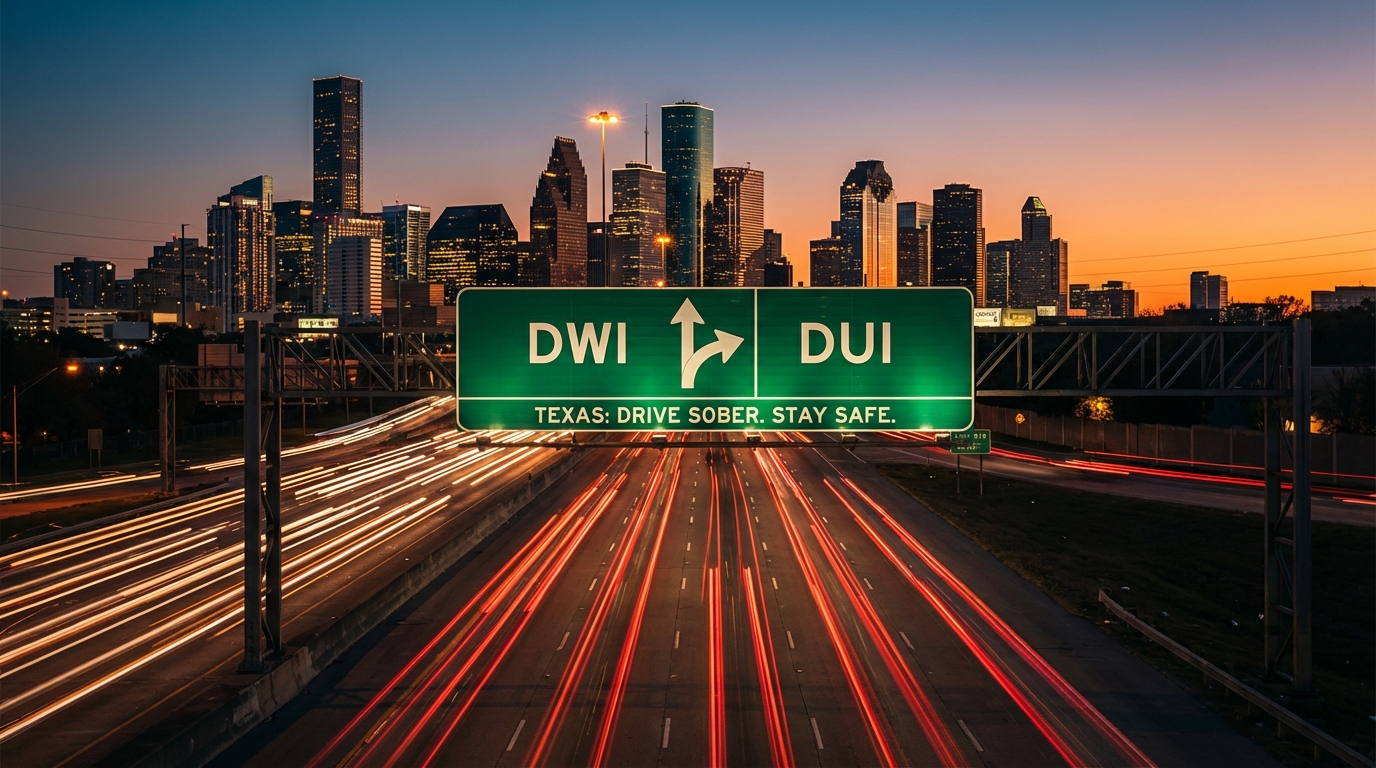
Language, labels, and law: why do people say DWI instead of DUI in Texas and does the word you use change anything in court?
Short answer: Texans say DWI because the adult crime in our Penal Code is Driving While Intoxicated. DUI exists in Texas mainly for minors. Saying DWI instead of DUI does not change the facts, the evidence, or the penalties the court can impose. What matters is which statute you are actually charged under and what the evidence shows.
If you searched why do people say DWI instead of DUI, you are not alone. In Houston you will hear officers, prosecutors, and judges use DWI for adult cases. DUI by a minor is a different offense with different elements. Below is a plain-English guide to the words, the laws behind them, and what the label does or does not change for your case.
Quick overview: Texas DWI vs DUI terminology
Texas law uses two different terms that sound alike but point to different statutes. DWI lives in the Penal Code and applies to adults and minors if they meet the intoxication standard. DUI in Texas usually refers to a Class C offense for people under 21 under the Alcoholic Beverage Code when they drive with any detectable amount of alcohol. If you want a deeper primer in the same voice you are reading now, see this plain explanation of DWI vs DUI terminology in Texas and compare it to the black-letter law in Texas Penal Code Chapter 49: DWI/DUI offenses and definitions.
For another friendly breakdown of wording and stigma, this related blog dives into why local news and courts prefer the DWI label in adult cases: why Texas typically uses DWI instead of DUI.
Key takeaway: the word you use in conversation does not change your legal exposure. The charging document, the evidence, and the statute number are what the court uses in Houston and across Harris County.
Adults vs minors: which charge applies in Texas
Here is the core distinction in plain English so you can orient yourself fast.
- DWI for adults: Operating a motor vehicle in a public place while intoxicated. Intoxicated means loss of normal mental or physical faculties due to alcohol, drugs, or a combination, or a blood alcohol concentration of 0.08 or more, or 0.04 for commercial drivers. This is a Penal Code offense and can be a Class B misdemeanor on a first offense, higher if aggravating factors apply.
- DUI for minors: Driving Under the Influence of Alcohol by a Minor is usually a Class C misdemeanor when a driver under 21 has any detectable amount of alcohol. No intoxication level is required for the basic offense. A minor can still be charged with full DWI if the evidence shows intoxication.
If you are a worried Houston driver in your thirties or forties, odds are your paperwork says DWI. That is the label used for adult cases in our courts. If your teen was stopped and the officer detected alcohol, the paperwork may say DUI by a minor unless the facts support adult-level DWI.
Does the label change anything in a Houston courtroom?
No. Judges and prosecutors in Harris County do not decide punishment or guilt based on a label on a news report or how you described your situation at work. They look at the statute cited in the charging instrument, the elements of the offense, and the evidence. The label only matters to the extent it shows which statute applies. If you are charged under the DWI statute, you face DWI penalties. If you are charged under the minor DUI provision, you face those consequences.
Why this matters to you: if your job is on the line, focus on deadlines and evidence, not the slang. The 15 day ALR window, the video from the stop, the breath or blood result, and any field sobriety testing issues are the tools that can change your outcome.
How police describe drunk driving charges in Texas
On the roadside and in reports, Houston officers usually say they are making a DWI arrest if the driver is an adult. Your packet may include a Statutory Warning, a temporary driving permit, and a blood or breath test form. You might also hear phrases like “intoxicated,” “normal use,” or “SFSTs,” short for standardized field sobriety tests. Officers use those terms because the Penal Code defines intoxication and the state’s training materials track those standards.
For minors, officers often write “DUI by minor” because the Alcoholic Beverage Code punishes detectable alcohol, even if the person is not intoxicated. That is why a 20-year-old with a low reading can face a different charge than a 35-year-old with the same reading but different facts.
Penalties at a glance: adult DWI and DUI by a minor
This is a big source of anxiety if you are supporting a family or protecting a career in greater Houston. Below are realistic ranges you will see discussed. These are general, not promises, and any case can differ based on facts and history.
- First DWI, no accident, no child passenger: Typically a Class B misdemeanor. Up to 180 days in jail, a fine up to $2,000, court costs, and possible probation. If the alleged BAC is 0.15 or more, it can be enhanced to Class A with up to a year in county jail and a higher fine. License consequences are handled separately through ALR.
- Second DWI: Often Class A misdemeanor with up to a year in county jail, higher fines, and longer license suspensions or interlock requirements.
- Third DWI: Usually a third degree felony with a potential prison range of 2 to 10 years and significant collateral consequences.
- DUI by a minor: Typically Class C. Fines can be up to $500 for a first offense, alcohol awareness classes, community service hours, and license suspension. Repeats can increase the suspension period and consequences.
- License suspensions through ALR: Separate from the criminal case. A failed breath or blood test can mean a proposed suspension as short as 90 days on a first occurrence. A refusal can trigger a longer proposed suspension, often 180 days for a first refusal. These are common ranges and can vary with history and other factors.
For the Analytical Planner in you, the definitions and offense grades live in the Penal Code and related rules. You can cross check the elements and definitions here: Texas Penal Code Chapter 49: DWI/DUI offenses and definitions.
ALR license process in Texas, plus the 15 day clock
The administrative license process, called ALR, is separate from your criminal case. If you were given a temporary permit after a breath test failure or a refusal, you generally have 15 days from service of the notice to request a hearing. If you do not request it in time, the suspension can begin automatically, usually on the 40th day after notice unless a hearing outcome changes that timeline.
Two practical steps many Houston drivers take right away to protect the right to drive to work: quickly file the hearing request, and capture everything you can remember while it is fresh. For a step-by-step guide, see how to request an ALR hearing and protect your license and this companion roadmap with timelines, practical first-offense checklist and ALR timeline. For the official state overview, the Department of Public Safety provides a helpful summary at Texas DPS ALR overview and how to request a hearing.
Why the 15 day deadline matters to you: if your company needs you on site or you commute across Harris County, losing the right to drive can create cascading job problems. Preserving your hearing is a simple but high value step.
Micro story: what the first 10 days look like for a Practical Worried Driver
Marcus is 38, a project manager who lives near the Heights and works off Loop 610. He was stopped leaving a holiday dinner and arrested for DWI. He burned a day of PTO to pick up his car, sat through a stressful Monday, and told no one at work. On day 4 he found the notice about the proposed license suspension in his papers and realized the clock had been ticking. On day 7 he requested his ALR hearing, got a confirmation, and wrote down everything he remembered from the stop. When he finally met with a Texas DWI lawyer the following week, that timeline and his written notes helped the lawyer quickly spot issues with the stop and how the field tests were given.
Not everyone’s path looks like Marcus’s. The point is that small, early actions can protect your options later. That is true no matter which label you or anyone else uses in conversation.
Houston TX court usage of DWI and DUI: what you will actually see
In Harris County and nearby counties, your case file will list the statute. Adult cases nearly always read DWI with a specific Penal Code section. If the driver is under 21 and officers only observed detectable alcohol, the citation can say DUI by minor with an Alcoholic Beverage Code section. Court staff, prosecutors, and the judge will follow the statute on the charging instrument. The shorthand in the hallway might be DWI, but the paperwork always controls.
For your life, this means job forms, background checks, and insurance will reflect the actual statute and level. If you work in an industry with public trust concerns, even the Class C label for a minor can matter. If you are an adult, the central risk is the DWI record and its consequences, not which three-letter acronym someone used in passing.
Public perception vs legal reality
In everyday talk, many people think DUI is a generic national term and DWI is a Texas thing. That is close but not quite. Texas uses DWI in its main criminal statute for adult cases. DUI is narrower here and mostly applies to minors. The legal system cares about statutes, elements, and evidence. Public perception cares about headlines. If coworkers are whispering about a “DUI,” do not panic about the word. Focus on protecting your license and building your defense.
Myth to correct: some believe saying “it is just a DUI” in Texas means it is minor or will be treated lightly. For an adult, a DWI arrest can bring jail exposure, fines, surcharges, an ignition interlock requirement, and a civil license suspension even before the criminal case ends. The word does not lighten that load. Your approach to the case does.
Evidence, not labels, drives outcomes
The following are the levers that actually move DWI outcomes in Houston courts.
- The stop: Was there a lawful reason to stop you. If not, evidence that came after can be challenged.
- Field sobriety tests: Were instructions correct and conditions safe. Video and small details can matter.
- Breath or blood test: Was the device maintained. Was the draw handled correctly. Was the blood stored and tested according to accepted procedures.
- Time line: How much time passed between driving and the test. Rising BAC arguments can hinge on minutes.
- Statements and body cam: What you said, what the officer said, and what the video shows.
- ALR testimony: The administrative hearing can lock in testimony or reveal gaps that help in the criminal case.
For a Practical Worried Driver, this list should be reassuring. It means you have concrete things to preserve and review. It also means that using the word DWI or DUI in a text message to a friend does not change the evidentiary landscape.
Mini notes for different reader types
Analytical Planner: You may want the exact definitions and offense levels. The Penal Code defines intoxication and grades DWI by offense history and facts like BAC 0.15 or more, crash with injury, or child passenger. See the statutory language in Texas Penal Code Chapter 49: DWI/DUI offenses and definitions. Strategy is built around elements and proof, not the nickname.
Casual Unaware: Quick reality check. The label does not erase consequences. Even a first DWI can trigger a 90 day proposed license suspension through ALR and raise insurance costs. Waiting past the 15 day hearing deadline removes one of the easiest protections you have.
Career-Conscious Executive: Discretion matters. Houston courts do not require you to tell your employer, but background checks and some licensing boards ask about arrests or convictions. Outcomes and records, not the acronym, are what HR sees. Address timelines early and keep documentation organized.
Licensed Professional Caregiver: Nurses and other licensed caregivers should consider board reporting rules and impairment questions on renewals. A minor DUI or an adult DWI can carry different reporting triggers. Document any treatment recommendations and consider how to communicate with HR without oversharing.
Common misconceptions about Texas DWI vs DUI terminology
- Misconception: If I say DUI instead of DWI, the court will think it is less serious. Reality: The court reads the statute on your charge and follows that law. Word choice in conversation does not change penalty ranges.
- Misconception: Minors cannot be charged with DWI. Reality: Minors can face DUI by minor for detectable alcohol, but they can also be charged with full DWI if evidence shows intoxication.
- Misconception: License suspension only happens if I am convicted. Reality: The administrative process can suspend your license even while the criminal case is pending unless you timely request and win an ALR hearing.
- Misconception: A high BAC number ends the case. Reality: Devices, sampling, chain of custody, and timing are all reviewable. The number matters, but it is not the only story.
What to do next: a one page checklist for the Practical Worried Driver
Print this section, or copy it to your notes. These steps are practical and fast. They reflect how Houston drivers protect jobs and options after a DWI arrest.
- Meet the ALR deadline: Within 15 days of receiving notice, request your ALR hearing. If you are unsure whether the clock started, assume it has. Here is a quick guide on how to request an ALR hearing and protect your license. For a broader walk through of early milestones, see this practical first-offense checklist and ALR timeline, and compare dates to the Texas DPS ALR overview and how to request a hearing.
- Document everything: Write a timeline of your day and night, from your first drink to the test or release. Note medications, food, and who can confirm your timeline. Save receipts, text messages, and the tow slip.
- Preserve video: Body cam and dash video can be requested later, but act early so nothing is lost. Note the arresting agency and any case numbers you were given.
- Identify sensitive obligations: If you hold a professional license, federal clearance, or a job with driving duties, list any reporting rules or timelines. Keep this private and organized until you have guidance.
- Consult a qualified Texas DWI lawyer: Ask questions about the stop, SFSTs, testing, and ALR strategy. Bring your timeline and any paperwork to make the meeting efficient.
Tip for your peace of mind: the words DWI vs DUI can confuse coworkers and friends. You do not need to correct them. Put your energy into steps that move the needle.
FAQs: key questions Houston drivers ask about why do people say DWI instead of DUI
Is DWI worse than DUI in Texas?
For adults, the charge you will usually see is DWI, and its penalty range can be higher than the Class C DUI by a minor. DUI by minor is generally a fine-only Class C for a first offense with education and community service, while adult DWI can carry jail exposure, fines, and a separate ALR license suspension. The “worse” label depends on the statute and facts, not the three letters.
Does saying DUI instead of DWI hurt my case in Houston?
No. The court and prosecutors rely on the Penal Code charge and the evidence. Using the wrong term in conversation does not change the statute, the elements, or the penalty range. Focus on meeting deadlines and gathering helpful information.
How long does a DWI stay on my record in Texas?
Texas does not have a standard automatic expunction for DWI convictions. Some outcomes may allow sealing in certain circumstances, and dismissals can qualify for expunction. Ask a Texas DWI lawyer about record options based on your charge and outcome.
What happens to my Texas driver license after a DWI arrest?
You may face a proposed civil suspension under the ALR program. You generally have 15 days from notice to request a hearing, and the temporary permit typically lasts up to 40 days unless a hearing result changes it. The criminal case and ALR case are separate and require separate attention.
Can a minor be charged with full DWI in Texas?
Yes. DUI by a minor covers detectable alcohol for under 21 drivers without proof of intoxication. But if the evidence shows intoxication, a minor can be charged with the same DWI statute adults face, with its higher penalties and collateral consequences.
Why acting early matters in Houston
If your mind is racing after a weekend arrest, remember this sequence. First, protect your license by preserving your hearing. Second, get the evidence, including video and test records. Third, have a focused conversation with a Texas DWI lawyer about the stop, testing, and defenses. Those steps are what change outcomes in Harris County. The DWI vs DUI phrase does not move the needle. Your actions in the first two weeks often do.
If you want a deeper on-demand walkthrough of common concerns, you can also browse this optional resource that answers common worries in plain English: interactive Q&A for common DWI questions and next steps.
Watch this quick Butler Law Firm explainer that shows the real difference between DWI and DUI in Texas and why the label itself usually does not change legal outcomes.
Butler Law Firm - The Houston DWI Lawyer
11500 Northwest Fwy #400, Houston, TX 77092
https://www.thehoustondwilawyer.com/
+1 713-236-8744
RGFH+6F Central Northwest, Houston, TX
View on Google Maps


No comments:
Post a Comment