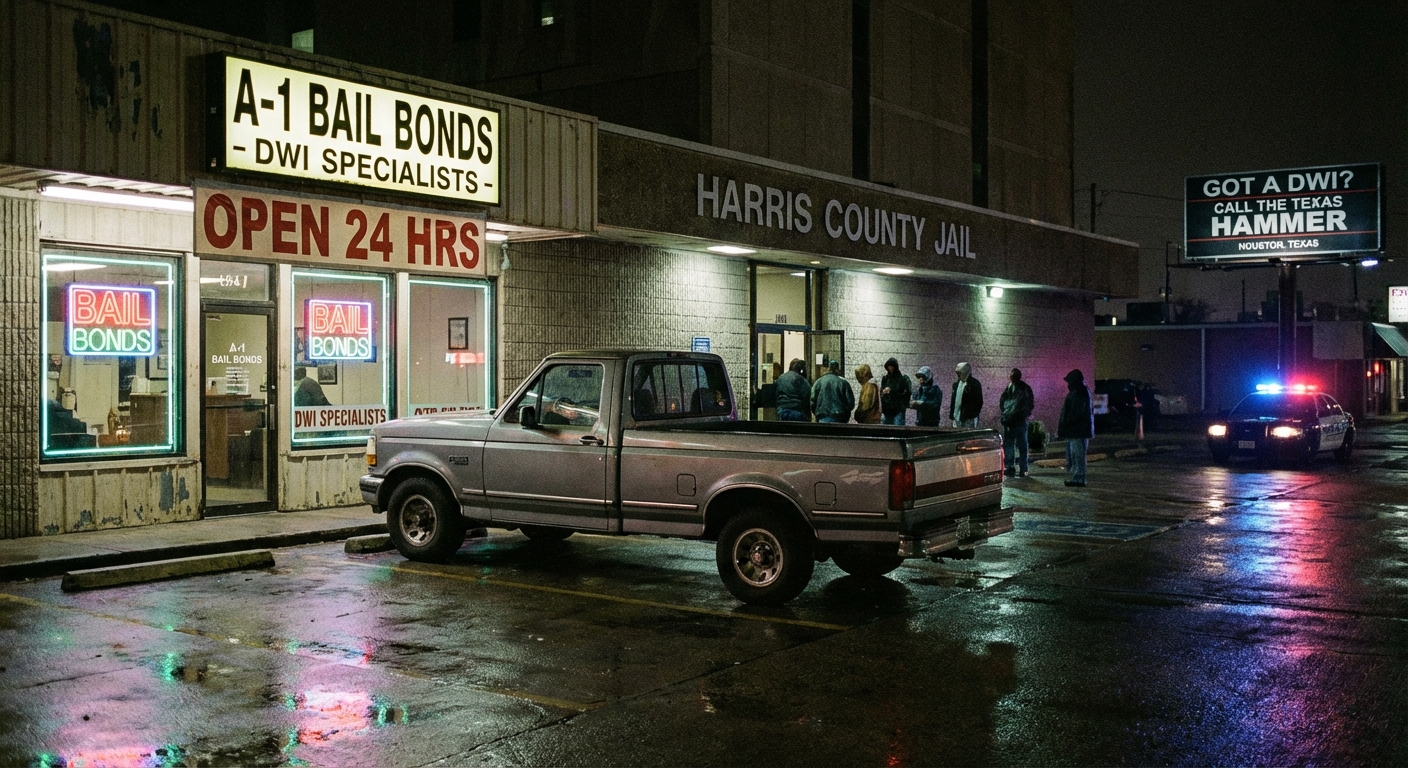
Money at Booking: How Much Is Bail for a DWI in Texas and What Makes It Go Up or Down?
If you are wondering how much is bail for a DWI in Texas, most first time DWI bonds fall in a general range of about $500 to $2,500, but that number can climb into the tens of thousands when there are prior DWIs, very high blood alcohol levels, crashes, or injuries. The exact amount depends on Texas law, your county’s bond schedule, and the judge or magistrate who looks at your specific facts.
If you are like a mid 30s construction manager who has never been arrested before, the shock is not only the handcuffs. It is the fear that some huge bail number will wreck your budget, cost you your job, and throw your family off balance. This guide breaks down typical DWI bail ranges in Texas, how Harris County and nearby counties handle bond, and which facts make your bail go up or down so you can plan instead of panic.
Quick answer: Average DWI bail amounts in Texas and what most people see at booking
To get practical right away, here are common starting points for average DWI bail amounts Texas wide. These are general ranges, not promises, but they help you frame what you may be facing.
| Type of DWI charge | Typical Texas bail range | What most first timers see |
|---|---|---|
| First offense DWI (no crash, no child, BAC around .08 to .14) | $500 to $2,500 | Often $1,000 to $1,500 in many urban counties |
| Second offense DWI (no injuries) | $2,500 to $5,000 or more | Many courts will go closer to the middle or high end |
| Felony DWI (3rd or more, or DWI with child, or serious injury) | $5,000 to $50,000+ depending on facts | Numbers vary widely and can jump fast after a crash or injury |
| DWI with accident but no serious injury | Often $2,500 to $10,000 | Higher if property damage is major or passengers were hurt |
In Houston and Harris County, many people on a first DWI with no crash are able to bond out the same day or early the next day on amounts in this lower range, sometimes through pretrial release or personal bond. As a working parent, if you can picture something closer to a few thousand dollars instead of some mythical six figure number, that can help you focus on how to cover it and keep income coming in.
What actually happens at booking and how bail is decided
When you are first arrested for DWI in Texas, you are taken to a local jail or holding facility for booking. You are fingerprinted, photographed, and entered into the system. Then, usually within hours, a magistrate or judge will look at the charges and set a bond amount based on law, any county bond schedule, and your individual risk factors.
If you want more detail about what to expect at booking and bail steps, there is a deeper guide that walks through the stop, arrest, and early court process in plain language. For now, focus on the fact that you are not picked at random, there is a legal framework for the number the magistrate picks.
The magistrate is required to consider things like your criminal history, the seriousness of the charge, ties to the community, and risk to public safety. This is where your job, your family, and your record can help or hurt you. If you are a construction manager with steady work and kids at home, you want those facts presented clearly so the court sees that you are not likely to run and that you need to be out to keep supporting your family.
Analytical Planner (Daniel/Ryan): Where do the rules come from?
For someone like an Analytical Planner (Daniel/Ryan), bail is not just a number. It is a mix of statutes, local rules, and risk factors. Texas defines DWI and related enhanced offenses in the Penal Code. You can review the Official Texas statute text for DWI and related offenses to see how things like prior convictions, high BAC, and injuries turn a simple DWI into a more serious charge that often drives bond amounts higher.
Key factors that make DWI bail go up or down in Texas
If you are trying to guess your own bail, the specific question is not only how much is bail for a DWI in Texas in general. What really matters is which facts in your case push your number up or help keep it down.
1. First offense vs repeat offense
Courts treat first time DWI much differently from a second or third. A first offense DWI bond range is usually at the bottom of the chart, because the court sees you as less of a repeat risk. For second and third DWIs, judges know the person has been through this before, so they tend to raise bail and add stricter bond conditions.
First offense: Most Texas counties, including Harris County, often use lower bond amounts, and in some cases personal bonds, for people with no criminal history and a clean driving record. That is where you often see $500 to $1,500 bond numbers, especially if there was no crash.
Repeat offense: A second DWI can quickly jump you into a $2,500 to $5,000 or higher range, especially if your prior DWI was recent. A third or more, often filed as a felony, can move the bond into five figures.
For more context on typical first-offense bail ranges and consequences, there are resources that walk through what many first offenders face in court, beyond just the bond number.
2. Blood alcohol concentration (BAC) and test results
A higher BAC often signals higher risk to the court. A test close to .08 might be treated differently than a test of .20 or higher. Some counties treat very high BACs as aggravating factors, which can drive up both the charge and the bond amount.
If your job requires you to be on the road, such as supervising construction sites, a very high BAC can create more concern for the court that you could reoffend while the case is pending. That concern can show up in the form of higher bail or stricter bond conditions like ignition interlock devices.
3. Crashes, injuries, and the role of accidents in bail
The role of injuries and crashes in bail decisions is huge. Even a minor fender bender can bump your bond amount above what a no accident DWI might see. If there is a serious crash with injuries, the charge itself may change to intoxication assault or intoxication manslaughter, which are more serious felonies with much higher bond numbers.
Courts are especially cautious when someone is accused of causing harm while intoxicated. If another driver, passenger, or pedestrian was hurt, the magistrate may see a greater risk to the public and raise bail to reflect that risk. In serious injury cases, bond amounts can easily reach $25,000 to $50,000 or more, depending on the county and facts.
4. Ties to the community and your personal situation
Your job, family, and length of time in Texas matter. Strong ties to the community lower the risk that you will skip court, which usually helps keep bail lower. If you have steady work, a mortgage or lease, and kids in local schools, those are all facts that can help.
If you are a practical provider trying to keep your crew running and your kids on schedule, it can help to have someone explain to the court that you must be out on bond to keep projects on track and provide childcare. Judges are human. They can understand those pressures, even while they have to protect public safety.
5. Prior criminal history and open cases
Any prior felony, violent offense, or open criminal case tends to push bail up. If you are on probation, parole, or bond for another case when arrested for DWI, the court can set a much higher bond or even decide not to grant bond in rare situations.
This is one reason why two people charged with the same DWI level in the same county can walk away with very different bond amounts. One has no record and gets a modest bond. The other has a long record and sees a much higher number, even though the new charge is the same.
Houston and Harris County examples: How local bond schedules for DWI work
Each Texas county can have its own bond schedule that sets typical starting amounts for common charges. In Harris County, the district and county criminal courts at law follow local rules and practices that guide how bond is set for DWI cases. These schedules are only starting points. Judges and magistrates can go up or down based on your specific situation.
You can review the Harris County courts page for local DWI case and bond info to understand where your case could be assigned and how local criminal courts operate. While these sites do not tell you your exact bond number, they help show that bond decisions are grounded in court rules and not just guesswork.
Example: First offense DWI in Harris County with no crash
Imagine Mike, a 35 year old construction manager in Houston, pulled over driving home from a job site. He has no criminal history, no crash, and a breath test around .11. In Harris County, he might see a bond set somewhere around $1,000 to $2,000. If pretrial services approves him, he might be released on a personal bond or a supervised bond that does not require paying the full amount up front.
In that case, the bail number is stressful but not life destroying. The bigger risk is missing work, losing his license later, and how the case could affect his long term record and income.
Example: Second DWI with minor accident in a nearby county
Now imagine the same driver, but this time it is his second DWI and there was a minor two car collision, no injuries. In many nearby Texas counties, the magistrate might set bond in the $3,000 to $7,500 range, add a no alcohol condition, and require an ignition interlock device. The same person, with one prior and a small crash, faces a much steeper financial and supervision burden.
How DWI bail actually gets paid in Texas
Knowing the number is only half the battle. You also need to understand the ways that bail gets paid and who is on the hook. This is where many families, especially practical providers, feel the most pressure.
Types of bonds in DWI cases
- Cash bond: You or a loved one pays the full bond amount to the court. If you appear at all required dates and follow conditions, the money is refunded at the end of the case, minus any fees or fines owed.
- Surety bond (bail bondsman): You pay a bondsman a non refundable fee, often around 10 percent of the bond amount, and they post the bond for you. So on a $2,000 bond, you might pay about $200 to the bondsman.
- Personal recognizance bond: The court releases you without cash up front, based on your promise to appear and meet conditions. This is more common for low risk first offenders.
- Pretrial services or supervised release: In some counties, a pretrial department supervises you instead of requiring high cash bail, often with conditions like check ins or alcohol testing.
For a working parent, the key is getting out quickly in a way that you can actually afford. If you tie up your entire savings in a high cash bond, you may still struggle to pay rent, childcare, and legal fees. If you use a bondsman, you lose that fee, but you preserve more cash for other needs.
Internal options and deeper reading on unaffordable bail
If you are worried that your bail will be out of reach, there are resources that go deeper into what to do if you can’t afford bail, including possible ways to ask for a bond reduction, non financial conditions, or other options that might keep you from staying locked up.
Numbered quick actions: What to do in the first 24 hours
In the first day after a DWI arrest, you do not have time to read law books. You need simple steps. Here are practical quick actions aimed at someone in your shoes who is trying to protect work and family.
- Figure out who can pay bond and how: Decide whether you, a spouse, parent, or trusted friend will handle the bond process. Confirm how much cash is available and whether using a bondsman makes more sense than posting full cash bond.
- Gather basic information about the charge: Write down or have someone else record where you were arrested, which county jail you are in, the booking number, and whether the charge is first, second, or felony DWI. This will affect your bond range.
- Plan for work coverage: If you supervise crews or shift workers, have a trusted person notify work that you have an urgent family or legal matter and may miss a day, without giving details you are not ready to share.
- Arrange childcare and household coverage: Make sure kids are picked up, fed, and calm. The emotional impact on your family can be bigger than the legal one if no one explains what is happening.
- Document your timeline while it is fresh: After release, jot down a simple timeline of the stop, field tests, and booking. This can help later when discussing your case with a Texas DWI lawyer.
- Learn your early deadlines: In addition to bond, there are quick deadlines for challenging license suspension and protecting your record. Do not wait weeks to understand these, or you may miss options.
For more detail about staying out of jail and protecting your employment after release, it can also help to read about steps to protect your job after an arrest, especially if you work in a field where driving or a clean record really matters.
What different readers should keep in mind about DWI bail in Texas
Analytical Planner (Daniel/Ryan): Making a rational bail plan
If you fit the Analytical Planner (Daniel/Ryan) profile, you likely want numbers and probabilities. In many Texas counties, roughly speaking, first time non accident DWIs land in the lower bail range, second DWIs move into mid four figure bonds, and felony or crash based DWIs can climb from five figures upward. Having those ballpark ranges in mind lets you model cash versus surety bond, likely monthly budget hits, and how a potential bond reduction might matter.
You might also find it useful to look at county level court websites and statutory definitions so you are not basing decisions on rumors. Treat your bail strategy the same way you would treat a work budget or project plan: collect facts, list risks, and then prioritize the steps that protect your freedom and income first.
High-stakes Executive (Sophia/Jason): Discretion and maximum exposure
A High-stakes Executive (Sophia/Jason) may be less focused on a $1,500 versus $3,000 bond difference and more worried about privacy and keeping the process low profile. Higher profile individuals often want to know the worst case bond number if the charge is enhanced by injury, high BAC, or a prior, so they can have liquid funds or credit ready in advance.
In that situation, it is reasonable to ask early about options for private handling where possible, such as quiet communication with a local bondsman, discrete appearance arrangements, or using personal bond where allowed. While the records themselves are public, careful planning can reduce unnecessary attention and avoid extra damage to reputation and business relationships.
Cost-minimizer Youth (Kevin/Tyler): Why DWI bail is not just “a quick fee”
If you identify with a Cost-minimizer Youth (Kevin/Tyler), you might be tempted to see bail as just a quick hit you can cover with a credit card and then forget. Here is a plain example. Say your first DWI bond is set at $1,500. You use a bondsman and pay a $150 fee. That does not sound so bad, but then you still have towing fees, court costs, higher insurance, and time off work.
It is easy for the total financial impact of a simple DWI to climb above $5,000 once you add everything in, even when the bond itself sat in the low thousands. Thinking that bail is the only cost is a common mistake that keeps people from planning for the real financial picture.
Medical Professional Worried About License (Elena): Timelines and staying employable
A Medical Professional Worried About License (Elena) may be less stressed about the exact bond number and more worried about how a DWI and any time in jail might affect a nursing license or hospital credentialing. For you, getting out on bond quickly is critical so you do not miss shifts, raise red flags with credentialing committees, or trigger automatic employment actions.
You should also be aware of administrative license suspension timelines, often called ALR hearings, which can start 15 days after notice in many cases. Those deadlines are separate from bail, but they interact with your ability to drive to work, which is often a key employment requirement for health care workers who move among facilities.
Common misconception: “If I cooperate, bail will always be cheap”
A frequent myth is that if you are polite and cooperate with officers, your bail will automatically be set low. Respectful behavior can help and may keep the situation calmer, but it cannot erase legal aggravators like a high BAC, a crash, a child passenger, or prior DWIs. The magistrate still has to follow Texas law and local rules about bond.
What cooperation can do is help you avoid extra charges like resisting or disorderly conduct that could raise your total bond exposure. It can also make you look more responsible when the judge reviews probable cause and bond later. So it matters, but it does not guarantee a cheap bond.
How bail conditions can cost you money, even after you are out
Bond is not just a dollar amount. Courts can add conditions that have their own costs. These may include ignition interlock devices, alcohol monitoring, random drug testing, driving restrictions, or reporting to a supervision officer.
An ignition interlock alone can cost installation fees plus monthly charges that add up to hundreds or thousands of dollars over the life of the case. Alcohol monitoring devices and frequent testing can also increase expenses and make scheduling work and family responsibilities harder. When you plan for the financial impact of bail, include these possible bond condition costs in your math.
How bail decisions connect to the rest of your Texas DWI case
Many people think of bail as a separate, one time issue. In reality, your bond decision affects the rest of your DWI case. If you stay in jail because bond is too high or you miss a bond reduction hearing, you may lose your job, fall behind on bills, and be under more pressure later to accept a quick plea you do not fully understand.
If you get out on a bond you can afford and keep working, you have more space to gather records, explore defenses, and consider the long term impact on your license and record. For someone supporting a family, that breathing room can make the difference between feeling forced into a fast decision and having time to understand your choices.
If you want to explore more detailed questions beyond this article, there are Butler Law Firm resources that offer an interactive Q&A for quick DWI bail questions so you can test different “what if” scenarios in your own time.
Frequently asked questions about how much is bail for a DWI in Texas
How much is bail for a first offense DWI in Texas?
For a first offense DWI in Texas with no crash, no injuries, and an average BAC, bail often falls somewhere between $500 and $2,500. In many urban counties, including Harris County, a typical first time DWI bond range is around $1,000 to $1,500, and some people may qualify for personal bond or supervised release instead of paying full cash.
Are DWI bail amounts higher in Houston and Harris County than in other Texas counties?
Houston and Harris County use their own local bond practices, but the basic ranges are similar to other large Texas counties. First time DWI cases often see lower bond amounts, while repeat or felony DWI charges can lead to higher bail, sometimes in the five figure range, especially if there was a crash or injury.
What makes DWI bail jump from a few thousand to tens of thousands of dollars?
The biggest jumps usually come from prior DWI convictions, very high BAC levels, serious crashes, injuries, or having a child in the vehicle. Once the charge becomes a felony, such as a third DWI or intoxication assault, it is common for judges to set bond from $5,000 up to $50,000 or more depending on the facts and your history.
Can I get my Texas DWI bail amount lowered after it is set?
In many cases, you can request a bond reduction hearing where the court looks again at your financial situation, family responsibilities, and risk level. Judges sometimes lower bond or adjust conditions if you can show strong community ties, employment, and a plan to follow all court rules, but there is no guarantee.
What happens if I cannot afford bail for my DWI in Texas?
If you cannot afford bail, you may stay in jail unless the court agrees to reduce the amount or grant a non financial release like personal bond or supervised release. This is where it can be important to present clear information about your work, family, and ability to pay so the court understands that a very high bond would effectively keep you locked up.
Why acting early on bail and bond conditions matters
For a practical provider with a family depending on them, waiting to sort out bail and bond conditions can quietly increase the damage from a DWI arrest. Every extra day in jail risks missed shifts, lost income, and strain at home. Even after you get out, unclear bond conditions can lead to violations, new warrants, or higher costs if you are not careful.
Taking early steps to understand your likely bond range, whether you will need a bondsman, and how bond conditions could affect your driving and work schedule gives you back some control. It also helps you protect your long term goals, whether that is running job sites on time, maintaining a professional license, or keeping your record as clean as possible under Texas law.
No article can cover every fact pattern, and bond decisions are always specific to your case, county, and history. Talking with a qualified Texas DWI lawyer about your situation can help you apply these general ranges and factors to your exact facts so you can make choices that protect your freedom, your job, and your family as much as possible.
Butler Law Firm - The Houston DWI Lawyer
11500 Northwest Fwy #400, Houston, TX 77092
https://www.thehoustondwilawyer.com/
+1 713-236-8744
RGFH+6F Central Northwest, Houston, TX
View on Google Maps


No comments:
Post a Comment