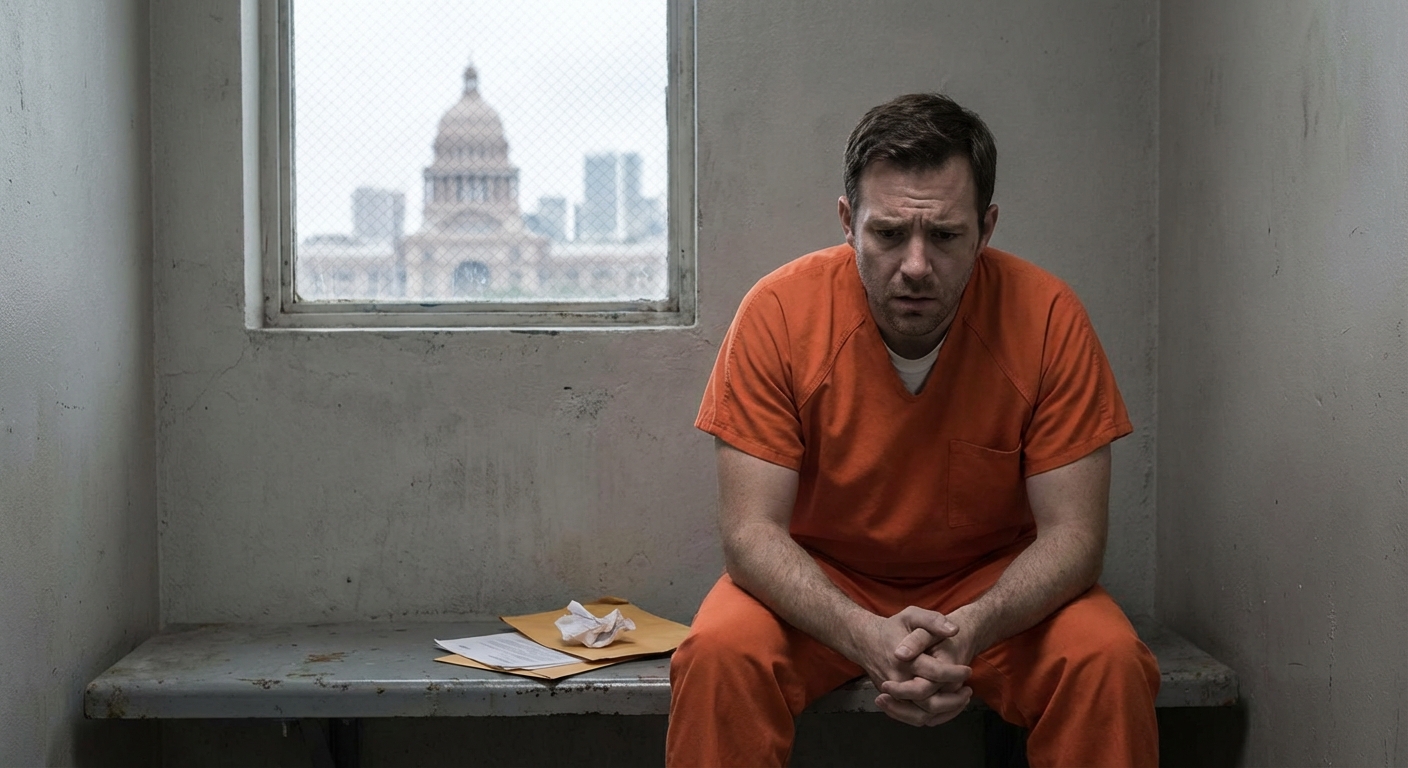
Sitting in Jail or Getting Out: What Happens If I Cannot Afford Bail on a Texas DWI and What Options Might Keep Me From Staying Locked Up?
If you are wondering what happens if I cannot afford bail for a Texas DWI, the short answer is this: you usually stay in jail until your case moves forward unless you use options like bond reduction, a personal bond, or help from a bail bondsman to get released. The good news is that in Texas, including Houston and Harris County, there are several legal tools that may lower your bond or let you out without paying the full amount, especially if you act quickly and understand the process.
If you are in your mid 30s, carry the bills for your family, and you just got arrested for DWI, it can feel like your entire life is on pause. You might be sitting in a holding cell worried that if you cannot scrape together bail money, you will lose your job, your paycheck, and your reputation. This guide explains in plain language what actually happens with Texas DWI bail amounts and affordability, what choices you have if you cannot pay, and how to protect your job and license while you fight the charge.
1. First hours after a Texas DWI arrest: from booking to the first bail decision
To understand what happens if I cannot afford bail, it helps to walk through the first 24 to 48 hours after a Texas DWI arrest. In Houston and surrounding counties, the process usually follows the same basic steps, even if the details differ slightly from jail to jail.
After your arrest, you are booked, fingerprinted, and photographed. Officers record the charge, which for a typical first offense DWI comes from Texas Penal Code Chapter 49 (statutory DWI offense definitions). Then your case goes in line for a magistrate or judge to set bail and conditions of release.
If you want a fuller picture of the arrest and booking process, including field sobriety tests and what happens in the station, you can read more about what to expect after a Texas DWI arrest.
For someone like you, working construction management or another hourly or project based job, the clock starts ticking the moment you are booked. Every extra day you sit in jail is a day you cannot show up at the site, answer calls, or support your family. That is why understanding the first bail decision is critical.
How judges usually set Texas DWI bail amounts
In many Texas counties, including Harris County, judges or magistrates use a bond schedule as a starting point. For a first offense DWI with no accident or injuries, the schedule might suggest a bond amount in the low thousands. If there was an accident, a high blood alcohol concentration, or a prior DWI, the schedule amount goes up.
From your point of view, the key question is not just the amount on paper, but whether that number is realistic compared to your paycheck, savings, and family obligations. A two thousand or five thousand dollar bond might as well be fifty thousand if you are already stretched thin by rent, car payments, and childcare.
Why you might still be stuck in jail even after bail is set
Here is the harsh reality: Texas law does not guarantee that bail will be set at a number you can easily afford. The judge must balance community safety, your risk of not returning to court, and your financial condition. If you cannot afford bail, you stay in jail unless you use one of the legal options described in this article.
Many people assume that once bail is set, release is automatic. The truth is that if you cannot post cash or work with a bondsman, you may still be sitting in a cell days later, wondering if you will be replaced at work.
2. Texas DWI bail amounts and affordability: what factors really matter
Texas DWI bail amounts and affordability vary from person to person, but courts tend to look at several common factors. Understanding these helps you see where you might have room to argue for a lower bond or a different type of release.
- The seriousness of the DWI charge, for example first offense vs. second or third offense
- Whether anyone was injured or there was a crash
- Your prior criminal history or lack of one
- Your ties to the community: family, job, length of time in Houston or the county
- Your past record of appearing for court when required
- Your financial situation and ability to pay
If you have a steady construction project manager job, live in the Houston area with your family, and have no prior record, you may have strong arguments that you are not a flight risk and do not need an extremely high bond. On the other hand, a serious crash or prior DWI can push the bond amount higher.
Micro story: Mike’s first 48 hours after a DWI arrest
Imagine this scenario. Mike, a 36 year old project manager, is arrested for DWI after a traffic stop on his way home from a late shift. No crash, no injuries, and no prior record. At the jail, the magistrate sets bond at three thousand dollars. Mike’s wife has enough to cover rent and groceries, but not to pull together three thousand in cash overnight.
By Monday morning, Mike has already missed one important job meeting. He worries that if he stays in jail much longer, his company might move the project to another manager. That is the point where options like a bond reduction hearing, personal recognizance bond, or using a bail bondsman become crucial to getting him out.
3. What happens if I cannot afford bail: core options to avoid staying locked up
If you are sitting in a Texas jail after a DWI and the bond number might as well be the lottery, you still have choices. The key is to move quickly and use the right option for your situation.
For someone in your shoes, worried about missing work and losing income, here are the main paths that might prevent you from staying locked up.
Option 1: Requesting bond reduction hearings in Texas DWI cases
A bond reduction hearing asks the court to lower the amount of bail or change the type of bond so it becomes affordable. This is often the first serious tool used when you simply cannot pay the amount originally set.
At a bond reduction hearing, the court can consider:
- Your income and monthly expenses
- Your family responsibilities, such as supporting kids or elderly parents
- Your job situation, including the risk of being fired if you remain in jail
- Your criminal and DWI history
- Any health issues or special circumstances
For someone like Daniel Kim — Analytical Professional, this is where the evidence based breakdown matters. Courts often want actual numbers: pay stubs, rent amounts, and proof of community ties. There are no guaranteed odds, and every judge is different, but presenting clear information about your finances and responsibilities can improve your chance of a lower, realistic bond.
If the court agrees, the judge may lower the dollar amount, add conditions like no alcohol and an ignition interlock device, or change you to a different type of bond that requires less money up front.
Option 2: Personal recognizance bonds in Texas DWI cases
A personal recognizance bond, often called a PR bond, lets you get out of jail without paying a full cash bond up front. Instead, you sign a promise to appear at all court dates and follow any conditions the judge sets.
Personal recognizance bonds in Texas are usually considered when:
- You have little or no criminal history
- The DWI did not involve injuries or a serious crash
- You have strong ties to the community
- The court believes you will come back to court and follow the rules
If you are a mid level manager like you, with a steady job and family in the area, that can help you argue for a PR bond or a partial PR bond. The downside is that PR bonds often come with strict conditions. These can include alcohol monitoring, random testing, or travel limits, which you need to understand before agreeing.
For someone like Sophia Delgado — Executive with Reputation Risk, a PR bond may be attractive because it can speed up release without a large public bail transaction. However, the conditions can still feel intrusive, and missing even one requirement can land you back in custody.
Option 3: Using a bail bondsman after DWI
If the judge will not reduce the bond to a number you can pay and you do not qualify for a personal bond, the practical route is often using a bail bondsman after DWI. In Texas, a bondsman typically charges a non refundable fee, often around 10 percent of the total bond amount, sometimes a bit more or less depending on the situation.
For example, if your bond is three thousand dollars, you might pay a bondsman around three hundred dollars rather than the full amount. The bondsman posts the bond and promises the court that you will appear. You still must follow all court conditions and show up when required. If you skip court, the bondsman can seek to revoke the bond, and you can be re arrested.
Using a bondsman can make the difference between sitting in jail and getting back to your job site within a day or two. However, you need to be clear that the fee you pay is usually not refunded, even if your case is dismissed later.
Option 4: Exploring alternatives judges use instead of keeping someone locked up
Some Texas judges and courts are open to alternatives to pretrial jail time, especially for first time DWI defendants with stable jobs. These options might include conditions like alcohol monitoring, ignition interlock, curfew, or check ins with pretrial services, sometimes paired with a lower bond amount.
If you want to understand how courts sometimes structure these alternatives alongside probation and other sanctions, it can help to read about when judges consider alternatives to pretrial jail. This gives you a sense of how judges weigh public safety against your need to keep working and supporting your family.
For you as a worried provider, the main point is that judges often care about whether you can keep your job and stay stable in the community. Showing that you are willing to follow strict conditions can sometimes help persuade a court to let you out instead of leaving you in a cell.
4. How your driver’s license and ALR deadlines connect to bail and release
While you worry about bond and getting out of jail, another clock is ticking on your Texas driver’s license. After a DWI arrest, the state can try to suspend your license through a civil process called Administrative License Revocation, or ALR.
You usually have a short window, often 15 days from the date you receive the suspension notice, to request an ALR hearing. Missing this deadline can lead to an automatic license suspension, sometimes for 90 days or longer on a first offense. If you are the main driver for your family or your job, losing your license can be as damaging as sitting in jail.
If you want step by step detail on this process, including timelines and forms, there is a helpful guide on how to request an ALR hearing and preserve your license. You can also see the Official DPS portal to request an ALR hearing and deadlines to understand what the state requires.
For someone like Elena Morales — Nurse Protector, preserving licensure and avoiding a mark on your driving and criminal record can directly affect your ability to work. Acting fast on the ALR request and staying on top of court dates is part of protecting that license and your job in a hospital or clinic.
5. Jail time, job risk, and how bail relates to likely DWI penalties
A common misconception is that if you post bail, you are safe from jail time. Bail is only about pretrial release. It does not decide what happens if you are convicted or how a judge will sentence you. However, bail and your pretrial conduct can influence how your case is viewed later.
For a first offense DWI in Texas, the law can allow up to 180 days in county jail and fines, along with license consequences. Many first offenders in Harris County and nearby areas may receive probation or community supervision rather than long jail terms, especially if there were no injuries or serious aggravating factors. If you want to explore how pretrial release, probation, and jail exposure fit together, you can read about how bail decisions relate to likely jail exposure.
For you as a provider, it helps to separate two questions in your mind:
- How do I get out of jail now so I can keep working and supporting my family
- What are the long term risks and penalties if this DWI is not handled well
Focusing on bail and bond options buys you time to work on the second question. It does not erase the DWI charge. That is why both short term release and long term defense planning matter.
6. Special concerns for each type of reader
For Mike Carter — Worried Provider
If you are the main earner in your household, the fear is simple: “If I stay in jail, my family cannot make it.” Your practical priorities are:
- Finding out the actual bond amount and conditions as soon as possible
- Seeing if a bond reduction hearing is realistic and how quickly it can be set
- Checking whether you might qualify for a PR bond or partial PR bond
- Deciding if a bondsman fee is better than missing another week of work
- Making sure someone helps request your ALR hearing within the deadline
Every day you save in jail time can mean a saved project, paycheck, or even a job. Keeping your employer informed in a simple, honest way may protect your position while you work through the court process.
For Elena Morales — Nurse Protector
If, like Elena Morales — Nurse Protector, you hold a professional license, your focus is not just on getting out of jail. You worry about background checks, board notifications, and mandatory reporting rules. You are right to be concerned that a DWI and any jail time can raise questions about fitness for duty and patient safety.
For you, acting quickly on bond, staying in full compliance with all pretrial conditions, and documenting your steps to address the situation can all matter later if your board asks questions. Saving proof that you attended required classes, followed monitoring orders, and kept your job can help show that you took the incident seriously.
For Daniel Kim — Analytical Professional
If you identify with Daniel Kim — Analytical Professional, you probably want hard data and clear odds. In bond reduction hearings, judges look at specific facts and documents, not just emotional pleas. Pay stubs, rental agreements, employment letters, proof of kids or dependents, and past court appearance records can all weigh in your favor.
There is no exact percentage chance of success. Each court is different, and judges have broad discretion. Still, presenting organized, concrete evidence about your life can both support a reduced bond and build credibility that may help throughout the DWI case.
For Sophia Delgado — Executive with Reputation Risk
If you are like Sophia Delgado — Executive with Reputation Risk, your top concern can be keeping your name out of the gossip cycle. You may fear coworkers or clients finding out you spent a weekend in jail. For you, speed and discretion matter.
Bond options that get you released sooner, such as a quick bond reduction request or PR bond where appropriate, can reduce the time you are away from work and avoid missed meetings that raise questions. Following every court order exactly helps prevent a warrant or a future arrest that could be far more public.
For Tyler Brooks — Unaware Young Adult
For younger readers like Tyler Brooks — Unaware Young Adult, a DWI and bail might feel like just a stressful weekend. In reality, even a first DWI and a short jail stay can affect jobs, school, and finances for years. License suspensions make it harder to get to class or work, and a criminal record can appear on background checks.
Taking bail and license steps seriously from day one is not overreacting. It is basic damage control for your future.
7. Step by step: what to do if you cannot afford bail right now
If you or a family member is sitting in a Houston area jail on a DWI and cannot afford bail, here is a practical checklist. You can share this with a trusted family member on the outside if you are still in custody.
Step 1: Get clear on the exact bond amount and conditions
- Confirm the bond amount, type of bond, and any special conditions like ignition interlock or no alcohol.
- Ask when you will next see a judge or when a lawyer can file a motion to modify bond.
Knowing the exact number and conditions lets you compare options: a bondsman, a bond reduction request, or a PR bond request.
Step 2: Evaluate your realistic ability to pay
- List how much cash or savings you and your close family truly have available.
- Consider essential expenses like rent, car payments, and food.
- Decide what you can afford for a bondsman fee versus full cash bond.
For a worried provider, this is where you weigh a non refundable bondsman fee against the serious risk of losing your job if you stay inside longer.
Step 3: Ask about requesting bond reduction hearings
- Gather proof of income, dependents, rent or mortgage, and any medical or family obligations.
- Prepare to explain how staying in jail harms your family stability and job.
- Understand that a judge can say yes, no, or offer different conditions on release.
Courts often move faster on bond issues when they see concrete documentation rather than vague claims of hardship.
Step 4: Explore personal recognizance bond eligibility
- Find out if the county and court use PR bonds for DWI cases like yours.
- Be honest about prior arrests or failures to appear they affect eligibility.
- Be prepared to accept and follow strict release conditions if a PR bond is granted.
Remember that a PR bond is a serious legal promise. Violating its terms can put you right back in jail, often on a higher bond.
Step 5: Decide whether to use a bail bondsman after DWI
- Compare the bondsman fee against what you might lose in pay if you stay in jail longer.
- Ask about payment plans or collateral if the bond is high.
- Make sure you understand your obligations to the bondsman and the court.
If you want a deeper dive into these options and related issues, some people find it helpful to use an interactive Q&A resource for common DWI bail and bond questions as a supplement to formal legal guidance.
Step 6: Do not ignore your ALR hearing deadline
- Mark the deadline to request an ALR hearing, often 15 days from the notice of suspension.
- Make sure someone on the outside helps submit the request on time if you are still in jail.
- Keep copies or confirmation of the request.
Protecting your license is a separate battle from bail, but it is just as important for your ability to keep working and supporting your family.
8. Common misconceptions about Texas DWI bail and staying out of jail
When people get arrested for DWI in Texas, they often bring in ideas from TV or hearsay that do not fit reality. Clearing these up can help you make better decisions under pressure.
Misconception 1: “If I cannot afford bail, I am stuck in jail until trial.”
In reality, there are several ways to ask the court to change your bond, such as a bond reduction hearing or a request for a PR bond. You can also consider a bondsman fee as a smaller up front cost. Trials in DWI cases can take months to a year or more in busy counties. Most people do not stay in jail that entire time.
Misconception 2: “Posting bail means I will not get jail time later.”
Bail only controls whether you are in or out of jail before your case is resolved. Sentencing, if any, comes much later and depends on evidence, prior record, and many other factors. Posting bail does not guarantee a certain outcome, but staying in compliance with bond conditions can help show the court that you take the process seriously.
Misconception 3: “I cannot do anything about my license while I focus on bail.”
While bail and your release are urgent, you can also protect your license by requesting an ALR hearing within the deadline. The ALR process is separate from the criminal case, so you can and should address both at the same time. Ignoring the ALR timeline could leave you free on bond but unable to drive legally to work.
9. Frequently asked questions about what happens if I cannot afford bail for a Texas DWI
How long can I be held in a Houston, Texas jail if I cannot afford DWI bail?
If you cannot afford bail for a Texas DWI, you can be held until your case is resolved unless the court changes your bond or grants a different type of release. In practice, many people pursue bond reduction, PR bond, or a bondsman within days so they do not sit in jail for months while the case moves through court.
Can a Texas judge lower my DWI bail if I explain my financial situation?
Yes, a Texas judge can lower your DWI bail after a bond reduction hearing where you present evidence of your income, expenses, and family obligations. There is no guarantee, but clear proof that the original bond is unaffordable and that you are not a flight risk can help support a reduction.
What is a personal recognizance bond for a Texas DWI and who qualifies?
A personal recognizance bond in Texas is a type of release where you sign a promise to appear in court instead of paying a full cash bond up front. Judges may consider PR bonds for DWI defendants with limited criminal history, strong community ties, and a low risk of missing court, although each case is evaluated individually.
Will my Texas driver’s license be suspended even if I get out on bail?
Your Texas driver’s license can still be suspended through the ALR process even if you are released on bail. To try to prevent or delay that suspension, you typically must request an ALR hearing within a short deadline, often 15 days from the date you receive the suspension notice.
Is using a bail bondsman for a Texas DWI cheaper than posting full cash bail?
Using a bail bondsman for a Texas DWI usually costs less up front than posting the full cash bail, because you pay a fee that is a percentage of the total bond amount. However, that fee is generally non refundable, so it is important to weigh the cost against your need to get out of jail quickly to protect your job and family obligations.
10. Why acting early on Texas DWI bail, bond options, and license issues matters
If you are lying on a jail bunk in Harris County worrying about your next paycheck, it can feel like you have no control. In reality, the first few days after a Texas DWI arrest are when you have the most power to shape what comes next. Asking about bond reduction, exploring personal recognizance bonds in Texas, and deciding whether to use a bondsman are all time sensitive choices that affect whether you return to work or stay locked up.
Acting early also matters for your driver’s license and long term record. Requesting your ALR hearing on time, showing the court that you respect bond conditions, and documenting your efforts to stay employed can all influence how your case is viewed. Even though no one can promise a particular result in a DWI case, being informed and proactive gives you better odds of protecting your job, your income, and your family.
If you want a short, visual walkthrough of what to focus on immediately after a Texas DWI arrest, including questions to ask and steps that can help you avoid being stuck in jail longer than necessary, this video can help. It offers a practical overview for someone in your situation who needs clear next steps, fast.
Butler Law Firm - The Houston DWI Lawyer
11500 Northwest Fwy #400, Houston, TX 77092
https://www.thehoustondwilawyer.com/
+1 713-236-8744
RGFH+6F Central Northwest, Houston, TX
View on Google Maps


No comments:
Post a Comment