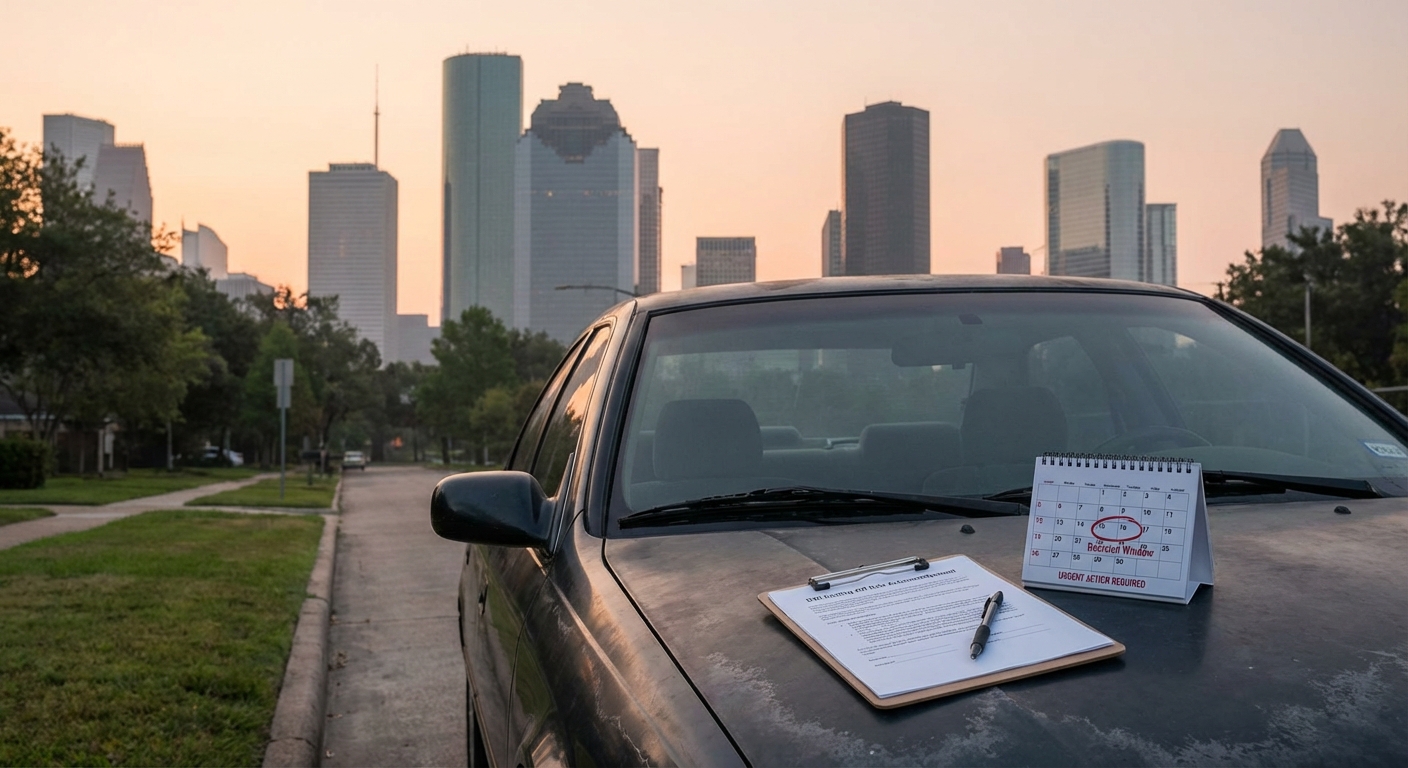
Contracts, Cooling Off Myths, and Bad Decisions: What Is the Cooling Off Rule in Texas and Could It Ever Help If You Signed Something Right After a DWI Arrest?
The short answer is that the cooling off rule in Texas after stressful events is narrow, and it almost never cancels agreements you sign right after a DWI arrest. Texas gives a three day right to cancel only for specific consumer sales that happen away from the seller’s business, not for bail bond contracts, towing or impound charges, ignition interlock rentals, or attorney fee agreements. If you signed something in the hours after your arrest, do not assume you can undo it by citing a cooling off law, because most post-arrest commitments are outside those protections.
What is the cooling off rule in Texas, in plain English?
Texas has a limited right to cancel some sales when the deal is made at your home or another location that is not the seller’s normal place of business. This is often called the Texas three day right to cancel or the door-to-door sales cooling off period. The rule is meant to protect you from high-pressure pitches at your front door, a hotel ballroom seminar, or a temporary booth, not from decisions tied to criminal arrests or court processes. For a neutral overview that lists what is and is not covered, see the State Law Library’s summary of the Texas three-day right to cancel (cooling-off rule). For quick explanations of DWI terms you may hear during this process, you can also scan our firm’s definitions and common questions about DWI terms and rights.
Key points to remember if you are reading this in Houston or Harris County after a long night in the jail release line: the cooling off rule is about consumer sales locations and disclosures. It is not a general safety net for any stressful purchase or signature.
Cooling off rule in Texas after stressful events: what it is and what it is not
When life is chaotic, your brain grabs for exits. After a DWI arrest, you may feel intense pressure to fix things right now. Sellers know this, and you may see offers for immediate towing release, storage discounts, ignition interlock installation, “programs” that promise leniency, or other services. It is natural to ask whether a cooling off law lets you cancel those deals once you get home and sleep on it. In most cases, it does not.
- What it is: A very specific consumer cancellation right for certain off-premises sales, usually giving you three business days to cancel if the seller followed the statute’s written notice rules.
- What it is not: A blanket three day refund rule for any contract made while you were upset, tired, embarrassed, or recently arrested.
If you are a Houston TX consumer making post-arrest decisions, the difference matters. The wrong assumption can cost you real money within 24 to 48 hours.
Door-to-door sales cooling off period, plus the most common exceptions
Texas law protects buyers who sign at home or away from the seller’s business. The seller must provide a written notice of the right to cancel and a detachable cancellation form. If those disclosures are missing, the buyer’s cancellation time can be extended until proper notice is given. But there are notable exceptions that often matter after an arrest:
- Motor vehicles: Buying a car is not covered by this cooling off law.
- Insurance and real estate closings: Generally outside the door-to-door cancellation rule, with narrow exceptions for special products like certain timeshares governed by their own statutes.
- Emergency repairs requested by the buyer: If you asked for urgent work to protect property, the right to cancel can be limited.
- Transactions at the seller’s fixed place of business: If you went to the provider’s shop or office, this is not a door-to-door sale even if you felt pressure.
These exceptions are why the rule almost never rescues someone from payments they agreed to make right after a DWI arrest.
Why cooling off protections rarely apply to post-arrest DWI decisions
Many post-arrest agreements are not consumer sales covered by the door-to-door statute at all. They are either criminal process related, or they are purchases you make at the seller’s fixed place of business, such as a tow lot or an ignition interlock shop. Here are the big categories that come up in Houston after a DWI:
- Bail bond contracts: These are financial agreements with a bondsman, not door-to-door consumer sales. Cooling off rules do not cancel bond premiums once posted.
- Towing and impound fees: You usually pay at the tow yard or storage facility. That is the seller’s business location, and charges are also tied to Transportation Code rules, not cooling off laws.
- Ignition interlock installation and monthly monitoring: You typically sign at the provider’s shop or online portal. This is not a covered door-to-door sale. There may be separate contract cancellation terms, but those are private, not statutory cooling off rights.
- Attorney fee agreements: Legal representation contracts are not covered by the door-to-door sales rule. Lawyers must follow professional conduct rules and their own written terms.
- Private “education” or “consulting” packages sold online: If you consented through a website or at a business location, the door-to-door rule does not apply. Be careful with auto-renewals.
You may still have options inside each category, like asking a vendor to work with you, pointing out missing disclosures, or using any cancellation clause the contract itself provides. But those are not the same as a statutory cooling off right.
Micro-story: a Houston snapshot that shows how this plays out
Mike is a 39-year-old construction manager who lives inside Beltway 8. He was arrested for DWI on a Friday. After release, he signed a monthly ignition interlock contract at a shop off Highway 290, paid the first month, and authorized auto debit. On Sunday morning he realized he may not even have to install an interlock until a court orders it, and he wondered if the “three day rule” could undo the agreement.
It could not. The sale took place at the shop, which is the provider’s business location. This is not a door-to-door solicitation. The cooling off rule offered no automatic cancellation. Mike instead had to read the contract’s own cancellation clause, check whether installation had already occurred, and decide whether to ask the vendor for a goodwill change. Meanwhile, the real deadline, his license suspension date, was approaching. He had 15 days from receiving his notice to request an ALR hearing. That was the clock that mattered.
Step-by-step: what to do right now to protect your license, money, and job
If you signed something within a day or two of your arrest, slow down and follow these steps. Each step is practical for someone in Houston or any nearby county like Harris, Fort Bend, or Montgomery.
- Preserve every document and message. Screenshot payment pages, keep receipts, and save email confirmations. If you later dispute a charge or ask for a change, you will need proof of what you agreed to and when.
- Do not double pay. If you already paid a tow yard or vendor, do not pay again based on a phone demand. Get a written invoice and verify the company name and address.
- Check the agreement for any built-in cancellation or change fees. Many contracts have a short cooling-off style clause written by the company. That clause, not the Texas door-to-door law, might give you an exit.
- Secure your driver’s license rights first. Texas suspensions tied to DWI can start quickly. Learn how to request and preserve your ALR hearing deadline and, if you want to go straight to the state site, use the Official DPS portal to request an ALR hearing and deadlines. The default deadline to request is commonly 15 days from when you receive notice, so move fast.
- Talk with a qualified Texas DWI lawyer about the agreement you signed. A lawyer can tell you if your situation fits any narrow cancellation rule, or if you should focus on other remedies like chargebacks, payment pauses, or negotiated changes.
- Protect your work status. Read your employee handbook for any duty to report arrests or license issues. If your job requires driving, ask about temporary non-driving assignments while your ALR hearing is pending.
- Use a trusted roadmap so you do not miss the next step. This short guide covers each milestone after a first arrest: first-offense roadmap: what to do after arrest.
Common misconception: “I get three days to cancel anything I signed because I was upset”
This is the myth that causes the most damage. The Texas three day right to cancel is not triggered by your stress level. It is triggered by where and how the seller solicited the sale, and by whether the transaction fits the statute. Being tired, anxious, or embarrassed does not create a cancellation right by itself. If a seller made specific promises that are untrue, other consumer protection laws may help, but that is a different analysis that requires evidence and deadlines of its own.
Houston-specific realities that affect your decisions in the first 14 days
In the Houston area, ALR hearings are set through the State Office of Administrative Hearings and often happen by phone. If you miss the hearing request deadline, DPS can suspend your license for a period that often ranges from 90 to 180 days for a first offense, depending on whether there was a refusal or a test failure. If you drive for work, that can be more damaging than a nonrefundable contract you wish you had not signed.
You probably balance job sites, crews, and deadlines. Losing driving privileges even for a month can strain your team. That is why the ALR deadline belongs at the top of your to-do list, ahead of contract regrets that may not be fixable by cooling off laws.
Signing contracts after a DWI arrest: which ones are most likely to be binding?
Here is a quick list of agreements that usually stick and what to consider next.
- Bail bond premiums: Usually nonrefundable once the bond is posted. Ask the bondsman to walk you through the payment schedule and any collateral terms.
- Tow and storage bills: Governed by Transportation Code rules and local storage rates. You may dispute improper tows through separate procedures, but the cooling off rule does not cancel the bill.
- Ignition interlock contracts: Often include installation fees, monthly charges, early termination fees, and data fees. If a court later orders a different provider or removes the requirement, you still have to follow the contract you signed unless the vendor agrees to a change.
- Private programs or online “help” packages: Read the fine print for auto renewal. If the site did not show clear pricing or cancellation terms, you may have a separate consumer issue. Save screenshots.
- Attorney agreements: These are professional services contracts with their own terms and ethics rules. Ask questions about scope and refunds before you sign.
Limits of cooling off laws for Houston TX consumers and post-arrest decisions
Cooling off statutes were built to stop high-pressure sales at your doorstep. They were not built to rewrite criminal process contracts. Even if a salesperson approached you outside a courthouse or police station, if the actual sale occurred at the seller’s fixed location or online, the door-to-door statute may not apply. And even when it does, the seller must have failed to give you the required written notice and cancellation form before your three business day window means anything.
Translation for someone in your shoes: you probably cannot rely on a cooling off law to cancel what you signed at a tow lot, a bondsman’s office, a mechanic’s shop, an interlock installer, or a lawyer’s office. Focus instead on the ALR clock, your court date, and any private cancellation options that are already in your contract.
For readers who want statute names and timelines at a glance
Solution Aware — Daniel Kim: The door-to-door right to cancel is found in Texas Business and Commerce Code Chapter 601, the federal Cooling-Off Rule appears at 16 C.F.R. Part 429, and DWI-related license actions and ALR hearings are primarily under Texas Transportation Code Chapters 524 and 724 with procedures handled through DPS and SOAH. The takeaway is simple, the door-to-door statute targets off-premises consumer sales, not post-arrest criminal process agreements.
Job, license, and reputation: protect what matters most
Your job may care more about your driving status than whether you paid a vendor too soon. If your license is suspended and you cannot get to job sites, your employment risk goes up. Learn how a DWI shows up and for how long by skimming this related guide on how a DWI can affect your employment rights. If you need discretion, use a professional email and a private phone for legal communications so work does not intercept sensitive messages.
Product Aware — Sophia/Jason: If the cooling off rule does not fit your situation, you still have choices that respect your privacy, like limited-disclosure communications, password protected client portals, and asking your lawyer to coordinate any interlock or treatment referrals quietly. That way you manage damage without adding attention.
Most Aware — Marcus/Chris: Cooling off statutes will not remove an arrest from public records or licensing boards. Plan for the ALR process and any court orders, then address reporting duties to your professional board with precise, factual notices rather than narrative explanations.
How to evaluate a contract you signed in the first 48 hours
Use this short checklist before you panic:
- Where did you sign? At home with a salesperson present, or at the seller’s business, or online. Only the first scenario hints at door-to-door rules.
- Did the paperwork include a separate written notice of a three day right to cancel and a detachable form? If yes, follow that notice exactly. If no, you may still not be in a covered transaction, but ask a lawyer to check the disclosures.
- Has the service already been performed? Installation or towing already done can limit your leverage even if some rule could apply.
- Is there a private cancellation or change fee clause? You may be able to cancel but owe a fee. Decide if the fee is cheaper than staying locked in.
- Are you within 15 days of your notice of suspension for ALR? If yes, stop and handle that request first using the resources linked above so you do not miss the most urgent deadline.
Short notes for other reader types who land on this page
Unaware — Tyler: Do not sign anything while you are impaired or exhausted. Sleep, review the paper in the morning, and get a legal review before paying. A quick pause can save you months of bills.
Frequently asked questions about the cooling off rule in Texas after stressful events
Is there really a three day right to cancel in Texas for anything I sign after a DWI?
No. The three day right to cancel applies to specific door-to-door style consumer sales, not to most agreements connected to a DWI arrest like bonds, towing, interlock rentals, or attorney contracts. Stress alone does not create a cancellation right.
What should a Houston driver do first, cancel a contract or request an ALR hearing?
Requesting an ALR hearing should come first because you usually have about 15 days from notice to act and the suspension can last months if you do nothing. Contract issues matter, but missing the ALR deadline hurts your ability to work and drive.
Does the cooling off rule apply if an interlock company approached me in a courthouse hallway?
Probably not. If you went to the company’s shop or completed the transaction online, that is not a door-to-door sale. The cooling off rule focuses on where the sale occurs and the seller’s business location, not the fact that you met a salesperson in a public place.
Can I undo a tow or storage fee in Houston using a cooling off law?
No. Towing and storage fees are governed by transportation and local regulations. You may dispute an improper tow through those procedures, but the door-to-door cooling off rule does not cancel the bill.
Where can I read a simple explanation of Texas cooling off rights?
The Texas State Law Library provides a plain-language summary that lists what is and is not covered. See the Texas three-day right to cancel (cooling-off rule) page for details.
Why acting early matters more than chasing a cooling off myth
Cooling off laws are not designed to fix post-arrest contracts. In Houston and nearby counties, the choices that matter most in the first two weeks are requesting your ALR hearing, securing your transportation plan, and getting clear advice about the charges and any court dates. If a vendor will work with you on a contract you regret, great, but do not let that search make you miss the real deadlines. If you want more plain-language answers after reading this page, you can explore our interactive Butler Q&A for common post‑arrest questions.
For quick viewing, here is a short checklist video that pairs with this article. It focuses on what to do, and what not to sign or pay, right after a DWI in the Houston area.
Butler Law Firm - The Houston DWI Lawyer
11500 Northwest Fwy #400, Houston, TX 77092
https://www.thehoustondwilawyer.com/
+1 713-236-8744
RGFH+6F Central Northwest, Houston, TX
View on Google Maps


No comments:
Post a Comment