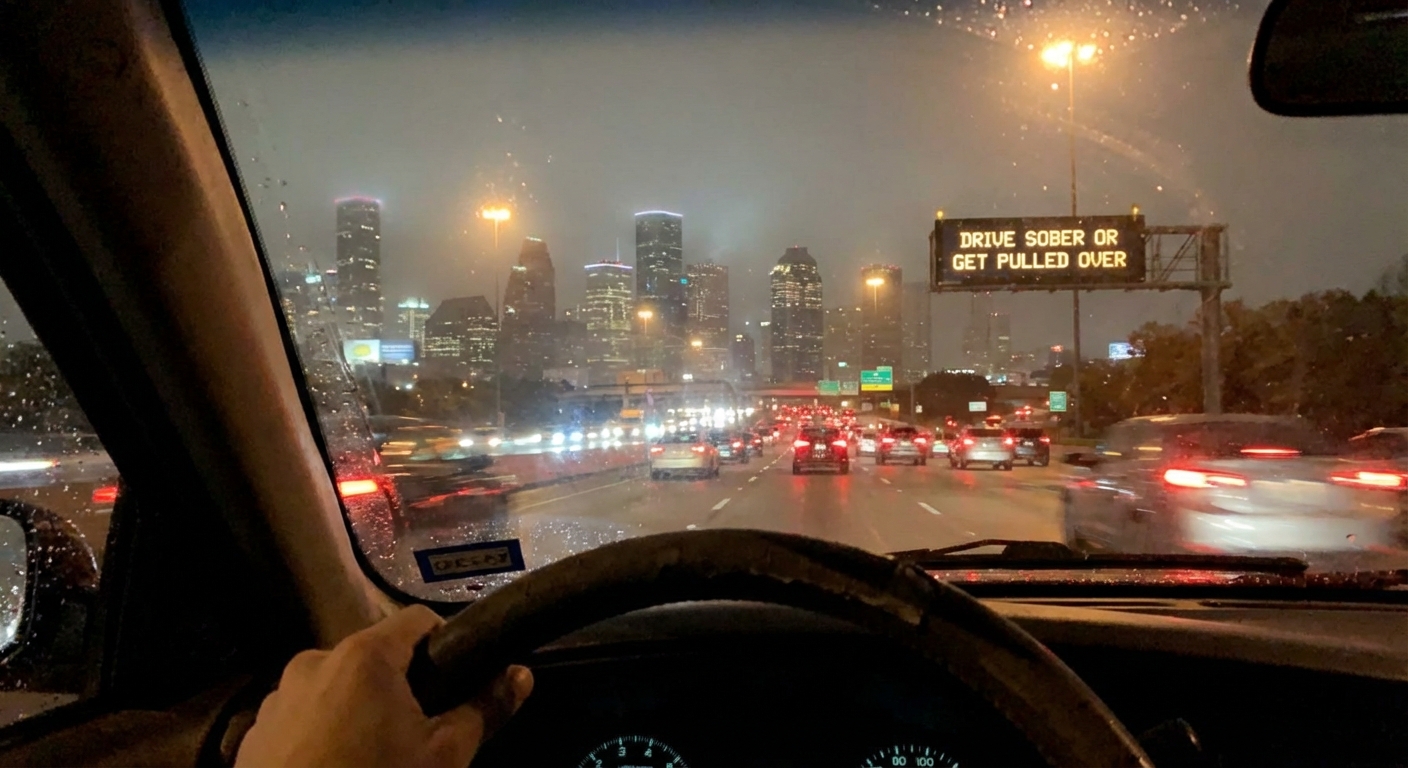
How Many Drinks Is .08 for a Man in Texas? Drink Counting vs Reality for Houston Drivers
The short answer: there is no fixed number of drinks that guarantees a man will be at or below 0.08 in Texas, but many men reach about 0.08 after roughly 4 to 5 standard drinks in about two hours. That estimate swings fast with body weight, timing, food, and drink strength, which is why relying on a personal “safe limit” is risky. In Texas, 0.08 is the per se DWI limit, and officers use tests, not your drink count, when deciding whether to arrest.
Quick answer first: how many drinks is .08 for a man?
If you are looking for a quick benchmark, most national guidance ties a 0.08 BAC to about four to five standard drinks for many men in roughly two hours, while stressing heavy individual variability. A standard drink means about 14 grams of pure alcohol, for example a 12 oz beer at 5 percent, a 5 oz glass of wine at 12 percent, or 1.5 oz of 80 proof spirits. “Tall” pours, strong craft beers, or doubles are more than one standard drink and push BAC upward faster.
For Houston drivers, here is a conservative illustration, not a promise. Drinks are standard pours, and the numbers assume minimal food and average metabolism. Real life can differ by a lot, especially with fast drinking, stronger alcohol, fatigue, medications, or recent illness.
| Men’s body weight | Approx drinks in 1 hour to approach 0.08 | Approx drinks in 2 hours to approach 0.08 |
|---|---|---|
| 140 lb | 2 to 3 | 3 to 4 |
| 180 lb | 3 to 4 | 4 to 5 |
| 220 lb | 4 | 5 to 6 |
Important: these are sketches, not shields. Two “pint” IPAs at 7.5 percent might equal three or more standard drinks. A big pour of whiskey can count as two or three. You might hit the Texas 0.08 DWI per se limit earlier than these ranges suggest. National health sources also emphasize variability in alcohol response and BAC change, which is why any rule of thumb can fail under real driving conditions.
For background on standard drinks and why people absorb alcohol differently, see neutral health guidance such as NIAAA guidance on drinks, BAC, and variability.
Why drink-counting breaks down: men’s body weight and alcohol absorption
You want a rule you can trust because your job and license matter. The problem is that your body is not a calculator. Even men with similar weight can show different BAC readings after the same number of drinks. Several moving parts make the difference.
- Body weight and body water. Higher body weight usually means a lower BAC from the same alcohol dose because it is diluted in more body water. But body composition and hydration still change the result.
- Timing. Three drinks in 45 minutes spikes faster than three drinks spread over two hours. Rapid intake can outpace your body’s ability to process alcohol.
- Food. A solid meal slows absorption. It does not eliminate alcohol or guarantee a safe BAC. Greasy food is not a shield.
- Drink strength and size. Craft beers, cocktails with multiple shots, and “heavy pours” count as more than one drink. Labels and bar recipes vary.
- Fatigue, illness, and medications. Lack of sleep, recent illness, and some prescriptions or over-the-counter drugs can intensify impairment at the same BAC.
If you supervise a construction crew in Houston and grab a quick dinner and two stiff drinks after a shift, your BAC and your coordination might not match how “fine” you feel. Your responsibilities and early start time tomorrow do not change how your body absorbs alcohol tonight.
BAC calculators vs real life
Online BAC calculators feel reassuring because they reduce a complex process to simple inputs. They are useful for education, but they are not admissible evidence and they often exclude key variables like exact pour size, true alcohol percentage, your absorption curve, or medical factors. Calculators typically assume uniform elimination rates and neat, standard drinks. Real life is messy, especially at Houston bars and ballgames where pours are generous and glasses differ.
Analytical Selector: the data is a starting point, not an answer. Use calculators for rough insight, then assume the real BAC could be higher, not lower. Field conditions, stress, and uneven drink sizes push numbers up.
Most importantly, a calculator will not stop an arrest. Officers in Texas rely on observations, field sobriety tests, and chemical tests. If your calculator says 0.06 but your behavior, driving, or breath sample points higher, the calculator does not help you on the roadside or in court.
What officers look at in Texas: tests, not guesses
Houston area officers do not ask how many you had and then decide based on your answer. They gather evidence. That usually starts with driving behavior, the smell of alcohol, and your interaction at the window. If they investigate further, expect field sobriety exercises, a preliminary breath test in some settings, and a request for an evidential breath or blood test.
- Field sobriety tests. The horizontal gaze nystagmus, walk and turn, and one-leg stand are used to look for specific clues of impairment. Nervousness, fatigue, and medical issues can affect results.
- Breath tests. The evidential breath test happens at a station or mobile unit, not from a smartphone or bar gadget. Results reflect alcohol in breath that correlates to a blood alcohol estimate.
- Blood tests. In Texas, a blood draw may follow a warrant, especially if a breath test is refused or if a crash or special circumstances exist. Lab procedures, chain of custody, and instrument maintenance can become central issues later.
If you want a step-by-step look at the stop and testing sequence, see what to expect when an officer stops you for DWI.
Texas has an implied consent framework. By driving on Texas roads, you are deemed to have consented to chemical testing after a lawful arrest for DWI, subject to important conditions and procedures. Refusing can trigger an administrative license suspension even if no criminal conviction occurs. You can review the statute text here: Texas implied consent law and chemical testing rules.
Texas 0.08 DWI per se limit and the two paths to an arrest
Texas law allows a DWI arrest and charge in two ways. One is the per se route at a BAC of 0.08 or more. The other is impairment based on the officer’s observations and tests, even if your reported BAC is under 0.08. This is why “I only had two” or “I felt fine” is not a legal defense at the roadside. The state is not obligated to trust a drink count or your personal impression of sobriety.
Carefree Young Driver: two tall seltzers can be more than two standard drinks. Mix fast drinking with an empty stomach and a quick highway trip, and you could be over 0.08 before you feel it. The cost of a DWI in Houston includes towing, release fees, increased insurance, time off work, and months of court dates. Even a first offense can disrupt your life for a long time.
Houston micro-story: the drink count that backfired
Picture a 34-year-old construction manager in Harris County. He is 185 pounds and finishes a long week by meeting coworkers near the job site. He eats a small appetizer, then has a pint of craft beer at 7.2 percent, a whiskey “double,” and later a seltzer that turns out to be 8 percent and 16 ounces. He spaces them over about 90 minutes because he is driving a short distance. He figures that is three drinks and thinks his “rule” of three is safe.
On the way home he gets stopped for a lane change without signaling. The officer smells alcohol, notes glassy eyes, and hears a slight slur. Field tests follow. He blows later at the station and the result shows 0.09. His drink count ignored pour size and alcohol strength, so his math failed. He now faces an ALR deadline, possible license suspension, and a court process that will cost time and money.
License risk is real: ALR deadlines and what to do next
After a DWI arrest in Texas, you usually receive a temporary driving permit and a notice about an Administrative License Revocation process. You generally have a short window, commonly 15 days from when you received the notice, to request a hearing. If you do not, a suspension often begins on the 40th day after you received the notice. The period can vary by refusal versus test-failure and by your record. Missing this window is a common and costly mistake for Houston drivers.
To understand options and timing in plain English, review how to protect your driver’s license and ALR deadlines in Texas. It explains why quick action matters and how ALR ties into the criminal case.
Healthcare Professional Worried About License: an ALR suspension and any breath or blood result may trigger employer or licensing board reporting duties. Get clear on what your board expects and document all deadlines so you do not miss a required disclosure.
Common misconceptions about drinks to reach .08 BAC in Texas
- Myth: Two drinks is always safe for a man. Reality: two large, strong drinks can equal three or four standard drinks. Fast drinking raises BAC quickly.
- Myth: Food or water “soaks up” alcohol. Reality: food slows absorption but does not reduce alcohol already absorbed. Hydration helps how you feel, but hydration is not protection against a 0.08 BAC or impairment clues.
- Myth: A BAC calculator proves I was under the limit. Reality: calculators are educational tools. Police and courts rely on observed impairment and chemical test results, not your phone’s estimate.
- Myth: If I am under 0.08 I cannot be arrested. Reality: Texas officers can arrest if they believe you lost normal use of mental or physical faculties due to alcohol or drugs, even with a reported BAC below 0.08.
Practical steps to reduce DWI arrest risk in Houston
You want a plan that fits a real Houston week, not a perfect world. These steps do not guarantee safety, but they cut risk and uncertainty.
- Count standard drinks, not glasses. Know what is in your pour. Ask about ABV for beers and size for cocktails.
- Slow the pace. Space drinks and give your body time. Absorption and elimination rates vary, and rapid intake is the enemy of safe BAC levels.
- Eat early. A real meal before drinking slows absorption. Do not rely on late snacks to undo earlier drinks.
- Use a backup ride. Rideshare, a designated driver, or a hotel room costs less than a DWI process and license issues.
- Keep medications in mind. Some prescriptions amplify impairment or interact with alcohol.
- Respect the uncertainty. If your night involves mixed drinks or high gravity beer, assume your BAC is higher than you think.
Career-Conscious Professional: consider how a stop looks from the outside. Even a clean record can be overshadowed by an arrest entry. Protecting your role, clients, and confidentiality starts with avoiding the conditions that produce ambiguous or high BAC results.
What happens after an arrest in Harris County: penalties and collateral fallout
Legal outcomes vary with facts, but a first-time DWI in Texas can involve fines, court costs, time in custody or probation, community service, alcohol education, ignition interlock requirements, and a driver’s license suspension that often lasts several months. Some cases involve enhanced penalties, for example a reported BAC of 0.15 or greater, a crash with injury, a child passenger, or prior convictions. Court dates and conditions can stretch across many months while you continue working and caring for family.
For details, including ranges and enhancements explained in everyday language, see what penalties you may face after a DWI conviction. That resource walks through how courts think about punishment and supervision terms.
Employment and background checks are a second wave of consequences. Even if a case is dismissed or reduced, records can surface in screening reports. To dive deeper into how hiring screens work in Texas and what shows up after seven years, see how a DWI can affect your job prospects and record.
Field sobriety, breath, and blood tests in context
Understanding the pieces gives you better decisions in the moment and better questions later.
- Traffic stop and contact. The officer needs reasonable suspicion to stop your vehicle, then develops or dispels a DWI investigation based on what follows.
- Standardized field sobriety tests. These have instructions and scoring. Uneven pavement, footwear, and medical conditions matter. Saying you “only had two” does not change how the clues are recorded.
- Breath test request. After arrest, officers typically request a breath or blood test. Refusal can lead to an ALR suspension. A test failure at or over 0.08 can also trigger an ALR suspension but on different timelines.
- Blood draw and lab analysis. Warrant issues, tube handling, fermentation, and analytical methods may be contested later, but none of that prevents an arrest tonight.
To prepare yourself for the process, study what to expect when an officer stops you for DWI before the weekend. It is easier to make calm choices if you already understand the sequence.
For the legal backbone governing post-arrest testing and the ALR process, read the statute text on Texas implied consent law and chemical testing rules. Seeing the rules in black and white helps you understand why officers and DPS move quickly after a refusal or a reported test failure.
Houston drivers misjudging legal limit: why it happens and how to think differently
Most drivers do not set out to drink and drive. Misjudgment grows from three patterns. First, social pressure and fast rounds compress time, so you drink more quickly than planned. Second, hidden alcohol content turns one drink into two, especially with pints, high ABV craft beers, margaritas, and double pours. Third, fatigue and stress from long work days increase the effect of the same BAC on coordination and attention. Together, these patterns can move a careful person into risky territory without realizing it.
Reframe your goal. Instead of asking “how many drinks can I have,” ask “what is my margin for error tonight.” If you have no fallback ride and a tight morning schedule, your real margin may be zero. Your future self, family, and paycheck will thank you for building a margin that does not depend on a rough drink count.
Secondary reader asides
Analytical Selector: if you want numbers, treat them as ceilings, not floors. If a chart suggests 4 to 5 drinks in two hours for your weight, assume impairment or a 0.08 reading could happen sooner than that. Field conditions, stress, and pour size bias BAC upward.
Career-Conscious Professional: think beyond court. Employer investigations, client perceptions, and travel restrictions can follow a single DWI arrest. Arrange transportation on nights out where business talk blends with alcohol so your professional discretion and licensure stay intact.
Carefree Young Driver: the real cost starts at the roadside. Towing, storage, time off work or classes, higher insurance, ignition interlock, and months of court dates can total thousands of dollars. A rideshare home costs less than the impound fee.
Healthcare Professional Worried About License: testing numbers and paperwork can carry over into credentialing and hospital privileges. Track ALR and court timelines and keep copies of every notice so you can answer board questions precisely.
Frequently asked questions about how many drinks is .08 for a man in Houston
Is two beers always safe to drive in Texas?
No. Two beers can mean two pints or two high-ABV craft beers that equal three or more standard drinks. Drinking speed and food matter. Some men will approach or exceed 0.08 with two large or strong beers in a short window.
Can I be arrested for DWI in Houston with a BAC under 0.08?
Yes. Texas allows arrest and prosecution based on loss of normal mental or physical faculties due to alcohol or drugs, even if a reported BAC is below 0.08. The per se 0.08 is one path, not the only path.
Does food or water lower my BAC?
Food can slow how quickly alcohol enters your bloodstream, but it does not reduce alcohol already absorbed. Water helps with hydration and comfort, but hydration does not prevent a 0.08 BAC or eliminate impairment clues during field tests.
What happens if I refuse the breath or blood test in Texas?
Refusal can trigger an administrative driver’s license suspension through the ALR process, separate from the criminal case. You typically have a short deadline, commonly 15 days from notice, to request a hearing. See the statute and a plain-English guide at Texas implied consent law and chemical testing rules and this overview of how to protect your driver’s license and ALR deadlines in Texas.
How long could a DWI affect my record and job prospects?
Even when cases are dismissed or reduced, records can appear in background checks. Some forms of relief exist in limited situations, but many drivers see long term effects on professional opportunities and insurance. For a deeper dive, review how a DWI can affect your job prospects and record.
Why acting early matters for Houston drivers
Early action creates options. ALR deadlines arrive quickly after an arrest. The 40 day suspension start commonly follows if no hearing is requested within the short window after notice. Work schedules, licensing issues, and family responsibilities are easier to balance if you understand the timeline now and plan for transportation, insurance, and any court conditions. If you face a DWI charge or investigation, talk with a qualified Texas DWI lawyer about your specific facts, testing method, and deadlines so you can make informed decisions.
If you want to explore common issues in a Q and A format, try this interactive Q&A resource for common Texas DWI questions. Use it to frame better questions for your own situation.
For a quick explainer on how labs and instruments, not drink counts, set the BAC number that officers and courts use, watch the short video below. It shows why timing, metabolism, and testing error can turn a “safe” drink count into a DWI risk.
Butler Law Firm - The Houston DWI Lawyer
11500 Northwest Fwy #400, Houston, TX 77092
https://www.thehoustondwilawyer.com/
+1 713-236-8744
RGFH+6F Central Northwest, Houston, TX
View on Google Maps


No comments:
Post a Comment