Record lifespan: how long does a DWI stay on your record in TX and what does “forever” really look like for Texas drivers?
In Texas, a DWI stays on your criminal record forever unless it is cleared through expunction or sealed by a qualifying order of nondisclosure, and it does not automatically drop off with time. Your Texas DPS driving history can also retain DWI entries indefinitely, although what employers, insurers, and background check companies actually see depends on the type of record they pull and the kind of check they run. If you searched how long does a DWI stay on your record in TX, this guide breaks down what “forever” looks like in real life for Houston drivers.
Quick answer for busy professionals
- Criminal record: A DWI arrest or conviction may remain searchable on Texas criminal history forever unless it is expunged or sealed by law. There is no automatic expiration.
- Texas DPS driving record: DPS can keep a complete history. Some certified records list your lifetime events, while other formats focus on recent years. The agency does not purge DWI convictions on a schedule.
- Employment background checks: Criminal convictions can often be reported without a time limit, but many reports focus on the last 7 years. The popular “7 year rule” does not erase a Texas DWI conviction from existence.
- Insurance and practical life impacts in Houston: Premiums commonly spike for 3 to 5 years. Some professional licenses and travel options are affected longer.
Start with shared definitions so you can read reports correctly
If you are an Analytical Seeker, you want clean definitions before timelines. These are the three record types people mix up the most:
- Criminal record: Court and criminal history data connected to an arrest, charge, dismissal, or conviction. This is what shows up in court portals and many criminal background checks.
- Texas DPS driving record: Your state driving history, including suspensions, administrative actions, and certain convictions. Employers or insurers may request different DPS record types, from 3-year snapshots to lifetime certified histories.
- Private background checks: Reports compiled by consumer reporting agencies using court data, identifiers, and other sources. The scope can vary by employer policy and federal or state rules.
For a deeper glossary with examples, see these definitions: criminal record, DPS driving record, background checks. Having those terms straight will make the timelines below click into place.
How long does each record keep a DWI in Texas, and what “forever” really means
You are likely asking this because a screening vendor or an HR portal flagged something and now your career feels exposed. Here is how permanence actually plays out for Houston and Harris County drivers.
1) Criminal record in Texas
- Default rule: A DWI conviction is permanent on your criminal record. It does not fall off after 7 or 10 years.
- Arrests and dismissals: An arrest that was dismissed or resulted in not guilty may still appear in court indexes unless removed through expunction or sealed from most public disclosure by an order of nondisclosure.
- Online court portals: Many Harris County and nearby county portals keep historical case listings. Even if the case is older, public dockets can still show it unless the law allows removal and you take action.
2) Texas DPS driving record duration
- Retention: DPS can retain your driving history for life. Different record types exist, including 3-year and lifetime certified formats. A DWI-related conviction or administrative suspension may appear on a lifetime-certified record long after the court case ends.
- What employers request: Many employers and insurers request a 3-year snapshot, but some transportation or safety-sensitive roles may request a complete certified record.
- Administrative entries: Refusals and failures from the breath or blood test process can be logged as administrative actions and may appear on certain DPS record formats even when the criminal case outcome is favorable.
3) Background checks and the misunderstood 7 year rule
- Convictions: Under common federal standards, criminal convictions can be reported beyond 7 years. Many employers still choose 7-year lookbacks for policy reasons, but that is a choice, not automatic erasure.
- Non-convictions: Arrests and other non-conviction data are treated differently, and reporting periods can vary. Dismissed cases might drop off many consumer reports after 7 years, but public court indexes can still list the case.
- Key takeaway: A Texas DWI conviction can still show up on a background check after 7 years. The 7-year idea is more of a reporting limitation for some categories, not a universal deletion rule.
For a plain-language overview of what background screeners may report and how the so-called 7-year rule gets applied, see the Texas State Law Library guide on background check limits. For a practical, Houston-focused breakdown of how employers read these reports, this blog offers a detailed look at the 7‑year rule and background checks.
Micro story: how this plays out for a Houston project manager
After a weekend traffic stop in the Heights, a mid-career project manager is charged with DWI. He pleads to a misdemeanor conviction, finishes probation, and keeps his job. Three years later he applies for a promotion with a new refinery contractor in Baytown. The HR vendor runs a criminal background check that looks back more than 7 years for convictions and pulls a lifetime-certified DPS record. The DWI shows up in both places. Insurance underwriters then re-rate the team’s risk and request proof of completion for alcohol education. The manager still gets hired, but with a longer probationary period and a higher premium allocation. This is what “forever” can mean in practice in Houston.
Enhancement lookback periods for DWI
You asked for precise timelines and how they affect the next case. In Texas, prior DWI convictions can be used to enhance punishment on later DWIs. There is not a short enhancement window that makes older DWIs disappear for criminal enhancement. A second DWI is usually a Class A misdemeanor with higher penalties. A third DWI is commonly charged as a felony, regardless of the spacing between cases. This is why even a very old conviction can still matter if another arrest occurs.
Common misconception to correct: Many people think a DWI becomes “inactive” after 7 or 10 years for all purposes. That is wrong in Texas. Enhancement and many background checks can consider old convictions long after that timeline.
What a Houston employer, licensing board, or insurer is likely to see
- Employment screening: Many large Houston employers use multi-source reports. Convictions can appear beyond 7 years. Non-convictions are treated differently by many vendors.
- Professional licensing: Boards for healthcare, engineering, teaching, and other fields focus on honesty and rehabilitation. A misdemeanor DWI does not automatically end a Texas career, but it can trigger disclosures and conditions.
- Insurance: Auto insurers often re-rate for 3 to 5 years, sometimes longer for high-BAC convictions or multiple incidents. Some carriers require SR-22 filings after certain suspensions.
- Travel: International travel to certain countries can be affected by criminal history regardless of age of the conviction.
Texas DPS driving record duration, formats, and why your request type matters
If you need to check what is showing before a background check, the DPS record format you order matters.
- 3-year history records: Often used for basic insurance underwriting and some employer screens. These may omit older events.
- Lifetime-certified records: Can show your complete history, including older DWI convictions and administrative entries such as test refusals.
- Administrative suspensions: An ALR suspension based on a test refusal or failure can appear even if the criminal case later ends in a reduction or dismissal. Reading both the court outcome and the DPS entry together tells the full story.
For a broader view on how Texas records and long-term fallout interact, you may also find this resource helpful on how Texas records and long‑term fallout interact.
Can I expunge or seal a Texas DWI, and when
Two main avenues can limit public access to a DWI record in Texas, depending on the facts:
- Expunction: Available in narrow circumstances, often when a case is dismissed and never results in a conviction, or when you are acquitted. An expunction legally removes the record from public systems.
- Order of nondisclosure: For certain first-time DWI misdemeanors with qualifying conditions, an order can seal the record from most public background checks after a waiting period. Eligibility and waiting times depend on factors like BAC level, whether there was an accident involving another person, probation terms, and whether an ignition interlock was used for a set period. See the statutory framework for Text of §411.0726 on nondisclosure eligibility for DWIs.
If you want a quick, plain-English walkthrough of record-clearing pathways, this optional deep dive may help: interactive guide on record sealing and expunction options.
ALR license deadlines that hit before records become permanent
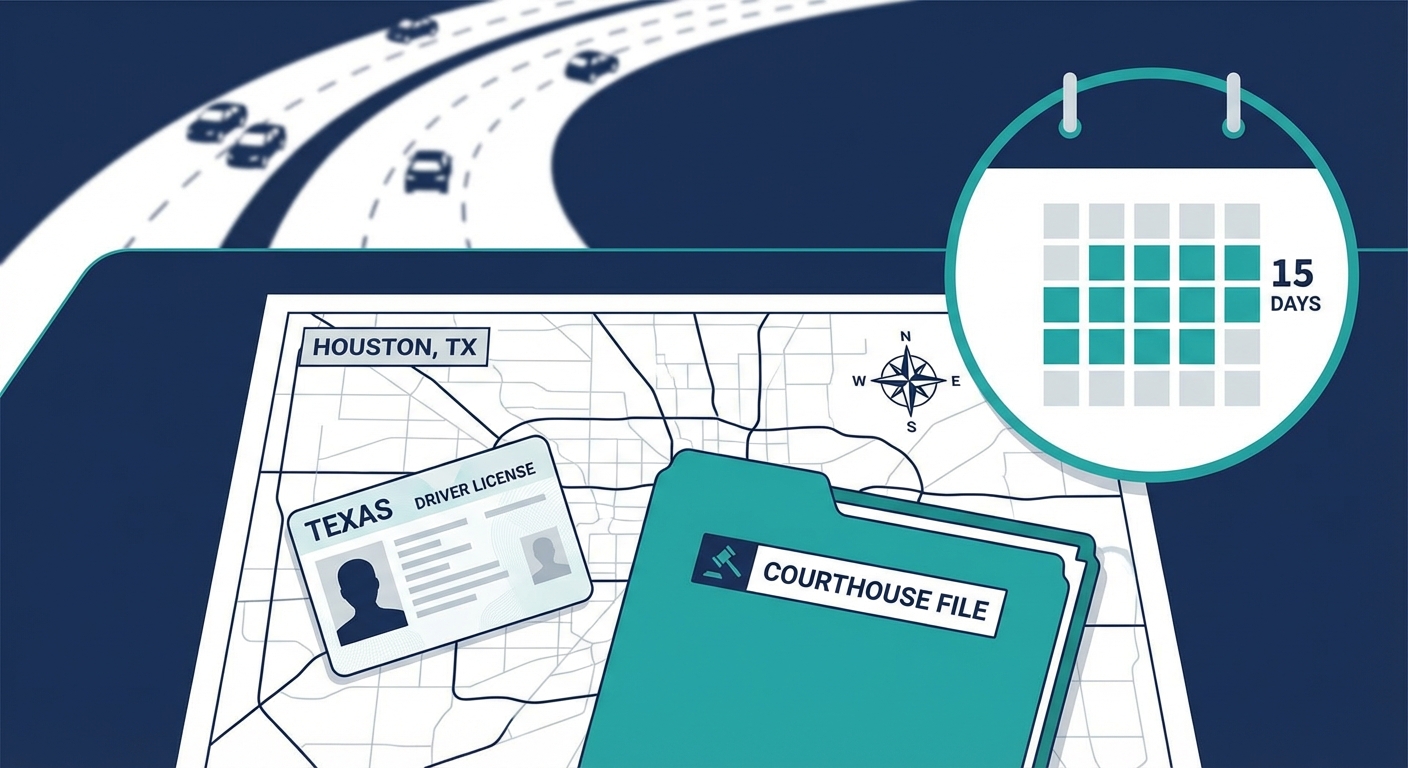
If your DWI began with a breath or blood test issue, you probably received a suspension notice. You generally have 15 days from the date you received the notice to request an Administrative License Revocation hearing. Missing that window can lead to an automatic suspension, which then shows up on your DPS record and can ripple into insurance pricing.
Use a step-by-step checklist for making the request on time and tracking the hearing process. Here is a practical starting point on how to request an ALR hearing and deadlines.
Practical ways to reduce the long-term impact in Houston, TX
You cannot change the past, but you can influence the paper trail people see and how decision makers interpret it. Consider these steps while you get legal advice tailored to your facts:
- Order and review your own records: Pull your DPS record, check court portals for your case number, and keep copies of completion certificates. Verify that dates and dispositions match.
- Ask about eligibility for sealing or expunction: A focused review of BAC, accident involvement, and prior history can determine if and when you can limit public access to the record.
- Prepare employment disclosures: Many Houston employers ask direct conviction questions. Short, factual disclosures with proof of completion often land better than evasive answers.
- Insurance timing: Shop carriers after major anniversaries such as years 3 and 5. Some companies reset pricing bands then.
- Mitigation activities: Proactive alcohol education, victim impact panels, or ignition interlock compliance can help show rehabilitation to licensing boards and employers.
- Driving habits: Clean, violation-free years after the case matter. A spotless driving record is the simplest long-term repair.
Short asides for different readers
Panicked Provider: If your family relies on your income, focus on the 15-day ALR request and on confirming the exact conviction date and disposition. Quick action on the license issue prevents an avoidable DPS suspension from making your insurance jump even more.
Status-Conscious Professional: Executives and licensed professionals care about discretion. Orders of nondisclosure for eligible cases can keep most private background check companies from reporting your case, and tight control of your disclosures helps you lead the conversation rather than react to it.
Carefree Young Adult: That first DWI can feel like a short-term hassle, but insurers often raise rates for 3 to 5 years and some jobs will see the conviction beyond 7 years. The long-term cost can exceed the price of a reliable car.
High-Net-Worth Client: Sophisticated record-challenging, careful monitoring of court and vendor databases, and strategic timing on nondisclosure requests can reduce visibility. Confidentiality planning should happen early, not after a recruiter calls.
Houston TX long-term impact of a DWI, by the numbers
- Administrative deadlines: 15 days to request the ALR hearing that can help you avoid an automatic suspension.
- Insurance horizon: 3 to 5 years of higher rates are common, sometimes longer after multiple incidents.
- Nondisclosure waiting windows: Depending on eligibility factors, Texas law can require a waiting period of several years before you can petition to seal an eligible first-time misdemeanor DWI.
- Enhancement risk: A prior conviction can count against you indefinitely if another arrest occurs.
Background checks and old DWI cases, explained simply
Think of the background check as a snapshot built from public sources. If you have a conviction, it can usually be reported without a strict time cap. Many companies configure their systems to show 7 years for routine roles, but the report can still include older convictions if policy allows. When a case was dismissed or you won at trial, some vendors limit reporting after 7 years. That does not guarantee clean search results, because court portals can still display the old case unless removed by law.
Frequently asked questions about how long does a DWI stay on your record in TX
How long does a DWI stay on my Texas criminal record?
Indefinitely. A DWI conviction remains on your criminal record unless it is expunged or sealed by an order of nondisclosure that you qualify for and obtain. There is no automatic falloff date in Texas.
Will a background check in Houston still show a DWI after 7 years?
Often yes. Many employers use reports that can show convictions beyond 7 years. The so-called 7-year rule does not erase a Texas DWI conviction from criminal history or court portals.
How long does a DWI affect my Texas DPS driving record?
The DPS system can keep a lifetime history. Some record types display only recent years, but lifetime-certified records may show older DWI convictions and administrative suspensions.
What are the enhancement lookback periods for a Texas DWI?
Texas does not use a short window that makes old DWIs vanish for enhancement. Prior DWI convictions can be used to enhance punishment on later cases even if they are many years apart.
Can I seal or expunge a first-time DWI in Texas?
Possibly, depending on details. Some first-time misdemeanor DWIs can be sealed by an order of nondisclosure after a waiting period if statutory conditions are met. Expunction is usually reserved for dismissals or not guilty outcomes.
Why acting early matters even if your case is old
Early action protects your license and builds a cleaner trail for the future. If your case is new, request the ALR hearing within 15 days to avoid an automatic suspension that lives on your DPS record. If your case is older, review eligibility for sealing, gather proof of completion, and prepare concise disclosures so background check results do not catch you off guard. For any path, a qualified Texas DWI lawyer can evaluate your options and sequence the steps correctly.
Prefer a quick explainer before diving into the timelines above, especially if you are an Analytical Seeker who wants answers fast
Butler Law Firm - The Houston DWI Lawyer
11500 Northwest Fwy #400, Houston, TX 77092
https://www.thehoustondwilawyer.com/
+1 713-236-8744
RGFH+6F Central Northwest, Houston, TX
View on Google Maps


No comments:
Post a Comment