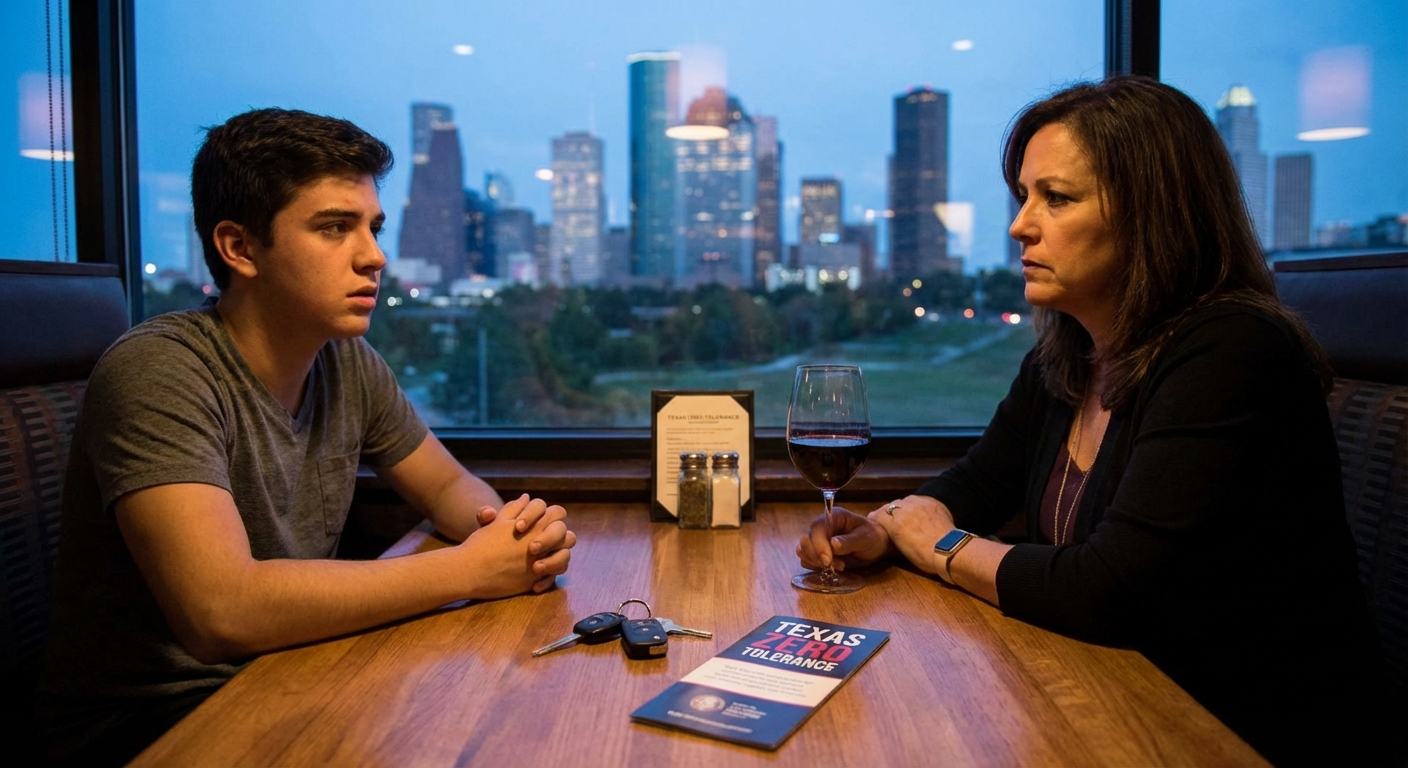
Underage Exceptions and Big Risks: can you drink at 18 with a parent in Texas without creating future DWI problems?
Short answer: Yes, an 18‑year‑old may legally drink alcohol in Texas if a parent, guardian, or spouse is visibly present and supervising, but that narrow exception ends the moment driving is involved. Even a small amount of alcohol can trigger under‑21 driving offenses, license suspensions, and long‑term problems. If you are asking can you drink at 18 with a parent in Texas, understand the exception is limited and never protects you from DUI by minor or DWI consequences tied to driving.
Texas law sets a clear split: supervised possession or consumption can be allowed, while driving after any alcohol under age 21 can lead to serious trouble. If you are an 18‑year‑old in Houston, or a parent trying to keep a teen safe, this guide explains what the parent exception covers, what it does not, and how to avoid mistakes that cause future DWI‑type issues.
The short answer for 18‑year‑olds and parents in Texas
Texas lets a minor consume alcohol in the presence of a parent, guardian, or spouse who is at least 21 and visibly supervising. That means in the same room, directly observing, and exercising control. The exception operates as a defense to consumption or possession charges, but it is not a permission slip to drive afterward. Many restaurants and venues in Houston and surrounding counties will still refuse to serve anyone under 21, even with a parent present, because business policies can be stricter than state law.
If you are that Curious Underage Driver, here is the simple rule you need to memorize: you can be with a parent and have a sip, but you may not drive after any alcohol. Zero tolerance for drivers under 21 still applies. Parents, if your goal is safety, the safest plan is to separate any supervised tasting from any driving plan at all.
For the black‑letter law that creates both the parent exception and the zero‑tolerance rules for under‑21 drivers, see the Texas statute on under‑21 alcohol and DUI by minor.
What “presence” means and where the exception can fail
Presence means the parent, guardian, or spouse is physically there, watching, and able to direct the minor. It is not enough to give verbal permission by text or phone. It does not count if a parent buys a drink and then leaves the table or goes to the car. If a police officer in a Harris County neighborhood bar sees an 18‑year‑old with a beer while the parent is ten minutes away in a different room, the exception likely fails.
Real life examples:
- At home in Spring Branch: A parent pours a small glass of wine at dinner and stays in the kitchen and dining area the whole time. That is typically within the exception.
- In a Houston restaurant: A server may refuse to serve the 18‑year‑old even with a parent at the table. The law allows the exception, but the business can say no. If served while the parent remains at the table and supervises, that can still fit the exception under state law.
- At a friend’s apartment in Midtown: If the parent is not there, there is no exception. A minor in possession charge can result.
Two important limits: the exception does not legalize public intoxication, and it does not give any protection once driving enters the picture. You can be legal to sip and still be illegal to drive.
Zero tolerance for under‑21 drivers in Texas
Texas uses zero tolerance for drivers under 21. Any detectable amount of alcohol while driving can support a charge called DUI by minor. Separate from that, DWI applies to any driver, including an 18‑year‑old, who is intoxicated by alcohol or drugs. You will sometimes hear people ask about DUI vs DWI for minors in Texas. The short version is that DUI by minor targets any detectable alcohol for drivers under 21, while DWI is the impairment or 0.08 BAC offense that applies at any age.
If you want a plain language walk‑through for families, this post breaks down what Texas zero-tolerance rules mean for teens.
Legal citation for the zero tolerance framework and for the parent exception appears in Chapter 106 of the Alcoholic Beverage Code. The same chapter also defines DUI by minor and related penalties. See the Texas statute on under‑21 alcohol and DUI by minor.
DUI vs DWI for minors in Texas: how the charges differ and why it matters
For an under‑21 driver, two paths can create criminal and license problems:
- DUI by minor: Typically a Class C misdemeanor for a first offense. It covers driving with any detectable amount of alcohol. Penalties often include a fine up to $500, an alcohol awareness course, and community service. A driver’s license suspension can be 60 to 180 days depending on prior history.
- DWI: This is the same Class B misdemeanor that applies to adults for a first offense, rising to more serious charges with aggravating factors. It involves intoxication by loss of normal use of mental or physical faculties, or a BAC of 0.08 or higher. Penalties can include up to 180 days in jail, fines up to $2,000, and a 90 to 365 day license suspension for a first offense, even if you are 18.
If you are 18 in Houston, a traffic stop after an admitted sip of wine with your parent can still lead to DUI by minor based on any detectable alcohol. If the officer notes slurred speech, poor balance, or a test shows 0.08, the charge can be DWI. For more detail on real‑world outcomes and how courts handle these cases, see our explainer on the consequences of underage drinking and driving in Texas.
Minor in possession vs parent consent: where young people get tripped up
A minor in possession charge focuses on holding or controlling alcohol. The parent‑present exception can be a defense when the parent is truly there and supervising. Without that presence, the exception falls away. Even with parent supervision, driving is still off limits for anyone under 21 if any alcohol was consumed.
Common confusion points:
- “But my parent said it was okay by text”: That is not the same as presence.
- “I was only carrying it for my mom”: If the parent is not there, a possession charge can still be filed.
- “I only had one beer”: One beer can still be a detectable amount for a DUI by minor, and for some people it can lead to DWI‑level impairment.
Parents, if you choose to allow supervised consumption, keep it in a controlled setting and pair it with a no‑driving plan. Teens, if there is any chance you might need to drive later, do not drink at all. That is the only choice that avoids the licensing consequences that come with Texas zero tolerance.
A Houston micro‑story: dinner, a short drive, and unexpected fallout
Picture an 18‑year‑old in Harris County who has half a glass of champagne at a family celebration with a parent sitting right there. On the short drive home, an officer notices a rolling stop. The teen admits to a small toast. A handheld test shows a detectable amount even though the number is below 0.08. The teen is cited for DUI by minor, given a Notice of Suspension, and the clock starts on an Administrative License Revocation timeline. The parent exception did not help once driving began.
Two months later, the teen is still dealing with insurance hikes and missed college activities because the temporary driving permit limits travel. All of it started with a legal sip in a supervised setting. The mistake was getting behind the wheel afterward.
Administrative License Revocation: the 15‑day timeline and immediate steps after a stop
Separate from the criminal charge, Texas runs an administrative process that can suspend your driver’s license. If you receive a Notice of Suspension after a DUI by minor or DWI investigation, you usually have only 15 days from the date you were served to ask for a hearing. Miss that deadline and the suspension often starts automatically. That is why acting quickly matters, even for an 18‑year‑old who thinks the case is “just a ticket.”
To understand the process and time limits, see the official Texas DPS overview of the ALR license‑revocation process. For a practical walkthrough of deadlines and options, this page explains how to request an ALR hearing and the 15-day deadline, and this deeper guide shows how to protect your license and meet ALR deadlines.
What to do in the moment if you are stopped:
- Be polite, provide license and insurance, and keep your hands visible.
- You must exit the car if asked. You may decline to answer questions about where you drank or how much. Short statements are safer than arguments.
- Standardized field sobriety tests are voluntary. Refusal can still lead to arrest, but it limits some evidence.
- If you refuse a breath or blood test, ALR rules can impose a longer suspension. If you consent and the test shows alcohol, a shorter suspension can still apply. Either way, the 15‑day hearing request window usually starts when you receive the notice.
- If you are given paperwork that says Notice of Suspension, write down the date. Set a reminder for the 15‑day deadline on your phone and calendar that day.
In Harris County and nearby counties, ALR hearings are often scheduled weeks or months later. If requested in time, you may qualify for a temporary permit while the case is pending. Occupational licenses can be possible in some situations, though commercial drivers have stricter limits. Always confirm the rules that fit your age and license class.
Practical prevention checklist for teens and parents
These steps protect safety and reduce the chance of DWI‑type fallout:
- Plan a no‑driving night: If an 18‑year‑old will be in a parent‑present setting with any alcohol, set transportation in advance. Rideshare, a designated sober adult, or staying overnight are safe choices.
- Write it down: Parents, if you allow supervised tasting at home, add a note to the family plan that no one under 21 drives afterward. Teens, text yourself the plan. It is a reminder you can point back to if friends push you to drive.
- Keep proof of supervision: If you are in a permitted setting and a question arises, a server’s name on the receipt and the parent’s presence are what matter, not a text from another room. Presence is key.
- Know your timeline: If stopped and handed an ALR notice, you likely have 15 days to request a hearing. Put that date on a sticky note, calendar, and phone.
- Protect your record: Avoid posting about alcohol or the stop on social media. Even jokes can be screenshotted and misunderstood.
- Review insurance and school policies: Some scholarships, campus housing contracts, and team rules have alcohol clauses. Better to know the rules before an incident happens.
For the Practical Provider (Mike Carter): job, license, and day‑to‑day fallout
If you are supporting a family, your main fear may be a lost license and lost shifts. An ALR suspension can complicate commuting and childcare. Some drivers can pursue an occupational license to drive for essential needs. Commercial drivers face tougher rules, and a DUI by minor or DWI can threaten employment even if the offense happened in a personal vehicle. Talk early with a qualified Texas DWI lawyer about practical options that fit your work schedule and license class. Employers often care most about reliability and disclosure; early planning helps you keep both.
For the Analytical Planner (Daniel/Ryan): exact rules, evidence, and deadlines
You like timelines and verifiable steps. Here is your high‑level map:
- Day 0: Stop occurs. If a Notice of Suspension is issued, your ALR window opens.
- By Day 15: Request the ALR hearing or the suspension usually activates. Missing this date removes a key chance to contest the stop and tests.
- 30 to 90 days out: Harris County criminal dockets vary. Discovery can include body‑cam, dash‑cam, breath test records, blood lab reports, and dispatch logs.
- 60 to 180 days: Typical under‑21 license suspension range for a first event, depending on whether the issue is a DUI by minor conviction, an ALR failure, or a refusal.
- Record options: Dismissals or certain outcomes can sometimes be sealed, but results vary. Do not assume a default expunction path.
Analytical takeaways: Preserve video early, calendar deadlines, and avoid statements that lock you into a fixed timeline of drinking. Small facts like a server’s refusal or the exact time of the last sip can change outcomes.
For the Reputation‑Focused Executive (Sophia/Jason): limiting exposure and long‑term damage
Jobs that require licensing, fiduciary duties, or client trust can be sensitive to any alcohol‑related entry on a record. An under‑21 DUI or a first‑offense DWI can populate background reports in ways that outlast school years. Early steps matter: request the ALR hearing on time, avoid social media, and keep communications discrete. If your role involves travel or public messaging, plan ahead for license limits and court dates so you can maintain privacy and keep commitments without drawing attention.
For the High‑Stakes VIP (Marcus): confidentiality and worst‑case planning
Your focus is privacy and risk control. Quiet handling starts with rapid calendar control of the ALR date, secure communications, and tight need‑to‑know circles. In Houston, many court obligations can be managed through counsel without you attending every appearance, depending on the charge and judge. Discuss what is possible for scheduling, security, and travel restrictions. Extreme‑case consequences are rare for a first event, but they can escalate quickly if an accident or injury is involved, so early, confidential advice is crucial.
Common misconceptions that cause under‑21 drivers trouble
- Misconception 1: The parent exception makes it legal to drive after one drink. Reality: The exception only covers supervised possession or consumption. Driving with any alcohol under 21 can still lead to DUI by minor, and if impaired or at 0.08, to DWI.
- Misconception 2: If my BAC is below 0.08, I am safe. Reality: For under‑21 drivers, any detectable alcohol can lead to DUI by minor. Officers can also charge DWI based on loss of normal use, even if a machine later reads under 0.08.
- Misconception 3: Refusing the breath test avoids suspension. Reality: Refusal often brings a longer ALR suspension than a test result that shows alcohol.
- Misconception 4: Minor in possession goes away because my parent said it was okay by phone. Reality: Presence must be in person and visible. A text is not enough.
Penalties and collateral effects at a glance
- DUI by minor first offense: Up to $500 fine, alcohol awareness class, 20 to 40 hours of community service, and license suspension often between 60 and 180 days.
- DWI first offense: Class B misdemeanor, up to 180 days in jail, up to $2,000 fine, and license suspension between 90 and 365 days. Additional court‑ordered conditions may include ignition interlock, classes, or community service.
- Insurance: Premiums can rise for years after an alcohol‑related driving event.
- School and employment: Scholarships, campus housing, internships, and professional licenses may have disclosure requirements.
These ranges are typical but not guaranteed. Local practices in Harris County and nearby courts can affect outcomes. The safest plan remains simple: under 21 and had any alcohol, do not drive.
Frequently asked questions about can you drink at 18 with a parent in Texas
Can a Houston restaurant legally serve an 18‑year‑old if a parent is at the table?
Texas law allows service to a minor if a parent, guardian, or spouse is present and supervising. Many restaurants have stricter policies and will not serve anyone under 21 regardless of parent presence. The law sets the floor, while businesses can set higher rules. Always respect the venue’s policy.
If I am 18 and had one drink with a parent, is a DWI still possible or only DUI by minor?
Both are possible depending on the facts. DUI by minor applies to any detectable alcohol while driving under 21. DWI applies at any age if you are intoxicated or at 0.08 BAC or higher, and it carries heavier penalties.
How long can my Texas license be suspended after an under‑21 alcohol stop?
For a first under‑21 event, license suspensions often range from 60 to 180 days for DUI by minor or ALR actions. A first DWI can bring 90 to 365 days. Timely requesting an ALR hearing within 15 days is a key step that can affect timing and outcomes.
Does drinking with a parent show up on my record?
Drinking with a parent is not a record by itself. What creates records are tickets, arrests, convictions, and administrative suspensions from driving. Keep supervised tasting completely separate from any driving to avoid records that follow you.
Is the 15‑day ALR deadline real for minors, or only for adults?
It is real for minors too. If you receive a Notice of Suspension, you usually have 15 days to request a hearing or the suspension begins automatically. Mark the date you were served and act before the deadline expires.
Why acting early matters for Houston families
Information and timing protect futures. The parent exception is narrow and focused on supervision, not driving. Once a stop happens, the ALR clock can start immediately, and missing the 15‑day window can close the door on an early challenge. Whether you are a teen planning your first year of college or a parent balancing work and carpools, proactive steps make the difference between a rough night and a long‑term problem.
If an under‑21 stop already occurred, learn the rules, calendar the ALR deadline, and consider speaking with a qualified Texas DWI lawyer about your specific facts. The goal is to minimize harm, keep school and work on track, and prevent a single mistake from becoming a permanent barrier.
Quick video: DUI vs DWI in Texas and why labels matter for under‑21 drivers
This short explainer clarifies the difference between DWI and DUI in Texas so an 18‑year‑old or a parent can understand how a supervised sip can still create driving consequences and ALR timelines.
About this resource: This article is an educational overview for Houston and Texas families who want clarity on the parent exception, zero tolerance, and ALR timelines. For legal text, review Chapter 106 of the Alcoholic Beverage Code using the official state link above. For practical license procedures, the Texas DPS ALR link provided earlier is a helpful reference.
Butler Law Firm - The Houston DWI Lawyer
11500 Northwest Fwy #400, Houston, TX 77092
https://www.thehoustondwilawyer.com/
+1 713-236-8744
RGFH+6F Central Northwest, Houston, TX
View on Google Maps


No comments:
Post a Comment