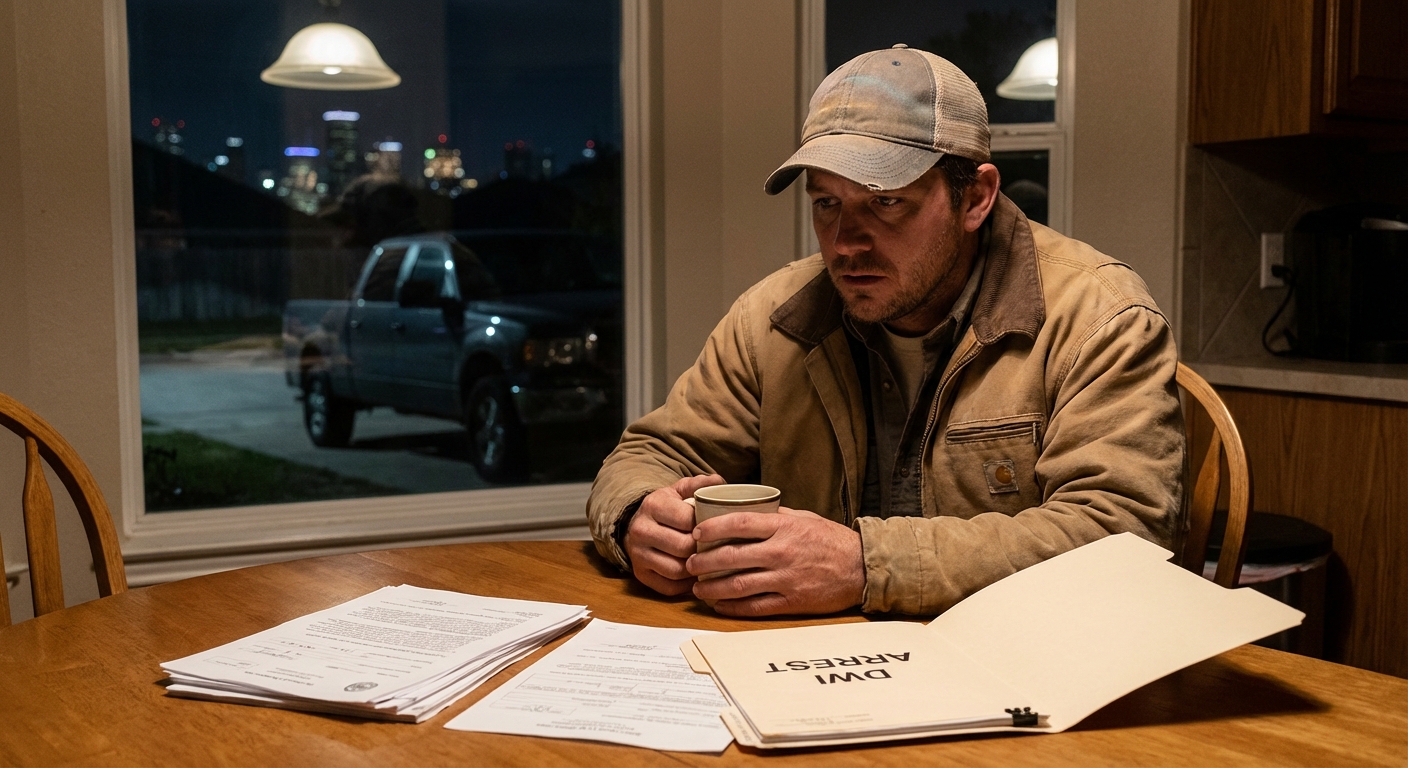
DIY Defense vs Professional Help: Do I Need a Lawyer for a DWI in Texas, or Is It a Mistake To Go It Alone?
In most real Texas DWI cases, representing yourself is a serious risk, so for anything beyond the simplest first offense, the safer answer to “do I need a lawyer for a DWI in Texas” is usually yes, especially if your license, job, or record are on the line. You are allowed to handle your own case, but Texas DWI law, strict deadlines, and local court practice make it very easy to miss something that affects your driver’s license, plea options, or long term criminal record.
If you are like Mike, a practical provider with a family and a steady job in construction, you probably care less about legal theory and more about two questions: “Can I keep driving so I can work” and “Is there a way to reduce the damage from this arrest.” This guide walks through the real differences between going it alone and working with a Texas DWI attorney, so you can decide what makes sense for your life, not just in the abstract.
1. The First Big Choice After a DWI Arrest: DIY vs Lawyer
Right after a DWI arrest in Houston or anywhere in Texas, you face two tracks at the same time: the criminal DWI charge in court and the separate Administrative License Revocation, or ALR, case with the Texas Department of Public Safety. Both tracks have deadlines and both can cost you your license and money if you wait too long or try to feel your way through the system without a plan.
On paper, the law lets you choose between representing yourself on a DWI case or having a lawyer. In reality, the system is not designed for people who are new to court. Prosecutors, judges, and police officers are used to the process and the rules of evidence. If you walk in alone, you are expected to follow those same rules even if you have never seen them before.
For a provider like you, that can mean lost work, repeated court dates, and pressure to accept the first plea offer just to get it over with, even if that offer is harsher than what might be negotiated with proper help.
2. The ALR 15 Day Deadline: Why Waiting Can Cost Your License
One of the most dangerous parts of doing a DWI case alone is the short deadline to fight your driver’s license suspension. In most Texas DWI arrests, you have only 15 days from the date you receive the notice of suspension to request an ALR hearing. If you miss that window, a suspension usually starts automatically.
If you are trying to protect your ability to drive to job sites or take your kids to school, that 15 day window matters more than anything else in the first few weeks. A simple checklist can help:
- Check the date on your temporary driving permit or suspension notice.
- Count 15 days, including weekends and holidays.
- Submit an ALR hearing request before the deadline passes.
- Keep copies or screenshots of your request for your records.
For step by step guidance on what to do first to protect your license (ALR hearing), you can review how Texas ALR hearings work, how they fit with the criminal case, and what a hearing can do for your driving privileges.
To actually file the request, the safest source is the Official DPS portal to request an ALR hearing, where you can see the current rules, forms, and deadlines directly from the state.
For a more detailed walk through of the license side and timing, including how long different suspensions can last and what happens if you miss the 15 day window, you can also read about step-by-step ALR hearing deadlines and license options.
If you represent yourself and do not realize this deadline exists, there is usually no “do over.” Even a strong criminal defense later cannot undo an administrative suspension that started because no one requested the hearing in time.
3. Texas DWI Basics in Plain Language
Before you decide whether to handle this alone, it helps to understand what the State must prove. In a standard first time Texas DWI, prosecutors are trying to show that you either:
- Had a blood alcohol concentration of 0.08 or higher, or
- Did not have normal use of your mental or physical faculties due to alcohol, drugs, or a combination.
Under Texas implied consent law, if you drive on Texas roads, you are considered to have agreed in advance to provide a breath or blood specimen when lawfully arrested for DWI, although you still have the right to refuse the test, which can trigger its own license consequences. If you want to see the formal legal language, Texas Transportation Code Chapter 724 is the Texas statute explaining implied consent and refusals.
For a first time DWI without certain aggravating factors, penalties can include fines up to $2,000, up to 180 days in jail, and potential license suspension. With a high blood alcohol concentration, a child in the car, or prior DWIs, the risk of higher fines, longer jail or prison time, and longer suspensions increases.
Those penalty ranges are the same whether you have a lawyer or not. The real difference is how much room you have to challenge the stop, the testing, and the way the case is charged, and whether you know how to use that room.
4. What Representing Yourself on a DWI Case Actually Looks Like
Many people imagine self representation as a single court appearance where they explain their side to a reasonable judge and walk away with a light outcome. In Texas DWI cases, it rarely works that way.
Here is what “going it alone” usually involves:
- Finding and filing the correct ALR hearing request in time.
- Attending an ALR hearing where a DPS lawyer may call the arresting officer and introduce police reports and test results.
- Attending multiple criminal court settings in a Harris County or nearby county court, sometimes early in the morning and sometimes resetting the case several times.
- Reviewing police video, breath or blood test records, and any field sobriety test scores.
- Identifying legal issues with the traffic stop, roadside tests, or chemical tests.
- Negotiating directly with a prosecutor who handles DWI cases all day, every day.
- Deciding whether to plead guilty, ask for a reduced charge, or set the case for trial.
- If there is a trial, picking a jury, making opening and closing statements, and cross examining officers and lab witnesses.
If you are a construction manager like Mike, that is a lot to add on top of long days, job deadlines, and family responsibilities. Courts often do not schedule around your shift work, and missed settings can lead to warrants and even more trouble.
One of the biggest practical problems with representing yourself on a DWI case is cross examination. You might know what really happened, but questioning an experienced officer or chemist in front of a judge or jury takes training and practice. Without that, important contradictions or weak points in the State’s case can stay hidden.
5. What a Texas DWI Lawyer Actually Does That You Cannot Easily Do Alone
Many practical providers worry about paying for a lawyer and then discovering that nothing was done beyond filling out a few forms. That fear is understandable. To make a good decision, it helps to know what an experienced DWI attorney can actually do that is hard to duplicate on your own.
In a typical Houston DWI, a focused defense lawyer may:
- File the ALR request and appear at the hearing to question the officer, often using that testimony later in the criminal case.
- Obtain all police reports, videos, breath or blood records, and lab documents.
- Review field sobriety test instructions and scoring to find errors or inconsistencies.
- Challenge whether the traffic stop or arrest was legal under Texas and federal law.
- Work with toxicology experts when blood testing is involved.
- Negotiate with prosecutors using legal defenses, evidentiary weaknesses, and your background to seek reduced charges or alternative resolutions.
- Advise you on long term impacts of different plea options, such as probation terms, surcharges, and record consequences.
For a detailed look at how specialist DWI lawyers challenge evidence and negotiate pleas, you can learn how issues with the stop, tests, or paperwork may affect the outcome.
You can also see how early counsel changes case outcomes and timelines, including how quick action right after an arrest can create more options later in court.
In short, the benefits of hiring a Texas DWI attorney are not just about having someone speak for you in court. They are about having someone who understands where the weak links in a DWI case tend to be, and how to use them to protect your license, your job, and your record as much as possible under the facts.
6. A Realistic Micro Story: Mike’s Two Paths
Imagine two versions of the same man, Mike, a 35 year old construction manager in Harris County. In both versions, he gets stopped late on a Friday, charged with DWI, and released the next morning with a stack of papers.
In the first version, Mike assumes it is a traffic type case and thinks he will just explain that he was tired, not drunk. He sets the papers aside, goes back to work, and misses the 15 day ALR deadline. By the time he finds out about it, his license is already suspended, he loses two weeks of work arranging rides and rescheduling job site visits, and he feels pressure to accept the first plea offer just so the court dates stop getting in the way of his income.
In the second version, Mike spends a few hours within the first week understanding his deadlines and options. An experienced DWI lawyer requests the ALR hearing, gets the police reports, and reviews the video. At the ALR hearing, the officer admits that the traffic stop was based on a mistake, not an actual traffic offense. That testimony becomes part of the record. Later, this issue is used in plea negotiations, and the outcome is more manageable for Mike’s license and job.
Both versions are realistic. The difference is not that one person is lucky and the other is not. The difference is whether someone understands how to use the process and timelines that Texas law already provides.
7. Navigating ALR Hearings and Court Settings Without Losing Your Job
For most working adults, the biggest stress is not only the risk of jail, but the risk of missing enough work that your position is at risk. In Houston area courts, DWI cases can last several months. That often means multiple settings for announcements, discovery, plea discussions, or pretrial motions.
If you handle the case yourself, you are responsible for every court date in both the criminal case and the ALR case. That can mean early morning appearances downtown, traffic, parking, and time away from job sites or the office, all while trying to understand what each setting means.
A Texas DWI attorney can generally appear with you or for you, depending on the setting and the court’s rules. More importantly, a lawyer can often consolidate issues so that you are not repeatedly taking off work just to find out nothing new is happening. That kind of scheduling help is hard to see on paper but matters a lot when you are balancing work, overtime, and family needs.
When evaluating DIY defense vs professional help, ask yourself this simple question: “If I add several court dates and a license hearing to my month, can I do that without putting my job at risk or missing income my family depends on.” If the honest answer is no, then trying to handle every step alone may be a bigger risk than it looks at first.
8. Plea Negotiations in DWI Prosecutions: Why It Is Not Just About Saying “Guilty” or “Not Guilty”
From the outside, plea negotiations in DWI prosecutions can look simple: accept the offer or go to trial. Inside the courtroom, that process can be more like a series of small decisions. Each one affects your record, your license, and sometimes your immigration or professional status.
Common questions that come up in plea negotiations include:
- Is there a way to reduce the DWI to a different charge based on the evidence.
- Are there alternative sentencing options that reduce time in custody.
- How will different plea options affect your driver’s license suspension length.
- What are the long term consequences for background checks or professional licensing.
When you negotiate on your own, you may only see the offer in front of you, not the full range of options that someone who handles DWI cases regularly knows to ask for, or the pressure points that can move an offer.
An experienced lawyer can frame your history, work responsibilities, and the strength or weakness of the evidence, and can often time negotiations to when key discovery has been reviewed. That timing can make a difference between accepting the first offer and achieving a better structured outcome that respects your need to keep working and supporting your family.
9. Data and Strategy Notes for the Analytical Planner (Daniel/Ryan)
Analytical Planner (Daniel/Ryan): If you tend to make decisions based on numbers and clear strategies, it helps to think of a Texas DWI case in stages. Each stage has its own “win rates” and realistic goals.
- ALR stage: The goal is often to avoid or shorten a license suspension, or at least gain testimony that can be useful later. Even when the license is ultimately suspended, a well handled ALR hearing can strengthen the criminal defense side.
- Pretrial stage: Success can mean getting key evidence suppressed, narrowing the charges, or securing a more favorable plea offer based on identified weaknesses.
- Trial stage: This is where full acquittals or not guilty verdicts happen, but it is also where the risk of harsher penalties appears. The decision to go to trial is usually based on a careful review of the evidence, your personal risk tolerance, and detailed advice from counsel.
Look for a Texas DWI attorney who can clearly explain their strategy at each stage, not just quote dismissal percentages without context. You want to understand how they approach navigating ALR hearings and court settings, what evidence they prioritize, and how they assess plea options versus trial. That kind of structured thinking tends to protect your long term interests better than a purely improvisational approach, whether you are the one doing it or you have counsel.
10. Confidentiality and Senior Attorney Involvement for High Stakes Readers
High-stakes Professional (Sophia/Jason) and Elite Risk-Manager (Marcus/Chris): If you are in a high visibility role, own a business, or have a public reputation to protect, the idea of your DWI case becoming public gossip can feel as threatening as the case itself. Texas law protects attorney client communications, and a focused DWI practice should be used to handling sensitive matters discreetly.
In higher stakes situations, it is reasonable to ask upfront who will actually handle your file, who will appear in court with you, and how information about your case will be stored and shared. Many people in your position prefer to know that a senior attorney is actively involved in case strategy and key settings, rather than having everything handled by staff. That expectation is not about ego, it is about risk management when your career or public role depends on how this situation is handled.
If you want an additional neutral view of a firm’s background, you can review a firm background and credential listing for additional credibility on a legal directory, then combine that with your own conversations and questions.
11. Special Note for Nurses and Other Licensed Professionals
Career-Careful Nurse (Elena): If you hold a Texas professional license, like a nursing license or another health care credential, a DWI case can have a second layer of risk. Even a misdemeanor DWI can trigger reporting requirements, board investigations, or questions about fitness to practice, especially if there are multiple alcohol related incidents.
For nurses, the Texas Board of Nursing can review criminal charges as part of its oversight on patient safety. That does not mean every DWI leads to a license loss, but it does mean that how the case is resolved, and how it is explained in any later licensing paperwork, can matter just as much as the immediate court fines or probation terms.
Because each licensing board has its own rules, a lawyer who understands both Texas DWI law and professional license issues can help you think ahead. That can include planning for background checks, renewal forms, and any required disclosures so that a single mistake does not grow into a career long setback.
12. A Wake Up Section for the Casual Risk-Taker
Casual Risk-Taker (Tyler/Kevin): It is easy to think, “Everyone has one DWI, it is no big deal,” especially in a big city like Houston where you may know people who seem to have bounced back. The numbers tell a different story. Between fines, court costs, probation fees, insurance increases, and possible ignition interlock or alcohol education costs, a single DWI in Texas can climb into the thousands of dollars over time, even before you count missed work or lost job opportunities.
For many people, the most painful part is not the fine, but the way a DWI on a record shows up every time a new employer runs a background check. That can cut you off from better paying jobs just when you are trying to move up. Treat this incident as the serious event it is, not as something to shrug off or ignore.
13. Common Misconceptions About DIY DWI Defense in Texas
As you think through do I need a lawyer for a DWI in Texas, it helps to clear up a few myths that cause people to underestimate the situation.
- “First DWIs are always dismissed if you are polite.” In practice, most first time DWIs in Texas are not automatically dismissed. Outcomes depend on the evidence, legal issues, and how the case is handled from day one.
- “If I blew under 0.08, the case will go away.” Texas law allows prosecutors to move forward based on loss of normal use of mental or physical faculties, even without a breath or blood test over the limit.
- “The judge will go easy on me if I explain I need to work.” Judges are bound by law and by what is in front of them in the file. They cannot give you legal advice, and they cannot act as your advocate even if they sympathize.
- “If I wait, the case might get forgotten.” DWI cases are tracked closely, and delays can actually reduce your options, especially if evidence is not requested or preserved early.
A more accurate way to view the situation is this: the system will move forward with or without you. The question is whether you want a guide who speaks the system’s language and knows its timelines, or whether you want to learn that language while your own case is at stake.
14. Practical Checkpoints You Can Act On Right Now
Even before you decide whether to represent yourself or seek counsel, there are practical steps you can take to protect your future:
- Protect your license: Confirm whether the ALR 15 day deadline applies in your case and, if so, submit the hearing request as soon as possible using the DPS portal or through a lawyer.
- Gather documents: Keep all paperwork from the arrest, including any bond conditions, temporary driving permit, and court date notices, in one folder.
- Write down details: As soon as you can, write out your memory of the stop, the questions asked, the field sobriety tests, and anything unusual about the breath or blood test process. These details fade quickly.
- Check your work schedule: Look ahead at your court dates and how they match your job responsibilities. If showing up alone will cause serious conflict with work, factor that into your DIY vs attorney decision.
- List your goals: For example, “Keep my license if possible,” “Avoid jail if I can,” “Limit damage to my record.” Clear goals make it easier to judge any plea offer or strategy.
Thinking through these checkpoints will give you a more solid ground whether you continue on your own or decide to have a Texas DWI lawyer take over certain parts of the process.
15. Frequently Asked Questions About Do I Need a Lawyer for a DWI in Texas
Can I legally represent myself in a Houston DWI case in Texas?
Yes, Texas law allows you to represent yourself in a DWI case, including in Houston and surrounding counties. However, you are held to the same rules of evidence and procedure as an attorney, and judges and prosecutors cannot give you legal advice or fix mistakes such as missed deadlines.
What is the 15 day ALR deadline after a Texas DWI arrest?
In most Texas DWI arrests, you have 15 days from the date you receive notice of suspension to request an Administrative License Revocation hearing. If you do not request the hearing in time, your driver’s license is usually suspended automatically, which can affect your ability to drive for work, family, and daily errands.
Is it ever reasonable to handle a first time DWI without a lawyer?
Some people with very straightforward first time cases and no driving or professional license concerns choose to handle matters on their own. Even then, it is wise to at least understand the potential penalties, license consequences, and long term record impact before entering a plea so that you are not surprised later by insurance increases or background check issues.
How can a Texas DWI attorney change the outcome compared to DIY defense?
A Texas DWI attorney can request and use evidence you might not know how to obtain, challenge the legality of the stop or arrest, and negotiate plea terms that account for both the strength of the State’s case and your personal situation. In many cases, this improves your chances of limiting license suspension, reducing penalties, or finding alternative resolutions that protect your job and family stability.
How long will a DWI stay on my record in Texas if I plead guilty?
In Texas, a DWI conviction can stay on your criminal record for many years and, in many situations, for life, which means it can show up on future background checks. That is one reason it is important to understand every option for reducing, contesting, or restructuring the charge before entering a guilty plea in a Houston area court.
16. Why Acting Early Matters More Than Anything
By now, you have seen that the biggest risk in a Texas DWI case is not just whether you end up paying a fine. It is how the case affects your license, your job, and your record over time. The earlier you act, the more choices you tend to have.
For someone in your position, with a family that counts on your paycheck and a supervisor that counts on you to show up on time, waiting until the week before court to think about your options is simply too late. The ALR deadline, evidence gathering, and early plea discussions all happen before most people feel ready.
Whether you ultimately choose to keep representing yourself or decide that professional help is worth it in your situation, take the next step now, not later: confirm your deadlines, collect your paperwork, and start getting clear, Texas specific information. That way, you are not guessing about your future, you are making informed choices about it.
To hear a short, practical explanation from a Houston DWI attorney about the exact steps that often follow a DWI arrest, including ALR timing, evidence review, and plea strategies, you can watch the video below. It offers a three to five minute walkthrough of common mistakes to avoid and how focused legal work can help protect your license, job, and finances.
Butler Law Firm - The Houston DWI Lawyer
11500 Northwest Fwy #400, Houston, TX 77092
https://www.thehoustondwilawyer.com/
+1 713-236-8744
RGFH+6F Central Northwest, Houston, TX
View on Google Maps


No comments:
Post a Comment