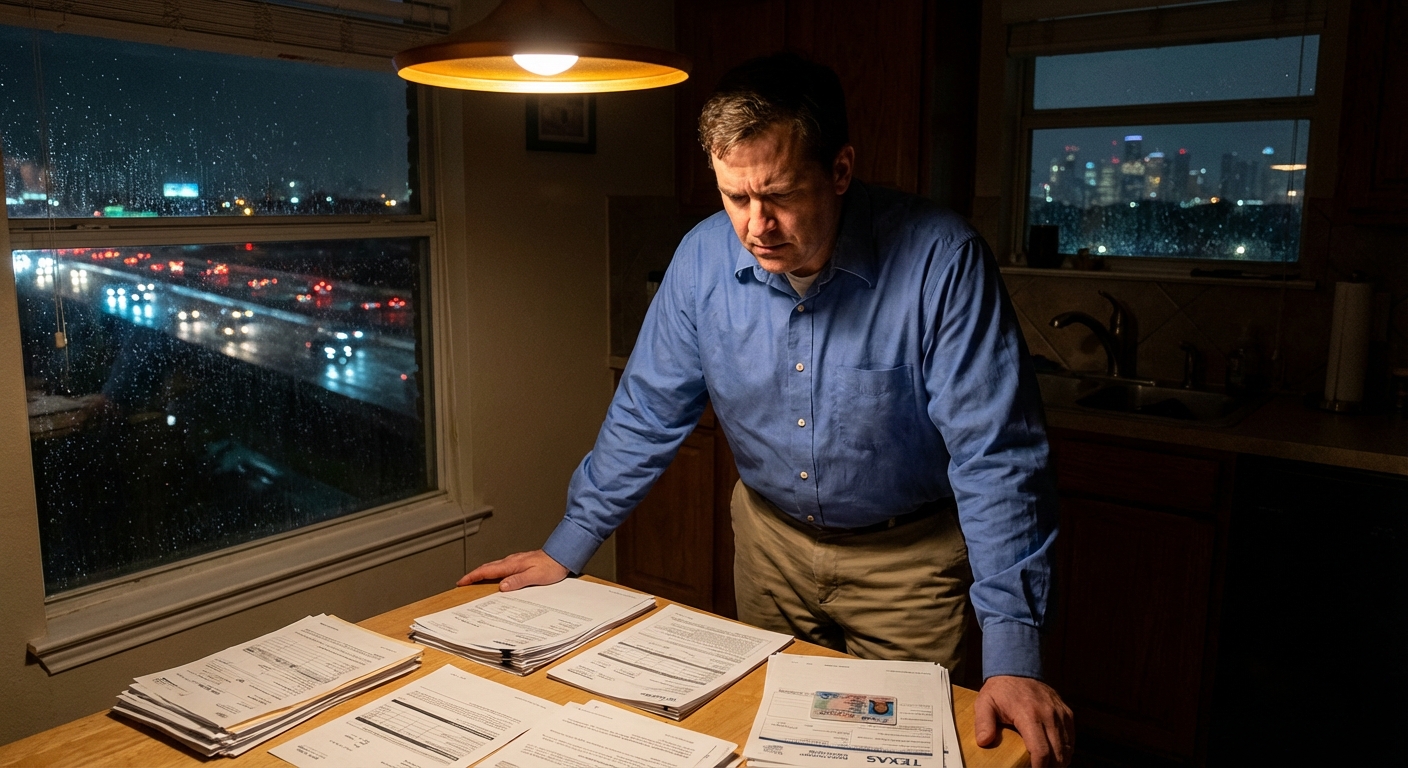
Texas DWI Aftermath Checklist: How to Protect Your License, Job, and Family After an Arrest
If you were just arrested for a Texas DWI, you usually have only 15 days from the date of your arrest to fight the automatic license suspension and start protecting your job, your record, and your family. In that short window, what you do and what you say can make a huge difference in how your case turns out, especially in Houston and Harris County where DWI cases move fast.
This guide walks you through the first decisions you need to make after a DWI arrest, including license deadlines, court dates, and what to avoid saying or doing. It is written for someone like you, a working provider who drives for work, has a family counting on them, and feels like one mistake might wreck everything.
Quick DWI Aftermath Checklist: First 24–72 Hours After a Texas Arrest
Right now you may feel shocked, embarrassed, and unsure what happens next. You are not alone. Many people in Houston who have never been in trouble before get caught off guard by how fast DWI deadlines hit them.
Use this simple checklist to steady things and regain some control.
For a deeper breakdown of these steps, you can also review an immediate ALR and job‑protection checklist after arrest that expands on license, job, and court issues.
1. Check the date on your DIC-25 or temporary license
When you are arrested for DWI, Texas Department of Public Safety (DPS) usually serves you with a “Notice of Suspension/Temporary Driving Permit,” often called a DIC-25 form. This paper is your temporary license and also your warning about the coming suspension.
- Look for the arrest date on the notice.
- Count 15 days from the date of service of that notice.
- That 15th day is your usual deadline to request an Administrative License Revocation (ALR) hearing.
If you miss this deadline, your license is typically suspended automatically, even if your criminal DWI case is still pending or eventually dismissed.
2. Request your ALR hearing before the suspension kicks in
The ALR process is separate from your criminal DWI case. It is a civil, administrative action by DPS to suspend your license because of a breath or blood test over the legal limit or a refusal.
To protect your ability to drive to work, it is critical to understand how to request an ALR hearing and keep your license within that 15 day window. You can also use the Official DPS portal to request an ALR hearing if you want to see the state’s instructions and options directly from DPS.
If you are a construction manager or trades supervisor in Houston, losing your license can make it impossible to get to job sites or pick up your kids. Preserving your driving privileges is often step one in protecting your income and family routine.
3. Do not talk about the facts of your case with anyone but your lawyer
It is natural to want to explain what happened to friends, coworkers, or even your boss. The problem is that texts, emails, social media posts, and casual comments can all turn into evidence later.
- Do not post about the arrest on social media.
- Do not text people details about how much you had to drink or what you told the officer.
- Do not try to “clear things up” with police or the prosecutor without legal guidance.
Anything you say can be taken out of context and used against you. Staying quiet about the details, and only discussing them in private with a qualified Texas DWI lawyer, is one of the few things you control right now.
4. Gather documents and notes while events are still fresh
In the first day or two after a DWI arrest, your memory is usually sharp. That makes this a good time to write down what happened, while details are still clear.
- Collect your citation, bond paperwork, DIC-25, and any tow or impound documents.
- Write down where you were, what you drank, when you ate, and the exact timeline up to the traffic stop.
- Note anything unusual about the stop, the roadside tests, or the breath or blood draw.
These notes are for you and your legal team, not for friends or social media. They can help uncover issues with the stop, testing, or officer’s process that might later support a defense.
5. Learn what you should and should not do at future traffic stops
If you have never been pulled over for suspicion of DWI before, you may not have known your rights or what the law required. To be better prepared in the future, review detailed guidance on what to do at the traffic stop and protect your rights so you understand the difference between cooperating with lawful orders and giving up important protections.
6. Map out your court dates and work schedule
Missing court can lead to a warrant, bond forfeiture, and even more trouble with your job. As soon as your first court date is set in Harris County or a nearby county, put it on a calendar.
- Ask a trusted person to help you track dates and reminders.
- Think ahead about childcare, transportation, and time off from work.
- If you are worried about time away from job sites, start planning alternative coverage now.
How a Texas DWI Puts Your License and Job at Risk
Your biggest fear might be simple: “If I lose my license, I lose my job, and then I cannot support my family.” That fear is rational. Texas DWI law hits driving privileges hard, especially if there is a breath or blood test over the legal limit or a refusal to test.
Administrative License Revocation (ALR) vs criminal DWI case
Think of your DWI situation as two tracks.
- Track 1: ALR license case. DPS tries to suspend your license, often for 90 days to 2 years depending on the situation and prior history.
- Track 2: Criminal DWI case. The county, such as Harris County, prosecutes you in criminal court. Penalties can include fines, probation, classes, ignition interlock, or even jail time.
These tracks are separate. You can win one and lose the other. That is why the 15 day ALR hearing request is so important, even if you are also thinking about how to handle the criminal charge.
Typical license suspension ranges
- First time DWI with test result at or above 0.08: license suspension can be around 90 days.
- Refusal to give a breath or blood sample: suspension can be closer to 180 days.
- Prior alcohol related contacts can lead to suspensions measured in years.
These are general ranges, not guarantees. The exact length depends on your record, the facts, and how the ALR process plays out.
How this affects your work life in Houston
If you supervise crews, drive between sites, or haul tools and materials, a suspended license can ripple through every part of your job. You could face:
- Difficulty getting to early morning site meetings.
- Limited ability to visit multiple locations in one day.
- Increased risk that your employer learns about the DWI from missed time or background checks.
For some construction managers, an occupational or restricted license may help fill the gap so they can drive to work, school, and essential duties during a suspension period. Whether that is possible depends on the outcome of the ALR process and any prior suspensions.
Understanding Texas DWI Law, Testing, and “Implied Consent”
To make smart choices after a DWI arrest, it helps to understand the basic rules behind traffic stops, testing, and your rights. This part is especially important if you felt pressured into roadside tests or a breath or blood sample and are now wondering what happens with those results.
What “implied consent” means in Texas
In Texas, by driving on public roads you are generally considered to have given “implied consent” to a chemical test of your breath or blood if you are lawfully arrested for DWI. The law that sets this out is the Texas Transportation Code Chapter 724, often called the Texas implied-consent statute on chemical testing.
Refusing the test usually leads to a longer license suspension than if you had taken it, and officers can sometimes seek a warrant for a blood draw anyway. That does not mean your case is hopeless, but it does shape the strategy and options you will need to look at.
Field sobriety tests vs chemical tests
It helps to separate two different things the officer may have used.
- Field sobriety tests. These are roadside balancing and eye movement tests. They are used to give the officer probable cause to arrest. Their accuracy can be affected by fatigue, injuries, weather, and instructions.
- Chemical tests. These are breath or blood tests that aim to measure your blood alcohol concentration (BAC). In Texas the standard adult legal limit is 0.08.
BAC near or slightly above 0.08 is not an automatic conviction. Lab errors, machine issues, medical conditions, or timing of the test can all matter. The key is getting a clear review of the evidence rather than assuming the number is unbeatable.
Common misconception: “I blew over the limit, so nothing can be done.”
Many Houston drivers walk out of the station convinced that because they tested over 0.08 there is no way to improve the outcome. That is not accurate. Test results can raise questions about the stop, the machine, the sample handling, and the timing. In some cases, results are kept out of evidence altogether or given less weight.
If you accept guilt without understanding the evidence, you might take on avoidable penalties that affect your license, criminal record, and job. Getting informed first is a better move for a provider who has others relying on them.
Micro Story: A Houston Construction Manager’s First 30 Days After DWI
Consider a Houston area construction manager in his mid 30s. He is arrested for DWI on the way home from a job site celebration. He blows slightly over the limit at the station. By Monday morning he is terrified that his company will fire him and that he will not be able to drive to multiple project sites.
Here is how his first 30 days might look if he takes organized steps.
- Day 1–3. He reviews his paperwork, notes the 15 day ALR deadline, and submits an ALR hearing request. He stops talking about the case with coworkers. He writes a timeline of the night for future reference.
- Day 4–10. He attends his first court setting in Harris County, where only basic issues are addressed. He adjusts his work schedule to make sure he can attend future dates without surprise absences.
- Day 11–30. His ALR hearing date is set. He looks into the possibility of an occupational license if a suspension occurs. He reads more on protecting your employment and licensing after a DWI arrest so he can decide if and when to notify his employer.
By the end of the month, he still faces a serious situation, but he has a plan for driving, work, and court. Instead of reacting in panic, he is taking specific, informed steps.
Provider-in-Panic: How to Balance Family, Job, and DWI Deadlines
If you are the main provider in your household, a DWI arrest can feel like a threat to everything at once. You may be replaying the traffic stop in your head while also worrying how you will get the kids to school or make morning safety meetings on time.
Sorting what is urgent from what is simply stressful
Not every problem needs to be solved in the first 48 hours. Focus first on what is truly urgent.
- ALR hearing request before the deadline.
- First court date and bond conditions.
- Transportation plan for work and family.
Issues like background checks, insurance premium changes, and long term career planning are important, but they usually unfold over weeks or months, not days. Taking care of the hard deadlines gives you space to handle the rest more calmly.
Protecting your privacy with your employer and family
In many jobs, especially at the construction management level, there is no automatic rule that your employer is notified of a first time DWI arrest. Employers often learn about it because of missed work, gossip, or voluntary disclosure.
Think carefully before you share details at work. If your license is at risk and your job involves driving company vehicles, you may eventually need to address it, but it usually makes sense to understand your legal posture first.
Analytical Strategist: Data and Timelines for Texas DWI Cases
Analytical Strategist: If you like numbers, timelines, and clear expectations, you probably want to know how often DWI cases are reduced or resolved without jail and how long the process tends to take.
Typical Houston area DWI timeline
- Day 0–15. Arrest, ALR notice, ALR hearing request deadline.
- First 1–2 months. Initial court settings, discovery (police reports, videos, test records).
- 3–6 months. Most first time misdemeanor DWI cases in busy counties like Harris County often fall somewhere in this range for plea negotiations or hearing settings, though some last longer.
- 6–12+ months. Contested hearings, motions to suppress, or trials can push cases further out.
Outcomes vary widely. Some cases are dismissed or reduced to lesser charges such as obstruction of a highway. Others result in probation with conditions like classes and ignition interlock. A smaller number result in jail sentences, especially with prior DWIs or accidents.
If you want an interactive way to understand DWI timelines and common next steps, you can also experiment with an interactive Q&A for quick DWI timeline and next steps that explains these stages in plain language.
High-Stakes Executive: Discretion and Reputation Protection
High-Stakes Executive: If your main concern is protecting your public image and professional reputation, you are looking for discretion, limited public exposure, and the least possible disruption to your schedule.
In Houston, many professionals quietly resolve first time DWI cases through negotiated outcomes, conditional dismissals, or other options that reduce long term damage while keeping court appearances and publicity to a minimum. Private, low profile handling is possible in many cases as long as you stay ahead of deadlines and avoid drawing attention through public statements or social media.
Elite Privacy-Seeker: Confidential, Direct Handling
Elite Privacy-Seeker: If you care most about privacy, you likely want direct contact with the lead attorney, minimal staff exposure to your details, and careful control of who sees your information.
Texas ethics rules allow confidential communications with counsel, and DWI cases are often handled in a way that limits unnecessary sharing of your personal facts. You can ask early in any consultation how your information will be protected and who will have access to your file so you feel comfortable moving forward.
Uninformed Young Adult: Real Costs of a Texas DWI
Uninformed Young Adult: If this is your first time in any legal trouble, it may feel like “just a ticket.” It is not. A Texas DWI can lead to hundreds or thousands of dollars in fines and fees, license suspension, higher insurance rates that last for years, and even a criminal record that does not simply disappear when you turn 21.
Also, do not ignore the 15 day ALR deadline. If you do nothing after a DWI arrest, your license will normally be suspended by default even before your criminal court case is resolved.
How a Texas DWI Can Affect Your Career and Professional License
For many working adults in Houston and the surrounding counties, the criminal case is only part of the concern. Professional licenses, security clearances, and company policies can all interact with a DWI in ways that are not obvious at first.
Employment background checks and company policies
Employers in construction, oil and gas, and transportation often run periodic background checks, especially if your position involves safety responsibilities or company vehicles. A DWI conviction on your record can trigger internal reviews or restrictions, and in some cases it can limit promotion opportunities.
Different employers handle this differently. Some focus on whether it is a first offense and how long ago it occurred. Others have strict bright line rules. Before volunteering information at work, it is smart to check your employee handbook and consider the timing of any disclosure.
Professional and trade licenses
Some Texas professional boards require reporting of criminal convictions, and a few require disclosure of certain arrests. This can include medical professionals, engineers, and other licensed roles. If your position requires a state license, you may need to map out both your court case and any reporting duties to your board.
For more ideas on planning for this, you can read about protecting your employment and licensing after a DWI arrest and use that information as a starting point for conversations with your HR department or licensing board if needed.
Insurance, company vehicles, and job sites
Insurance companies sometimes raise premiums after a DWI or require special endorsements. If your job includes driving a company truck or operating vehicles on job sites, your employer’s insurer may set conditions on who can be listed as an approved driver.
In practice, some Houston employers reassign driving duties temporarily or require that employees with a recent DWI conviction use their own vehicles, with limits. Planning for this possibility can reduce surprises later.
Common Defenses and Options in Texas DWI Cases
No article can cover every DWI defense, but it is useful to understand the types of issues that come up again and again in Texas courts, including Harris County.
Problems with the traffic stop
Police need reasonable suspicion to stop a vehicle. If the officer did not have a valid reason to pull you over, it may be possible to challenge the stop and seek to suppress evidence gathered afterward. Examples include vague or inconsistent explanations for the stop or video that does not match the stated reason.
Issues with field sobriety tests
Standardized field sobriety tests have specific instructions and scoring methods. If they are not followed, the results can be less reliable. Problems such as bad lighting, uneven pavement, confusing instructions, or pre existing injuries can all affect performance in ways that look like intoxication but are not.
Breath or blood test challenges
Breath machines must be properly maintained and calibrated. Blood samples must be collected, stored, and analyzed according to protocol. Gaps in documentation, lab errors, or contamination can call results into question. In some cases, rising blood alcohol levels mean your BAC was lower while you were actually driving than it was at the time of the test.
Negotiated outcomes and alternative resolutions
Even when dismissal is not realistic, there can be options to reduce the impact of a DWI case. These may include reductions to lesser charges, pretrial interventions, or negotiated probation terms with limited jail time. The specifics depend on your criminal history, the facts, and local policies in counties like Harris, Fort Bend, or Montgomery.
What You Should Know About Future Traffic Stops After a DWI
Once you have been through a DWI arrest, you are unlikely to forget it. Still, it is important to understand your rights and obligations if you are stopped again in the future, even for something simple like speeding.
Basic do and do not guidelines
- Do pull over safely, keep your hands visible, and follow lawful instructions.
- Do provide your license, registration, and proof of insurance when asked.
- Do not argue on the roadside about whether the stop is legal.
- Do not guess at how much you drank or try to “talk your way out” by oversharing.
- Do be polite and calm, even if you feel nervous.
Knowing your rights ahead of time can keep you from making statements or consent decisions that hurt you later. The detailed guide on what to do at the traffic stop and protect your rights is useful even if your recent DWI is the first and last time you ever face that situation.
Top FAQs About Texas DWI Aftermath and Protecting Your License
How long does a DWI stay on my record in Texas?
In Texas, a DWI conviction often stays on your criminal record permanently unless it is eligible for a very limited form of relief. That means background checks years from now can still see it. Some non conviction outcomes may qualify for record sealing or orders of nondisclosure, but strict rules apply and depend on the final result in your case.
Is a first time DWI in Houston always a felony?
No, most first time DWI cases in Houston and Harris County are charged as misdemeanors, not felonies. A DWI can become a felony if it involves certain factors such as serious injury, a child passenger, or multiple prior convictions. The difference between misdemeanor and felony DWI is significant in terms of potential penalties and long term consequences.
Can I still drive to work after my Texas DWI arrest?
Immediately after arrest, you can usually keep driving on your valid Texas license or temporary permit until your suspension date, unless a court orders otherwise. If a suspension does go into effect, you may be able to seek an occupational or restricted license that allows driving to work, school, and essential duties. Acting before the 15 day ALR deadline and planning ahead usually gives you more options.
Will my employer in Houston automatically find out about my DWI?
There is no single rule that forces every employer to receive notice of a DWI arrest. Employers are more likely to learn about it if you miss work for court, if they run periodic background checks, or if your position involves special driving or licensing requirements. Reviewing your company policies and thinking through timing before you disclose anything can help you manage the impact.
What happens if I ignore my court dates or license deadlines?
If you skip court, the judge can issue a warrant and your bond may be forfeited, which only increases your problems. If you miss the ALR hearing request deadline, your license is usually suspended automatically for a set period. Ignoring deadlines almost always makes things worse, which is why organizing your paperwork and calendar early is such a key step.
Why Acting Early After a Texas DWI Matters So Much
The hours and days after a DWI arrest in Texas feel overwhelming, especially if you are responsible for a family and crews who rely on you to show up on time. It is tempting to shut down, try to forget about it, and hope the court will “go easy” because you have a clean record or a steady job.
In reality, ignoring deadlines can cost you your license, limit your defense options, and make the situation much harder to repair. Taking a few focused steps now, such as requesting your ALR hearing, preserving evidence, and organizing your work and family schedule around court dates, puts you in a much better position to protect your driving ability and your income. When you are ready, talking through your specific facts with a qualified Texas DWI lawyer can help you turn that basic plan into a strategy tailored to your life.
For a short, plain language walkthrough of what to do right after a Texas DWI arrest, including license and court deadlines, you can watch this video from Jim Butler that focuses on protecting your case and your driving privileges.
Butler Law Firm - The Houston DWI Lawyer
11500 Northwest Fwy #400, Houston, TX 77092
https://www.thehoustondwilawyer.com/
+1 713-236-8744
RGFH+6F Central Northwest, Houston, TX
View on Google Maps


No comments:
Post a Comment