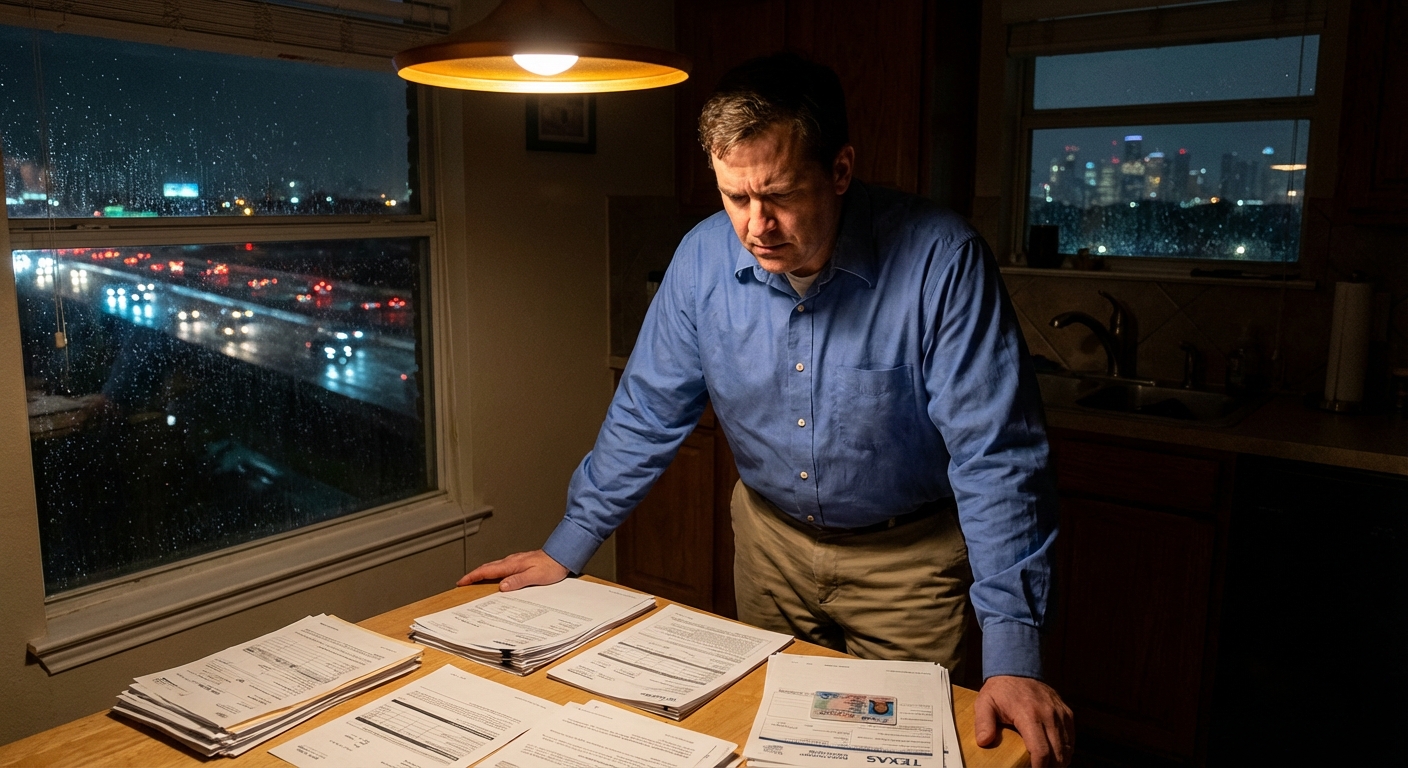
Texas DWI First 72 Hours: 15‑Day ALR Deadline And How To Protect Your License And Job After A Houston Arrest
If you were just arrested for DWI in Texas, you have only 15 days from the date of your arrest to act or your driver’s license can be automatically suspended, so your first priority is to request an ALR hearing and start protecting your license, job, and family stability right away. In those first hours it is normal to feel overwhelmed, but a clear step by step plan can keep you driving while your DWI case is fought in court and can reduce long term damage to your record and finances.
This guide is written for someone like you, a hard working provider in Houston or nearby counties who has never been through this before and needs plain explanations, not legal jargon. We will walk through what the 15 day ALR deadline really means, exactly what to do in the first 72 hours, how the license case and the criminal case are different, and what typical timelines and outcomes look like in Texas DWI cases.
Step One: Understand The 15 Day ALR Deadline Before Your License Is Automatically Suspended
After a Texas DWI arrest, the state starts a separate administrative case against your driver’s license called the Administrative License Revocation, or ALR, process. If you do nothing, your license can be automatically suspended 40 days after your arrest, but you only have 15 days to request a hearing to fight that suspension.
In Houston and across Harris County, this ALR process matters just as much as the criminal case if you rely on your truck or car to get to construction sites, the office, or your kids’ school. Losing your license can mean losing your job, missing overtime, and putting strain on your family.
To protect your license, you or your attorney must send a timely request for an ALR hearing. You can learn more about how to request an ALR hearing and protect your license and why the 15 day deadline is so strict.
For a simple official reference, the Texas Department of Public Safety provides an Official DPS portal to request an ALR hearing where requests can be submitted online. This is an administrative step, separate from the criminal court, that helps determine whether and how long your license might be suspended.
If you are the primary provider in your home, this deadline is not something to “wait and see” about. Missing it means DPS can suspend your license with no opportunity to cross examine the officer or challenge the reasons for the stop, arrest, or test results at that stage.
For a more detailed walk through of the ALR process from a Houston focused perspective, you can also review immediate 15‑day ALR steps to save your license so you understand the clock that is already running.
First 72 Hours After A Texas DWI Arrest: A Simple Action Plan
The first 72 hours after your DWI arrest are when you can make the biggest impact on your case. Here is a practical checklist tailored for someone working full time, managing a family schedule, and trying to protect income and driving privileges.
Within The First 24 Hours
- Find and organize your paperwork. Gather your temporary driving permit, bond paperwork, towing receipt, and any citation or court date information. Keep them in one folder so nothing is lost.
- Write down what happened. While it is still fresh, write a timeline of your day, where you were coming from, what you ate and drank, when you were stopped, and what the officer said and did. Small details can become important later.
- Check your court date and bond conditions. Make sure you know when and where to show up. Missing court can lead to a warrant and make a bad situation worse.
If you are a construction project manager or skilled trades worker, missing even one day on site can throw off a schedule or upset a supervisor. Getting organized early lets you plan around court and license issues so your work disruption stays as small as possible.
Within 48 Hours
- Address the ALR deadline. Do not wait. Either submit an ALR hearing request or talk with a Texas DWI lawyer about handling it as part of your representation.
- Ask your employer about transportation options if needed. Without giving details you are not comfortable sharing, you can start thinking through backup travel options in case your license is later restricted.
- Review basic Texas DWI rules and penalties. Understanding the basics of what to do after a first‑time DWI arrest in Texas can calm some of the fear and help you make better decisions.
Within 72 Hours
- Consult with a qualified Texas DWI lawyer. Use this meeting to review the police report, discuss ALR strategy, and map out what happens over the next 30, 60, and 90 days.
- Plan for court dates and possible license changes. Coordinate child care, work schedules, and transportation so your family routines and job stay as stable as possible.
- Start a simple case file. Keep copies of everything you receive from the court, DPS, and your attorney together so you always know where things stand.
If you like structure, you may also find it useful to follow a more detailed first 72‑hour action plan to protect driving privileges that breaks these items down into even smaller, manageable steps.
How The ALR License Case Is Different From Your Criminal DWI Case
One of the most confusing parts for people after a DWI arrest in Houston is that they suddenly face two related but separate cases. The first is the ALR administrative case against your driver’s license. The second is the criminal DWI charge in a Harris County or nearby county court.
The ALR case is handled through the Texas Department of Public Safety and the State Office of Administrative Hearings. The only question there is whether DPS can suspend your license and for how long. The rules of evidence are a bit looser than in criminal court, and the burden of proof is lower than “beyond a reasonable doubt.”
The criminal DWI case is handled in county criminal court. It decides whether you are convicted of DWI, placed on probation, or have your case dismissed or reduced. This is where jail time, fines, probation conditions, and criminal record consequences are decided.
For someone like you who must be on the road early for work, both tracks matter. You want to protect your license in the short term through ALR, and you also want to work toward the best possible outcome in criminal court so your long term record and career are protected.
What A First Time Texas DWI Charge Can Mean For Your Job, License, And Wallet
Texas takes DWI seriously, even on a first offense. In general, a first time DWI without certain aggravating factors is a Class B misdemeanor, with potential penalties that can include up to 180 days in county jail, fines up to $2,000, court costs, and a driver’s license suspension of 90 to 365 days if DPS wins the ALR case.
On top of that, Texas adds annual “surcharges” through state fines for several years after conviction. You may also face higher insurance rates, ignition interlock device costs, probation fees, and alcohol education classes.
For a provider in panic, the real question is how this affects your ability to keep food on the table. A license suspension can mean turning down jobs that require travel to scattered job sites. A DWI on your record can raise concerns with employers that run background checks, especially for positions that involve company vehicles or safety sensitive duties.
One common misconception is that a first DWI will always be dismissed if you have “a clean record” and a steady job. In reality, Texas prosecutors still file and pursue these cases, especially in busy counties like Harris, Montgomery, and Fort Bend. A clean background can help in negotiations, but dismissal is not automatic and depends heavily on the facts and legal issues in your specific case.
How Breath And Blood Tests, Refusal, And Implied Consent Affect Your License
Texas has an “implied consent” law that impacts what happens when you agree to or refuse a breath or blood test after a DWI arrest. In simple terms, by driving on Texas roads you are considered to have given consent to chemical testing if you are lawfully arrested for DWI, though you can still refuse. That refusal, however, triggers its own set of license consequences.
Under this law, refusing a breath or blood test can lead to a longer ALR suspension than failing a test. You can review the underlying rules in the Texas statute explaining implied consent and refusal consequences if you want to see the exact wording.
For someone in your position, the important takeaway is that both scenarios can affect your license:
- If you fail a test (for example, by blowing over 0.08), DPS can seek a license suspension that often starts at 90 days for a first offense.
- If you refuse a test, DPS can seek a longer suspension, often starting around 180 days for a first refusal.
Either way, the ALR hearing is where your attorney can challenge whether the officer had reasonable suspicion for the stop, probable cause for the arrest, and properly requested the test. Winning there can keep your license from being suspended at all, or set you up for a better outcome in criminal court.
Micro Story: How Acting In The First Week Changed One Houston Driver’s Situation
Consider a typical situation. “Mark,” a 35 year old construction project manager in Harris County, is pulled over driving home after a job completion celebration. He spends one night in jail, is released in the morning, and is given a temporary driving permit.
At first he is frozen. He thinks if he keeps his head down, the case might “just go away.” After a talk with his spouse and a quick online search, he realizes there is a 15 day deadline on his license. On day 4 he contacts a Texas DWI lawyer who requests his ALR hearing, obtains the police report, and starts planning a defense.
By the time his ALR hearing date arrives, the lawyer has found issues with the traffic stop and the way the field sobriety tests were given. The license suspension is challenged, and his driving privileges are protected while the criminal case is still pending. Months later, the DWI is reduced to a lesser charge with no jail time, and Mark keeps both his job and his ability to drive his kids to school.
No two cases are alike, and no result can be promised, but this simple story shows how using that first week wisely can change the direction of your case and your life.
Analytical Researcher: Typical Texas DWI Timelines, Outcomes, And Costs
If you fall into the Analytical Researcher category, you might want concrete numbers to feel more in control. While every case is different, here are realistic ranges many first time DWI defendants in Texas experience:
| Stage | Typical Timeframe | What Usually Happens |
|---|---|---|
| ALR Hearing Request | Within 15 days of arrest | Request filed with DPS to contest license suspension |
| ALR Hearing Date | 1 to 3 months after request | Officer testimony may be challenged, license suspension decided |
| Criminal Court Settings | Several appearances over 3 to 9 months | Discovery review, negotiations, and hearings or trial |
| Common Outcomes For First Offense | By end of case | Plea to DWI or reduced charge, probation, or in some cases dismissal |
| Typical Direct Costs | Over life of case | Fines up to $2,000, court costs, probation fees, classes, higher insurance |
To dig into more questions that come up at each stage, you can also refer to an interactive Q&A resource for quick DWI guidance and common questions which covers common DWI worries in a question and answer format.
If you are comparing information, remember that online charts cannot see the strength or weakness of the evidence in your specific case, the judge’s and prosecutor’s practices in your county, or the impact on your professional licenses or certifications.
Common Defenses And Issues That Can Help In A Texas DWI Case
No DWI case is hopeless just because you were arrested. Texas DWI law is technical, and there are many points where an experienced attorney can find issues that help your defense. Here are some of the most common areas that can be explored:
- Reason for the traffic stop. Did the officer have a valid reason to pull you over, such as a clear traffic violation or reasonable suspicion of impairment
- Field sobriety tests. Were standardized tests like the walk and turn or one leg stand given correctly and on a suitable surface Were there medical or physical issues that could have affected performance
- Breath or blood test procedures. Was the breath machine properly maintained and calibrated Was the blood sample drawn, stored, and analyzed according to required protocols
- Video and audio evidence. Does the patrol car or body camera footage line up with what the officer wrote in the report or testified to under oath
- Chain of custody and paperwork errors. Are there gaps or mistakes that call the reliability of the evidence into question
The goal of looking at these details is to see whether the state can actually prove each required element of a DWI charge beyond a reasonable doubt. If you are worried that “there is nothing that can be done,” it often helps to sit down with someone who can walk through the evidence piece by piece.
Status-Conscious Buyer: Discretion, High Stakes, And Senior Level Attention
If you see yourself as a Status-Conscious Buyer, your biggest concerns may be privacy and making sure your case is handled with serious attention, not shuffled off as just another file. A DWI arrest can be embarrassing, and for people in visible roles or leadership positions, reputation and confidentiality matter as much as the legal outcome.
In practice, that means looking for representation that offers discreet communication, careful handling of court appearances, and direct access to a senior attorney who understands high stakes professional and family concerns. It is reasonable to ask during an initial consultation how often you will work directly with a senior lawyer and how your personal information is protected.
Elite-Already-Decided: Reassurance About Senior Attorney Involvement
If you fit the Elite-Already-Decided profile, you may already know you want an experienced DWI attorney involved and are mainly looking for reassurance about how your case will be staffed and managed. For you, it can be helpful to confirm that a senior lawyer will personally review your evidence, handle key hearings like the ALR, and be available for strategy decisions rather than delegating everything.
Asking specific questions about who attends your ALR hearing, who negotiates with the prosecutor, and who prepares you for testimony or trial can give you clear expectations and peace of mind.
Carefree Unaware: Why A Texas DWI Is More Serious Than It First Looks
Some people fall into the Carefree Unaware category and initially think a DWI is like a traffic ticket that will go away if they pay a fine. If that is you, here is a quick reality check.
- A Texas DWI conviction can stay on your criminal record permanently and can be seen by employers, landlords, and licensing boards.
- License suspensions can run from 90 days to 2 years or more, depending on prior history and whether there was a test refusal or high blood alcohol level.
- Fines, court costs, surcharges, and higher insurance premiums can add up to thousands of dollars over several years.
- In some cases, you can be required to install an ignition interlock device, attend alcohol education programs, and comply with strict probation rules.
This is why the 15 day license deadline and the first 72 hours matter so much: small steps now can prevent bigger problems later, both in court and in your everyday life.
How A Texas DWI Can Affect Different Types Of Jobs And Licenses
The impact of a DWI does not look the same for everyone. If you are a construction project manager, CDL driver, nurse, teacher, or hold any professional license, you may face additional concerns beyond the basic criminal penalties.
- CDL drivers. A DWI can lead to disqualification of a commercial driver’s license, even if the arrest involved a personal vehicle, which can be career ending for long haul and delivery drivers.
- Safety sensitive roles. Jobs that involve heavy machinery or supervising others on dangerous worksites may take DWI convictions especially seriously due to liability and insurance concerns.
- Licensed professionals. Nurses, teachers, engineers, and other licensed professionals in Texas may need to report certain criminal cases or convictions to their licensing boards, which can lead to separate investigations or conditions.
If you are like Analytical Researcher Elena Morales, a nurse worried about her license, you may want to ask specifically how a DWI disposition could affect your licensing board and what steps can be taken early to show responsibility and rehabilitation.
Why Getting Informed Early Matters More Than “Being Innocent”
Another common misconception is that if you are “actually innocent” or think your blood alcohol content was under the legal limit, you can safely ignore deadlines or skip early planning. In Texas, cases move forward based on what can be proven in court, not just what really happened in your memory.
Requesting the ALR hearing, securing video and medical records, and preserving witness information early helps protect both innocent drivers and those who made a mistake but want the fairest possible outcome. Waiting until the week before court often means evidence is harder to find and deadlines have already passed.
Frequently Asked Questions About Texas DWI First 72 Hours And The 15 Day ALR Deadline
How long do I have to request an ALR hearing after a Texas DWI arrest
You have only 15 days from the date of your arrest to request an ALR hearing in Texas. If you miss that deadline, your license can be automatically suspended on the 40th day after your arrest, with no chance to contest the suspension at that stage.
Will I lose my job in Houston if my license is suspended for DWI
Many Houston employers will not automatically fire someone for a first DWI, but a license suspension can make it hard to get to work on time or travel to multiple job sites. Addressing the ALR hearing, exploring occupational license options, and communicating carefully with your employer can reduce the risk of job loss.
How long does a first DWI stay on my record in Texas
In most cases, a DWI conviction in Texas stays on your record permanently and can be seen on criminal background checks. Some related charges or outcomes may qualify for record sealing in limited circumstances, but a straight DWI conviction is generally not easily removed.
What are the typical penalties for a first DWI in Harris County
For a first time DWI in Harris County without aggravating factors, the charge is usually a Class B misdemeanor with possible penalties of up to 180 days in county jail, up to a $2,000 fine, court costs, and a license suspension of 90 to 365 days. Many first offenders receive probation instead of jail, but conditions can still include classes, community service, interlock devices, and strict reporting.
How much does a Texas DWI usually cost in total
A Texas DWI can cost several thousand dollars once you add up fines, court costs, probation fees, classes, license reinstatement fees, and higher insurance premiums. The exact amount depends on your specific case, county, and outcome, but planning for a significant financial impact is wise.
Why Acting Early After A Texas DWI Arrest Matters For Your Future
When you are sitting at home after bonding out of a Houston jail, it can feel easier to push everything aside and hope it will work out. The truth is that the actions you take in the first 15 days, and especially the first 72 hours, can change the rest of your year and even your long term record.
Requesting the ALR hearing in time, organizing your evidence, and talking with a qualified Texas DWI lawyer give you real control over at least part of a stressful situation. These steps can help you keep driving, keep providing for your family, and move toward the best result that your facts and the law allow.
If you are the main provider in your home, your goal is simple: protect your license, protect your job, and reduce long term damage as much as possible. With clear information and timely action, a single mistake does not have to define your future in Houston or anywhere else in Texas.
For a brief overview of these first decisions in video form, you can watch a short primer that walks through what to do right after a Texas DWI arrest, including the 15 day ALR deadline and steps to protect your driving status.
Butler Law Firm - The Houston DWI Lawyer
11500 Northwest Fwy #400, Houston, TX 77092
https://www.thehoustondwilawyer.com/
+1 713-236-8744
RGFH+6F Central Northwest, Houston, TX
View on Google Maps


No comments:
Post a Comment