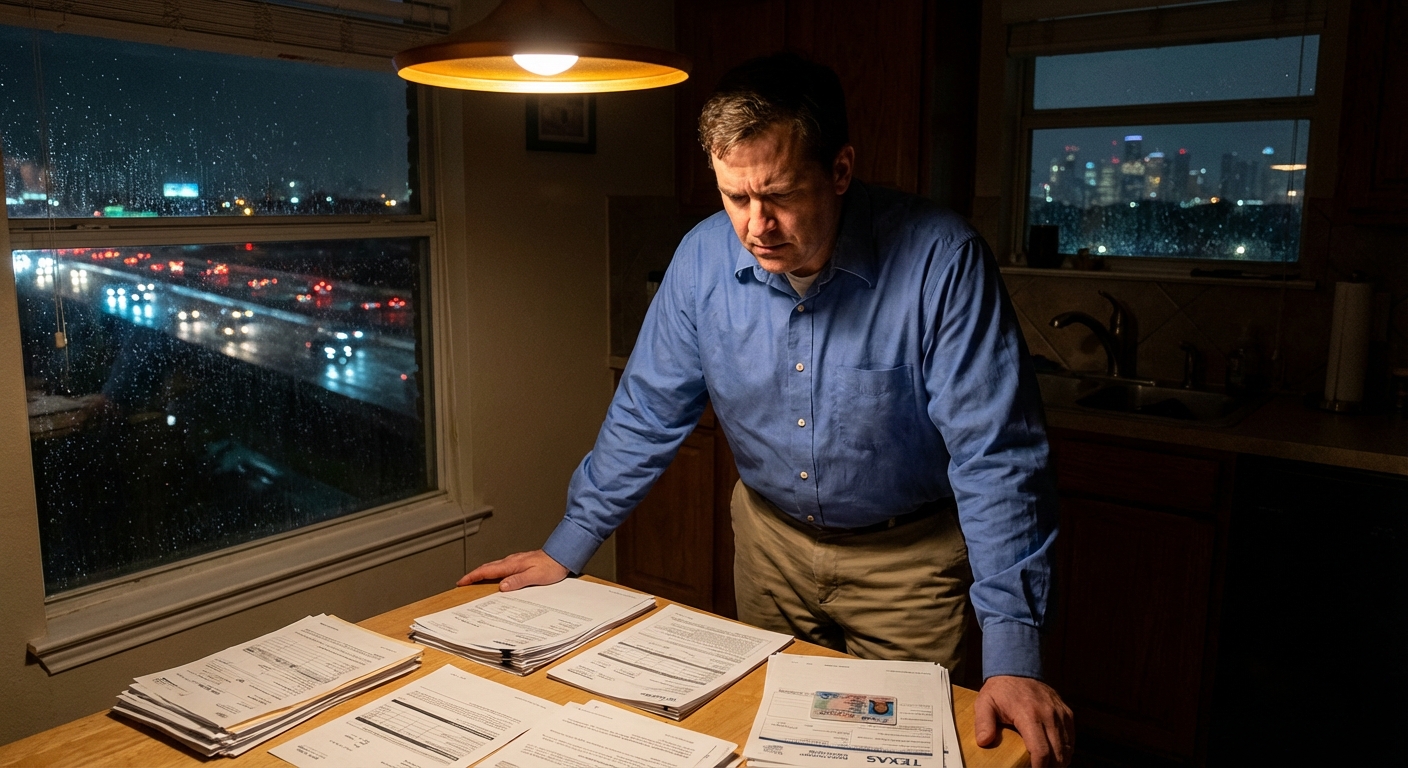
What To Do After A DWI Arrest In Houston: 15‑Day ALR Deadline, License Protection, And Next Legal Steps
If you were just arrested for DWI in Houston, your most urgent next step is to protect your Texas driver license within 15 days by requesting an Administrative License Revocation (ALR) hearing and then getting a Texas DWI lawyer to start preserving evidence and building your defense. In Texas, a DWI arrest sets off two different cases at once, the criminal case in court and a separate license suspension case with the Department of Public Safety, and fast action affects both. This guide walks you through what to do in the first hours and weeks so you can protect your job, your ability to drive, and your long term record as much as possible.
Emergency DWI Arrest Checklist For Houston Drivers
Right now you are probably thinking about your job, your family schedule, and how you will get to the job site or office if you cannot drive. To cut through the panic, here is a short, practical checklist of what to do in the first few days after a DWI arrest in Houston or anywhere in Harris County.
1. Mark your 15 day ALR license deadline
After a Texas DWI arrest, you generally have only 15 days from the date you received your temporary driving permit or suspension notice to request an ALR hearing. If you miss this deadline, DPS will usually suspend your license automatically, even if your criminal DWI case is still pending or later dismissed.
- Find the pink or yellow temporary driving permit or suspension notice the officer gave you.
- Look at the date and count 15 days ahead on a calendar.
- Write that date in your phone and on paper, and set reminders.
- Plan to have the ALR request made well before that date, not on the last day.
If you want a deeper walkthrough on how to request an ALR hearing and preserve your license and what these deadlines mean, review that information before the 15 day clock runs out.
You or your lawyer can request this hearing directly with the state. To see the official rules and available submission options, you can view the Official DPS ALR hearing request and deadlines resource from the Texas Department of Public Safety.
2. Contact a Texas DWI specialist quickly
The sooner a lawyer who focuses on DWI cases reviews your paperwork, the faster they can stop avoidable damage. Acting early can help with:
- Requesting your ALR hearing in time and checking whether you qualify for an occupational license if your license is later suspended.
- Requesting dash cam, body cam, and jail video while it is still stored and easy to obtain.
- Spotting issues with the traffic stop, field sobriety tests, or breath and blood testing that could support a defense strategy.
You do not need to have every answer ready before you speak with a lawyer. You only need to have your paperwork, your questions, and a willingness to follow clear steps.
3. Preserve evidence while it is still fresh
Evidence disappears quickly after a DWI arrest in Houston. Bars and restaurants may overwrite video in days, witnesses move on, and even your own memory fades.
- Write down your timeline from several hours before the stop until you were released from jail.
- List any witnesses, such as coworkers, friends, or bartenders who saw you before you drove.
- Save receipts that show what you drank, when you stopped drinking, and when you left.
- Note any medical conditions or injuries that might affect your balance, speech, or appearance.
Share this information privately with your DWI lawyer so they can decide which pieces matter most for your defense and for your license hearing.
4. Protect your job, family schedule, and privacy
As a construction project manager or other working professional, you may be worried that news of your arrest will spread or that you will not be able to travel to job sites. Some steps you can take immediately include:
- Do not post anything about your arrest on social media.
- Gather information about your work schedule, routes, and any company vehicle policies.
- Think ahead about child care and family logistics if your ability to drive is interrupted temporarily.
There is usually no need to tell every coworker what happened. Talk with a Texas DWI lawyer about when, if ever, to inform your employer and what to say.
How The ALR Process Works And Why It Matters To Your License
The ALR process is a separate civil case about your driving privileges. It is different from your criminal DWI case in a Harris County court, but the two interact in important ways.
What is an ALR hearing in Texas
An ALR hearing is an administrative proceeding where an administrative law judge decides whether to suspend your Texas driver license because you either failed or refused a breath or blood alcohol test after a DWI arrest. The focus is on the stop, the arrest, and your decision to take or refuse testing.
This hearing is usually held by phone or video, which often helps busy professionals who cannot miss a full day of work. Your lawyer can appear and question the arresting officer about what they saw, what tests they used, and how they handled the sample.
ALR deadlines and suspension ranges
If this is your first Texas DWI arrest and you failed the test, a common license suspension range is 90 days. If you refused testing, the potential suspension can start around 180 days. For repeat arrests or past alcohol related suspensions, the time can be longer.
Your ALR lawyer can look at your driving record, the officer’s report, and your test results, then explain your specific risk range. Resources that explain how and when to request an ALR hearing can give you a more detailed overview of how long you might lose your license and what options exist for limited driving privileges.
How ALR hearings can help your criminal case
Even if the judge ultimately upholds a suspension, an ALR hearing can still help your defense. Your lawyer may be able to:
- Cross examine the officer under oath about the stop and arrest.
- Lock in the officer’s testimony early, which can expose inconsistencies later in the criminal case.
- Gather police reports and video that help evaluate whether the stop was legal and whether field sobriety tests were properly given.
For a working parent trying to keep a project on schedule, it can feel frustrating to spend time on a hearing that might not save the license. The bigger picture is that this early hearing is often the first real chance to test the prosecution’s evidence and shape your overall DWI defense plan.
Texas DWI Penalties, Real Costs, And Long Term Risks
One of the most common misconceptions about a first DWI in Texas is that it is “no big deal” or that it will just be a traffic ticket with a fine. In reality, even a first time DWI can bring criminal penalties, license consequences, and financial costs that add up quickly.
Criminal penalties you may face
Exact penalties depend on your record, your blood alcohol concentration, and whether anyone was hurt, but these general ranges apply to many first and second DWI cases in Texas.
- First DWI (non accident, no child passenger) Class B misdemeanor with potential jail time up to 180 days, fines up to thousands of dollars, and court costs.
- Second DWI Class A misdemeanor with higher potential jail time and fines.
- DWI with child passenger or serious injury Often charged as a felony, which brings more serious prison and collateral consequences.
For a more detailed summary of Texas DWI penalties, license risks, and costs, you can review how Texas law treats different DWI levels and prior convictions.
Short callout for real world costs and license risks
Beyond fines and court, a DWI in Houston can lead to:
- Loss of your license for months or longer if you do not act within the 15 day ALR deadline.
- Increased insurance premiums, sometimes for several years.
- Time away from work for court, classes, or community service.
- Limitations on professional licenses, travel, and some job opportunities.
If you are more like Tyler the Young Unaware and this is your first run in with the legal system, it is important to understand that a Texas DWI is not something that simply disappears after paying a fine. It stays on your criminal record unless it is dismissed and sealed or an acquittal is later made eligible for record clearing under Texas law.
How a DWI affects work and career
Many Houston area employers care more about reliability and honesty than about a single mistake, but legal trouble can still create barriers. You may need to manage:
- Missed time for court dates or probation meetings.
- Job duties that require driving a company vehicle or visiting job sites.
- Background checks for promotions or new positions.
If you are in a sensitive role or leadership position, you may want more detailed guidance on protecting your job and professional reputation after DWI including how and when to disclose the case, and how to plan around travel or license limits.
Understanding Implied Consent, Breath Tests, And Refusals In Texas
Texas has an “implied consent” law, which means that by driving on Texas roads you are understood to have agreed to provide a breath or blood sample in certain lawful DWI arrest situations. Refusing a test can trigger its own license suspension that is separate from any suspension you might face after a conviction.
If you want to see how this idea is written into state law, you can review the Texas statute on implied consent and test refusals, which describes when officers can request a sample and what happens if a driver refuses.
How implied consent affects your case
Implied consent issues show up in both your ALR hearing and your criminal case. Your lawyer will look for questions like:
- Did the officer have reasonable suspicion to stop you
- Did the officer have probable cause to arrest you for DWI
- Were you properly warned about the consequences of refusing or failing a test
These details can affect whether your license is suspended, whether the test result comes into evidence, and what defenses a lawyer may raise later.
Micro Story: A Houston Project Manager Navigates A First DWI Arrest
Consider a common scenario. A mid 30s construction project manager in Harris County is stopped on the way home from a company dinner. He had a couple of drinks over several hours, but feels fine to drive. After a minor traffic infraction, he is pulled over, asked to step out, and given field sobriety tests he has never seen before.
He is arrested, spends the night in jail, and is handed a stack of papers when released. Monday morning, he is supposed to be at a job site across town. He worries the company truck will be taken away if they find out what happened.
A DWI lawyer reviews his case within a few days, requests the ALR hearing before the 15 day deadline, and obtains the dash cam video. The video shows uneven lighting and heavy traffic noise that made the field tests harder than the officer described. At the ALR hearing, the lawyer questions the officer about these conditions and about how long it had been since the officer last had field sobriety training.
The ALR judge still orders a suspension, but the testimony reveals weaknesses that later help challenge parts of the criminal case. The lawyer then helps the client request an occupational license so he can keep driving to and from job sites and maintain his role supporting his family.
This is not a promise about how any specific case will come out. It is an example of how acting quickly, especially in the first two weeks, can change what options you have later.
Key Defense Strategies Texas DWI Lawyers Often Explore
Every DWI case is different, but there are recurring questions experienced Texas DWI lawyers ask when they review a Houston arrest report or video. These questions often drive the defense strategy and can affect both the court case and the license hearing.
1. Was the traffic stop legal
Police must have a lawful reason to stop you, such as a traffic violation or reasonable suspicion of impairment. If the video or reports show a weak reason for the stop, your lawyer may argue that all evidence gathered afterward should be suppressed.
2. Were field sobriety tests conducted properly
Standardized field sobriety tests require clear instructions, proper demonstrations, and fair scoring. Poor lighting, uneven pavement, loud traffic, and medical issues can all influence how you appear on camera.
As a construction project manager who spends days on your feet or works around injuries, you may have balance or joint issues that affect these tests. Telling your lawyer about past injuries, surgeries, or conditions can be important.
3. Is the breath or blood test reliable
Breath machines must be maintained and calibrated, and blood samples must be collected and stored correctly. Defense lawyers often request maintenance logs, lab records, and chain of custody documents to look for problems.
4. Are you a candidate for reduced charges or alternative outcomes
In some cases, especially for first time offenders, a lawyer may explore options such as reductions to lesser charges, diversion programs where available, or other negotiated resolutions. These outcomes depend on many factors including your prior record, the facts of the arrest, and local practices in Harris County and nearby counties.
Your lawyer’s job is to explain realistic paths, not quick fixes. A clear strategy can still give you hope and a plan, even when the evidence looks strong at first glance.
Data Snapshot For Solution Aware Readers
If you see yourself as more like Ryan the Analyst, you may be looking for numbers, trends, and strategy before you even think about which lawyer to hire. While exact statistics vary year to year and by county, there are some general patterns in Texas DWI cases.
- Many first time DWI cases in urban counties like Harris resolve without jail time, especially where there was no accident or injury.
- A significant number of DWI charges are reduced or dismissed based on legal or proof problems, negotiation, or completion of programs, though no outcome is guaranteed.
- License suspensions can range from 90 days to 2 years or more, depending on prior history and test results.
- Successful challenges often focus on the legality of the stop, the conduct of field sobriety testing, or the reliability of breath and blood tests.
For someone who wants a framework, it can help to think in terms of three tracks: the license track (ALR), the criminal court track, and the long term record and career track. A strong defense plan looks at all three from the start, not just what will happen at the first court setting.
Privacy, Discretion, And High Stakes Concerns
If you relate more to Jason the Executive or Chris the Insider, your top concerns might be discretion, reputation, and minimizing disruption to complex work or travel schedules. You may worry more about who will find out and how much of your time the process will take than about the specific fine amount.
Many Texas DWI lawyers who work with executives and high profile clients structure their representation to protect privacy as much as possible. This can include limiting unnecessary court appearances, handling as much communication as possible through counsel, and planning around existing travel or obligations. It is appropriate to ask about options for confidential communication and direct access to lead counsel if your situation calls for it.
Professional License Concerns For Nurses And Other Licensed Workers
Elena the Nurse (Alt Problem Aware) and other licensed professionals rightly worry about how a DWI might affect board reporting and ongoing credentialing. In Texas, some licensing boards require disclosure of certain arrests or convictions within specific timeframes.
If you work in health care, engineering, education, or another licensed profession, talk with a Texas DWI lawyer about how your arrest might interact with your board’s rules. It is often helpful to coordinate with counsel who understands both the criminal process and professional licensing issues, so the timing and content of any disclosure can be handled carefully.
Common Misconceptions About Texas DWI Cases
When you are tired and stressed after a Houston DWI arrest, it is easy to rely on myths or half remembered stories from friends. Correcting a few of the most common misconceptions can help you make better choices in the days ahead.
“If I blew under 0.08, the case goes away automatically.”
In Texas, prosecutors sometimes proceed with a DWI case even if the test result is under 0.08, based on driving behavior, field tests, or other signs of impairment. The test result is important, but it is not the only factor. Your lawyer will look at the entire picture, including how you were driving and how you appeared on video.
“A first DWI drops off my record after seven years.”
This idea floats around often, but it is not accurate under Texas law. A DWI conviction usually stays on your record indefinitely. Certain dismissals or not guilty verdicts may be eligible for expunction or orders of nondisclosure, but these are separate procedures that must be pursued affirmatively.
“There is no point fighting the ALR hearing, I will lose anyway.”
Even when a license suspension is likely, the ALR hearing can still create valuable sworn testimony and discovery for your criminal case. Winning an ALR hearing is not the only measure of success. The information gained there can help shape better results later in court.
Everyday Impact: How A DWI Changes Life In Houston For A While
Beyond the courtroom, a DWI touches your everyday schedule. If you live in the Houston area, a suspended license can affect:
- Your commute to downtown, the Galleria, or outlying job sites in Katy, The Woodlands, or Baytown.
- Getting kids to school, practice, and medical appointments.
- Visiting aging parents or handling errands like groceries and pharmacy runs.
A Texas DWI lawyer can help you explore whether you qualify for an occupational license, which is a restricted license that allows driving for work and essential household duties during part of the day. Planning your routes, carpools, and work schedule around any temporary limits can soften the blow and keep your family routine as stable as possible.
Frequently Asked Questions About Your Texas DWI Next Steps
How long does a DWI stay on my record in Texas
In Texas, a DWI conviction typically stays on your criminal record permanently. There is no automatic “drop off” after a certain number of years. Some cases that end in dismissal or acquittal may later qualify for expunction or nondisclosure, but those are separate legal processes that require action and court approval.
Is my first DWI in Houston a felony or a misdemeanor
Most first DWI charges in Houston and Harris County are filed as misdemeanors. A first DWI can become a felony if certain factors are present, such as having a child passenger under 15 in the vehicle or being involved in a crash that causes serious bodily injury. Your charging paperwork or court notice will indicate whether your case is a misdemeanor or felony.
What happens if I miss the 15 day ALR deadline in Texas
If you miss the 15 day deadline to request an ALR hearing after your Texas DWI arrest, DPS will usually move forward with an automatic license suspension. You generally lose the chance to contest the suspension through the ALR hearing process. You may still have options such as applying for an occupational license, so it is important to speak with a lawyer even if you think a deadline has passed.
Can I get an occupational license after a DWI in Houston
Many Texas drivers whose licenses are suspended after a DWI arrest or conviction can apply for an occupational license. This special license allows limited driving for work, school, and essential household duties, often with time of day or route restrictions. Eligibility depends on your driving record, prior suspensions, and court orders, so a Texas DWI lawyer should review your situation before you apply.
How soon should I talk to a DWI lawyer after an arrest
It is wise to talk with a Texas DWI lawyer as soon as you are released from custody or within a few days of your arrest. The 15 day ALR deadline, short video retention periods, and early court settings all mean that evidence and options change quickly. Early advice can help protect your license, your job, and your ability to challenge the state’s evidence later.
Why Acting Early After A Houston DWI Arrest Matters
Time is one of your most valuable resources after a DWI arrest in Houston. Within the first two weeks, your lawyer can request your ALR hearing, secure key videos and records, and start identifying defenses or negotiation paths that fit your facts and your goals.
For someone in your position, trying to support a family and keep critical projects on schedule, the real goal is more than just “winning” your case. It is about reducing disruption, keeping your license or getting lawful driving privileges as soon as possible, protecting your record, and avoiding unnecessary damage to your career. Speaking with a qualified Texas DWI lawyer early, asking clear questions, and following a step by step plan can make a difficult situation more manageable.
For a concise walkthrough of these early steps, you may find it helpful to watch a short video that lays out what to do right after a Texas DWI arrest, how ALR deadlines work, and how experienced DWI counsel begins protecting your license and your job.
Butler Law Firm - The Houston DWI Lawyer
11500 Northwest Fwy #400, Houston, TX 77092
https://www.thehoustondwilawyer.com/
+1 713-236-8744
RGFH+6F Central Northwest, Houston, TX
View on Google Maps


No comments:
Post a Comment