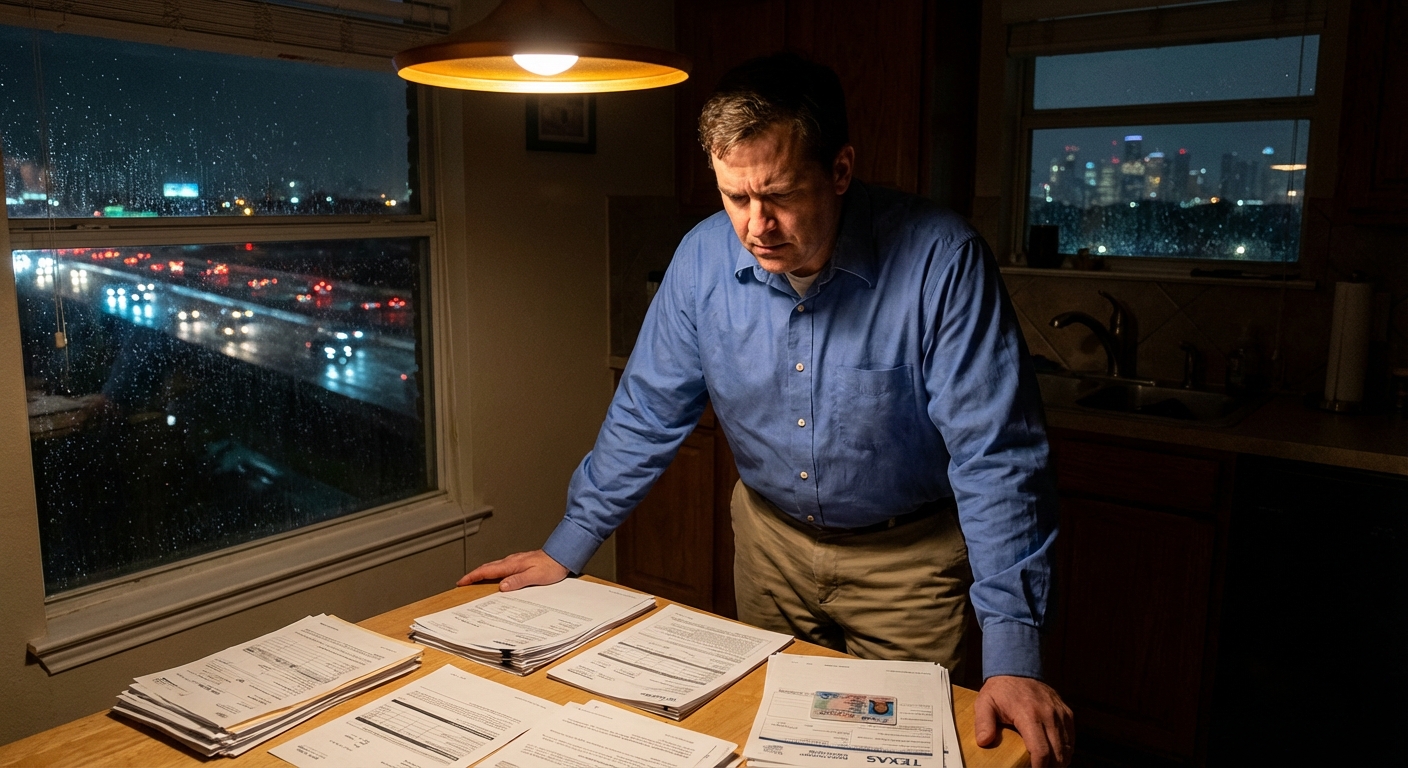
First 72 Hours After a Texas DWI Arrest: How to Protect Your License, Job, and Family
If you were just arrested for DWI in Texas, the most important thing in the first 72 hours is to protect your driver’s license and start organizing your defense before deadlines hit and evidence disappears. In practical terms, that means tracking the 15 day ALR deadline, preserving key documents and video, and getting qualified legal guidance so one mistake does not snowball into license suspension, job problems, and long term financial damage.
You are probably exhausted, embarrassed, and worried about how you will get to work in Houston traffic if you lose your license. This guide walks you step by step through what to do in the next three days so you can move from panic to a clear plan.
Your 72 Hour Action Checklist After a Texas DWI Arrest
Right now you do not need legal theory. You need a simple checklist. In these first 72 hours your goal is to keep your license in play, protect your job, and avoid saying or doing something that makes the case harder to fight later.
For a deeper dive, you can also review this detailed 72‑hour ALR checklist to protect your job once you get through this overview.
Step 1: Mark your 15 day ALR deadline
When you are arrested for DWI in Texas and either fail or refuse a breath or blood test, the Department of Public Safety (DPS) can try to suspend your license through the Administrative License Revocation, or ALR, process. You usually have only 15 days from the date you received the notice to request a hearing. If you miss that deadline, the suspension can kick in automatically.
In the first few hours after your arrest you should find your temporary driving permit or the notice the officer gave you, then write the date of your arrest and count 15 days forward on a calendar. That is your drop dead date to act. You can learn more about how to request an ALR hearing and protect your license and why this deadline matters.
For a direct, official source, the Texas Department of Public Safety runs the Official DPS portal to request an ALR hearing. This is where an attorney can formally ask for the hearing that can put the brakes on an automatic suspension and open the door to challenge the stop, arrest, and testing.
If you are a construction project manager like our PrimaryPersona, losing your license even for 90 days can mean missed job sites, late arrivals, and awkward explanations to supervisors. Treat this ALR deadline like a hard work deadline at a critical project milestone.
Step 2: Gather every document related to your arrest
Within the first 72 hours, collect and organize everything from your arrest. This includes:
- The DIC-25 or other temporary driving permit notice, if you refused or failed a test
- Your bond paperwork and any jail release documents
- Your court date notice, including the court location in Harris County or a nearby county
- Any receipts from towing or vehicle release
- Names and contact information for any passengers or witnesses
Put all of this in a folder or scan it into a dedicated folder on your computer. If you later talk with a Texas DWI lawyer, having these documents ready can save time and help them understand your situation quickly.
Step 3: Write down what happened while it is still fresh
Memory fades quickly, especially after a stressful night. Within the first day or two, sit down somewhere quiet and write out your own timeline. Include where you were, what you had to drink, when you left, why you were pulled over, what the officer said, what field sobriety tests you were asked to do, and whether you took or refused a breath or blood test.
This is not something you need to share with anyone right now, but it can be extremely helpful later if you decide to contest the DWI charges. Small details, like uneven pavement during a balance test or bright flashing lights affecting your eyes, can matter.
Step 4: Decide who to call and what not to say
In these first 72 hours you will feel pressure to tell your boss, coworkers, or friends everything. As a provider, you may also feel like you owe everyone a full explanation. Slow down. In many cases it is smarter to talk privately with a qualified Texas DWI lawyer first and get guidance about timing and wording before you speak with anyone tied to your job.
For more context on what to expect and how to prepare, you can review practical next steps after a first-time DWI arrest in Texas, which covers the trend of how first offense cases are usually handled and what early decisions matter.
Do not post about the arrest on social media and do not guess or speculate if anyone asks you direct questions. Anything you say publicly can be screenshotted and may come up later in court or in meetings with HR.
How the ALR Process Works and Why It Matters for Your Job
If you drive to multiple job sites around Houston, your driver’s license is not a luxury, it is part of how you provide for your family. The ALR process is separate from the criminal DWI case, but the two are closely linked.
What triggers ALR in Texas
Under the Texas implied consent law, your driver’s license comes with certain conditions related to alcohol and drug testing. The rules are found in the Texas statute explaining implied consent and refusals. In basic terms, ALR is triggered if:
- You refuse to provide a breath or blood sample after a lawful DWI arrest, or
- You provide a sample and the result is at or above 0.08 BAC, or a lower threshold in some commercial situations.
After that, DPS has the power to try to suspend your license, sometimes for several months, unless you properly request and fight an ALR hearing.
Typical ALR suspension ranges
Every case is different, but some common suspension ranges are:
- First time failure of a breath or blood test: often around 90 days
- First time refusal of a test: often around 180 days
- Longer suspensions if you have prior alcohol related contacts
For someone trying to keep a construction management job in the Houston area, even 90 days without a license could mean missing field visits, losing overtime, or losing a promotion. That is why the 15 day ALR hearing request is such an important early step.
What an ALR hearing can do for you
An ALR hearing is not a criminal trial, but it is still an opportunity. At that hearing, a lawyer can question whether the officer had a legal reason to stop you, whether the arrest followed proper procedures, and whether the testing was handled correctly. In some cases, this can help avoid or shorten a suspension. It can also uncover issues that may help later in the criminal DWI case.
For an Analytical Planner (Ryan), think of the ALR process as an early discovery tool. In one anonymized Houston area case, careful use of the ALR hearing exposed problems in the officer’s report, which contributed to a more favorable outcome in the criminal case. Results always depend on facts, but data from that hearing can be valuable.
Immediate Steps to Protect Your Career and Reputation
As a mid-level manager or trades supervisor, you probably feel pulled in two directions. On one side, you want to keep your head down and pretend nothing happened. On the other, you are afraid your employer will find out first and think you hid it. In these first days, your choices about work and communication can set the tone for how your job is affected.
Protecting your job while the case is pending
Here are practical steps focused on your employment, especially in Houston, Harris County, and similar Texas markets where driving is a big part of many jobs:
- Review your employee handbook or contract. Look for any section about criminal arrests, driving requirements, or reporting obligations.
- Check your company’s vehicle policy. If you drive a company truck or use a company fuel card, there may be special rules.
- Think before you disclose. In many situations you may not be required to report an arrest immediately. Getting legal guidance first lets you plan what to say, if anything, and when.
- Keep your performance strong. Coming in on time, meeting deadlines, and staying focused at work can reduce the chance that a supervisor uses the DWI as a reason to push you out.
If you want more depth on employment issues, this article on concrete steps to protect your employment after arrest outlines how timing, documentation, and clear communication can make a difference.
Career-Focused VIP (Jason/Sophia) readers often worry most about reputation and discretion. In many DWI matters, communications with a lawyer are confidential, and meetings or calls can be arranged in ways that respect your schedule and privacy. That can help you address the problem quickly without unnecessary attention at work or in your social circles.
Why “just pleading guilty to get it over with” is risky
A common misconception is that a quick guilty plea will make everything go away faster. In reality, a DWI conviction can stay on your Texas record for life, affect professional licensing, and trigger future penalties if you are ever accused again.
For someone in construction management, that record can also show up on background checks when you apply for new jobs or promotions. Taking time at the front end to understand the charges, options, and possible defenses can help you avoid long term consequences even if you feel pressure to resolve it quickly.
Micro-story: How early action helped one Houston provider
Consider a fictional but realistic example. A 36 year old project manager in Harris County was arrested for DWI after a late dinner with a subcontractor. He refused the breath test, his truck was towed, and he spent the night in jail. The next day he was panicked about his kids, his mortgage, and his job.
Within 48 hours he requested an ALR hearing, organized his paperwork, and obtained the police reports early. The ALR hearing exposed timing issues in the field sobriety tests, and video later showed him performing better than the officer’s notes suggested. The case still took time, but early steps kept his license active during the fight and helped avoid some of the harsher job impacts. Not every case works out that way, but his quick action created options that a late response would not have allowed.
Key Texas DWI Rules That Affect Your License and Future
To make good decisions, you need a basic understanding of how Texas treats DWI. You do not need to memorize statute numbers, but you should know what you are facing.
Basic DWI definitions in Texas
In simple terms, Texas defines DWI as operating a motor vehicle in a public place while intoxicated. Intoxicated usually means either your normal mental or physical abilities are impaired by alcohol or drugs, or your blood alcohol concentration is 0.08 or higher. For commercial drivers, the limit can be lower while on duty.
In Houston and the surrounding counties, DWI cases are handled in county criminal courts. A first offense without special factors is usually charged as a Class B misdemeanor, but it is still serious. Jail time, fines, license consequences, and long term record issues are all on the table.
Penalties you could face for a first DWI in Texas
For many readers in the “Casual Unaware (Kevin/Tyler)” group, it helps to see actual numbers. For a typical first DWI in Texas, you could be looking at:
- Up to 180 days in jail, with a minimum of 3 days in some situations
- Fines that can reach into the thousands of dollars with court costs and fees
- License suspension periods that can range from 90 days to a year in some cases
- Annual surcharges or fees to keep your license once the case is resolved
One national safety statistic that often surprises “Casual Unaware” readers is that alcohol related crashes kill thousands of people in the United States each year. That is part of why Texas treats DWI so seriously and why courts in Harris County move these cases aggressively. The goal here is not to scare you, but to remind you that taking the charges seriously is important even if no one was hurt in your case.
Special concerns for Healthcare Professional (Elena)
If you are in the Healthcare Professional (Elena) group, your worries may go beyond driving. Many nurses, therapists, and other licensed professionals must report certain criminal charges or convictions to a licensing board. A DWI can also affect credentialing with hospitals or insurers, depending on the situation.
For healthcare workers in Houston and around Texas, the 15 day ALR deadline still applies, but you also need to be thinking about board reporting rules, employer policies, and how an eventual outcome, such as a conviction or reduction, might need to be disclosed. Early guidance can help you line up timelines for ALR, the criminal case, and any licensing obligations so you are not caught off guard.
What Elite Most-Aware (Chris/Marcus) readers look for
Elite Most-Aware (Chris/Marcus) readers often already know that DWI cases can be contested. They are usually focused on how to handle things privately, efficiently, and with minimal disruption to business and reputation. For these readers, early action can include planning for discrete communications, limited public record footprints where legally possible, and strategies to manage news or gossip inside professional circles.
While no lawyer can promise a specific result, understanding the full menu of options such as hearings, motions, negotiation tracks, and trial strategies early in the case helps you make decisions that align with your career and family priorities.
Evidence To Preserve In The First Few Days
Evidence is not just what the officer wrote in a report. There may be security footage from a bar, dash cameras from your own vehicle, text messages that show your timeline, and more. Many of these things are easier to preserve in the first week than months later.
Video and digital evidence
Within the first 72 hours, consider these steps:
- Make a list of any locations you were at in the hours before the arrest that may have cameras, such as bars, restaurants, parking garages, or gas stations.
- Save any phone photos, ride share receipts, or payment records that show what you did and when.
- Write down the names and contact information of anyone who saw you walking, talking, or driving shortly before the stop.
Surveillance video can be routinely overwritten in a matter of days or weeks. Asking for it early, often through a lawyer, can make the difference between having independent evidence of your condition and relying only on what the officer wrote.
Medical conditions and prescriptions
If you have medical conditions, injuries, or take prescription medications that affect balance, speech, or eye movements, make a note of those and keep handy any documentation you have. Field sobriety tests are not one size fits all. A knee injury or certain medications can make you look impaired when you are not.
If you are in a job that is physically demanding, such as construction or skilled trades, your medical history and daily physical stress can be an important part of understanding field sobriety performance. Explaining these issues clearly early in the process can help avoid misunderstandings later.
Common Misconceptions About Texas DWI That Can Hurt Providers
When you are scared and embarrassed, it is easy to accept bad advice from friends, coworkers, or the internet. Here are a few myths that come up often after a DWI arrest in Houston and across Texas.
“If I blew under 0.08, I am automatically safe.”
This is not always true. Texas law allows prosecutors to argue that you were intoxicated based on loss of normal mental or physical abilities even if the test was under 0.08. Conversely, a result at or above 0.08 does not automatically mean you will be convicted. Both sides look at all the evidence, including driving behavior, field tests, video, and more.
“First time DWI is just a slap on the wrist.”
Some people treat a first DWI like a traffic ticket. That can be a costly mindset. A first DWI can carry jail time, heavy fines, license suspension, and long term record consequences. It can impact professional licenses, security clearances, and job opportunities. Treating it seriously from day one is a better approach.
“I have to tell my employer everything right away.”
For many jobs in Texas, there is no automatic requirement to report an arrest within 24 hours, though some fields and contracts do have reporting clauses. Often you have time to understand your situation, talk to a lawyer, and then decide how and when to communicate with your employer. Acting thoughtfully instead of impulsively can reduce unnecessary job fallout.
Step-by-Step Strategy For Analytical Planner (Ryan)
If you identify with Analytical Planner (Ryan), you probably want a structured roadmap more than emotional reassurance. Here is a simple step list many readers follow after a DWI arrest in Harris County or nearby counties:
- Within 24 hours: Secure your release paperwork, court date, and temporary driving permit. Write your personal timeline of events while it is fresh.
- Within 48 hours: Mark the 15 day ALR deadline on your calendar. Begin gathering names of any witnesses and locations with possible video. Review your work policies and contracts for any reporting obligations.
- Within 72 hours: Organize all documents in a folder, paper or digital. Consider consulting with a Texas DWI lawyer about requesting the ALR hearing and setting an evidence preservation plan.
- Within the first 2 weeks: Track court dates, comply with any bond conditions, and continue preserving potential evidence before it disappears. Avoid new legal issues.
You might also appreciate an interactive Q&A resource for quick DWI questions and timelines if you like working through hypotheticals and timelines on your own before talking with anyone.
Frequently Asked Questions About The First 72 Hours After a Texas DWI Arrest
What is the very first thing I should do after a DWI arrest in Houston?
The first priority is to get your immediate safety and release handled, then secure your paperwork and mark the 15 day ALR deadline on your calendar. Once you know that date, you can focus on organizing documents, writing down what happened, and seeking legal guidance before you run out of time to challenge a license suspension.
Will I automatically lose my driver’s license after a Texas DWI?
No, your license is not automatically gone, but it is at risk. In many cases Texas DPS can try to suspend your license through the ALR process if you refused or failed a test, which is why requesting a hearing within 15 days is so important. Until the suspension date kicks in or a decision is made, you may be able to keep driving on a temporary permit.
Do I have to tell my employer about my DWI right away?
It depends on your job, contract, and company policies. Many Houston workers do not have an immediate, same day reporting obligation, but some government, transportation, and healthcare roles may have stricter rules. It is usually wise to review your employment documents and get legal advice before deciding when and how to share information with your employer.
How long does a first DWI stay on my record in Texas?
Under current Texas law, a DWI conviction can stay on your record permanently. In some situations there may be limited options to seal or otherwise reduce public access to certain records, but those options are fact specific. This is one reason why taking a first offense seriously, even if you have no prior record, can be critical for your long term career and licensing.
Can a Texas DWI affect my professional license or certifications?
Yes, for some professions a DWI can affect licenses, certifications, or security clearances. Healthcare workers, commercial drivers, and certain government employees in the Houston area often have extra reporting rules. If you are in a licensed field, it is important to understand both the criminal and professional consequences early, so you can plan how to handle disclosures and deadlines.
Why Acting Early Matters More Than Being Perfect
After a Texas DWI arrest, you may feel like the damage is already done, especially if you spent a night in the Harris County jail or had your vehicle towed. The truth is that many of the most important choices are still ahead of you in the first 72 hours and the first few weeks. Acting early does not mean panicking. It means calmly protecting your license, gathering information, and giving yourself options.
The stance of this guide is simple. Being proactive almost always puts you in a better position than waiting and hoping things will magically improve. Even if you made a mistake, you can still control how you respond, how well you protect your job and family, and how fully you understand your legal options under Texas law. Consider speaking with a qualified Texas DWI lawyer who can walk through your specific facts, help you request an ALR hearing if appropriate, and build a plan that fits your work and family responsibilities.
Whether you are a construction project manager, a healthcare professional, or an executive trying to handle things quietly, the next three days are about regaining control. Mark your deadlines, preserve your evidence, stay quiet on social media, and get informed so that this DWI charge does not define your future.
To supplement this written guide, you may find it helpful to watch a short, practical walkthrough from a Houston DWI attorney that explains what to do after a Texas DWI arrest and how to start protecting your case, driving privileges, and job.
Butler Law Firm - The Houston DWI Lawyer
11500 Northwest Fwy #400, Houston, TX 77092
https://www.thehoustondwilawyer.com/
+1 713-236-8744
RGFH+6F Central Northwest, Houston, TX
View on Google Maps


No comments:
Post a Comment