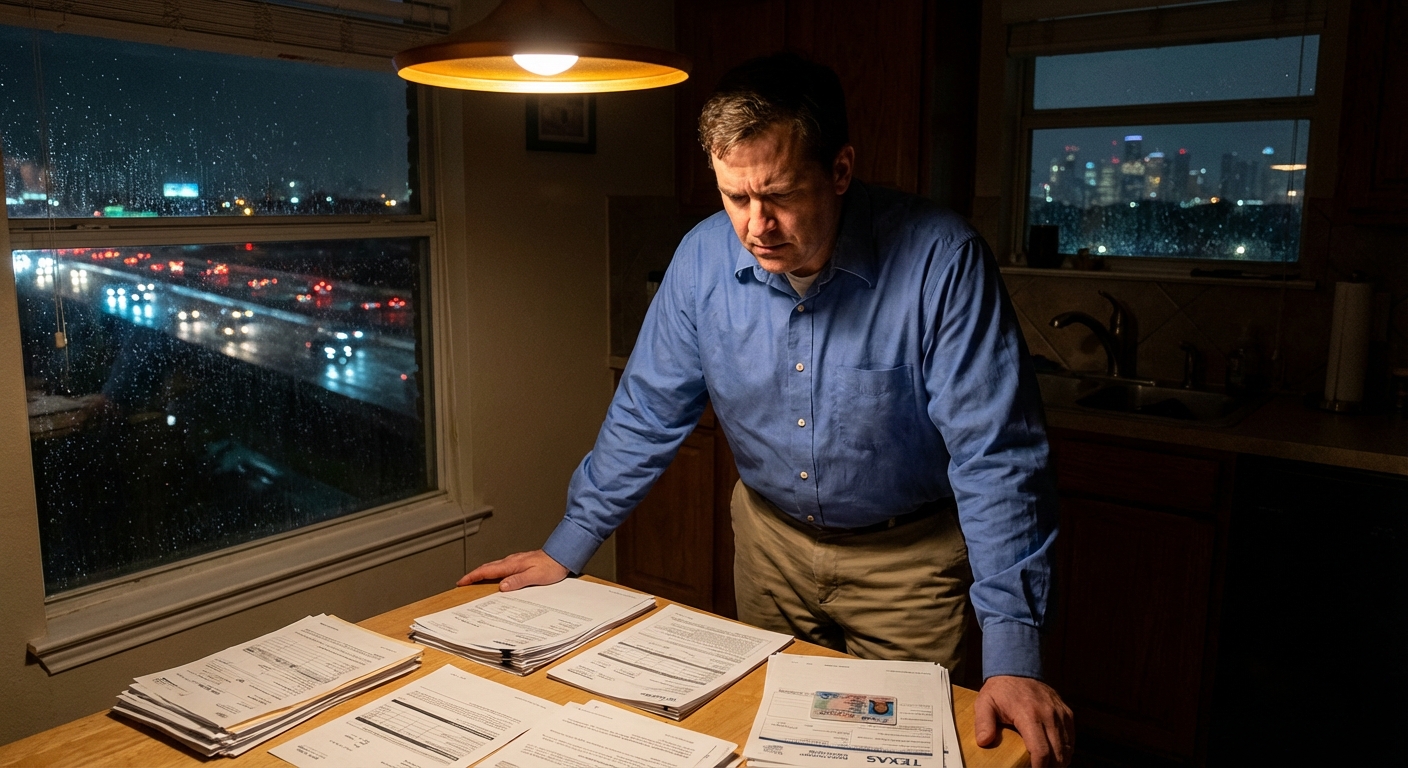
Texas DWI Arrest Timeline Guide: First 72 Hours And The 15‑Day ALR License Deadline
If you were just arrested for DWI in Texas, you generally have 15 days from the date of your arrest to fight the automatic license suspension and the decisions you make in the first 24 to 72 hours can strongly affect your job, your driver’s license, and your case. During this short window you can request a license hearing, start gathering evidence, and get legal guidance so you are not just waiting and hoping things work out.
I am going to walk you through what to do right now, in plain language, so you understand the Texas DWI timeline, the ALR 15‑day deadline, and how to protect your license, income, and future as much as possible.
First, Take A Breath: What This Texas DWI Guide Will Help You Do
Mike, if you are a construction project manager or any worker who drives for a living, you may be thinking your life just blew up overnight. You are worried about losing your license, getting fired, and paying bills if you cannot drive to job sites. This guide focuses on the next 24 to 72 hours and the first 15 days, so you know exactly what steps to take instead of freezing in panic.
This article will help you:
- Understand the Texas DWI process from arrest through license suspension
- See the real meaning of the 15‑day ALR deadline and how it works
- Learn key defenses to DWI charges like bad traffic stops and unreliable tests
- Look at realistic penalties, costs, and insurance consequences
- Plan your next steps so you protect your job and license as best you can
For a deeper step‑by‑step breakdown of the first few days, you can also read this detailed step-by-step 24–72 hour action checklist focused on Texas DWI arrests.
The First 24–72 Hours After A Texas DWI Arrest: Your Priority Checklist
Right after a Houston or Harris County DWI arrest, it can feel like everything is happening at once. In reality, there are a few critical tasks you need to handle soon, and many other worries can wait until later. Here is how to break down the first 72 hours.
Within The First 24 Hours
- Secure your paperwork. Keep the DIC‑25 or temporary driving permit, your citation, bond paperwork, and any towing or property receipts in one folder. You will need these for the ALR hearing and your criminal case.
- Write down everything you remember. Include where you were stopped, what the officer said, how you were driving, whether you took or refused the breath or blood test, and how you performed on field sobriety tests. Small details can later support defenses like an unlawful stop or unreliable testing.
- Confirm your court date. The citation or release paperwork should list the court and date. Missing a court date makes things worse, and you do not want a warrant issued while you are trying to keep your job.
Within 48 Hours
- Check the 15‑day ALR deadline. Look at your arrest date. Count 15 days forward. That is usually the deadline to request the Administrative License Revocation hearing that can stop or delay the automatic suspension of your driver’s license.
- Start gathering evidence. Save work schedules, receipts, text messages, and photos from the night in question. If anyone saw you before you drove and thought you were sober, write down their names and contact information.
- Tell only trusted people. You may be tempted to talk about the arrest with coworkers or on social media. Do not. Anything you say can be used against you later. Keep details between you, close family or friends, and a qualified Texas DWI lawyer.
Within 72 Hours
- Request or plan the ALR hearing. You can learn more about how to request an ALR hearing and preserve your license so you do not lose your driving privileges by default.
- Review your budget. List your monthly bills, savings, and income. This helps you plan for legal fees, possible fines, and increased insurance costs. It also makes you more prepared when you talk with a lawyer about fees.
- Write your questions. You are going to feel overloaded in any legal meeting. Make a list of questions about your license, job, and record so you get clear answers instead of leaving confused.
Analytical Planner (Ryan): During this 72‑hour window, tracking simple metrics helps. Note your exact arrest date and time, your BAC result if you know it, and each deadline. Having that data handy often shortens the time it takes a lawyer to spot defenses and file critical requests.
Understanding The Texas DWI Timeline And ALR 15‑Day Deadline
The Texas DWI process actually splits into two tracks: the criminal case in a Houston or Harris County court and the civil license case through the Department of Public Safety, called the Administrative License Revocation or ALR process. The ALR timeline is fast and can impact your ability to drive long before your criminal case is finished.
What The ALR Process Is And Why 15 Days Matter
After a DWI arrest, DPS can try to suspend your license if your BAC was at or above 0.08 or if you refused breath or blood testing. You usually have only 15 days from the date of arrest to request a hearing to challenge that suspension. If you do not request the hearing in time, the suspension starts automatically, often about 40 days after the arrest date.
You or your lawyer can request a hearing by mail, fax, or online. The Official DPS portal to request an ALR hearing explains the basic steps and options. Many people let this deadline pass because they assume the court date will handle everything, but the court date is separate from the ALR deadline.
For a more detailed breakdown of the timeline and options, this blog resource explains how to file an ALR hearing and timeline for Houston drivers.
What Happens At The ALR Hearing
At the ALR hearing, the question is not whether you are guilty of DWI beyond a reasonable doubt. The question is whether the officer had reasonable suspicion for the stop, probable cause for the arrest, and whether you failed or refused testing under Texas implied consent rules. It is a lower standard than the criminal case, but it is also a chance to cross‑examine the officer and lock in their testimony.
If DPS wins, your license is suspended for a period that depends on your record and whether you failed or refused the test. If you win, your license is not suspended on that ALR basis, which can make keeping your job and insurance easier while the criminal case continues.
Texas Implied Consent, Refusals, And ALR
Texas has implied consent laws that say when you drive on Texas roads you agree to provide a breath or blood sample when an officer lawfully arrests you for DWI. If you refuse, DPS can seek a longer ALR suspension than if you failed the test. The Texas statute explaining implied consent and refusals gives the technical details, but the main point for you is simple: both a refusal and a failure can trigger an ALR case, and each has different pros and cons for your criminal defense.
High-Stakes Professional (Jason): If your work requires a clean driving record or you hold a leadership role, you may want a quick, discreet assessment of how the ALR record and any refusal will look to licensing boards or corporate HR. Early, quiet planning usually protects both your license and your reputation better than waiting.
How Long Can A Texas DWI Affect Your Job, License, And Record?
One of the biggest fears after a Houston DWI arrest is how long this will hang over you. For someone managing crews and projects, even a short license suspension can mean being pulled off key jobs or passed over for promotions.
License Suspension Ranges
These are general ALR suspension ranges for a first‑time DWI:
- Failed breath or blood test: typically about 90 days of possible suspension
- Refused breath or blood test: typically about 180 days of possible suspension
If you have prior alcohol‑related contacts or prior suspensions, the ranges go up. If your license is suspended, you may qualify for an occupational license that allows limited driving for work, school, and basic household needs. Judges in Harris County and nearby counties commonly see these requests, but each judge has different rules and paperwork preferences.
Criminal Penalties And Work Consequences
On the criminal side, a first DWI in Texas is usually a Class B misdemeanor with a possible jail range of 72 hours to 180 days, fines up to several thousand dollars, court costs, and potential probation. Actual outcomes depend on BAC, accident or injury, criminal history, and the strength of the evidence. You can review more detailed breakdowns of realistic penalties, fines, and likely consequences in Texas to get a clearer picture.
For your job, the real risk is often not jail, it is license restrictions, missed work for court and classes, and how a conviction looks on background checks. Many employers in construction, transportation, and oil and gas have strict policies about DWI convictions, especially if you drive company vehicles or access safety‑sensitive sites.
Elite Concerned (Chris): If you are in a visible executive or public‑facing role, you may care less about fines and more about confidentiality. Handling the DWI process with absolute discretion, limited public exposure, and direct communication with an attorney, instead of multiple staff, can help protect your professional image.
Common Defenses In Texas DWI Cases: How Your Case Might Be Challenged
Many people think that if they blew over 0.08 or had blood taken, the case is hopeless. That is a misconception. Texas DWI cases are often won or improved based on how the stop happened, how the tests were handled, and how the evidence is presented in court.
1. Unlawful Traffic Stop Or Detention
Officers must have reasonable suspicion to stop you, such as specific driving behavior or a traffic violation. If the officer stopped you based on a hunch or vague reasons like “looked suspicious,” that can be challenged. In some cases, video shows that the driving was normal or that the officer’s story does not match what really happened, which can lead to evidence being suppressed.
2. Problems With Field Sobriety Tests
Standard field sobriety tests like the walk‑and‑turn and one‑leg stand are supposed to be given in a specific way on suitable surfaces. Problems like uneven Houston roads, poor lighting, heavy boots, or medical issues can all affect performance. If your job has you on your feet all day, fatigue alone can make your balance look worse than it is.
3. Breath Test Issues
Breath machines must be properly maintained, calibrated, and operated. Certain medical conditions, mouth alcohol, or radio interference can affect readings. Records of maintenance and operator training can sometimes reveal gaps that cast doubt on the result.
4. Blood Test And Chain Of Custody Problems
Blood samples go through a chain of custody from the draw site to the lab. If that chain is broken or the sample was stored improperly, it can lead to challenges or motions to suppress. Labs also have to follow strict protocols; errors and contamination do happen.
5. Video And Witness Testimony That Contradict The Officer
Body cam and dash cam video from Harris County or Houston agencies often tell a fuller story than the report. Sometimes the officer describes you as “staggering” or “slurring,” but the video or a sober witness shows clear speech and steady walking. These details matter when prosecutors and judges evaluate whether the evidence truly proves intoxication.
Analytical Planner (Ryan): You might appreciate tracking defense “wins” like suppressed evidence, reduced charges, or dismissed cases as part of your research. While every case is different, focusing on specific defense issues like test reliability and legal grounds for the stop usually leads to more measurable improvements than worrying about worst‑case scenarios.
Realistic Costs Of A Texas DWI: Fines, Fees, And Hidden Expenses
One shock for many people is how expensive even a first DWI can be over time. A common misconception is that the main cost is the fine mentioned on the ticket. In reality, fines are just one part of the total cost.
Direct Legal And Court Costs
- Attorney’s fees: Often quoted as a flat fee or stages, such as handling the ALR hearing and the criminal case. Fees can vary based on experience, complexity, and whether the case goes to trial.
- Court costs and fines: Courts can order fines up to several thousand dollars for a first DWI, plus mandatory court costs.
- Classes and programs: You may have to pay for DWI education classes, victim impact panels, or substance evaluations.
Hidden And Long-Term Costs
- Insurance increases: Auto insurance can jump significantly for several years after a DWI, sometimes adding thousands of dollars in total.
- Time off work: Court dates, meetings, classes, and ALR hearings can require time away from the job, which may cost lost pay or lost opportunities.
- Transportation and childcare: If your license is suspended and you cannot get an occupational license quickly, paying for rides or adjusting childcare can add up fast.
You can review typical Houston DWI lawyer cost ranges and fee expectations to better understand how different fee structures might fit your budget and priorities.
Unaware Young Adult (Kevin): For many younger drivers, the most surprising part of a DWI is that the total cost over a few years can easily reach five figures when you add up fines, fees, insurance, and lost work. That is why even a “first mistake” can have serious long‑term money and license consequences.
How A Texas DWI Can Affect Professional Licenses And Careers
If you are in a profession that requires a license or background check, a DWI arrest or conviction can ripple out beyond driving. This is especially true for nurses, teachers, engineers, CDL holders, and many other regulated roles around Houston.
Reporting And Background Checks
Some licensing boards require self‑reporting of arrests or convictions within a specific time. Others may not require reporting unless there is a conviction or a certain level of offense. Employer background checks for promotions or new positions can flag pending charges and convictions even years later.
ALR Suspensions And Work Driving
If your license is suspended after the ALR hearing or a conviction, you may not be able to drive company vehicles, travel between sites, or work in areas that require clean driving records. For someone managing construction projects around Harris County, that can mean being stuck in the office instead of supervising crews, which may affect raises and job security.
Careful Professional (Elena): If you hold a professional license, the outcome of the ALR hearing and the way your DWI is resolved can matter for board reviews. Understanding reporting rules early and planning a strategy around both the criminal case and your licensing obligations is often key to protecting your long‑term career.
Micro‑Story: How One Houston Worker Managed His DWI Timeline
Consider a mid‑30s project manager in Houston who was stopped after leaving a work celebration. He had no prior record, but he failed the breath test and was arrested for DWI. He was sure his career was over and thought his only choice was to plead guilty quickly.
Within a few days, he requested an ALR hearing, kept careful notes about the traffic stop, and gathered his work records that showed long shifts and fatigue that day. At the ALR hearing, video showed his driving was not as bad as reported, and questions were raised about whether the officer had enough cause to stop him. In the criminal case, additional review of the breath test process revealed inconsistencies. While he still faced consequences, this early action helped him avoid the harshest license suspension and keep his job supervising multiple sites instead of being pulled from field work.
Every case is different, and no outcome can be promised, but this kind of timeline shows how using the first 15 days and early defenses can shift the results compared to simply accepting the first offer.
Common Misconceptions About Texas DWI And ALR Deadlines
When you are stressed, it is easy to rely on myths from friends or social media. Some of the most dangerous misunderstandings involve the ALR process and what it means to “just plead guilty.”
Misconception 1: “If I Plead Guilty Fast, My License Will Be Safe”
The ALR process is separate from the criminal case. Even if you plead guilty quickly, you can still face an ALR suspension if you missed the 15‑day hearing request deadline. Acting early on the ALR notice is often the only way to keep or temporarily protect your Texas license.
Misconception 2: “My BAC Was Over 0.08, So There Is No Point Fighting Anything”
Even with a breath or blood result over 0.08, many parts of the case can be examined, including the stop, test procedures, and whether the machine or lab followed proper rules. There can be a big difference between a conviction with the maximum penalties and an outcome that minimizes impact on your record and driving.
Misconception 3: “If I Refused The Test, I Am Automatically Guilty”
A refusal can increase the ALR suspension risk, but it does not automatically prove guilt in the criminal case. The prosecution still must prove intoxication beyond a reasonable doubt based on all the evidence, including driving, appearance, and any video or witnesses.
Frequently Asked Questions About The Texas DWI Timeline And ALR 15‑Day Deadline
How many days do I have to request an ALR hearing after a DWI arrest in Texas?
In most Texas DWI cases you have 15 days from the date of your arrest to request an ALR hearing. If you miss this deadline, your license is usually suspended automatically a few weeks later, even if your criminal case is still pending or not yet filed.
Will my employer in Houston find out about my DWI arrest?
Whether your employer finds out depends on company policies, background checks, and whether your job involves driving. Some companies require you to report any arrest, while others only act if there is a conviction or license suspension that affects your ability to work.
Can I still drive to work after a Texas DWI arrest?
After arrest, you can often continue driving using the temporary permit until your license is suspended or the ALR process is resolved. If your license is later suspended, you may be able to request an occupational license that allows limited driving for work, school, and essential needs.
How long does a DWI stay on my record in Texas?
A DWI conviction in Texas usually stays on your criminal record permanently unless it is later eligible for a limited order of nondisclosure under specific conditions. This is one reason many people try to avoid a final conviction when possible, especially in careers that use background checks.
How much does a first DWI in Houston really cost?
The total cost of a first Houston DWI can vary widely but often reaches several thousand dollars or more once you add fines, court costs, attorney’s fees, classes, and higher insurance premiums. Planning your budget early and understanding the full picture helps you avoid financial surprises as the case moves forward.
Why Acting Early On A Texas DWI And ALR Hearing Matters
Mike, it is normal to feel stuck and ashamed after a DWI arrest in Houston. You might even want to ignore it for a few days and hope it will not be as bad as it seems. The hard truth is that ignoring the case can quietly cost you your license, your job options, and a lot more money than necessary.
Acting early does not mean panicking, it means taking a few focused steps: protecting your paperwork, writing down what happened, learning your 15‑day ALR deadline, and getting clear answers on your options. That way, you protect your ability to drive to job sites, keep paying your bills, and give yourself the best shot at reducing the long‑term damage from one night’s mistake.
For privacy‑focused readers like High-Stakes Professional (Jason) and Elite Concerned (Chris), early planning also lets you manage who knows about your case, how your employer might find out, and how to keep the process as low profile as possible while still taking it seriously.
Below is a short walkthrough that can help you see the first few steps in real time.
Butler Law Firm - The Houston DWI Lawyer
11500 Northwest Fwy #400, Houston, TX 77092
https://www.thehoustondwilawyer.com/
+1 713-236-8744
RGFH+6F Central Northwest, Houston, TX
View on Google Maps


No comments:
Post a Comment