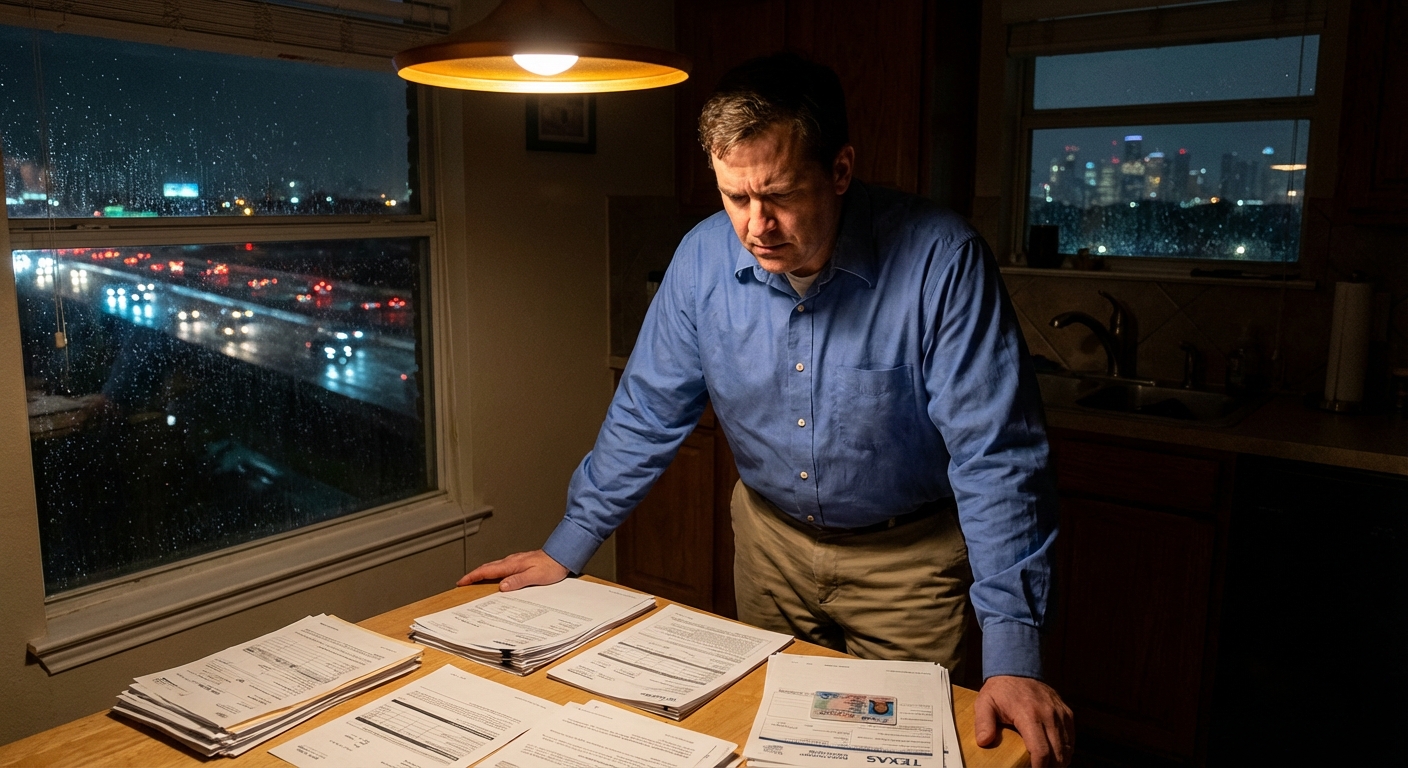
Texas DWI ALR Hearing Deadline: What Houston Drivers Must Do In 15 Days To Protect Their License
If you are arrested for DWI in Texas, you usually have only 15 days from the date you receive the notice of suspension to request an ALR hearing and try to save your driver’s license. Missing that 15 day ALR deadline almost always means an automatic license suspension, even before your criminal DWI case is resolved.
You are probably juggling work, family, and a flood of questions. This guide walks you step by step through what the ALR process is, how the 15 day window really works, what to do in the first 24 to 72 hours after a Houston DWI arrest, and how the criminal case and license case fit together. The goal is simple: help you protect your license, your job, and your routine while you decide your next legal moves.
First things first: the 15 day ALR deadline and what it really means
When you are arrested for DWI in Texas, the officer usually takes your plastic driver’s license and hands you a piece of paper that acts as a temporary permit. That notice also triggers the administrative process that can suspend your license. You then have about 15 days from the date you receive that notice to request a hearing.
For many drivers in Houston and Harris County, this deadline is the single most important early step. If you do nothing, your temporary driving permit will expire and a suspension will kick in automatically for a set period, often 90 days or more, depending on whether you failed or refused a breath or blood test.
To understand the exact filing rules and options, it helps to review how to request an ALR hearing and keep your license along with the official Department of Public Safety portal. The Texas Department of Public Safety provides an Official DPS ALR hearing request and deadline portal where you or your lawyer can track and request the hearing electronically.
If you are reading this and you are not sure when you were arrested or when you received the notice, stop and check your paperwork. Count 15 days from that date, not from when you were released from jail. If you are anywhere near that line, treat it as urgent.
Immediate checklist after a Houston DWI arrest: first 24 to 72 hours
Right after a DWI arrest, your mind is racing. You are wondering what to tell your spouse, whether your boss will find out, and what this will cost. Here is a simple action checklist that speaks directly to those fears and focuses on protecting your license and job.
- Locate your temporary permit and notice of suspension. This is usually the sheet the officer gave you when your plastic license was taken.
- Mark the 15 day ALR deadline on a calendar. Put reminders on your phone for several days before the deadline.
- Gather paperwork from the arrest. Bond paperwork, towing receipt, any jail property sheet, and your citation all matter later.
- Write down your memory of the stop. Time of day, where you were in Houston or nearby, questions officers asked, field sobriety tests, and anything you said without a lawyer present.
- Review a clear guide with step-by-step actions to take after a first-time DWI arrest.
- Learn the exact steps to request an ALR hearing fast so you do not miss your license deadline.
If you are a working professional with a commute, kids’ activities, or job sites to visit, it helps to think of these steps as protecting your schedule. Every action you take in the first few days is aimed at keeping you driving legally while the case plays out.
What is an ALR hearing and how does it connect to your Texas DWI case?
The Administrative License Revocation process is a civil, not criminal, proceeding run through the Texas Department of Public Safety and the State Office of Administrative Hearings. It is separate from your criminal DWI case in Harris County or a nearby county, although both grow out of the same arrest.
At an ALR hearing, an administrative law judge reviews limited issues like whether the officer had reasonable suspicion and probable cause, whether you were properly informed of your rights, and whether you refused or failed a chemical test. The judge then decides whether to uphold or reverse the license suspension.
This is important for you because evidence revealed at the ALR hearing, such as the officer’s testimony and documents, can be useful in challenging the criminal case. Even if suspension cannot be avoided, the hearing can set up later options for an occupational license so you can keep driving for work and essential tasks.
A common misconception is that the ALR process is “just paperwork” and cannot help your criminal case. In reality, it is often the first chance for a lawyer to cross examine the arresting officer under oath and lock in their version of events.
Texas implied consent, test refusals, and how they affect your license
Texas has an implied consent law that says by driving on Texas roads, you are deemed to have consented to breath or blood testing if you are lawfully arrested for DWI. If you refuse, your license can be suspended for a longer period than if you take the test and fail, especially on a first offense.
The rules are detailed in the Texas implied-consent statute explaining chemical-test rules. In simple terms, you face an administrative suspension whether you refuse testing or provide a sample over the legal limit. The length of that suspension can range from around 90 days up to 2 years, depending on your history and the facts.
If your job requires a clean driving record, or you hold a commercial driver’s license, these choices carry extra weight. For a Houston driver who spends most days on the road, a longer suspension can threaten income, promotions, and basic stability at home.
How the ALR suspension timeline usually works in a Texas DWI
Every case is unique, but many first time Texas DWI arrests follow a similar license timeline.
- Day 0: Arrest and notice of suspension given, license confiscated, and temporary permit issued.
- Days 1 to 15: Deadline window to request the ALR hearing. If no request is made, the suspension usually kicks in automatically around 40 days from the date of notice.
- After a timely request: DPS schedules an ALR hearing, often several weeks to a few months out, depending on the county and docket.
- Before the hearing: Your lawyer can request evidence, police reports, and video, and may issue subpoenas for officers to appear.
- At the hearing: The administrative law judge decides whether to uphold or reverse the suspension.
During this time, you can usually keep driving on your temporary permit or until the order of suspension takes effect. If you are in a field where missing work even a few days could put your position at risk, planning for this timeline matters.
Micro story: how one Houston professional handled the ALR clock
Imagine a 36 year old project manager in Houston who is stopped late on a Friday night after a client dinner. He is arrested for DWI, spends the night in jail, and is released Saturday morning with paperwork and a temporary license. On Monday he is back at his desk pretending nothing is wrong, but inside he is panicked about his job and his kids’ carpool.
At first, he considers just “seeing what happens.” Midweek, he finally looks at his paperwork and realizes the 15 day ALR deadline is the following Thursday. By acting within that window and requesting the hearing, his license is not automatically suspended at day 40, and his lawyer uses the hearing to obtain dashcam video and question the officer. That evidence later becomes vital to negotiating a better outcome in the criminal case.
Your facts will be different, but the lesson is the same. Treat the ALR clock as real, and do not wait until the last day to get informed about your options.
Solution-focused Analyst: data, track record, and typical ALR timelines
Solution-focused Analyst: If you think in terms of data and process, you probably want clarity on odds and timelines more than anything. No lawyer can promise a specific result, but there are some realistic patterns.
- In many Texas DWI cases, the ALR hearing is scheduled 30 to 90 days after the request is filed.
- First time DWI drivers with no prior alcohol related contacts are often eligible for shorter suspensions or occupational licenses if the suspension is upheld.
- In some contested ALR hearings, officers fail to appear or evidence has issues, which can lead to the suspension being denied, although there is never a guarantee.
- The majority of criminal DWI cases in urban counties like Harris County resolve within 6 to 12 months, but some move faster or slower depending on complexity.
If you appreciate structure, it may help to keep a simple spreadsheet with your arrest date, ALR request date, hearing date, and court settings. This makes it easier to talk through your situation with a Texas DWI lawyer who can explain which outcomes are realistic for someone in your position.
Status-Conscious Executive: discretion and high-stakes license protection
Status-Conscious Executive: If you are a senior manager, executive, or public figure in Houston, your top concerns may be privacy and keeping disruptions out of the boardroom. An ALR suspension that suddenly prevents you from traveling to key meetings or client sites can be more damaging than the underlying charge if it is not handled carefully.
You can ask about strategies that prioritize discretion, such as limiting who within your organization must know about court dates, using early morning or late afternoon settings when possible, and planning license solutions that keep you able to meet core business obligations. Good communication and clear scheduling help maintain your professional image while your case is handled.
Understanding Texas DWI penalties and how ALR fits into the bigger picture
While this article focuses on the ALR hearing and your license, it is important to see how that fits into the full range of DWI consequences in Texas. A first time DWI is usually a Class B misdemeanor, with potential penalties that can include up to 180 days in jail, fines, court costs, probation, classes, and surcharges. Higher BAC levels or prior DWIs can raise the stakes and, in some cases, lead to felony charges.
The ALR suspension is just one part of that. You might face:
- Administrative license suspension for refusing or failing a test.
- Possible license restrictions or ignition interlock as part of a plea or probation.
- Higher insurance rates for several years.
- Long term record consequences, because a DWI can stay on your record indefinitely unless it is later made eligible for some type of relief.
For a Houston professional with a clean history, the fear is often that one night will erase years of hard work. Understanding the range of penalties, and where your case falls within that range, can calm that fear and help you weigh options like contesting the charge, negotiating a plea, or exploring alternative outcomes allowed under Texas law.
Protecting your career and professional license after a Texas DWI
If you hold a professional license or work in a regulated field, a DWI arrest in Texas can create extra anxiety. Nurses, teachers, engineers, real estate agents, and many other professionals worry about mandatory reporting rules and background checks.
The impact on your employment usually depends on three things: your employer’s policies, your specific role, and whether the DWI leads to a conviction or is resolved in a way that avoids one. Timelines also matter. Some people are never asked about an arrest, while others must report it within a set number of days.
For more detail on job related issues, you may want to review practical steps to minimize employment and licensing risk. When you talk with a Texas DWI lawyer, bring any employee handbook or professional licensing rules you have, so you can get guidance tailored to your field.
Elite Most-Aware: confidentiality and smooth, low-friction handling
Elite Most-Aware: If you have worked with lawyers before and already know you want experienced help, your main questions might be about confidentiality and how smoothly your case can be handled behind the scenes. Texas DWI proceedings are public, but there are still ways to minimize attention, manage schedules, and keep your life as normal as possible during the case.
Ask about who will actually handle your hearings, how updates will be delivered, and what you can do proactively so your day to day routine feels as seamless as possible. Even when the situation is stressful, a clear plan and discreet communication can make the process feel more controlled.
Young Unaware: why the 15 day ALR deadline and real costs matter
Young Unaware: If this is your first real run in with the legal system, it is easy to think a DWI is “just a ticket” that goes away if you pay a fine. In Texas, that is not how it works. A DWI is a criminal charge that can bring hundreds or thousands of dollars in fines and fees, license suspension, higher insurance, and a record that can follow you for years.
The 15 day ALR deadline is your early warning sign. Missing it can leave you without a license just when you are starting a career or taking care of school and family responsibilities. Using those first two weeks wisely, and getting informed about your options, can protect your ability to drive to work, pay your bills, and move forward.
Common misconceptions about Texas DWI and ALR hearings
When you search online or talk to friends, you will hear a lot of myths about DWI and license hearings. It helps to clear up a few of the big ones.
- “If I passed field sobriety tests, I have nothing to worry about.” In reality, those tests are subjective and only one piece of evidence. The State can still pursue a DWI based on officer observations and other factors.
- “The ALR hearing is pointless if they already have my breath or blood result.” Not true. The hearing is often where problems with the stop, arrest, or testing come to light, and it can affect both the suspension and the criminal case strategy.
- “A first DWI in Texas always goes away if I just wait long enough.” DWI charges are serious and usually will not simply disappear with time. Court settings and negotiations take time, but the case requires active handling.
- “My employer will automatically fire me if they find out.” Many employers look at the total picture, including your performance, how you handle the situation, and whether the charge becomes a conviction. Honest, thoughtful planning can reduce the risk to your career.
The key is to separate rumors from actual Texas law and procedure. An informed approach gives you a better chance to manage both the criminal charge and your license.
How a Texas DWI lawyer typically approaches the ALR process
While every attorney has a personal style, many Texas DWI lawyers follow a similar structure when handling ALR hearings, especially for professionals who need to keep driving.
- Confirm deadlines and file the ALR request to stop an automatic suspension while the case is reviewed.
- Request and review evidence like police reports, breath or blood test records, and dash or body cam video.
- Subpoena officers when appropriate to appear at the ALR hearing and testify under oath.
- Use the hearing to test the State’s case and look for weaknesses or inconsistencies that can also help in the criminal court.
- Plan for occupational license options if the suspension is upheld, to keep you driving for work and essential duties.
The point of this process is to protect your license where possible and, at the same time, gather information that can support your broader defense. You stay focused on your job and family while someone with Texas DWI experience tracks the moving pieces.
FAQ: key questions about the Texas DWI ALR hearing deadline
How long do I have to request an ALR hearing after a Texas DWI arrest?
In most Texas DWI cases, you have about 15 days from the date you receive the notice of suspension to request an ALR hearing. If you miss this deadline, your license is usually suspended automatically on the date listed in your paperwork, often around 40 days from the notice.
Will my license be suspended automatically in Houston if I do nothing?
Yes, if you do not request an ALR hearing within the 15 day window, the suspension typically goes into effect automatically. This can happen even if your criminal DWI case in a Houston court has not been resolved yet.
Does winning the ALR hearing in Texas mean my DWI is dismissed?
No, the ALR process is separate from the criminal DWI case. Winning the ALR hearing usually means your license is not administratively suspended for that event, but the prosecutor can still move forward with the criminal charge unless there are other issues.
How long can a Texas DWI stay on my record?
A DWI in Texas can stay on your criminal record indefinitely, which is why many people focus on minimizing long term effects from the beginning. Some situations may allow for limited relief under Texas law, but that depends on how the case is resolved and your history.
Can I get an occupational license in Texas if my DWI suspension starts?
Many drivers in Houston and around Texas are eligible for an occupational license after an ALR suspension begins, especially on a first offense. An occupational license can allow you to drive for work, school, and essential household duties, subject to court and DPS rules.
Why acting early on your Texas DWI and ALR hearing matters
You do not have to become a legal expert overnight, but you do need to take a few smart steps quickly. Marking the ALR deadline, requesting the hearing, and gathering your paperwork can make the difference between driving legally and suddenly losing your license while your case is still pending.
For someone in your position, with a job to protect and a family schedule to keep steady, time is not your enemy as long as you use it. Focus on the next right move, ask clear questions, and consider speaking with a Texas DWI lawyer who works with Houston and Harris County cases every day. If you want a more interactive explanation of these issues, you can also explore an interactive Q&A resource with practical DWI tips that walks through common scenarios.
For younger or first time drivers, remember this: a DWI in Texas is more than a bad night. It can affect your license, your wallet, and your record for years. Respect the 15 day ALR window, learn your options, and treat this as a serious problem that deserves a thoughtful, informed response.
Below is a short video that walks through the first critical actions after a Texas DWI arrest. It covers requesting the ALR hearing, preserving evidence, and when to contact an attorney, which aligns with your need to protect your job, license, and family routine as a working professional.
Butler Law Firm - The Houston DWI Lawyer
11500 Northwest Fwy #400, Houston, TX 77092
https://www.thehoustondwilawyer.com/
+1 713-236-8744
RGFH+6F Central Northwest, Houston, TX
View on Google Maps


No comments:
Post a Comment