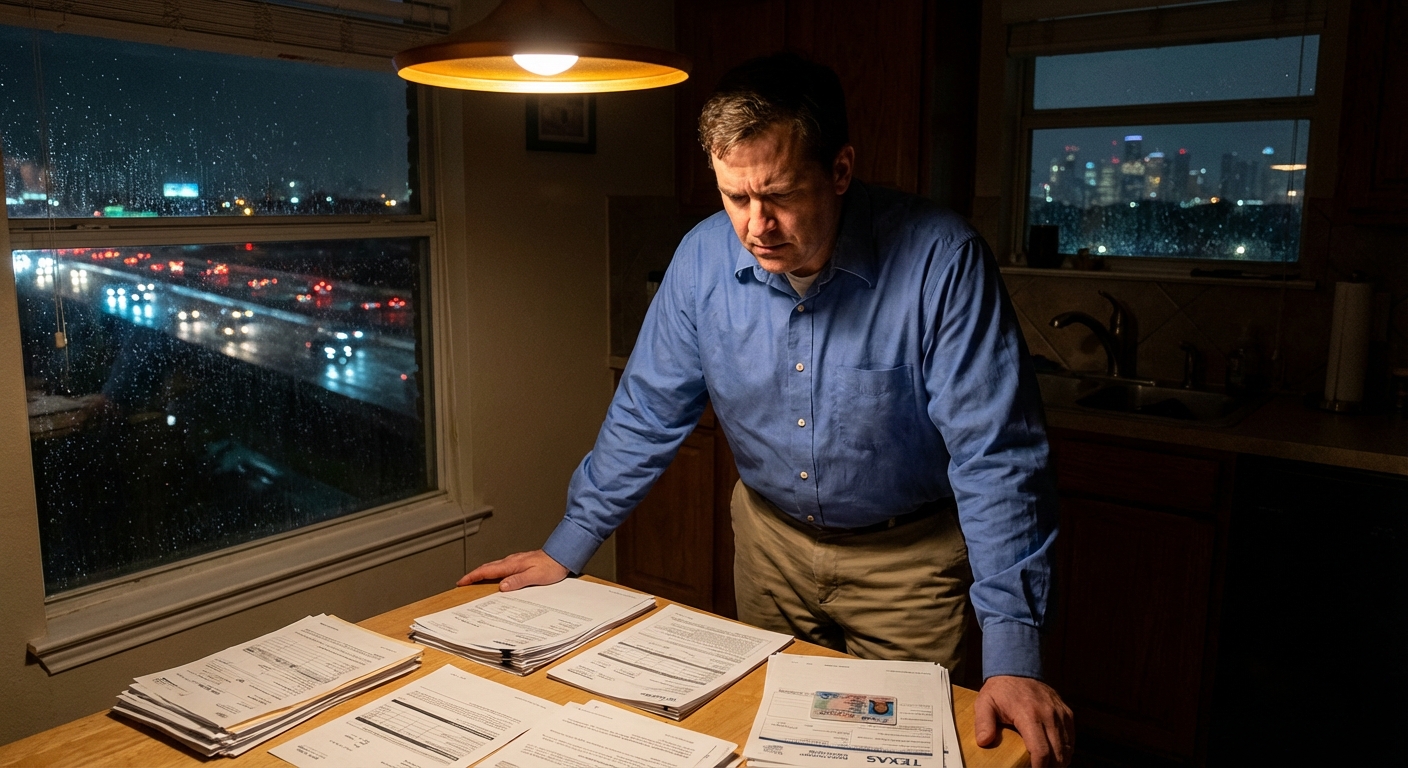
Texas 15‑Day DWI License Suspension Deadline: What Houston Drivers Must Do Right Now
After a Texas DWI arrest, you have only 15 days from the date you receive the Notice of Suspension to request an ALR hearing and try to save your driver’s license, and if you miss that 15‑day deadline your license is usually suspended automatically. In Houston and across Texas, that single deadline often matters more for your ability to work and support your family than anything that happens in court in the first few weeks. This guide walks you through what that 15‑day rule means, how the ALR process works, and the practical steps you can take today to protect your license, job, and finances.
If you are a mid‑career provider who just got arrested, your mind may be racing: How will I get to work, what will this cost, will my boss find out. The 15‑day ALR deadline is your first chance to slow things down and put a plan in place instead of just reacting.
First things first: what you must do in the next 15 days
Right now, your most urgent task is to stop an automatic driver’s license suspension by requesting an ALR hearing within 15 days of receiving your Notice of Suspension or Temporary Driving Permit. That notice is often the yellow piece of paper the officer handed you when they took your plastic license.
To understand the mechanics and options, it helps to read a step by step explanation of how to request an ALR hearing and preserve your license. You can also use the Texas Department of Public Safety’s Official DPS portal to request an ALR hearing directly if you are handling this part yourself. Many people feel better having a Texas DWI attorney handle this request so it is filed correctly and on time.
For a deeper, plain‑English walkthrough of the very first days after a Houston‑area DWI, you may also want to review an urgent first‑72‑hour checklist and ALR action steps so you do not miss anything important while the shock is still fresh.
If you are like many hardworking parents in Harris County, losing your license even for a short time could mean missed shifts, lost income, and chaos at home. That is why this 15‑day window matters so much.
Simple checklist for the next few days
- Find the date on your Notice of Suspension or Temporary Driving Permit and count 15 calendar days forward.
- Write that 15‑day deadline on your calendar and set reminders for several days before.
- Request your ALR hearing in writing through DPS or through a lawyer before day 15.
- Gather basic documents such as your ticket, bond paperwork, and any paperwork from the jail.
- List work and driving needs so you can explain to a lawyer why you must keep your license.
For many providers, this is the single most important administrative step in the entire DWI case. You can deal with the criminal court dates, but if you cannot legally drive to work in Houston traffic, everything else gets harder.
Understanding the Texas ALR process after a DWI arrest
The Administrative License Revocation process is a separate civil process that runs alongside your criminal DWI case. DPS, not the criminal court, handles whether your license is suspended because of a DWI arrest or breath test refusal or failure. That separation can be confusing if this is your first arrest.
Here is how it usually works for a Houston driver:
- You are arrested for DWI and either fail a breath or blood test or refuse testing.
- The officer gives you a Notice of Suspension and often takes your plastic license.
- You have 15 days from that notice to request an ALR hearing.
- If you request the hearing on time, you usually receive a temporary permit so you can keep driving until the hearing is held and decided.
- If you do not request the hearing in time, DPS typically suspends your license on the 40th day after the notice date.
In Harris County and surrounding counties, your ALR hearing might be held in person or by phone, depending on current DPS procedures. This hearing is not about guilt or innocence for DWI. It focuses on whether the officer had reasonable suspicion to stop you, probable cause to arrest you, and whether you failed or refused a test under Texas law.
If you are the main provider for your family, understanding this second track of your case is critical. You may feel tempted to ignore the letters and focus only on the criminal court date, but the ALR case is what decides whether you can drive to work next month.
Texas implied consent, test refusals, and how they affect your license
Texas has an “implied consent” law that affects every licensed driver. Under Texas statute explaining implied consent and refusals, if you are lawfully arrested for DWI, you are considered to have already consented to provide a breath or blood sample. You can still refuse, but that refusal usually triggers an ALR suspension that can be longer than if you took and failed a test.
Here is how test results typically affect your license risk:
- Test refusal: For a first DWI, a refusal can lead to a proposed license suspension of around 180 days.
- Test failure: If your blood alcohol concentration is at or above the legal limit, your proposed ALR suspension is often around 90 days for a first DWI.
- Prior ALR actions or DWI convictions can increase those suspension periods significantly.
A common misconception is that refusing a test “helps your case” automatically. In reality, a refusal can create a tougher ALR situation and may not prevent the state from getting blood evidence another way. If your career depends on being able to drive reliably in the Houston area, you need to understand exactly how your test decision impacts your license and what can still be challenged at the ALR hearing.
Realistic financial and job consequences if you miss the 15‑day deadline
To see how serious this can be, consider a common scenario. A mid‑level supervisor in Houston earns about $30 per hour and works 45 hours a week. If his license is suspended and he cannot reliably get to the job site in Katy or Baytown, he may be written up for absences or late arrivals and could even lose his position.
Even without losing a job, the costs add up quickly:
- Rideshare or cab costs to and from work each day.
- Increased insurance rates if a DWI conviction or ALR suspension goes on his driving record.
- Fines, court costs, possible ignition interlock fees, and license reinstatement fees.
Many people are surprised to learn that when you add everything together, a Texas DWI with related license issues can easily cost thousands of dollars over time. For the Carefree Young Adult who thinks “it is just one night,” it can help to know that between fines, fees, insurance, and transportation, even a first DWI can run several times more than a typical monthly rent payment in Houston.
For a Provider Panicked reader, the bottom line is simple. If you miss that 15‑day ALR deadline, you remove one of the few tools that might help you keep your license, which can drive total costs and work disruption much higher.
How protecting your license helps protect your job and family
Keeping your ability to drive legally is often the key to keeping everything else stable. In Harris County and nearby counties, public transportation rarely offers a realistic option for most work schedules. If you need to be on a job site at 6 a.m. or pick up kids from daycare before closing, you probably rely on your own vehicle every day.
When you timely request an ALR hearing, you give yourself at least three advantages:
- Time to keep driving to work while the hearing is pending.
- A chance to challenge the stop and arrest which can sometimes prevent a suspension.
- Early access to evidence that may also help in the criminal DWI case.
Imagine you are already covering the mortgage, car notes, and daycare. A sudden license suspension can force you to turn down overtime, miss school events, or rely on relatives and coworkers for rides. Protecting your license as early as possible gives you more control over your schedule and your income.
For the Status-Conscious Executive, there is an added layer. You may worry about how a suspension looks within your company or industry if word gets out. Careful handling of the ALR process and any requests for restricted licenses can help reduce the chances that colleagues or clients ever notice a change.
Evidence and data: what the ALR hearing can show about your case
Many people in the Analytical Job-Protecter category want proof and numbers, not just reassurance. The ALR process can be useful because it often forces the state to disclose important evidence early, such as the officer’s police report, the breath test records, or notes about your field sobriety tests. When a lawyer cross‑examines the officer at the ALR hearing, the testimony is usually recorded and can later be used to test the officer’s memory or credibility in the criminal case.
To see how different cases can turn out, you can look at examples of past DWI outcomes and results we’ve achieved. No two cases are the same and past results do not guarantee any outcome, but real examples can show you that dismissals, reductions, and successful license protections are possible in the right circumstances.
From a numbers perspective, not every ALR hearing results in a win for the driver. However, requesting the hearing often leads to better awareness of the evidence and sometimes to more favorable options in the criminal case. For an analytical reader, that early discovery and the ability to pin down the officer’s story on the record can be just as valuable as the chance to avoid a suspension.
Special risks for licensed professionals and the Careful Professional (nurse)
If you are a Careful Professional (nurse) or hold any professional license, a Texas DWI and any related license suspension can have extra consequences. In some fields, boards may ask about arrests, convictions, or alcohol related incidents. Even if your employer is supportive, your licensing board may review your situation more strictly.
For nurses, teachers, CDL holders, and similar professionals, protecting your driver’s license and keeping your record as clean as possible is not just about getting to work on time. It can influence whether you stay in good standing with your board or meet background check requirements for promotions and new jobs.
That is one reason why the ALR hearing and the 15‑day deadline matters so much. A license suspension on top of a DWI charge may raise more questions in a board review than a case where the driver fought the suspension aggressively from day one. Learning how to protect your license and work in 15 days can be especially important if your livelihood depends on both a clean criminal record and a valid license.
Common misconceptions about the 15‑day ALR deadline and Texas DWI
When you are newly arrested, it is easy to rely on myths from friends or coworkers. Correcting a few of the most common misunderstandings can help you make better decisions.
Misconception 1: “If I just plead guilty, this will be over quicker and cheaper.”
Many providers think a quick guilty plea is the fastest way to get life back to normal. In reality, a guilty plea does not undo any ALR suspension, and it can lead to higher long‑term costs through insurance, employment issues, and difficulty renting vehicles or traveling for work. Exploring your options before any plea often reveals alternatives like reductions, dismissal possibilities, or programs that can reduce the impact on your record and license.
Misconception 2: “The ALR hearing is pointless, so why bother.”
Some drivers believe the ALR hearing is just a formality that the state always wins. While not every case avoids suspension, the hearing is often the only structured chance to question the officer under oath early in the process. It can uncover mistakes or weak points in the stop, arrest, or testing that become very important later.
Misconception 3: “My job will not care as long as I handle it on my own.”
In some workplaces that may be true, but many employers and professional boards run regular background or driving record checks. A DWI conviction or license suspension that could have been fought more effectively can create difficult conversations months or years down the road. Protecting your license early is often part of protecting your long‑term career.
Privacy, discretion, and the needs of high‑stakes readers
If you identify with the Status-Conscious Executive or High-Need Confidential personas, you may be less worried about fines and more focused on privacy and long‑term reputation. You may ask questions like: Who will see my records, will this appear on background checks for board appointments, or will the people in my industry hear about it.
Texas DWI and ALR proceedings are legal matters and certain parts of them are public by default. However, how your case is handled, who attends your hearings, and what information is proactively shared can be managed carefully. Discreet representation, limited sharing of case details, and thoughtful decisions about media and online exposure can help reduce the risk of broader reputational damage.
For readers who need a very private approach, it is reasonable to ask any lawyer you speak with about how they handle confidentiality, who in the office will know about your case, and how they communicate about sensitive matters.
Step by step: navigating your Houston DWI and ALR case
Once the initial shock wears off, it helps to see your situation as a series of steps. You do not have to solve everything at once. You just need to stay ahead of the most important deadlines and build a clear picture of your options.
Step 1: Secure the ALR hearing before day 15
As discussed above, this is the first and most urgent task. Whether you or a lawyer submits the request, verify that it was filed correctly and before your specific deadline.
Step 2: Organize your paperwork and calendar
Gather your citation, bond paperwork, Notice of Suspension, and any court date notices. Use your phone or a notebook to track your ALR deadline, your first court appearance in the criminal case, and any employer or professional board reporting deadlines you may face.
Step 3: Map out the likely timeline
In Houston and surrounding counties, first court dates for DWI can range from a few weeks to a couple of months after the arrest. ALR hearings are usually set within a few months as well. Having a rough timeline lets you plan around busy work seasons, family obligations, and vacation time, so you can attend what you must attend without extra stress.
Step 4: Review potential defenses and outcomes
Texas DWI cases are very fact specific. Defenses may involve challenging the legality of the stop, how field sobriety tests were performed, the accuracy of breath or blood tests, and whether all procedures were followed correctly. Possible outcomes range from case dismissal to reductions or negotiated resolutions that can limit the impact on your record and license. Each choice carries different consequences for work, travel, and professional licenses.
Step 5: Plan for worst‑case and best‑case scenarios
A calm, realistic plan considers both what you hope will happen and what you will do if license restrictions or other conditions are imposed. That might mean arranging backup transportation to your job sites, adjusting work hours temporarily, or discussing short‑term flexibility with a trusted supervisor.
Frequently asked questions about the 15‑day Texas DWI ALR deadline
What happens if I miss the 15‑day deadline after a Texas DWI arrest?
If you miss the 15‑day window to request an ALR hearing, DPS will usually suspend your Texas driver’s license automatically on the 40th day after the date on your Notice of Suspension. You lose the chance to challenge the stop, the arrest, or the test at an ALR hearing. You may still be able to seek a restricted or occupational license in some situations, but the process is more limited and often more expensive.
Does the 15‑day DWI deadline work differently in Houston or Harris County?
No, the 15‑day ALR deadline is a Texas state rule, so it applies the same in Houston, Harris County, and nearby counties. The way hearings are scheduled and where they are held can vary by region, but the number of days you have to request the hearing is the same statewide. Local experience can still matter because Harris County officers, courts, and DPS offices may follow certain local practices within that statewide framework.
Can I keep driving to work after a DWI arrest in Texas?
In many cases you can keep driving for a limited time as long as you timely request an ALR hearing. The Notice of Suspension or temporary permit you received from the officer usually lets you drive for 40 days or until your ALR case is decided. If your license is later suspended, you may be able to apply for an occupational license that lets you drive for work and essential household duties, subject to specific rules and restrictions.
How long can a DWI related license suspension last in Texas?
For a first Texas DWI with no prior ALR actions, an ALR suspension often ranges from about 90 days for a test failure to around 180 days for a test refusal. Prior DWI convictions, ALR suspensions, or certain aggravating factors can increase the suspension period. Criminal court penalties and separate suspensions can also stack additional time on top of the ALR action, so it is important to understand how all parts of your case fit together.
Will my employer in Houston automatically find out about my DWI or license suspension?
There is no single statewide rule that forces DPS or the court to notify every private employer about a DWI arrest or ALR suspension. However, employers often find out through background checks, driving record pulls, or changes in your ability to drive for work. Certain professional licenses and government or safety‑sensitive jobs have stricter reporting requirements, so it is important to review your specific employment policies and any professional board rules that apply to you.
Why acting early on the 15‑day deadline matters more than you think
Acting within the 15‑day ALR window does more than just delay a possible license suspension. It gives you breathing room, a chance to see the evidence a bit sooner, and a structured way to push back against a system that can feel overwhelming. For a Provider Panicked reader, it is one of the most practical ways to protect your ability to work, pay bills, and take care of your family while the legal process plays out.
If you want more detail or need to explore how these rules might apply to a specific situation, an interactive Q&A resource for common Texas DWI questions can help you dig deeper into issues like ALR timelines, occupational licenses, and potential defenses. You can then discuss what you learn with a qualified Texas DWI lawyer who can tailor the advice to your exact facts, job requirements, and family needs.
Even if you feel ashamed or frustrated about what happened, remember that one arrest does not define you. Taking the simple but critical step of protecting your license within 15 days is a concrete way to start stabilizing the situation.
Once you have your ALR request filed, you can shift your focus to long‑term strategy. That includes exploring defenses, understanding possible outcomes, and planning for any temporary restrictions in a way that keeps your job, finances, and family life as steady as possible.
Below is a short, practical video guide that walks through these first steps in plain English.
Butler Law Firm - The Houston DWI Lawyer
11500 Northwest Fwy #400, Houston, TX 77092
https://www.thehoustondwilawyer.com/
+1 713-236-8744
RGFH+6F Central Northwest, Houston, TX
View on Google Maps


No comments:
Post a Comment