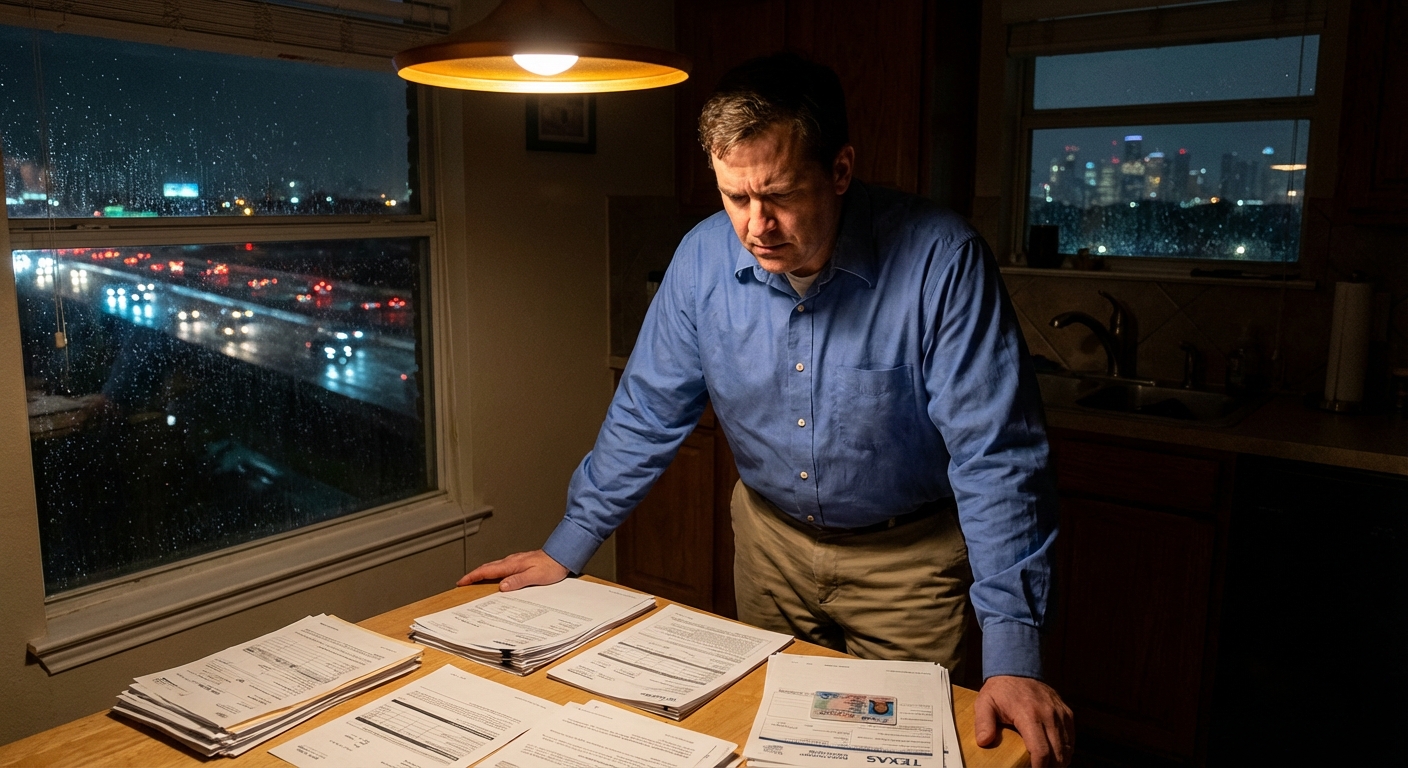
Protecting Your Texas Driver’s License After a DWI Arrest: 15‑Day ALR Deadline, Job Impact, and Next Legal Steps
If you were just arrested for DWI in Texas, you usually have only 15 days to request an Administrative License Revocation (ALR) hearing before your driver’s license is set for automatic suspension, so acting quickly is critical if you want to keep driving to work and supporting your family. That ALR deadline is separate from your criminal DWI case, but it can hit your job, income, and daily life just as hard if you miss it. In Houston and across Texas, understanding this deadline and your options in the first two weeks can make a real difference in how much damage this one arrest does to your career and record.
This guide walks you step by step through what to do in those first stressful days after a Texas DWI arrest, how the ALR process works, what penalties you are facing, and how people in your position often protect their license, job, and long‑term future.
First 15 Days After a Texas DWI Arrest: Your Immediate Checklist
Right now, you are likely replaying the arrest in your head and wondering if one bad night will cost you your job, your reputation, and your ability to drive your kids to school. The most important thing in these first days is to move from panic to a clear checklist so you do not miss any deadlines.
For a deeper, step‑by‑step breakdown of these early decisions, many Houston drivers find it useful to review a dedicated stepwise 15‑day ALR checklist for Houston drivers while they work through the list below.
1. Mark your 15‑day ALR deadline on a calendar
In most Texas DWI cases, you have 15 days from the date of your arrest or the date you received a Notice of Suspension to request an ALR hearing. If you do nothing, your license is typically set to be suspended 40 days after that notice. Put this deadline in your phone, on a paper calendar, and anywhere you will see it.
2. Request your ALR hearing to fight the license suspension
The ALR hearing is your chance to challenge the automatic suspension of your driving privileges. It is separate from your criminal DWI case, and it can also be a valuable opportunity for your attorney to obtain evidence and cross‑examine the arresting officer.
To understand the process in more detail, you can read about how to request an ALR hearing and preserve your license, which explains timing, forms, and what to expect at the hearing. You can also use the official Texas Department of Public Safety’s DPS portal to request an ALR hearing online if you are handling the initial request yourself.
If you are the main provider for your family, requesting this hearing quickly helps you keep the possibility of driving to work open, instead of waking up one morning to find that your license is already suspended.
3. Gather key documents and information
While you are within that 15‑day window, start pulling together everything related to your arrest. This might include:
- The DIC‑24 statutory warning and DIC‑25 Notice of Suspension, if you received them
- Any paperwork from the jail about your charges and court date
- Your bond conditions
- Names of any passengers or witnesses
- Receipts or proof of where you were before the stop
Having this information ready makes it easier for a lawyer to give you clear, specific guidance quickly. It also gives you a sense of control at a moment when everything feels chaotic.
4. Protect your work schedule and transportation now
If you rely on driving around Houston, Harris County, or surrounding counties for work, think ahead about what happens if your license is suspended for a time. Can you work remotely some days, adjust your hours, or temporarily carpool or use rideshare when needed? For many providers, these conversations feel uncomfortable, but proactive planning can reduce the chance that a suspension blindsides your employer or your paycheck.
5. Talk with a qualified Texas DWI attorney about both cases: ALR and criminal
The ALR and criminal DWI cases have different rules, deadlines, and possible outcomes. A Texas DWI attorney can walk you through both tracks, explain what is realistic in your situation, and help you avoid mistakes that could hurt your license or your court case. If you are the person holding your family’s financial life together, having a clear plan from someone who works with these cases every day can ease a lot of the panic you are feeling right now.
How the Texas ALR Process Works and Why It Matters for Your Job
Many people arrested for DWI in Houston are surprised to learn that the ALR process is run by the Texas Department of Public Safety, not the criminal court. It is an administrative hearing that focuses mainly on whether the officer had grounds to stop and arrest you and whether you refused or failed a breath or blood test.
Under Texas Transportation Code Chapter 524 on ALR rules, the length of a license suspension for a first DWI arrest can range from about 90 days to 1 year, depending on your age, your test results, and whether you refused testing. That is a long time to be juggling carpools, rideshares, and explanations to your boss about why you cannot drive.
For you as a working provider, the ALR hearing can matter for at least three reasons:
- It may prevent or delay suspension so you can keep driving legally, with fewer disruptions to work and family.
- It creates a record that your attorney can sometimes use to challenge issues in the criminal case later.
- It gives you an early read on the evidence and the officer’s testimony, which helps you make better decisions about plea offers versus trial.
If you drive a company vehicle, hold a commercial driver’s license, or work in a field like sales, construction supervision, or home services, losing your license can quickly turn into lost income. Treat the ALR process as seriously as the criminal case, because your employer usually cares more about whether you can show up on time and legally drive than about fine print in a statute.
Criminal DWI Case vs. ALR Hearing: Two Tracks, One Life
It helps to visualize your situation as two parallel tracks. On one track is your criminal DWI case in a Harris County or surrounding‑county court. On the other track is your ALR proceeding with DPS. Both can affect your ability to drive, your record, and your wallet, but they move at different speeds and follow different rules.
Criminal DWI case basics
Under Texas law, a first‑offense DWI is usually a Class B misdemeanor. That means potential penalties can include:
- Up to 180 days in county jail (often probated in first‑offense situations)
- Fines and court costs that can easily total $2,000 or more
- DWI education class and community service
- Driver’s license surcharges or fees
- Probation conditions such as ignition interlock, travel limits, and alcohol testing
The exact range depends on your blood alcohol concentration (BAC), whether there was a crash, and other factors like having a child passenger. For a more detailed breakdown, many people look at a quick overview of Texas DWI penalties and likely consequences to understand how prior convictions or high BAC can raise the stakes.
In the criminal case, your attorney may challenge the traffic stop, field sobriety tests, breath or blood results, or other parts of the investigation. Negotiations can sometimes lead to a reduction, a dismissal, or another resolution that protects your record, but each case is unique and must be evaluated on its own facts.
ALR proceeding basics
At the ALR hearing, DPS is trying to prove that the officer had reasonable suspicion to stop you and probable cause to arrest you, and that you either refused testing or failed a test at or above the legal limit. The burden of proof is lower than in criminal court, which is one reason many drivers assume it is not worth fighting. That assumption can be costly.
If DPS wins, the suspension usually starts shortly after the decision. If you win, the suspension may be avoided, and your attorney has an early transcript and evidence that can be helpful in the criminal case. Even when the suspension cannot be avoided completely, the steps you take can affect whether you are able to get an occupational license to drive to work, school, and basic household activities.
How a Texas DWI and ALR Suspension Can Affect Your Job and License
From a provider’s perspective, the biggest fear after a DWI arrest is that everything you built for your family could start to unravel overnight. It helps to break the risk down into stages so you can see where early action may help.
Stage 1: Immediate fallout at work
In the short term, the main issues are missed time from work for court dates and ALR hearings, plus the stress of trying to hide what happened. Some employers in Houston are understanding if this is your first offense and you handle it responsibly. Others, especially in safety‑sensitive positions, may be stricter.
If your company has a written policy on criminal arrests or DWI, review it carefully. You might also think through whether you will be asked about the arrest on any upcoming internal forms or security renewals.
Stage 2: License suspension and transportation problems
If your license is suspended through ALR or the criminal case, you may suddenly be unable to drive to job sites, client appointments, or your regular workplace. In Texas, even a 90‑day suspension can feel endless when you are juggling school drop offs, overtime, and bills.
Some drivers qualify for an occupational license that allows limited driving for essential purposes. The rules can be strict and may involve ignition interlock devices, proof of insurance, and specific driving times and routes. A Texas DWI attorney can explain whether an occupational license is realistic in your situation and how to stay compliant if you get one.
Stage 3: Long‑term career and licensure impact
For many working professionals, the bigger risk is not a few weeks of inconvenience, but how a DWI on your record might affect future promotions, professional licenses, or background checks. If you are in healthcare, education, financial services, commercial driving, or government work, you know that even a single misdemeanor can raise questions.
If this is your concern, it can be helpful to review detailed guidance on practical steps to protect your professional reputation after a DWI. Being proactive about documentation, compliance, and any required reporting can show licensing boards and employers that you are taking the incident seriously.
You are not the first person in a high‑responsibility role to face a DWI arrest in Houston. How you handle the next few months, and especially whether you miss or meet key deadlines, often matters more than the arrest itself in the long run.
Short Micro‑Story: One Provider’s Experience After a Houston DWI Arrest
Consider “Mark,” a mid‑career project manager in Harris County who was pulled over after a client dinner. He had never been arrested before. In the days after his DWI arrest, Mark felt sick every time he thought about his mortgage, his kids’ activities, and what his boss would say.
With help, he requested his ALR hearing within the 15‑day window, obtained the police reports, and started planning transportation in case his license was suspended. Over several months, he worked through the ALR process and his criminal case. While his situation was serious, the fact that he acted quickly on the license issue, followed his bond conditions carefully, and prepared for court kept his job secure and limited how much the case interrupted his daily life.
Your outcome will depend on your own facts, but this kind of structured, early response is often what separates a crisis that stays contained from one that snowballs into job loss and long‑term damage.
Analytical Strategist: What Do the Numbers and Timelines Look Like?
Analytical Strategist: If you are the type who wants data and clear timelines before you can breathe, it may help to know some general patterns in Texas DWI and ALR cases. While every case is different, a first‑offense DWI in Texas often runs through the criminal court system over a period of several months to a year, depending on the court’s docket and whether you are fighting the charges or pursuing a negotiated resolution.
On the ALR side, the initial suspension for a first‑time failed breath or blood test is often 90 days, while a refusal can lead to 180 days. In repeat‑offense or higher‑risk situations, those numbers can climb. Many cases end without a trial through negotiations or dismissal, sometimes after a review of video, lab results, and officer testimony from the ALR hearing. For someone in your position, the key metric is usually not conviction rates in the abstract, but how early action on the ALR hearing, evidence collection, and bond compliance might improve your specific options.
High‑stakes Professional: Discretion, Reputation, and “Will People Find Out?”
High-stakes Professional: If you are an executive, business owner, or high‑visibility professional in Houston, you may be less worried about fines than about headlines, internal gossip, or damage to your brand. Your biggest questions may be about who will see your case, how public records work, and what can be done to limit exposure.
Although an arrest record is generally a matter of public record, there are often ways to minimize how visible a DWI case becomes, especially if the charge is dismissed or reduced and you later qualify for record‑related relief under Texas law. Handle every court appearance, ALR hearing, and bond condition with the same level of planning you would bring to an important client meeting. Quiet, consistent compliance often keeps your case from drawing extra attention from employers, licensing agencies, or the media.
In sensitive roles, it is also important to think through how you would answer questions if your case appears on a background check. Preparing a short, truthful, and responsible explanation with the help of counsel can make those conversations less damaging if they ever occur.
Elite Confidential: High‑Net‑Worth and Confidential Handling
Elite Confidential: For high‑net‑worth clients and public figures, privacy and attorney‑led strategy may matter as much as the legal outcome. Texas DWI law applies the same to everyone, but the planning around travel, business commitments, security clearances, and media risk can be more complex.
If this describes you, it is reasonable to expect discreet, attorney‑driven handling that coordinates ALR, court dates, and potential occupational licensing with your existing obligations. Keep in mind that while confidentiality protections apply to attorney‑client communications, the underlying arrest records and court events are handled by public agencies, so early planning is still essential to manage your exposure.
Unaware Young Adult: Why a Texas DWI Is Much More Than “Just a Ticket”
Unaware Young Adult: Many younger drivers think a DWI is like a pricey speeding ticket that disappears in a year or two. In Texas, a DWI is a criminal offense that can stay on your record indefinitely and can affect jobs, housing, and school opportunities for years. For example, even a first‑offense DWI can carry up to 180 days in jail, hundreds or thousands of dollars in fines and fees, and a license suspension that makes it hard to get to work or class.
Even if you never see the inside of a jail cell, the combination of higher insurance rates, court costs, DWI education classes, and missed work days can cost far more than most people expect. Treating a DWI as “just a ticket” is one of the fastest ways to turn a short‑term mistake into a long‑term obstacle.
Common Misconceptions About Texas DWIs and ALR Hearings
As you try to stabilize your situation, you will hear plenty of well‑meaning but incomplete advice from friends and coworkers. It is important to separate myths from reality so you can make decisions that protect your license and job.
Misconception 1: “If I ignore the ALR paperwork, it will just go away.”
In reality, ignoring the ALR notice usually guarantees that your license will be suspended automatically once the 40‑day period runs out. You do not have to attend the hearing personally in every case, but the request must be made on time, and someone needs to handle the hearing strategically if you want a chance to avoid or shorten suspension.
Misconception 2: “First‑time DWIs are always dismissed in Houston.”
While some first‑offense DWIs in Harris County and neighboring counties are dismissed or reduced, many are not. Outcomes depend on the facts: the stop, your BAC, whether there was a crash or minor in the car, and the strength of the evidence. Hoping for an automatic dismissal can keep you from doing the early work that gives you the best shot at a favorable result.
Misconception 3: “If my license is suspended, I can just drive carefully and hope I do not get caught.”
Driving on a suspended license is a separate offense that can lead to more serious charges, longer suspensions, and even impoundment of your vehicle. It can also look very bad in front of a criminal court judge, especially when you are already facing a DWI. If your license is suspended, your energy is better spent exploring an occupational license and alternative transportation than risking another arrest.
Misconception 4: “If I blew under the legal limit, I am safe.”
Texas law focuses on whether you were intoxicated, not only on a specific number. While a breath test under 0.08 is often helpful to your defense, officers can still arrest if they believe your mental or physical faculties were impaired by alcohol or drugs. Evidence like field sobriety tests, driving behavior, and officer observations can still matter, which is why preserving and reviewing all available evidence is important.
Building a Defense Strategy That Protects Your License, Case, and Career
While you cannot change what happened on the night of the arrest, you do have significant control over what you do next. A strong defense strategy usually focuses on three areas: legal defenses, practical protections for your livelihood, and long‑term record management.
1. Legal defenses and evidence review
In both the ALR hearing and the criminal case, your attorney will look closely at the traffic stop, the detention, the arrest, and any testing. Questions often include:
- Did the officer have a valid reason to stop your vehicle?
- Were the field sobriety tests conducted according to proper procedures?
- Was the breath or blood testing equipment maintained and calibrated correctly?
- Were your constitutional rights respected throughout the process?
Sometimes problems in the evidence lead to reduced charges or dismissals. In other cases, identifying weaknesses gives your attorney leverage in negotiations so you can avoid the harshest consequences.
2. Protecting your livelihood and license
At the same time, you and your attorney can work on a plan that prioritizes your ability to work and support your family. This may involve aggressively pursuing your ALR hearing, seeking an occupational license if needed, coordinating court dates with your work schedule, and complying with bond conditions so you do not trigger additional problems.
For a provider, this practical layer of the strategy can feel just as important as legal arguments. It is one thing to win an argument about a traffic stop. It is another to make sure you can continue paying your mortgage and keeping food on the table while the case moves through the system.
3. Planning for your record and future opportunities
Finally, consider how your choices today affect your record over the next 5 to 10 years. Resolutions that avoid a permanent conviction may preserve more options for record‑related relief later. Completing court‑ordered classes, counseling, or community service diligently can also make a difference in how employers and licensing boards view the incident.
You cannot erase the fact that you were arrested. You can, however, influence whether this becomes a temporary setback or a permanent barrier to promotions, new job offers, and professional growth.
Frequently Asked Questions About Protecting Your Texas Driver’s License After a DWI
How long do I have to request an ALR hearing after a DWI arrest in Texas?
In most Texas DWI cases, you have 15 days from the date you receive the Notice of Suspension to request an ALR hearing. If you miss that deadline, your driver’s license is usually set to be automatically suspended 40 days after the notice. Requesting the hearing on time preserves your chance to contest the suspension and gather early evidence.
Will my employer in Houston find out about my DWI arrest?
Whether your employer finds out depends on your job duties, company policies, and whether your case affects scheduling or driving privileges. Some employers run periodic background checks or require disclosure of arrests in certain positions, especially in safety‑sensitive or licensed professions. It is wise to review your employee handbook and think ahead about how you would address questions if they arise.
Can I get an occupational license if my Texas driver’s license is suspended for DWI?
Many Texas drivers qualify for an occupational license that allows limited driving for essential purposes like work, school, and household tasks. Eligibility and requirements depend on your record, the reason for suspension, and whether you have prior alcohol‑related suspensions. A court can set conditions such as ignition interlock, specific driving hours, and proof of insurance.
How long does a DWI stay on my record in Texas?
In Texas, a DWI conviction can remain on your criminal record indefinitely unless you qualify for and obtain record‑related relief under specific laws. That is one reason the way your case is resolved can have long‑term consequences for jobs, housing, and professional licenses. Early legal advice can help you pursue options that protect your record as much as possible.
What is the difference between the criminal DWI case and the ALR hearing?
The criminal DWI case happens in a Texas court and focuses on whether you committed the offense of driving while intoxicated, which can lead to jail, fines, and a criminal record. The ALR hearing is an administrative process run by DPS that focuses on your driving privileges and whether your license should be suspended for refusing or failing a breath or blood test. Both tracks can affect your ability to drive, and both deserve careful attention.
Why Acting Early on a Texas DWI Matters for Your Family and Future
In the days after a DWI arrest, it is natural to feel ashamed, angry at yourself, and afraid of what this means for your family. The worst thing you can do is freeze and hope it will all work out on its own. Deadlines like the 15‑day ALR window move forward whether you are ready or not.
By taking a few clear steps now, you give yourself the best chance to contain the damage. Mark your deadlines. Request your ALR hearing. Gather your documents. Think through transportation and work logistics. Then sit down with a qualified Texas DWI lawyer to map out how to protect your driver’s license, your case, and your career based on the facts in front of you.
If you are a younger reader who thinks this is just an expensive lesson, keep this in mind: Texas DWI is linked to thousands of license suspensions every year, and many of those suspensions cost people jobs, promotions, and schooling opportunities they never get back. One decision, handled carefully and early, does not have to define the rest of your life. Handled carelessly, it can close doors for a long time.
For a brief, action‑focused overview, you can also watch a short video that walks through what to do in the first days after a Texas DWI arrest, including how ALR hearings fit into the bigger picture.
Butler Law Firm - The Houston DWI Lawyer
11500 Northwest Fwy #400, Houston, TX 77092
https://www.thehoustondwilawyer.com/
+1 713-236-8744
RGFH+6F Central Northwest, Houston, TX
View on Google Maps


No comments:
Post a Comment