What To Do After A DWI Arrest In Houston: Protecting Your License, Job, And Family In The First 72 Hours
If you were just arrested for DWI in Houston, your first 72 hours are critical because you only have a short time to protect your Texas driver license and start building a defense before things snowball. In plain terms, you must understand the 15 day ALR deadline, what the charges mean, and the steps to protect your license, job, and record so one mistake does not control the rest of your life.
You may feel like your entire world just flipped. As a working provider with a family, it is normal to be scared about losing your license, missing work, and paying for something you do not understand. This guide walks you, step by step, through what happens next after a DWI arrest in Houston and nearby Texas counties, and what you can do right now to protect yourself.
Big Picture: What A Texas DWI Arrest Really Means For You
After a DWI arrest in Texas, you face two separate problems at the same time: a criminal DWI case in court and a civil driver license case through the Administrative License Revocation (ALR) program. These are different processes but both can affect your ability to drive, work, and support your family.
Here is the simple breakdown:
- The criminal case happens in a county criminal court, for example in Harris County Criminal Court at Law for a first time DWI.
- The ALR license case is started by the Texas Department of Public Safety (DPS) and focuses only on your driving privileges, not guilt or innocence on the criminal charge.
Many people think pleading guilty quickly will make it all “go away.” In reality, a DWI conviction in Texas can carry jail time, fines that reach thousands of dollars, license suspension, and long term consequences for work and insurance. Acting early gives you more options, like contesting the ALR suspension, negotiating a reduction, or fighting to suppress bad evidence.
Unaware youngster: Even for a first DWI in Texas, the true cost can easily reach several thousand dollars once you add fines, court costs, probation fees, and higher insurance, so treating a DWI as “no big deal” is a mistake.
Your First 72 Hours After A Houston DWI Arrest: Step By Step
Right now you probably want someone to tell you exactly what to do next. This section gives you a clear checklist for the first three days after your arrest so you can protect your license and your job.
Step 1: Calm down, get your paperwork together
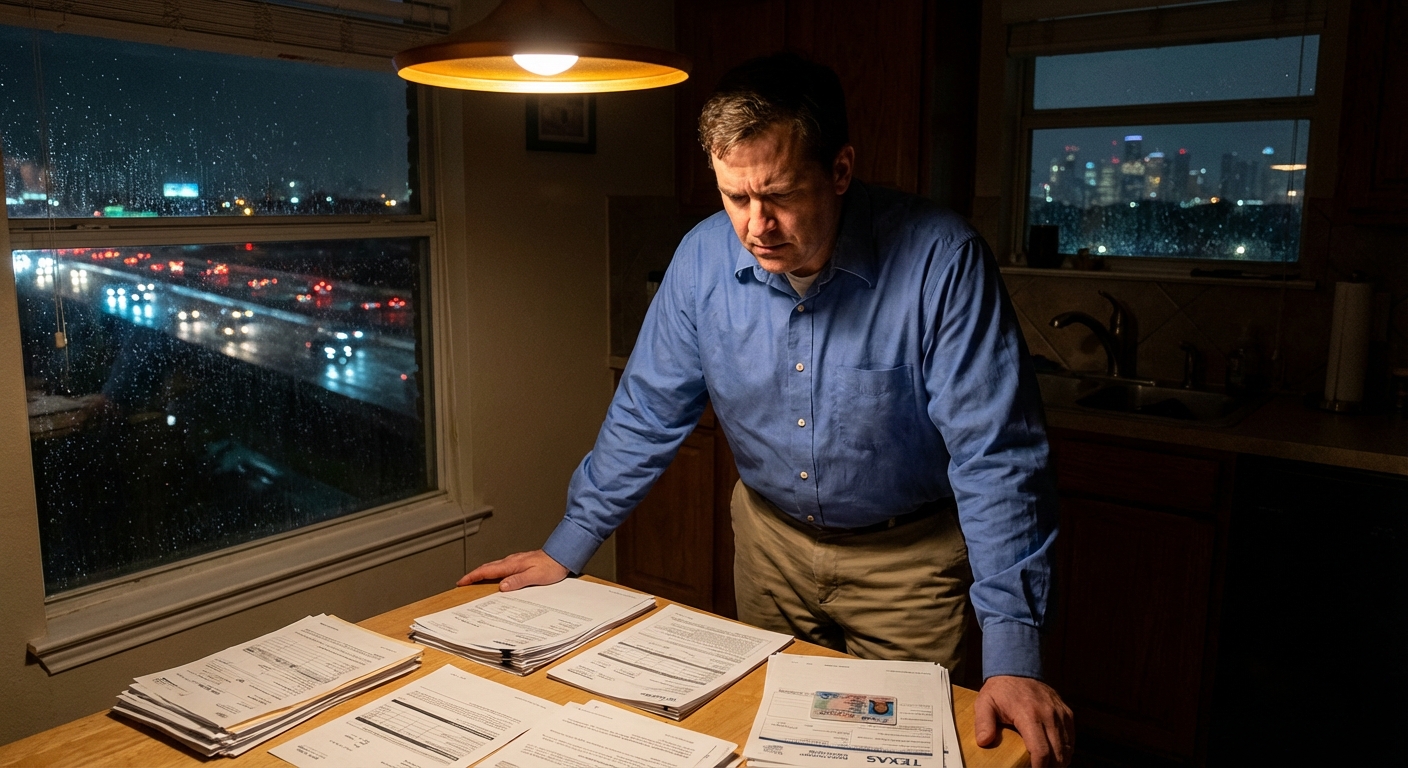
When you are released from jail, you likely received several documents. Keep all of these in a folder:
- Citation or charging paperwork showing your DWI charge and court date
- Bond receipt and any bond conditions, such as no alcohol or ignition interlock
- Notice of Suspension / Temporary Driving Permit (often a yellow form) if you took or refused a breath or blood test
- Property receipts or towing information
These papers may look confusing, but they contain key dates and information your lawyer will need. Take clear photos of everything in case anything gets lost.
Step 2: Mark the 15 day ALR deadline to save your license
On the date of your arrest, a 15 day clock usually starts to request an ALR hearing to challenge your license suspension. If you miss this deadline, DPS can suspend your driver license automatically even before your Houston DWI case goes to court.
For a deeper checklist, you can review an urgent 15‑day ALR deadline checklist and next steps that walks through the timing and common paperwork issues. You can also see the how to request and prepare an ALR hearing in Texas guide for an in depth explanation of the process and what happens at the hearing.
To actually file the hearing request on your own, you may use the Official DPS portal to request an ALR hearing, which allows Texas drivers to submit hearing requests within the required deadline. Missing the 15 day window is one of the most common and most damaging early mistakes.
Step 3: Think about how a suspension will affect work and family
As a construction manager or other provider, a suspended license can mean lost jobs, late arrivals, or even termination if you drive a company truck. Make a short list:
- How many days per week you drive for work
- Whether you drive company vehicles or personal vehicles for job sites
- Who depends on you for rides, such as children, elderly parents, or a spouse
This helps you explain your situation to a Texas DWI lawyer so they can look at occupational license options or ways to avoid a suspension.
Step 4: Avoid talking about your case with anyone but a lawyer
It is natural to vent to coworkers or post about what happened. That can backfire. Anything you say can be used later, including text messages and social media. You can talk about how you feel, but avoid talking about specifics of the stop, test, or what you told the officer. Save those details for a confidential talk with a lawyer.
Step 5: Learn the basic legal terms in plain English
You do not need to become a lawyer, but you should understand a few key phrases you will see in your paperwork:
- DWI is “Driving While Intoxicated.” In Texas, this usually means loss of normal use of mental or physical faculties due to alcohol or drugs, or a blood alcohol concentration of 0.08 or higher.
- ALR is “Administrative License Revocation.” It is the civil process where DPS tries to suspend your license for breath or blood test results or refusal.
- Occupational license is a limited license that may allow you to drive for work, school, and basic household needs while your license is otherwise suspended.
Knowing these basic terms helps you follow along and make good decisions. If you are more of an information driven reader, the Analytic chooser may want to see timelines and options laid out clearly, which we cover in later sections on penalties and defenses.
Understanding The ALR Hearing And License Suspension In Texas
For many working people in Houston, the first and biggest fear after a DWI arrest is losing the ability to drive. That comes from the ALR process, which runs on its own track separate from your criminal case.
How the ALR process starts
In most Texas DWI cases, the officer either gives you a breath test at the station or requests a blood sample. If your test shows 0.08 or higher, or if you refuse, DPS starts an ALR case to suspend your license. The officer takes your plastic license and issues a temporary permit that is usually valid for 40 days.
You then have 15 days from the date you received the notice to request a hearing. If you request the hearing on time, the temporary permit stays valid until the ALR hearing is decided.
How long can a license suspension last?
Suspension time depends on your history and whether you refused or failed a test:
- First DWI failure (0.08 or higher): usually a 90 day suspension
- First DWI refusal: usually a 180 day suspension
- Prior alcohol related suspensions can increase these periods and lead to longer suspensions
These numbers are typical, not guarantees. Your exact situation can be different if you are under 21, a commercial driver, or have prior DWIs or ALR actions.
ALR hearing vs criminal DWI case
The ALR hearing only decides if DPS can suspend your driver license. It does not decide guilt or innocence in your DWI criminal case. Evidence from the ALR hearing, however, can help a defense lawyer spot weaknesses in the stop, arrest, or testing.
If you want more background on civil license suspensions and key timelines, you can review the Texas DPS overview of the ALR program and timelines, which lays out how ALR fits with your criminal case.
Analytic chooser: You might appreciate that an ALR hearing can sometimes preserve your license, lock in officer testimony under oath, and supply reports that help in negotiations later, which is why many Texas DWI defense strategies focus heavily on this early step.
Texas DWI Penalties That Can Affect Your Job And Finances
Understanding possible penalties helps you see why acting early matters. For a first time DWI in Texas with no aggravating factors, the charge is usually a Class B misdemeanor. Penalties can include:
- Up to 180 days in county jail, with a minimum 72 hours in some cases
- Fines up to $2,000, plus court costs and state fees
- Driver license suspension separate from ALR in some situations
- Conditions like probation, alcohol education, community service, and ignition interlock devices
If your blood alcohol concentration is 0.15 or higher, or if there was a child passenger, crash, or injury, the charges and penalties can increase. For example, DWI with a child passenger is a state jail felony and can be life changing for a parent who needs to drive children in Houston traffic every day.
On top of court penalties, many providers feel the “hidden” costs the hardest:
- Higher insurance premiums
- Missed work for court dates, classes, and community service
- Job risks if you are required to drive or maintain a clean record
- Stress on your family and reputation
Even if you avoid jail, a DWI can affect background checks and professional licenses. That is why many people set a goal of finding a path to dismissal, reduction to a lesser charge, or an outcome that limits long term damage as much as possible.
Common Paths And Defense Options After A Houston DWI Arrest
No two DWI cases are exactly the same. The facts of the traffic stop, field sobriety tests, breath or blood tests, and your driving record all matter. Still, there are common defense themes and resolution paths that often come up in Harris County and nearby Texas counties.
Challenging the traffic stop and arrest
Police must have a lawful reason to stop your vehicle. That can be speeding, lane drift, no headlights, or another violation. If the stop was not lawful, your lawyer may challenge the stop and seek to suppress later evidence. Likewise, officers must follow proper procedures during the arrest and field sobriety tests.
Video from dash cams and body cams often plays a big role in these arguments. For example, if the officer claims you were stumbling but the video shows a steady walk, that can matter for your defense.
Breath and blood test issues
Breath and blood tests are not perfect. Problems can arise with:
- Machine maintenance and calibration
- Training and qualifications of the operator
- Collection, handling, or storage of blood samples
- Delays between driving and testing that may affect BAC levels
In some cases, expert review or subpoenas for maintenance logs and lab records can uncover issues that may help negotiate a reduction or even lead to evidence being excluded.
Negotiation and alternative outcomes
Depending on your record and the strength of the evidence, some Texas DWI cases may resolve through negotiated outcomes such as:
- Reduction to a lesser charge like Obstruction of a Highway in certain situations
- Plea agreements that focus on education and treatment instead of jail
- Agreed conditions that may help limit license consequences
There is no guaranteed result. Anyone promising you a specific outcome up front is not being realistic. A careful review of the evidence and the court’s tendencies is needed before you can understand your true options.
Status-focused buyer: If you care a lot about discretion and how this looks in your community, you may want a defense strategy that aims to avoid public trial settings when possible and that manages court appearances in a way that fits your work schedule and privacy concerns.
How A Texas DWI Lawyer Helps Protect Your License And Job
You are not required to hire a lawyer in a Texas DWI case. However, the law is complex and the consequences can be serious, especially when your job and family depend on your license and record.
Here are some ways a DWI focused lawyer can help:
- Request and handle your ALR hearing, including gathering police reports and cross examining the officer
- Review videos, test records, and reports to spot legal and factual defenses
- Advise you on realistic outcomes in your specific court and county
- Help you apply for an occupational license if a suspension cannot be avoided
- Coordinate court dates and conditions so you can keep working and caring for your family
For a practical guide on evaluating legal help, you can read about how to quickly find a Houston DWI specialist who focuses on these cases every day instead of treating them as just another file.
High-net-worth client: If your primary concerns are discretion and direct access, you can look for representation that limits exposure, manages media risks, and gives you direct contact with an experienced attorney instead of only staff so delicate financial and professional issues stay private.
For ongoing educational support, some readers also find an interactive Q&A resource with practical DWI tips helpful when learning about Texas DWI law and preparing questions to discuss with a qualified lawyer.
Micro Story: One Provider’s Path After A Houston DWI Arrest
Imagine a 35 year old construction supervisor from northwest Houston. He is stopped on the way home from a job site after a long day. The officer says he drifted once in his lane, smells alcohol, and begins field sobriety tests on the side of a dark road. He is arrested and given a breath test that reports 0.09.
He panics about his commercial projects, his crew, and paying for his kids’ activities. Instead of ignoring the paperwork, he contacts a local DWI lawyer within a couple of days. A timely ALR hearing request is filed, the lawyer gets dash cam video, and later discovers the initial lane “drift” was minimal and not clearly a violation. After several months and careful negotiation, his case is reduced and his license remains valid for work with some conditions.
This outcome is not a promise of what will happen in your case. It is simply an example of how fast action, especially with the ALR deadline, can open doors that might otherwise close.
Misconceptions About Texas DWI Cases That Can Hurt You
Many Houston drivers make early decisions based on myths. Clearing these up can protect you.
“If I just plead guilty, this will be over and I can move on.”
In Texas, a DWI conviction stays on your record and can affect future cases, job opportunities, and professional licenses. Quickly pleading without reviewing video, test results, and the stop itself can lock you into long term consequences that might have been avoidable or reduced.
“I passed some of the field tests, so I must be fine.”
Officers often focus on small mistakes or claim you failed even when you felt steady. The official report may not match your memory. Only by reviewing the video and reports can you understand what the officer will actually say in court.
“Since I blew under 0.08, I cannot be charged.”
Texas law allows DWI charges based on loss of normal use of mental or physical faculties even without a 0.08 result. A lower test can still help negotiation, but it does not guarantee dismissal.
Practical Steps For The Provider-in-panic Persona
If you are the main provider for your family, you care about simple, practical steps. Here are specific ways to protect what matters most.
Protecting your job
- Review your employee handbook or HR policies for any rules about criminal charges, driving records, or reporting arrests.
- Think about whether your job requires regular driving, access to company vehicles, or site visits in Harris County and nearby counties.
- Talk privately with a lawyer before you speak with your employer so you do not share more than needed.
Protecting your family finances
- Set a basic budget so you know what you can realistically afford in fines, classes, and transportation if your license is limited.
- Ask about payment structures or staged costs when you discuss your case with a lawyer so you avoid surprises.
- Remember that investing in a defense now can sometimes reduce long term costs like higher insurance and repeated court visits.
Provider-focused decision making
You might feel pressured to pick the first name you see online or the cheapest option because money is tight. Slowing down enough to understand your ALR deadline, court dates, and realistic outcomes can help you choose a strategy that protects your driving, your work, and your family stability as much as the law will allow.
First 72 Hours Checklist After A Texas DWI Arrest
Here is a simple checklist you can refer to in the first three days after your arrest:
- Gather and safely store all paperwork from the jail and the officer.
- Write down your clear memory of what happened: why you were stopped, what you said, and what tests you took.
- Mark your calendar with the 15 day ALR deadline and your first court date.
- Decide how a license suspension would affect your job, family, and daily life.
- Learn basic DWI and ALR terms so you can ask better questions.
- Talk with a Texas DWI lawyer about your options, including the ALR hearing and possible defenses.
- Stay away from posting about your arrest on social media.
For a more detailed walk through, you can read a guide on step‑by‑step actions to take right after a DWI stop, which explains how each decision at and after the stop can affect your case.
Frequently Asked Questions About The First 72 Hours After A Texas DWI Arrest
How long do I have to act after a Texas DWI arrest before I lose my license?
In most Texas DWI cases, you have 15 days from the date you receive your suspension notice to request an ALR hearing to challenge the automatic license suspension. If you do not request the hearing in time, your license can be suspended even before your criminal DWI case is resolved in court.
Is my first DWI in Houston automatically a felony?
No, most first time DWI charges in Houston and across Texas are Class B misdemeanors, not felonies. A DWI becomes a felony when there are factors like a child passenger, serious injury, death, or multiple prior DWI convictions.
Will I go to jail for a first DWI in Texas?
Texas law allows up to 180 days in county jail for a first DWI, but many first offenders receive probation, fines, classes, and other conditions instead. The outcome depends on your record, the facts of the case, and the court.
Can a Texas DWI be dismissed or reduced?
Some DWI cases can be dismissed or reduced when evidence problems, legal issues, or favorable facts exist, but there is never a guarantee. A lawyer usually needs to review videos, reports, and test results before giving you a realistic opinion about dismissal or reduction chances.
How long will a DWI stay on my record in Texas?
In many situations, a DWI conviction in Texas can stay on your criminal record long term and may show up on background checks. That is one reason people take time at the start of the case to explore defenses and options that might avoid a final DWI conviction when possible under the law.
Why Acting Early After A Houston DWI Arrest Matters
Taking action in the first 72 hours after a DWI arrest in Houston can change the path of your case. Early steps like requesting the ALR hearing, gathering paperwork, and talking with a Texas DWI lawyer give you a better chance to protect your license, your job, and your family finances.
Waiting and hoping everything will be fine is one of the most harmful choices people make. The 15 day ALR deadline will not pause, and important video and evidence can be harder to obtain as time passes. Getting informed early helps you move from panic to a plan.
To see these ideas explained in a short and clear format, you can watch this brief video where Jim Butler talks about what to do after a Texas DWI arrest and how to protect your case, license, and job before you make major decisions.
Butler Law Firm - The Houston DWI Lawyer
11500 Northwest Fwy #400, Houston, TX 77092
https://www.thehoustondwilawyer.com/
+1 713-236-8744
RGFH+6F Central Northwest, Houston, TX
View on Google Maps


No comments:
Post a Comment