Texas ALR 15-Day Deadline After a DWI Arrest: How to Protect Your License and Your Job
If you were arrested for DWI in Texas, you usually have only 15 days from the date of your arrest to request an ALR hearing and try to stop your driver’s license from being automatically suspended. That short deadline is part of the Texas Administrative License Revocation process, and missing it can quietly cost you your ability to drive, threaten your job, and make an already stressful DWI case even harder.
If you are in Houston or anywhere in Harris County and you are worried about paying the bills, keeping your job site moving, and getting your kids where they need to go, this first step is critical. In this guide, we will walk through what the ALR process is, what the 15-day rule really means, how to request the hearing, and how smart early choices can protect both your license and your future.
First Things First: Your 15-Day ALR Deadline And Immediate Next Steps
Right now, the most important clock running against you is the ALR deadline. In Texas, if you refused a breath or blood test, or if your test result was at or above the legal limit, Texas Department of Public Safety (DPS) can start an administrative process to suspend your license. You must act quickly to request a hearing so you can challenge that suspension.
For a clear, nuts-and-bolts walk through, you can read a detailed step-by-step 15-day ALR checklist to protect driving that breaks down what to do from the first day after your arrest through the hearing request.
Here is what you should focus on in the first few days after a Houston DWI arrest:
- Find your DIC-25 form or temporary driving permit. This is usually the paper DPS or the officer gave you after taking your physical license. The date on that form usually controls your deadline.
- Count 15 days from your arrest or notice of suspension. If you are not sure which date applies, assume the earliest date and treat that as your deadline to avoid mistakes.
- Submit your hearing request to DPS before that 15th day. You or your attorney can use the online DPS portal to Request an ALR hearing (Texas DPS portal) and preserve your right to contest the suspension.
- Collect documents and information. Save your bond paperwork, any tow receipts, and the DIC forms. Write down what happened as soon as you can, while it is still fresh.
- Talk with a Texas DWI lawyer about next steps. The ALR process is separate from your criminal DWI case, but both affect your license, record, and employment.
If you are like the Overwhelmed Provider (Mike) described earlier, you may be thinking more about your next paycheck than about legal forms. That is exactly why this 15-day window matters so much: if your license is suspended by default, getting to work sites around Houston or other nearby counties can become a daily crisis instead of a routine drive.
What The Texas ALR Process Actually Is (And Why It Matters)
The Administrative License Revocation process is a civil, not criminal, action started by DPS after a DWI arrest when you either allegedly refused a chemical test or tested at or above the legal alcohol limit. It is separate from your DWI charge in criminal court, but it runs on its own timeline and can suspend your license even if your criminal case is still pending.
The authority for this process comes from the Texas implied consent law and the ALR statute. Drivers who are lawfully arrested for DWI are considered to have already agreed to chemical testing, and if they refuse or test over the limit, DPS can move to suspend their license under Texas Transportation Code Chapter 524 (ALR statute).
Here is how the ALR process usually works after a Houston-area arrest:
- The officer arrests you for DWI and asks for a breath or blood test.
- If you refuse, or if the result is at or above the legal limit, the officer seizes your physical license and issues a temporary permit.
- DPS sends or confirms a notice of suspension, which triggers your 15-day deadline to request a hearing.
- If you request a hearing in time, the suspension is usually put on hold until a hearing is held before an administrative law judge.
- If you do not request the hearing, the suspension kicks in automatically, often 40 days from the date of the notice.
For someone trying to keep a construction crew running or managing shift work in Houston, this is not just a technical process. Losing your license for even 90 days can mean lost contracts, missed shifts, or getting written up at work when you cannot reliably show up.
How Long Can Texas Suspend Your License After A DWI ALR Case?
One of the biggest questions for most drivers is, “How long am I going to be off the road if this goes badly?” The answer depends on whether this is your first DWI related enforcement action and on whether DPS is accusing you of refusing or failing a chemical test.
The numbers can shift based on your record, but here are common ranges:
- First-time test failure (breath or blood at or above 0.08): suspension can be around 90 days.
- First-time refusal: suspension can be around 180 days.
- Prior alcohol-related suspensions: periods can increase to one year or more.
For Overwhelmed Provider (Mike), these months are not just dates on a calendar. A 180-day suspension might cover the entire busy season in construction, which can wreck overtime, bonus opportunities, and the trust you have built with your crew and supervisors.
Step-By-Step: How To Request An ALR Hearing And Protect Your License
It helps to think of the ALR hearing request as a simple but time sensitive task. You do not have to know every detail of Texas administrative law to get the request filed on time, but you do need to be accurate about dates and make sure DPS receives your request.
Step 1: Confirm your deadline and read your paperwork
Look at your DIC-25 or temporary permit and check the date. Then count 15 days, including weekends and holidays. If day 15 falls on a weekend or holiday, try to request the hearing before that day anyway, and do not wait for the last minute. If you are unsure, many Houston DWI lawyers will at least confirm the key date for you so you do not guess wrong.
Step 2: Submit your hearing request
You or your attorney can request the hearing through the DPS online system. The page to use is the same portal people use statewide to set hearings: the Request an ALR hearing (Texas DPS portal). When you submit, print or save a screenshot of your confirmation. That proof matters if there is ever a dispute about timing.
Step 3: Track your mail and email
DPS or the State Office of Administrative Hearings will usually send you a notice with the date, time, and location of your ALR hearing. This may be an in-person hearing or a remote one, depending on current procedures. If you move or update your contact information, you should make sure DPS has the correct address so you do not miss a notice.
Step 4: Prepare for the hearing
The ALR hearing often focuses on whether the officer had reasonable suspicion to stop you, whether there was probable cause to arrest you, and whether the test result or alleged refusal meets the legal standards. This is where an attorney can cross-examine the officer, challenge the paperwork, and sometimes uncover flaws in the case that can also help your criminal DWI defense.
If you manage a crew or travel between job sites, it may feel like you do not have the time or energy to think about legal strategy. Still, this is one of the few early chances to protect your license and gather evidence that might reduce the long-term damage to your record and income.
Immediate Next Steps After A First-Time Texas DWI Arrest
If this is your first DWI arrest in Texas, you might be thinking, “I have never been in trouble before, so the court will go easy on me, right?” Unfortunately, a first offense DWI still brings real criminal penalties, court costs, and long-term consequences for your driving record and work life.
To understand the criminal and administrative sides together, it can help to read about practical next steps after a first-time DWI arrest, especially if you rely on your license for construction work, union jobs, or professional licensing.
In Houston, a common scenario for a first-time DWI looks like this:
- You are pulled over after leaving a restaurant or job site gathering and asked to perform field sobriety tests.
- The officer arrests you and requests a breath or blood sample. You either refuse or provide a sample that the officer claims is over the limit.
- Your license is seized for ALR purposes, and you are released from jail with a court date and temporary permit.
- You have 15 days to request the ALR hearing, and your criminal case begins working its way into a Harris County court.
Penalties for a first DWI can include fines, possible jail time, probation, mandatory classes, and ignition interlock requirements in some cases. Even if you avoid jail, a conviction can create issues with background checks, company vehicle policies, project site access, and professional licenses that require a clean record.
For a data point that might speak to the Analytical Professional (Ryan), Houston courts regularly process thousands of DWI cases each year, and a significant number of first-offense cases are resolved without a final trial. That does not guarantee any particular outcome for you, but it shows that early decisions about evidence, ALR hearings, and negotiations can shape how your case is resolved.
How The ALR Case And The Criminal DWI Case Interact
One common misconception is that if you “beat” one part of the process, you automatically win the other. That is not how Texas DWI law works. The ALR process and the criminal DWI charge are related, but they are not identical, and each has its own standards and timelines.
Some key differences:
- Burden of proof. In the criminal case, the State must prove guilt beyond a reasonable doubt. In the ALR hearing, the standard is usually lower.
- Penalties. ALR is about your license and driving privileges. The criminal case is about fines, probation, possible jail, and a permanent record.
- Evidence overlap. Test results, police reports, and officer testimony can appear in both. A strong challenge in ALR may highlight issues that help in criminal negotiations or trial.
For someone like Overwhelmed Provider (Mike), what matters is how these two tracks combine to affect daily life. Losing your license makes it harder to get to court, work, and probation meetings. A conviction on your record may impact promotions, future background checks, and even which jobsites you are allowed to access.
Work, Family, And Real-World Consequences Of A Texas ALR License Suspension
From a human point of view, the hardest part of a DWI case is usually not the legal language. It is the disruption to your job and family. For a construction manager, foreman, or tradesperson in Houston, losing your license can quickly lead to late arrivals, missed overtime, and uncomfortable conversations with your boss.
Consider this micro-story based on real patterns seen in Houston DWI cases:
Mike is a 36-year-old construction manager who covers multiple sites between Katy and Baytown. After a Friday dinner with his crew, he is stopped and arrested for DWI. He receives the temporary permit but ignores the ALR paperwork because he thinks his court date will handle everything. Forty days later, his license is automatically suspended. To get to work, he relies on rides from coworkers and expensive rideshares. Within a month, he has been late three times to a critical safety meeting, and his supervisor moves him off a key project. The pay cut hits his family budget hard, and the stress at home grows.
The law sees this as a standard suspension period. Mike experiences it as a slow collapse of the stability he worked years to build. That is why the 15-day ALR deadline is such a big deal for workers who carry a lot of responsibility at home.
Affordable Defense Options And Early Representation
Many drivers hesitate to get legal help right away because they assume they cannot afford it or that nothing can be done. In reality, early involvement often creates options that are cheaper and more effective over the long term than trying to fix things after a suspension or conviction is already in place.
For example, early representation can sometimes:
- Ensure the ALR hearing request is filed correctly and on time.
- Gather video, audio, and officer records while they are still easy to obtain.
- Challenge probable cause, test procedures, or paperwork errors at the ALR hearing.
- Negotiate for reduced charges, alternative programs, or conditions that minimize license and job impact.
- Coordinate with you on work schedules, childcare, and transportation planning so you can stay employed during the case.
If you want to understand how early legal work can change the trajectory of a case, you can read more about why hiring a lawyer quickly preserves your license and how proactive defense often saves money and stress over the life of a DWI case.
For Overwhelmed Provider (Mike), the key takeaway is that waiting rarely makes things cheaper. Missed deadlines, lost evidence, and preventable license suspensions usually cost more in lost income and long-term damage than early, focused help.
Short Asides For Different Types Of Readers
Analytical Professional (Ryan): If you track your life in spreadsheets, it may help to know that ALR hearings in Texas often turn on narrow issues like the reason for the traffic stop or the exact wording of the officer’s statutory warnings. A single problem in that chain can change the outcome of the suspension decision, which is why detailed documentation and timelines matter.
High-Stakes Executive (Jason): If you manage teams or carry a public profile in the Houston area, you may be focused on discretion, speed, and minimizing public fallout. That usually means tightly controlling who has access to your case details, moving quickly on ALR and court dates, and planning a schedule that limits disruptions to meetings, travel, and leadership responsibilities.
Elite Concerned (Chris): If you are most worried about your name, reputation, and privacy, know that Texas DWI defense work can be structured so that sensitive conversations happen directly with a senior attorney and staff are limited. Confidentiality rules protect your information, and some educational resources, like an interactive Q&A with practical Texas DWI tips, can help you learn more without sharing personal details publicly.
Carefree Young Adult (Kevin): If this DWI started as “just a night out” and you thought it was “just a ticket,” the shock is real. The 15-day ALR deadline, possible 90 to 180 day license suspension, fines, and a permanent criminal record are long-term problems that can follow you through job searches, apartment applications, and rideshare background checks. Taking this seriously early can save you from years of explaining one bad night.
Common Defenses And Issues In Texas ALR Hearings
No article can list every possible defense, but it helps to know that ALR hearings are not just a formality. They are real opportunities to test the strength of the stop, arrest, and testing process. Depending on your situation, potential issues might include:
- Reason for the stop. Was there a clear, legally valid reason for the officer to pull you over in the first place, such as speeding, weaving, or a broken light, or was the stop questionable.
- Probable cause for arrest. Did the field sobriety tests, observations, and other factors rise to the level required to make a lawful arrest.
- Wording of statutory warnings. Did the officer correctly read and document the warnings about your rights and the consequences of refusing or failing a test.
- Testing process and reliability. Were the breath or blood tests performed, stored, and interpreted according to required procedures, and are there gaps in the paperwork or chain of custody.
- Identity issues or misunderstandings. In rare cases, paperwork may mix up drivers or contain errors that matter legally.
Finding these issues usually requires reviewing incident reports, body camera footage, and lab information. For a working parent or busy professional in Houston, it is not realistic to pull all of that together alone while also keeping up with long hours and family duties, which is why many people seek legal help early.
Misconceptions About ALR And Texas DWI License Suspensions
Many drivers in Harris County walk away from their first court date confused because they believed one of these common myths:
- “If the criminal case gets dismissed, my license record just clears itself.” Even if your DWI charge is dismissed or reduced, the ALR suspension history may still exist unless it is separately addressed.
- “I can deal with the license stuff later.” The ALR deadline is short, and once the 15 days pass, you usually lose the right to a hearing on that suspension.
- “First offenses are no big deal.” A first DWI can still mean long-term consequences for driving, insurance rates, and employment screenings.
- “Since I refused the test, they have no evidence.” Refusal cases still include officer observations and field tests, and the refusal itself can be used as a basis for suspension under the ALR rules.
Correcting these misunderstandings early can keep you from making decisions that are much harder to fix later. For Overwhelmed Provider (Mike), that might mean putting aside pride for a moment and getting clear information before signing anything or missing a deadline that cannot be undone.
Frequently Asked Questions About The Texas ALR 15-Day DWI Deadline
What happens if I miss the 15-day ALR deadline after my Texas DWI arrest?
If you miss the 15-day deadline to request an ALR hearing, DPS will usually move forward with suspending your license automatically. The suspension typically begins around 40 days from the date on your notice and can last from about 90 days to 180 days or longer, depending on your record and whether you refused or failed the test. You may still be able to explore options like occupational licenses, but you lose the chance to challenge the suspension at a hearing.
Is the ALR process different in Houston compared to other Texas counties?
The ALR rules are statewide under Texas law, so the core process is the same in Houston and in other counties. However, hearing locations, scheduling practices, and how officers testify can vary a bit by region. Harris County drivers often deal with high caseloads and busy dockets, which makes tracking notices and dates especially important.
Can I keep driving to work while my ALR hearing is pending in Texas?
In many cases, if you request your ALR hearing on time, your temporary permit remains valid until the hearing decision is made. That means you may be able to keep driving legally in the short term. If your license does end up suspended, you may be able to request an occupational license that lets you drive for limited work and essential needs, subject to court and DPS rules.
Does winning my Houston ALR hearing mean my DWI case is dismissed?
Not automatically. Winning an ALR hearing can prevent or shorten a license suspension and may reveal weaknesses in the State’s evidence, but the criminal DWI case is handled separately in criminal court. A good ALR result can sometimes help in negotiations on the criminal side, yet it does not guarantee a dismissal.
How long does a Texas DWI stay on my record if I am convicted?
Under current Texas law, a DWI conviction can stay on your criminal record indefinitely and can be seen on many background checks. There are limited situations where certain outcomes may qualify for sealing or other relief, but a standard conviction is not like a traffic ticket that just disappears after a few years. This is one reason many Houston drivers work hard to explore defenses, reductions, and early options instead of simply pleading guilty.
Why Acting Early On A Texas DWI And ALR Case Matters
The clearest stance in this entire discussion is this: acting early almost always gives you more options after a DWI arrest in Texas. The ALR hearing request deadline, evidence collection, and negotiations all favor the person who takes the process seriously from day one rather than waiting to see what happens.
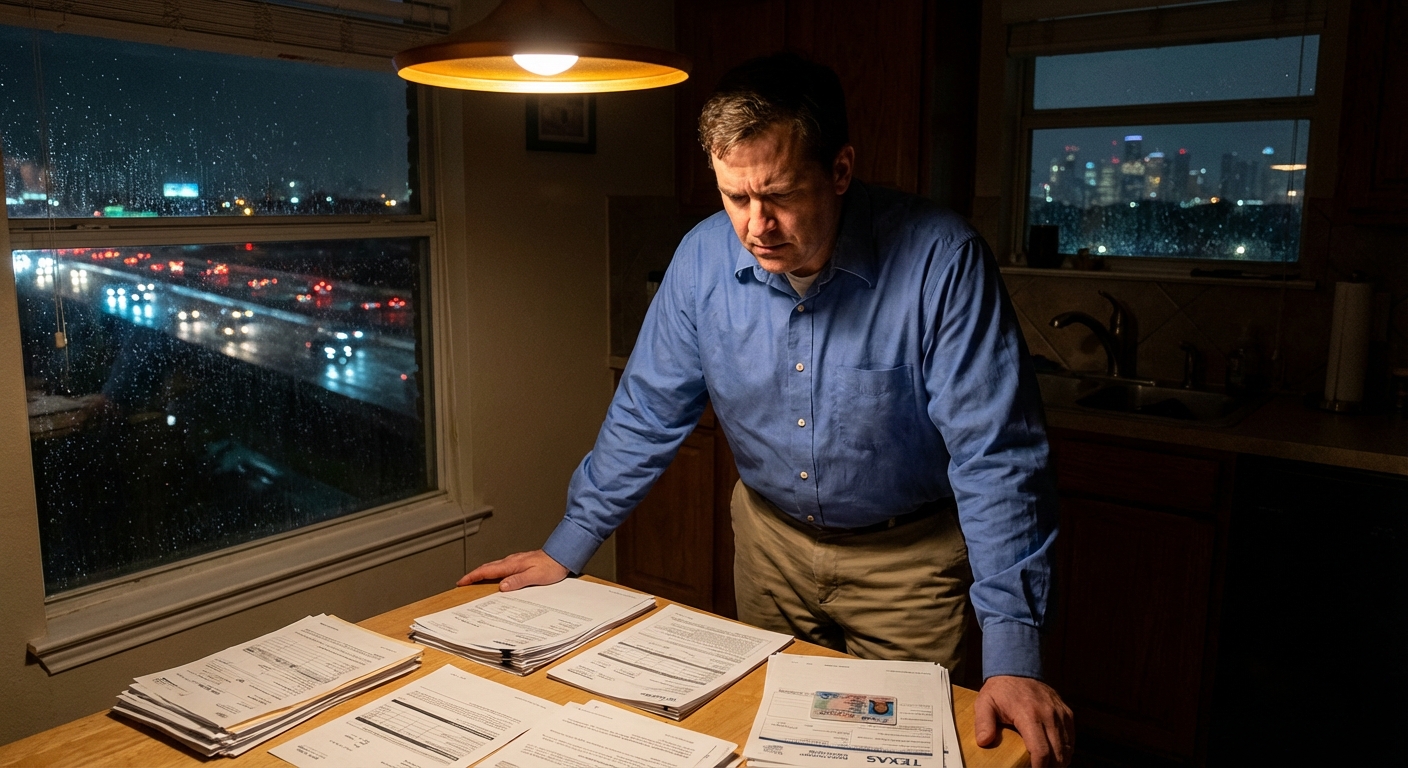
If you are in the same position as Overwhelmed Provider (Mike), up late in Houston, staring at your bond paperwork and worrying about your family, remember that your next few decisions will matter more than what happened on the side of the road. Getting informed, protecting your license, and planning for court can turn a terrifying situation into a manageable, step-by-step process.
For the Analytical Professional (Ryan), early action keeps more data and options on the table. For the High-Stakes Executive (Jason) and Elite Concerned (Chris), early planning supports discretion, privacy, and continuity in your work and public life. For the Carefree Young Adult (Kevin), recognizing that this is far more than “just a ticket” can keep one bad night from turning into several difficult years.
To help you visualize the process and hear it explained in plain language, you can also watch this short walkthrough from Houston DWI lawyer Jim Butler on defending a Texas DWI case and protecting your license, including the importance of the 15-day ALR deadline.
Final Checklist For Anyone Who Thought This Was “Just A Ticket”
If your first reaction to your Texas DWI was to shrug it off, use this quick checklist to reset your approach. These steps apply whether you are a construction manager in Harris County, an office professional in downtown Houston, or a younger driver who misjudged a night out.
- Find your DIC-25 or temporary driving permit and circle the date of your arrest or notice.
- Count 15 days from that date and mark it on your calendar as your ALR hearing request deadline.
- Use the official DPS portal to submit your ALR hearing request before that date and save proof of your submission.
- Gather your paperwork: bond forms, towing receipts, DIC forms, and any discharge paperwork from the jail.
- Write down your memory of the stop and arrest while it is still clear in your mind, including times, locations, and witnesses.
- Look into resources that explain how to request an ALR hearing and protect your license in more detail so you do not miss critical steps.
- Consider speaking with a qualified Texas DWI lawyer about both the ALR case and the criminal DWI charge so you can plan for work, family, and financial impact.
Taking these steps in the first two weeks after a DWI arrest can be the difference between a manageable legal problem and a long, expensive disruption to your life. You cannot change what already happened on the road, but you do have control over what you do tonight, tomorrow, and before that 15-day clock runs out.
Butler Law Firm - The Houston DWI Lawyer
11500 Northwest Fwy #400, Houston, TX 77092
https://www.thehoustondwilawyer.com/
+1 713-236-8744
RGFH+6F Central Northwest, Houston, TX
View on Google Maps


No comments:
Post a Comment