Texas DWI Arrest: Your 72‑Hour Checklist to Protect Your License, Job, and Future
If you were just arrested for a Texas DWI, your next 72 hours are critical because you usually have only 15 days from the arrest to fight a potential driver’s license suspension and start protecting your job and record. In that short window you can gather key documents, request an ALR hearing, and begin building a defense instead of letting the process roll over you. This guide walks you step by step through what to do right now so you keep as much control as possible over your license, career, and family stability.
First 72 Hours After a Texas DWI: Calm, Clear Checklist
You may feel like your life just blew up in a single night. For a mid‑career provider with a family depending on you, that fear is real. The way you use the next few days can make the difference between a short‑term disruption and long‑term damage to your license, job, and finances.
Here is a practical 72‑hour checklist tailored for Houston and other Texas drivers:
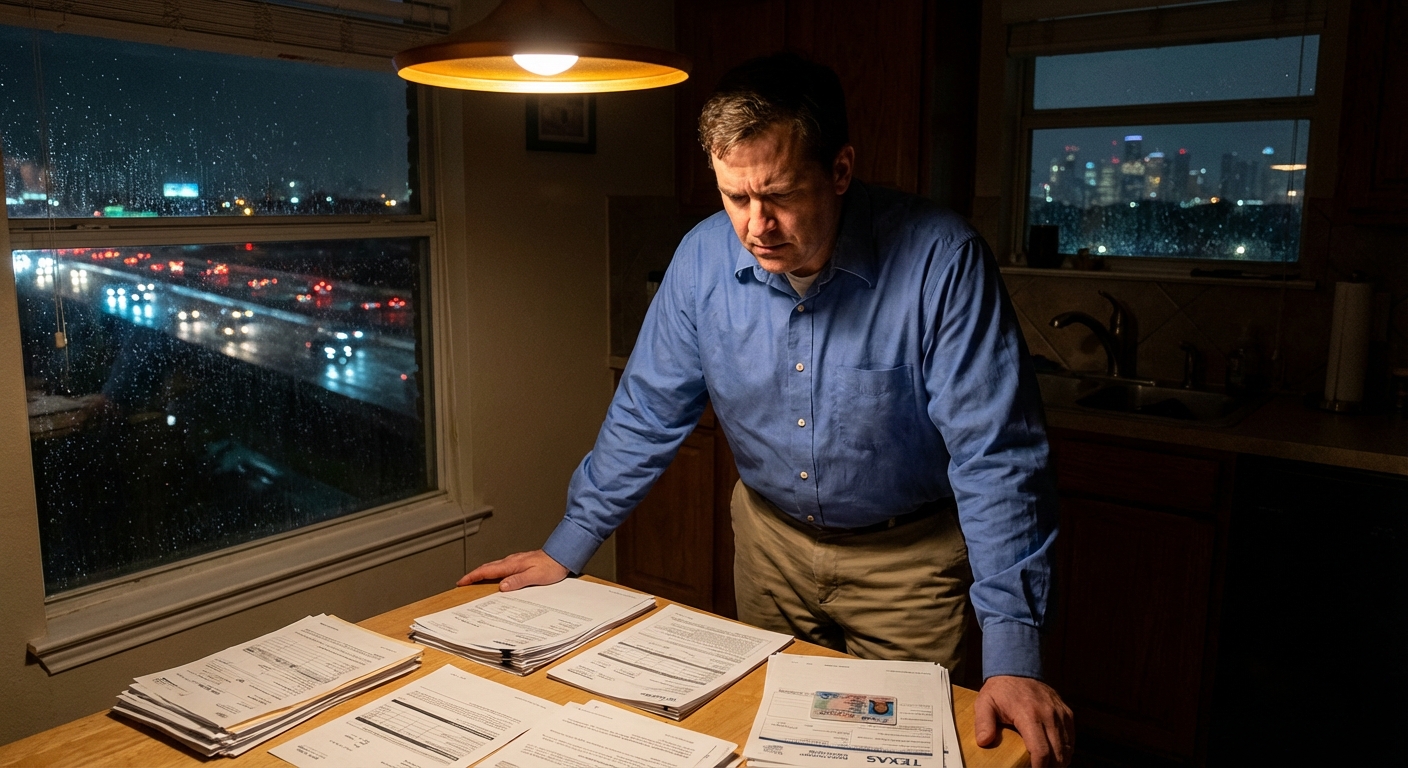
Step 1: Secure and review your paperwork
- Citation or arrest report.
- Any temporary driving permit or “Notice of Suspension/Temporary Driving Permit” the officer gave you (often a yellow or white DPS form).
- Bail bond paperwork and upcoming court date information.
Take clear photos or scans of everything. Store them in a safe folder you can share later with a qualified Texas DWI lawyer.
Step 2: Mark your 15‑day ALR deadline
In most Texas DWI cases, you have only 15 days from the date of arrest to request an Administrative License Revocation (ALR) hearing. If you miss that deadline, your driver’s license can be automatically suspended even if the criminal DWI charge is later reduced or dismissed.
On your calendar, write “ALR deadline” next to the 15th day after your arrest. Circle it. Set phone reminders. If you drive for work, have a commercial license, or just need to get kids to school, this deadline is one of the most important dates in your case.
For a more detailed walkthrough of the early steps and deadlines, you can review this focused guide on what to do in the first days after arrest: 72‑hour checklist to protect your license and job.
Step 3: Request your ALR hearing
You or your attorney must affirmatively request an ALR hearing. That challenge stops the automatic suspension from starting right away and gives you a chance to contest whether DPS can suspend your license at all.
If you want a step‑by‑step breakdown on how to request an ALR hearing and protect your license, that resource explains the timelines, options, and practical tips in plain language. You can also see the official state explanation of the process in the Texas DPS overview of the ALR license process.
Step 4: Write down everything you remember
Within these first 72 hours, details are still fresh. Take 10 to 15 minutes and write out a private timeline in your own words:
- Where you were before driving and what you drank and when.
- Why you were pulled over or where the stop occurred.
- What the officer said about your driving, odor, speech, or balance.
- What field sobriety tests you were asked to do and how they went.
- Whether you agreed to or refused a breath or blood test, and when.
This timeline becomes crucial later for spotting weak points in the stop, the tests, and the arrest.
Step 5: Protect your job and personal privacy early
If your job involves driving, professional licensing, or background checks, you are right to worry. Before you talk to an employer or licensing board, understand the basic penalties and what might show up on your record. A good starting point is an overview of Texas DWI penalties, fines, and license consequences so you know what you may be facing if a conviction occurs.
For many professionals, it also helps to review specific strategies geared toward career impact, such as practical measures to safeguard your professional license while your case is pending.
Quick Data Box for the Analytic Strategist
| Key Item | Typical Range / Rule in Texas |
|---|---|
| ALR hearing request deadline | 15 days from date of arrest in most DWI cases |
| First DWI license suspension (ALR) | 90 to 180 days, depending on test result or refusal |
| Typical first‑offense DWI penalties | Up to 180 days in jail, up to $2,000 fine, plus court costs and surcharges |
| How long a DWI stays on Texas record | Potentially for life unless limited relief like nondisclosure applies |
| Common defense areas | Traffic stop legality, field test validity, breath/blood testing issues, video contradictions |
If you are an Analytic Strategist, use this box as a starting framework. Your individual odds and timelines always depend on details such as prior history, BAC level, whether there was a crash, and which Harris County or surrounding county court handles your case.
How ALR and License Suspension Really Work After a Texas DWI
One of the biggest shocks for Texas drivers is realizing there are two separate tracks after a DWI arrest. The criminal case happens in court, while the ALR process is an administrative case about your license handled through the Texas Department of Public Safety.
Administrative vs criminal cases
- Criminal DWI case: Determines guilt or innocence, penalties such as jail, probation, and fines.
- ALR proceeding: Focuses only on whether DPS can suspend your driving privilege based on test results or refusal.
You can win one and lose the other. For example, someone might win the ALR hearing because the officer did not appear, but still face the criminal charge. Or the criminal charge might be reduced, while an ALR suspension still goes into effect if the deadlines were missed.
What triggers an ALR suspension
Under Texas implied consent law, by driving you are considered to have agreed to give a breath or blood sample if lawfully arrested for DWI. The Texas statute text on implied consent and refusals explains that refusing a test can itself be grounds for a license suspension, even if your BAC number would have been under the legal limit.
Common ALR triggers include:
- Refusing a breath or blood test after a DWI arrest.
- Providing a sample that shows a BAC of 0.08 or higher, or lower if you are under age 21 or a commercial driver.
- Certain serious crashes where intoxication is suspected.
If any of these occurred in your Houston‑area stop, the clock on that 15‑day deadline has already started.
Why the ALR hearing matters for you as a provider
For someone who supports a family and has to be at work on time, an ALR suspension can be more damaging day to day than the criminal case. Losing your license can mean:
- Needing rides or expensive rideshare to work.
- Risking discipline if you cannot reliably show up for shifts.
- Having trouble transporting children or elderly relatives.
Challenging the suspension can also create an opportunity to cross‑examine the arresting officer and collect early testimony that might help in the criminal case. That is why many drivers view the ALR hearing as more than just a license fight, it is a preview of the state’s evidence.
Texas DWI Penalties, Job Risk, and Long‑Term Costs
A big misconception is that a first DWI in Texas is “no big deal” as long as no one was hurt. In reality, even a first offense in Harris County or nearby counties can carry consequences that ripple through your life for years.
Criminal penalties you could face
For a typical first‑offense DWI in Texas with no accident and BAC under 0.15, you are usually looking at a Class B misdemeanor. The statute allows:
- Up to 180 days in county jail.
- Fine up to $2,000, plus state fees and court costs.
- Driver’s license suspension and annual surcharges depending on the outcome.
With higher BAC, prior DWIs, a crash with injury, or a child in the car, penalties can rise quickly into Class A misdemeanor or even felony territory, with longer jail ranges, larger fines, and harsher license impacts.
How a DWI can affect your job and career
For a mid‑career provider, the fear is usually not just fines or short‑term restrictions. You may worry about:
- Required disclosure to your employer or HR.
- Professional licensing boards (healthcare, finance, education, energy, and more).
- Future promotions, security clearances, or travel restrictions.
- What shows up on routine background checks.
In the Houston area, many large employers use automated background services that flag arrests and convictions. Even if you avoid jail, a DWI on your record can complicate internal transfers or new job searches. When you are the one your family depends on, that uncertainty can keep you up at night.
Real‑world financial costs
Beyond fines, you may face:
- Increased insurance premiums for several years.
- License reinstatement fees.
- Possible ignition interlock costs.
- Lost income for court dates, ALR hearings, and potential license suspension.
It is not unusual for the true cost of a first DWI, when you add everything up, to be several thousand dollars or more over time. Understanding these potential costs early helps you plan and make more informed decisions instead of feeling blindsided later.
Common Misconceptions About Texas DWI Cases
In the first few days after arrest, friends, co‑workers, and the internet will give you a lot of opinions. Some are helpful. Many are not. Here are a few myths that often trip up Houston drivers.
Misconception 1: “If I passed some field tests, I am safe.”
Field sobriety tests are subjective and depend heavily on how the officer interprets your performance. Even if you felt steady, the officer may have already decided to arrest you and record “clues” that make you look impaired. The police report and video may not reflect your own memory of what happened.
Misconception 2: “If I refused the breath test, they have no case.”
Refusing a breath or blood test can trigger a license suspension and the state can still try to prove intoxication using officer observations, driving behavior, and field tests. In some cases they may even obtain a warrant for a blood draw. The refusal does not automatically make the case go away.
Misconception 3: “A first DWI will fall off my record in a few years.”
In Texas, a DWI conviction can remain on your record indefinitely. There are limited circumstances where a case may be sealed from public view through an order of nondisclosure, but that is not automatic and depends on the specific outcome and eligibility rules.
Micro‑Story: A Typical Houston Professional After a DWI Arrest
Imagine a 42‑year‑old project manager in Houston who has never been in trouble before. One Friday night after a client dinner, he is stopped for speeding on 610. The officer smells alcohol, conducts field tests, and arrests him for DWI.
He spends the night in the Harris County jail, is released the next morning, and suddenly realizes he has a court date, a temporary driving permit, and no idea what ALR even means. He drives a company truck for site visits and has two kids in middle school. His biggest fear is that one mistake will derail his ability to provide for his family.
In the first 72 hours, he gathers his paperwork, marks his ALR deadline, and requests the hearing in time. That step alone prevents an automatic suspension from starting immediately. Over the next few weeks, he learns about possible defenses, gathers pay stubs and job documents, and works with a Texas DWI lawyer to manage both the court case and the license proceedings. The situation is still serious, but he no longer feels like his life is out of control.
You may be in a similar position. The details will be different, but the path out starts with calm, informed action in the first few days.
How Chemical Tests, Refusals, and BAC Levels Affect Your Texas DWI
Your decision to take or refuse a breath or blood test can carry separate consequences from the criminal case. It also affects how prosecutors and courts in Harris County and surrounding counties view your case.
If you provided a breath or blood sample
When the state has a BAC test result, they will usually try to use it to show you were at or above 0.08 at the time of driving. Higher numbers can lead to more serious charges or conditions such as mandatory ignition interlock, especially if your BAC is alleged to be 0.15 or higher.
The fact that a number appears on paper does not mean it is automatically correct. Issues that may be examined include:
- Whether the machine was properly maintained and calibrated.
- Whether the blood draw followed correct procedures.
- Time gap between driving and testing.
- Medical conditions or substances that might affect readings.
If you refused testing
If you refused a breath or blood test after the officer requested it and read you the warnings, that refusal likely triggered the ALR process and a proposed longer license suspension period. The state can still rely on officer observations, field tests, and other evidence, but they will also try to use your refusal against you at the license hearing.
Many drivers believe refusal always helps them. In reality it is a tradeoff with pros and cons that depend on your situation, driving history, and the available evidence. Once the refusal has already happened, the focus shifts to using the remaining tools to protect your license and future mobility as much as possible.
Defenses and Options in a Texas DWI Case
Even if you feel the situation is hopeless, there are often more angles than you realize. Texas DWI law and local court practice give several points where a case can be challenged, negotiated, or managed to reduce harm.
Challenging the traffic stop
Officers must have a lawful reason to stop you. That might be speeding, lane drifting, a broken light, or a crash. If the stop itself was improper or based on thin facts, it may be possible to challenge the stop and seek to keep out evidence that resulted from it.
Examining field sobriety tests
Standardized tests such as the walk‑and‑turn, one‑leg stand, and horizontal gaze nystagmus (HGN) have specific protocols. Poor instructions, uneven surfaces, bad lighting, or physical limitations can all affect performance. Videos sometimes tell a different story than the written report.
Questioning chemical testing
Breath and blood tests depend on proper maintenance, chain of custody, and correct handling. Records can be reviewed to see whether labs and machines followed required standards. Anomalies or gaps in this paper trail can be important.
Negotiation and outcome management
Not every DWI case in Houston ends in trial. Depending on your record, facts, and local policies, possible outcomes may include:
- Dismissal, often based on legal or evidentiary issues.
- Reduction to a lesser charge such as obstruction of a highway in some situations.
- Deferred adjudication on certain eligible charges, which can limit final record impact.
- Conviction with negotiated terms focused on maintaining employment and family obligations.
The key is that you do not have to navigate these options alone. For someone in your position, understanding the range of realistic paths can relieve some of the fear that “my life is over.”
Confidentiality, Reputation, and the High‑stakes Executive & VIP Reputation Guardian
If you identify with the High‑stakes Executive persona, you may be less worried about fines and more concerned about privacy, media exposure, and career reputation. Houston’s business and professional communities can be close‑knit. It is reasonable to seek a process that keeps your situation as quiet and contained as possible.
If you relate to the VIP Reputation Guardian, you might focus on discreet handling, direct access to an attorney rather than staff, and options like record sealing where available. Texas law does provide certain confidentiality protections and, in some circumstances, procedures such as orders of nondisclosure that can limit public access to records after specific outcomes. While no one can guarantee a sealed record or zero publicity, choosing early steps with privacy in mind can reduce the risk of unnecessary exposure.
For professionals in fields such as healthcare, engineering, finance, or energy, combining that privacy‑focused approach with practical measures to safeguard your professional license can help protect both your current role and long‑term career path.
For the Carefree Young Adult: Why This Really Matters
If you see yourself as a Carefree Young Adult, maybe this was your first run‑in with the law and you are tempted to assume things will “just work out.” It is important to know that a Texas DWI can stay on your record for life and that you have that same 15‑day deadline to request an ALR hearing before your license is automatically suspended.
Even if you do not have a career yet, a DWI can affect college applications, internships, professional school admissions, and future job checks. Taking the early steps in this guide helps keep more doors open when you are ready for the next stage of life.
Frequently Asked Questions About Texas DWI Arrests and Your Next Steps
How long do I have to request an ALR hearing after a Texas DWI arrest?
In most Texas DWI cases you have 15 days from the date of your arrest to request an ALR hearing. If you do not request the hearing within that period, your driver’s license can be automatically suspended on a set date even if your criminal case is still pending or later reduced.
Will I lose my job in Houston if I am convicted of a first DWI?
A first DWI conviction in Texas does not automatically cost you your job, but it can trigger employer reviews, background check flags, and potential discipline depending on your role and company policies. Jobs that involve driving, safety‑sensitive duties, or professional licensing tend to carry higher risk, so understanding your employer’s rules and planning how to handle disclosure is important.
How long does a DWI stay on my record in Texas?
A Texas DWI conviction can remain on your criminal record indefinitely. In certain situations, you may later qualify for an order of nondisclosure that limits public access to specific records, but eligibility depends on the exact outcome, prior history, and waiting periods.
Can a Texas DWI be reduced or dismissed?
Some DWI cases in Texas are reduced or dismissed, but there is no automatic right to a lesser charge. Outcomes depend on factors such as the strength of the state’s evidence, legality of the stop, test results, prior record, and local policies in the court where your case is pending.
Is a DWI in Texas a felony or a misdemeanor?
Many first and second DWI charges in Texas are misdemeanors, though penalties can still be serious. A DWI can become a felony if it involves a third or subsequent offense, a crash with serious bodily injury, or a child passenger, which brings higher potential prison ranges and long‑term consequences.
Why Acting Early After a Texas DWI Arrest Matters
The first few days after a DWI arrest can feel like a blur of fear, embarrassment, and confusion. For someone who provides for a family and is used to being in control, that loss of control is often the hardest part. You cannot undo what has already happened on the side of the road, but you do control what you do next.
Acting early helps you:
- Stop or delay an automatic license suspension by requesting an ALR hearing in time.
- Preserve memories, documents, and potential evidence that may fade or be lost.
- Plan for work, childcare, and transportation so your family is not blindsided.
- Understand realistic outcomes instead of living with worst‑case scenarios in your head.
One misconception is that you should “wait and see” what happens at the first court date before doing anything. In reality, by that time your ALR deadline may already have passed and important opportunities could be gone. Whether you are an analytic planner, a high‑stakes executive, a reputation‑focused professional, or a younger driver who just had a wake‑up call, the most protective move you can make is to get informed and organized within the first 72 hours.
If you want a deeper, interactive walk‑through of many of these steps and questions, you can explore this interactive Q&A resource for practical DWI next steps that focuses on Texas law and Houston‑area processes.
Finally, remember that your conversations with a qualified Texas DWI lawyer are confidential, including discussions about your job, family needs, and reputation. Many professionals in Houston quietly navigate a DWI and move forward with their careers and family lives. Taking calm, informed action now gives you the best chance to do the same.
For a concise visual explanation of many of these first steps and how they affect your license and case, you can watch this short explainer from Houston DWI attorney Jim Butler. It walks through immediate actions after a Texas DWI arrest so you understand what is at stake and where to focus in the first days.
Butler Law Firm - The Houston DWI Lawyer
11500 Northwest Fwy #400, Houston, TX 77092
https://www.thehoustondwilawyer.com/
+1 713-236-8744
RGFH+6F Central Northwest, Houston, TX
View on Google Maps


No comments:
Post a Comment