Texas DWI License Suspension: Understanding the 15‑Day ALR Deadline and How to Protect Your Driving Privileges
If you are arrested for a Texas DWI, the state can try to suspend your driver’s license through a separate administrative process, and you usually have only 15 days from the date you receive the notice to request a hearing and fight that suspension. This civil license process is called Administrative License Revocation, or ALR, and it runs on its own track alongside your criminal DWI case. Knowing how the ALR system works, what deadlines apply, and what practical steps you can take in the first days after your arrest can make a big difference in protecting your license, your job, and your family life.
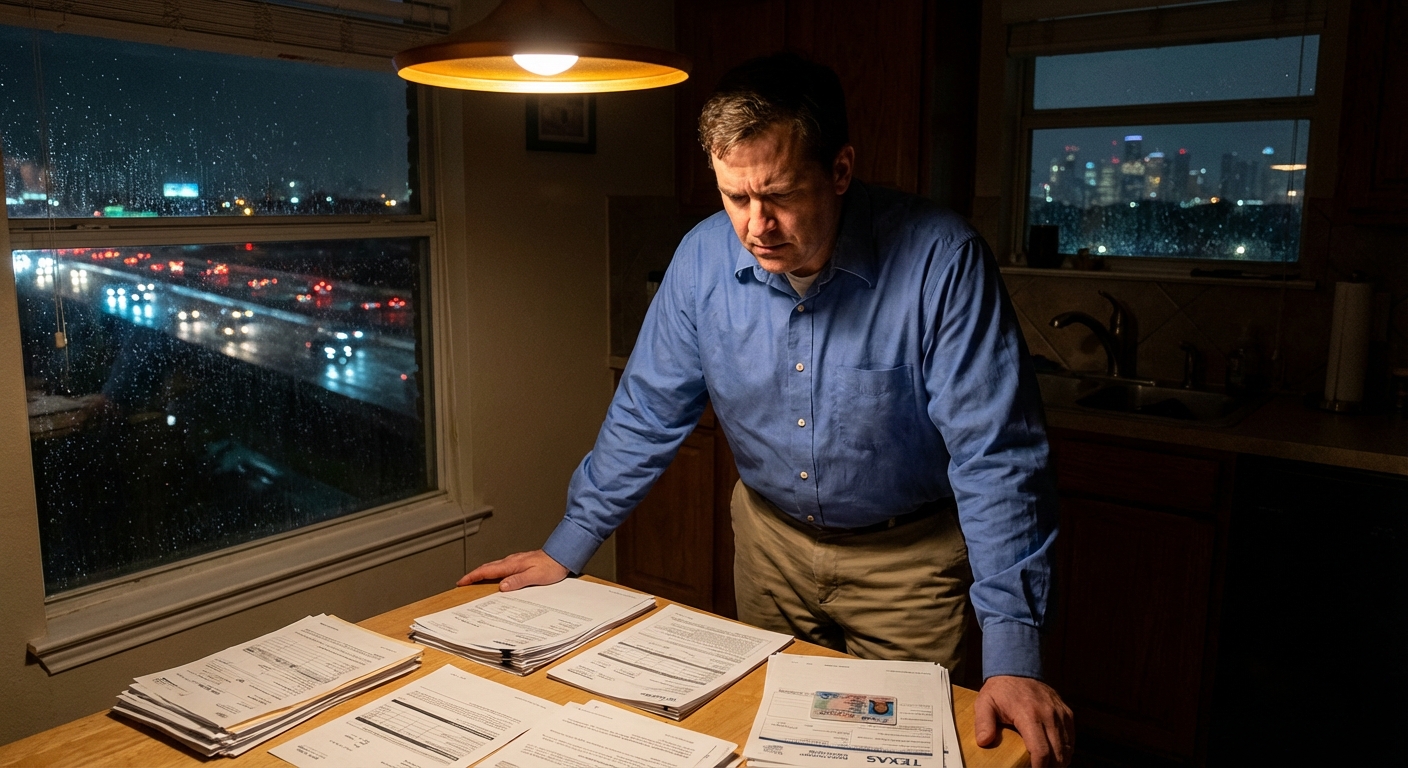
If you are like Provider-at-Risk Mike, a Houston construction project manager with a fresh DWI charge, this is probably the first time you have ever heard about ALR, and the idea of losing your license for months may feel just as scary as the criminal charge itself. This guide walks you through the Texas ALR process in plain language and gives you a clear, step-by-step path to protect your driving privileges as much as possible.
Quick-start checklist: what to do in the first 15 days after a Texas DWI arrest
Right after a DWI arrest in Houston or anywhere in Texas, time matters. You are dealing with two tracks at once: the criminal case in a Harris County or nearby county court and the civil ALR process through the Texas Department of Public Safety (DPS). Here is a simple checklist focused on the critical 15-day ALR deadline.
- Step 1: Find the suspension notice. After most DWI arrests, the officer takes your physical license and gives you a DPS “Notice of Suspension/Temporary Driving Permit.” This paper is your temporary license and also your warning that ALR is coming.
- Step 2: Mark your 15-day deadline. Count 15 days from the date you received that notice. That deadline is usually printed on the form. If you do not act by that date, DPS can move forward to suspend your license automatically.
- Step 3: Request an ALR hearing before the deadline. You or your lawyer can submit a request to challenge the suspension. Many people work with a lawyer to do this, but you can also look at the Official DPS portal to request an ALR hearing so you understand what is required and what information the state is asking for.
- Step 4: Learn how to request an ALR hearing and protect your license. A Texas DWI defense firm can help you decide how to frame the hearing request and what issues to raise. For more detail on how to request an ALR hearing and protect your license, review in-depth guidance that explains timelines, forms, and what happens if you miss the deadline.
- Step 5: Review immediate steps to save your driving privileges. If you feel overwhelmed, you can walk through a fuller list of immediate steps to save your driving privileges, including keeping track of court dates, preserving evidence, and avoiding common mistakes that hurt your case.
- Step 6: Start thinking about your job and schedule. Make a list of the times you absolutely must drive for work or family, and gather documents that show how important your license is, such as job descriptions or child custody orders. These details may help later if you need an occupational license.
If you follow this checklist in the first couple of days after your arrest, you give yourself more options to protect your license. Ignoring the ALR piece or waiting until “later” makes it much harder to undo damage once a suspension starts.
What is Administrative License Revocation (ALR) in Texas?
The ALR program is a civil process run by DPS that focuses on your privilege to drive, not on whether you are guilty of a crime. It is triggered when an officer arrests you for DWI and either claims you refused a breath or blood test or that you submitted and failed with a blood alcohol concentration of 0.08 or higher.
For someone in Houston like Provider-at-Risk Mike, that means you could be facing:
- A separate hearing in front of an administrative law judge, often handled by phone or in a small hearing setting, not in a criminal courtroom.
- License suspension periods that may start at 90 days and increase with prior history, refusals, or high test results.
- Deadlines and paperwork that are completely independent of your criminal DWI court dates.
To understand the structure and legal basis for ALR, you can look at the DPS overview of Texas ALR program, timelines, and process, which explains how refusals, test failures, and prior contacts affect your suspension exposure. The important point for you is that ALR is not automatic if you take action early, but it can feel automatic if you do nothing and let the deadlines pass.
ALR vs. your criminal DWI case
It helps to picture your situation as two tracks running side by side:
- Criminal track: Handles guilt or innocence on the DWI charge in a Harris County or surrounding county court, where you can face fines, probation, or even jail time.
- Civil ALR track: Decides whether your Texas driver’s license should be suspended and for how long, based mainly on whether the officer had reasonable suspicion, probable cause, and whether you refused or failed the chemical test.
Even if your criminal DWI case is later reduced or dismissed, an ALR suspension could already be in place if no hearing was requested or if the hearing was lost. On the other hand, a well-handled ALR hearing can sometimes expose weaknesses in the state’s evidence that might also help your criminal defense.
Myth-buster for Unaware Kevin: real costs and the 15-day ALR deadline
Unaware Kevin: Many people think that if they are polite to the officer and this is their first DWI, their license will “probably be fine” and they can deal with it when court comes around. That is a dangerous myth.
In Texas, the ALR process can suspend a first-time driver’s license for months, even before any criminal conviction, and missing the 15-day hearing deadline can make that suspension nearly automatic. The costs are not just fines or attorney’s fees: lost work hours, rideshare expenses, higher insurance rates, and possible job loss can easily add up to thousands of dollars over the suspension period. Taking the ALR deadline seriously is one of the simplest ways to reduce those ripple effects.
How long can Texas DWI license suspensions last?
The possible ALR suspension length varies by situation, but here are some general ranges that often apply under Texas law:
- First-time DWI, test failure (BAC 0.08 or higher): license suspension typically in the range of 90 days up to 1 year.
- First-time DWI, test refusal: suspension often increases, for example 180 days or more, because Texas law penalizes refusing chemical testing.
- Prior DWI or prior ALR issues: suspension periods can go up to 1 or 2 years depending on how many prior incidents and how recent they are.
These are broad guidelines, not promises. The exact suspension range in your case will depend on your record, your age, whether there was an accident, and whether any minors were in the car. If you are Provider-at-Risk Mike with a clean record and kids to drive to school, it may be a relief to know that even if a suspension is ordered, Texas law sometimes allows an occupational license so you can still drive to work, school, and essential tasks.
Penalties, job risk, and how a DWI license suspension can affect your future
Many people think only about court fines or possible jail when they hear “DWI penalties.” In reality, your driver’s license status and how a DWI appears on background checks can affect your income and family life for years.
For a deeper overview of Texas DWI penalties and job-impact risks, you can study how fines, probation conditions, mandatory classes, and ignition interlock requirements interact with license suspensions. For example, even a first-time DWI can involve:
- Criminal penalties such as fines and possible jail time.
- Conditions like alcohol education courses, community service, or an ignition interlock device.
- License suspension through both ALR and, later, a criminal conviction.
- Increased auto insurance rates and potential non-renewal.
- Employment issues if you drive for work, are subject to random checks, or hold a professional license.
Provider-at-Risk Mike often worries most about how this will affect his paycheck. If you are supervising construction sites around Houston, losing your license for even 90 days can mean missed shifts or demotion if you cannot get to scattered job locations on time. Planning early, including exploring occupational licenses and workarounds, helps you stay valuable to your employer while your case moves forward.
Aside for Nurse Elena: professional license and ALR hearing timelines
Nurse Elena: If you are a nurse or other licensed professional in Texas, a DWI and any related license suspension can raise reporting questions with your licensing board. Boards often look at both the criminal case and whether there is any pattern of substance issues, so an ALR suspension on top of a criminal record can raise extra red flags.
For you, tracking the ALR hearing timelines and the underlying facts is critical, because any official record of a refusal, high BAC result, or accident may appear in the documents your board can review. Getting accurate legal guidance early can help you decide what to disclose, when to disclose it, and how to document mitigation such as treatment, counseling, or education.
How an ALR hearing works in practice
Once you or your lawyer timely request an ALR hearing, DPS sets a hearing date and location. Often, these hearings for Houston-area arrests are handled in regional offices or by phone, not at the main criminal courthouse downtown.
At the hearing, an administrative law judge will decide whether DPS has met its burden to suspend your license. The focus is usually on a few key questions:
- Did the officer have reasonable suspicion to stop you and probable cause to arrest you?
- Were you properly informed of the consequences of refusing or failing a breath or blood test?
- Did you actually refuse the test, or did your sample show a BAC at or above the legal limit?
Your lawyer may cross-examine the officer, challenge paperwork, or point out contradictions in the state’s evidence. Sometimes officers fail to appear, or documents are flawed. While there are never guarantees, this is one place where preparation can pay off.
Micro-story: how early ALR action helped a Houston worker
Consider a hypothetical example similar to Provider-at-Risk Mike. A mid-30s project manager in Harris County was arrested for DWI while driving home from a job site. The officer claimed he failed field sobriety tests and later showed a BAC just over the limit.
His lawyer requested an ALR hearing within a few days. At the hearing, the officer’s report contained conflicting times, and the video did not match the written description of his driving. The administrative judge ultimately decided DPS had not met its burden and denied the proposed suspension. The criminal case still took time to resolve, but because he acted quickly on ALR, he avoided a months-long license suspension that could have cost him his role on multi-site projects.
This story is not a promise of outcome, only a reminder that the ALR process offers opportunities for defense that you lose if you wait too long.
Analytical Planner Ryan: step-by-step strategy summary
Analytical Planner Ryan: If you prefer a structured plan, here is a high-level strategy summary to navigate a Texas DWI license suspension risk.
- Confirm your deadlines. Identify your 15-day ALR deadline from the suspension notice, then list your first criminal court date. Put both in a calendar with reminders.
- Request the ALR hearing in time. Whether you do it personally or through counsel, make sure the request is submitted and documented. Keep proof of submission for your records.
- Gather evidence early. Save any text messages about your drinking plans, receipts that show timing, and names of potential witnesses. Note any medical issues or injuries that could have affected field sobriety tests.
- Map out work and family needs. Create a chart of your weekly driving needs: job sites, kids’ schools, medical appointments. This makes it easier to discuss occupational license options and practical solutions.
- Prepare for both tracks. Understand that your ALR hearing and criminal case can help each other. Evidence developed in ALR can sometimes support motions or negotiations in the criminal case.
- Review long-term consequences. Consider how a DWI and any suspension might affect your insurance, professional plans, and travel. Plan for these possibilities instead of being surprised later.
When you see the process as a series of clear steps rather than a shapeless crisis, it is easier to stay calm and make solid decisions for yourself and your family.
High-stakes Jason: discretion, privacy, and reputation
High-stakes Jason: If you are an executive, business owner, or public-facing professional in greater Houston, your biggest fear may be reputation damage and unwanted attention, not just fines or temporary suspension. You may worry about clients, investors, or media learning about your arrest.
While no lawyer can erase a public arrest record, there are ways to manage risk: minimizing unnecessary court appearances, coordinating schedules to reduce visibility, and exploring options like nondisclosure orders if your case is resolved favorably under Texas law. Discreet, well-planned handling of ALR and the criminal case can help keep the focus on solving the problem rather than creating new headlines.
Privacy-First Chris: confidentiality and direct-access concerns
Privacy-First Chris: If privacy is your top concern, remember that communications with a lawyer about your DWI and license issues are typically confidential under attorney-client privilege. Most reputable Houston DWI attorneys keep your case details closely guarded and share information only as needed for your defense.
For someone who values privacy, you may want to ask any lawyer you speak with about how they handle client files, who in the office has access to your information, and what steps they take to prevent accidental disclosures. Feeling secure about confidentiality can make it easier to be honest about what happened and what you need, which in turn allows them to better address your ALR and license risks.
Common misconception: “If I pass the test, my license is safe”
One common misconception is that if you blow under 0.08 or cooperate fully with the officer, your license cannot be suspended. In practice, Texas law focuses both on BAC and on whether the officer had reason to believe you had lost the normal use of your mental or physical faculties.
It is possible to face ALR issues even when the test result is close to the limit or there are questions about how the test was conducted. Likewise, refusing the test might avoid a high BAC reading but can still trigger its own form of suspension. The safest approach is not to assume that cooperation alone protects your license, but to verify your status and deadlines right away.
Protecting your career and income after a DWI in Texas
For Provider-at-Risk Mike and many others, the real fear is not just a court fine but a long-term hit to income and career. A DWI combined with a license suspension can strain your relationship with your employer, especially if your job requires driving, field visits, or flexible hours.
Practical steps to protect your work life can include: communicating carefully with your employer about scheduling needs, exploring temporary transportation solutions, and planning ahead for any mandatory classes or court dates. For more guidance on practical steps to safeguard your employment and income, you can review detailed discussions about HR policies, background checks, and ways to show that you are taking responsibility while still fighting for your legal rights.
Aside for employers and supervisors
If you manage crews, drive a company vehicle, or hold a safety-sensitive role in Houston, your employer may have its own internal rules for DWI arrests. These can include temporary reassignment, required disclosures, or automatic suspensions for certain positions.
Understanding both your company policy and Texas law gives you a better chance to propose reasonable solutions, such as working from a central office temporarily, shifting to non-driving duties, or adjusting schedules to match court and ALR requirements.
Case-result style data box for Solution-aware readers
Important note: Every DWI case is different, and past outcomes do not predict results in any future case. These examples are purely educational.
| Scenario | Initial ALR Risk | ALR Outcome | Key Factors |
|---|---|---|---|
| First-time Houston driver, BAC slightly above 0.08 | 90-day to 1-year suspension | Suspension denied at ALR hearing | Video evidence showed relatively normal driving, documentation errors in officer report |
| Driver in nearby county, alleged test refusal | 180-day or longer suspension | Shorter agreed suspension with occupational license | Dispute about whether refusal was clear, health issues impacted cooperation |
| Professional license holder with prior DWI several years ago | Longer suspension and board scrutiny | Suspension imposed but occupational license granted | Documented treatment, stable work history, clean record since prior case |
These examples illustrate that outcomes vary widely and depend on the facts, the evidence, and how early the driver acted on the ALR notice.
Frequently asked questions about Texas DWI license suspension and ALR
How long do I have to request an ALR hearing after a DWI arrest in Texas?
In most Texas DWI cases, you have 15 days from the date you receive the notice of suspension to request an ALR hearing. If you miss that deadline, DPS can move forward with an automatic license suspension, and your options become more limited. That is why it is so important to locate your notice and mark the deadline right away.
Will I automatically lose my license after a DWI in Houston?
You do not automatically lose your license the moment you are arrested, but if you do nothing, a suspension can follow very quickly. The officer’s notice usually serves as your temporary driving permit, and the ALR process starts behind the scenes unless you request a hearing. Taking prompt action is the only way to preserve your chance to contest the suspension.
Can I get an occupational license if my Texas license is suspended for DWI?
In many cases, Texas courts can authorize an occupational license that lets you drive for essential needs such as work, school, and basic household tasks, even while your regular license is suspended. There are eligibility rules, waiting periods, and compliance requirements that vary based on your record and the nature of the suspension. A lawyer familiar with Houston-area courts can explain what is realistic in your specific situation.
Does winning my ALR hearing mean my DWI case is dismissed?
Winning an ALR hearing protects your license from that particular suspension, but it does not automatically dismiss or end your criminal DWI case. The criminal charge continues in county court, where the prosecutor and judge make separate decisions about guilt, sentencing, and conditions. However, evidence revealed in the ALR process may sometimes be useful in defending the criminal case.
How long will a DWI affect my record and job prospects in Texas?
A DWI can remain on your criminal record for many years and may appear in background checks for employers, landlords, and professional licensing boards. While certain outcomes can support sealing of records under Texas nondisclosure laws, a conviction or repeated alcohol-related issues may limit those options. Planning early for both the license and the criminal sides of your case gives you the best chance to reduce long-term career damage.
Why acting early on your Texas DWI license suspension matters
For someone in your position, juggling work, family, and fear of the unknown, it may feel tempting to put the paperwork in a drawer and wait for your first court date. Yet the ALR system operates on its own schedule, and the most important deadline often passes long before you ever appear before a criminal judge.
Taking action in the first days after your arrest, especially to request an ALR hearing, helps you protect your license, preserve valuable evidence, and keep more options on the table. Whether you are Provider-at-Risk Mike, Analytical Planner Ryan, High-stakes Jason, Privacy-First Chris, Unaware Kevin, or Nurse Elena, you deserve clear information so you can make calm, informed decisions about your future. If you have questions about how the Texas DWI laws and ALR program apply to your specific facts, it is wise to discuss them with a qualified Texas DWI lawyer who regularly handles cases in Houston and surrounding counties.
For a short, plain-language walkthrough of these early steps, you can watch this video from a Houston DWI lawyer that explains how Texas drivers can protect their cases and their licenses right after an arrest.
Butler Law Firm - The Houston DWI Lawyer
11500 Northwest Fwy #400, Houston, TX 77092
https://www.thehoustondwilawyer.com/
+1 713-236-8744
RGFH+6F Central Northwest, Houston, TX
View on Google Maps


No comments:
Post a Comment