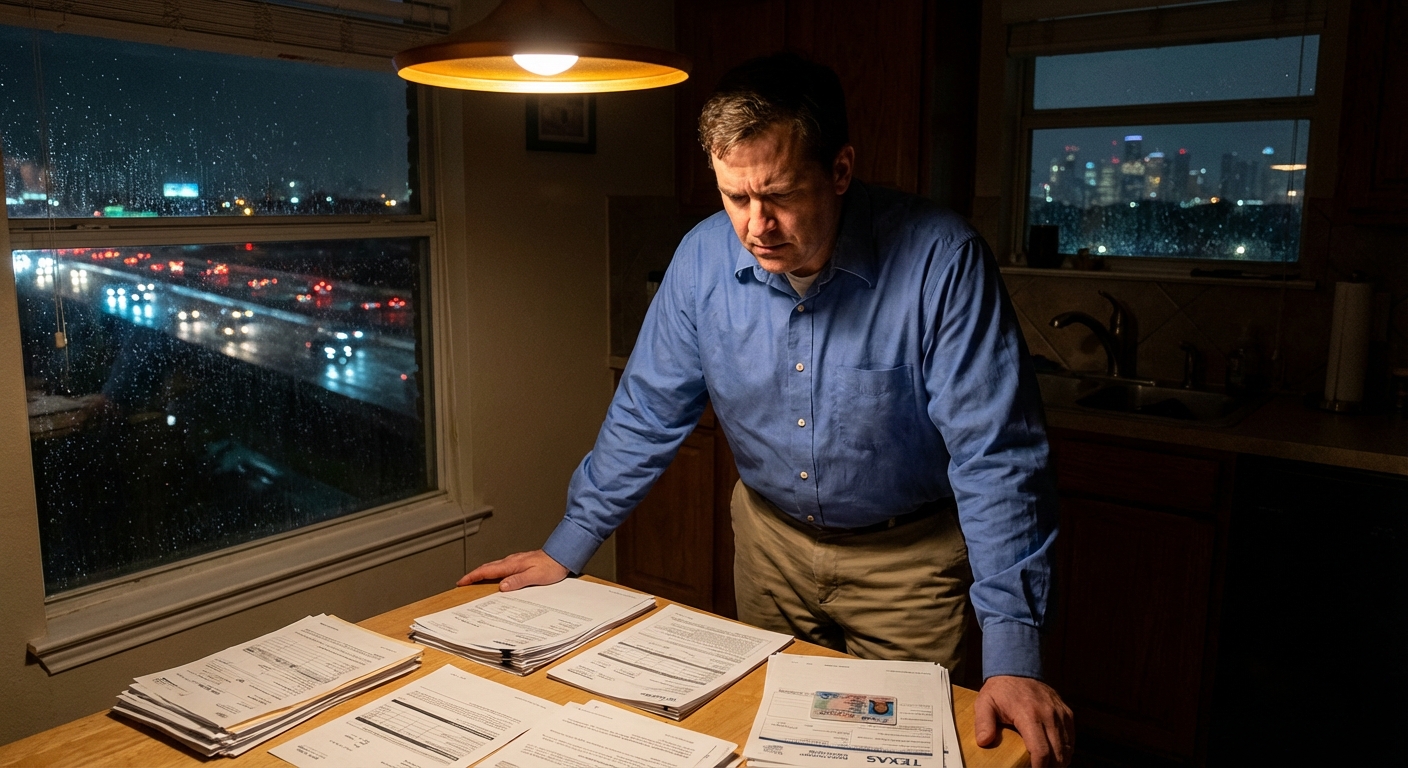
What To Do After A DWI Arrest In Houston: 72‑Hour Checklist And The 15‑Day Texas ALR Deadline
If you were just arrested for DWI in Houston, the most important thing to know is that you have only 15 days from the date of your arrest to fight the automatic suspension of your Texas driver’s license, and what you do in the first 72 hours can make a major difference in your case. In those first days, you should focus on protecting your license, organizing key documents, and getting informed about your options so one mistake does not cost your job, income, or reputation.
This guide walks you through a simple, step by step plan for the first 72 hours after a DWI arrest in or around Houston, explains how the Administrative License Revocation (ALR) process works, and covers basic defenses that may apply to your case. It is written for working providers like you who cannot afford to lose their license or their ability to support their families.
Your First 72 Hours After A Houston DWI Arrest: Simple Checklist
Right now you may feel embarrassed, angry, and unsure what to do next. You might be thinking about your family, your mortgage, and how you will get to job sites if you lose your license. Those feelings are normal, but this is also the window when you can take control.
Here is a plain 72 hour checklist to follow after a DWI arrest in Houston or Harris County:
1. Within The First 24 Hours
- Find your paperwork. Gather your citation, any bond conditions, and the temporary driving permit or “Notice of Suspension” the officer gave you. This notice usually starts the 15 day clock for your license.
- Write down what happened. As soon as you can, write a timeline of the stop, field tests, questions, and whether you took or refused a breath or blood test. Small details matter later, especially if there were issues with the stop or testing.
- Check your court date. Look at your release papers for your first court setting in a Harris County or nearby county court. Missing this date can lead to a warrant and more trouble.
2. Within 48 Hours
- Confirm the 15 day deadline. Look at the date on your DIC-25 or similar notice. You usually have 15 days from the date you received it to request an ALR hearing to challenge your license suspension.
- Start learning the process. Read a trusted Houston-focused guide, such as a step‑by‑step checklist for the first 72 hours after a stop, so you know what to expect in court and with DPS.
- Review a deeper checklist. For more detail on urgent steps and license protection, you can also review a 15‑day ALR and immediate post‑arrest checklist that focuses specifically on Houston DWI cases.
3. Within 72 Hours
- Request or plan your ALR hearing. You can learn about how to request an ALR hearing and protect your license or speak with a Texas DWI lawyer who can handle this step for you. Missing this deadline usually means your license will be suspended automatically.
- Gather evidence. Save any photos, videos, text messages, bar receipts, or GPS records from the night of the arrest. These can sometimes help challenge the officer’s version of events or your reported level of impairment.
- Protect your work schedule. Let a trusted supervisor know you have an upcoming court date without oversharing details. As a construction manager or similar provider, advance notice can help protect your position and schedule around court and ALR hearings.
If you are an Analytical Planner type, you may want proof that these steps matter. In many Texas DWI cases, simply requesting the ALR hearing on time buys you weeks or months of continued driving with your current license while the case is pending, which can be the difference between keeping and losing a job that requires driving.
Understanding The Texas 15 Day ALR Deadline And License Suspension
The Administrative License Revocation process is separate from your criminal DWI case. It is a civil process handled through the Texas Department of Public Safety, not the criminal court. If you do nothing, DPS will suspend your driver’s license based on the officer’s report and your test result or refusal.
How The 15 Day ALR Deadline Works
- At or after your arrest, the officer gives you written notice that DPS intends to suspend your license.
- You have 15 days from receiving that notice to request an ALR hearing.
- If you request the hearing on time, your license usually remains valid until a hearing officer makes a decision.
- If you miss the deadline, the suspension often starts 40 days from the date on the notice, and you lose the chance to challenge it.
To see the official process and online filing options, you can review the Texas DPS page to Request an ALR hearing (official DPS portal). For a deeper explanation in plain language, the Butler Law Firm guide on how to request an ALR hearing and protect your license walks through the steps, timelines, and what usually happens at these hearings.
For someone in your position, the ALR hearing can feel like one more stressor. However, it also creates a chance to cross examine the arresting officer, spot weaknesses in the stop or testing, and sometimes negotiate a more favorable outcome in the criminal case.
How Long Can Your Texas License Be Suspended?
The length of a Texas ALR suspension depends on your record and whether you refused or failed a chemical test:
- First DWI, test failure (BAC at or above 0.08): Typically 90 day suspension.
- First DWI, test refusal: Often 180 day suspension.
- Prior alcohol or drug related contact within 10 years: Suspensions can increase to 1 or 2 years, depending on the situation.
These are general ranges, not guarantees. Actual outcomes depend on the evidence, your record, and how the hearing is handled.
How Texas Implied Consent And Test Refusal Affect Your Case
Texas has “implied consent” laws that affect what happens if you refuse a chemical test after a DWI arrest. In short, by driving on Texas roads, you are considered to have given implied consent to a breath or blood test after a lawful arrest for DWI. If you refuse, DPS can try to suspend your license even if your criminal case is later dismissed.
If you want to see the exact legal language, you can review the Text of Texas implied consent and refusal consequences in Chapter 724 of the Texas Transportation Code. The key takeaway for you is that a refusal may help in some criminal cases, but it usually triggers a longer license suspension on the ALR side.
Many people believe that if they refuse all tests, their case will simply go away. That is a common misconception. In reality, officers can often seek a warrant for a blood draw, and prosecutors may argue that your refusal shows consciousness of guilt. The details of your stop and testing need to be evaluated in the context of both the criminal DWI and the ALR process.
Micro Story: How Acting Within 72 Hours Helped A Houston Provider
Consider a situation similar to what you might be facing. A mid 30s Houston construction supervisor was stopped driving home from a job site after a team dinner. The officer claimed he drifted over the center line and smelled of alcohol. He performed roadside tests on uneven pavement and was arrested for DWI.
Within 24 hours, he wrote out his timeline and noticed that the officer never mentioned any actual traffic violation before initiating the stop. Within 5 days, he requested the ALR hearing and spoke with a DWI lawyer. At the ALR hearing, the officer’s testimony conflicted with his report about the reason for the stop.
The hearing result helped challenge the basis for the stop in the criminal case. In the end, the DWI was reduced, his license suspension was shortened with an occupational license, and he kept his role supervising crews at different Houston job sites. While every case is different and no result is guaranteed, this kind of outcome is much more likely when action is taken early.
Core Texas DWI Penalties That Threaten Your Job And License
It is also important to understand the possible penalties you face in a Texas DWI case, especially if you depend on your license for work.
Criminal Penalties For A First DWI In Texas
- Jail time: Up to 180 days in county jail, with a minimum of 3 days in some cases.
- Fines: Up to $2,000 in fines for a standard first DWI, not including court costs and surcharges.
- Driver license issues: Possible license suspension through both the criminal case and the ALR process.
- Conditions: Alcohol education classes, community service hours, and possible ignition interlock as a condition of bond or probation.
For higher BAC levels, prior DWIs, or accidents involving injuries, penalties can rise quickly, including potential felony charges.
As a provider in panic, what matters most is how this could affect your ability to drive to job sites, pick up your kids, or travel for work. In many Harris County cases, the court is willing to consider alternatives such as probation, ignition interlock devices, and occupational licenses, especially when you act early and demonstrate responsibility.
Basic Texas DWI Defenses Explained In Plain Language
While no two DWI cases are the same, there are several common defense themes that experienced Texas DWI lawyers look for. Understanding these in simple terms can help you feel less helpless.
1. Challenging The Traffic Stop
Officers must have a valid legal reason to stop your vehicle, such as speeding, failing to signal, or swerving within a lane to the point that it is considered unsafe. If the initial stop is not supported by specific facts, evidence gathered after that stop, including breath or blood tests, may be challenged.
Your written timeline, dashcam video, bodycam footage, and any witness statements can all play a role in evaluating whether the stop was lawful.
2. Field Sobriety Test Problems
Roadside tests like the walk and turn, one leg stand, and horizontal gaze nystagmus have specific instructions and scoring methods. Uneven pavement, poor lighting, fatigue from a long workday, or medical conditions can affect how you appear on these tests, even if you are not legally intoxicated.
An experienced DWI defense often involves carefully reviewing the video of these tests and comparing the officer’s testimony to standardized procedures.
3. Breath Or Blood Test Issues
Breath machines and blood testing labs must follow strict maintenance, calibration, and chain of custody rules. Problems with calibration, contamination, delays in testing, or improper handling can raise doubt about the accuracy of your reported blood alcohol concentration.
Even when the number seems high, the question is whether that number will be considered reliable enough in court after cross examination and expert review.
4. Rising Blood Alcohol And Timing
Alcohol absorbs into your system over time. In some cases, your blood alcohol level may have been lower while you were actually driving and higher by the time the test was given at the station or hospital. This “rising BAC” issue can be important when your test result is only slightly above 0.08.
For a construction manager who finished a drink just before leaving a job site gathering, careful timing analysis can sometimes show that the legal limit was reached only after driving had already stopped.
5. Occupational Licenses And Damage Control
Even when a suspension cannot be avoided, Texas often allows qualifying drivers to apply for an occupational driver license that permits limited driving to work, school, and essential tasks. There are waiting periods and requirements, but many providers use this option to stay employed while a DWI case is resolved.
Understanding that there are tools to protect your ability to work can reduce some of the fear you may be feeling right now.
How Different Types Of Readers Might Approach A Houston DWI Case
Not everyone processes a DWI arrest in the same way. You might see yourself in one of these brief profiles, and that can help guide how you gather information and make decisions.
Analytical Planner: Data, Timelines, And Proof
If you identify as an Analytical Planner, you likely want to see clear timelines, success rates, and statutes. For you, reviewing the 15 day ALR deadline, expected suspension ranges, and sample case timelines can make the situation feel more manageable. You may also appreciate using the DPS link to Request an ALR hearing (official DPS portal) yourself so you can track the process independently.
Status-Minded Decider: Reputation And Professional Standing
A Status-Minded Decider may worry most about how this arrest affects professional image. In Houston, many DWI cases for licensed professionals, managers, and business owners are handled quietly. Court appearances can often be scheduled to minimize time away from important meetings, and communications about the case are typically kept discreet, especially when your work and reputation are on the line.
VIP Protector: Confidentiality And Fast Handling
If you see yourself as a VIP Protector for your family or business, you may be less concerned about short term costs and more focused on confidentiality and speed. Most experienced DWI defense practices understand this and provide private communication channels, direct access to an attorney, and prompt scheduling of key steps like ALR hearings and early evidence review, so your case moves forward quickly and quietly.
Carefree Young Adult: Real Costs And The 15 Day Clock
For a Carefree Young Adult, a DWI might first feel like just another ticket. In reality, between fines, court costs, probation fees, insurance hikes, and possible ignition interlock, the total cost of a first DWI in Texas can easily reach several thousand dollars. Missing the 15 day deadline for your ALR hearing can add months of license suspension on top of that, so treating this as a serious legal problem from day one matters.
How A Houston DWI Affects Your Job, Income, And Family Life
As a mid career provider, the real fear often is not the legal terms, but what happens to your paycheck and your role in your family. In Houston and nearby counties, many jobs in construction management, oil and gas, transportation, and healthcare depend on a valid Texas driver’s license and a clean enough record to satisfy company policies.
A DWI can trigger internal HR reviews, make you ineligible for certain projects with driving requirements, or limit your ability to be added to company auto insurance. Some employers also have policies that require reporting criminal charges within a set time. Understanding your company’s rules and planning how to communicate about your case can reduce surprises later.
At home, the stress of a DWI can lead to sleepless nights, tension with your spouse or partner, and fear about your children seeing you differently. Taking organized, concrete steps in the first few days often helps restore a sense of control and shows your family that you are dealing with the problem head on.
Common Misconceptions About Texas DWI Cases
When you search online after a DWI arrest, you will see a lot of mixed information. Here are a few frequent misunderstandings to clear up.
“If I just pay the ticket, it will go away.”
A DWI is not like a simple traffic citation. It is a criminal charge that can lead to jail time, probation, and a permanent record. Simply pleading guilty to “get it over with” may lead to long term consequences that are much more expensive than taking a careful, informed approach.
“I blew under 0.08, so I am safe.”
In Texas, you can be charged with DWI even if your test result is below 0.08, if the officer and prosecutor claim you did not have the normal use of your mental or physical faculties due to alcohol, drugs, or a combination. Video evidence, driving behavior, and field tests can all be used to build that claim, so any DWI accusation should be taken seriously, regardless of the exact BAC number.
“If I refused the test, they have no case.”
Refusing a breath or blood test does not automatically end the case. Officers can often request a warrant for a blood draw, and the refusal itself can lead to a longer license suspension in the ALR process. The best approach is to evaluate your specific facts, including the stop, the officer’s procedures, and any test results or refusals, in a structured way.
Practical Next Steps For Choosing A Texas DWI Lawyer
Because this article is meant to be educational, not promotional, the focus here is on how to think about your options. If you decide to consult a lawyer, you may want to prepare a short list of questions that help you understand their approach and experience.
Useful questions include:
- How many DWI cases have you handled in Harris County or nearby counties in the last few years?
- How do you approach the ALR hearing and license issues in addition to the criminal case?
- What are the most common defenses you see in cases like mine?
- How will we communicate about updates, and who will handle my case day to day?
- What should I do, and not do, before my first court date to protect my case?
For more ideas on questions to ask, and how to compare different attorneys, you can review guidance such as what to ask during your first call with a lawyer. You can also explore an interactive Q&A with basic DWI tips and common questions if you prefer to work through common issues in a question and answer format before speaking with anyone directly.
Frequently Asked Questions About The 15 Day ALR Deadline And Your Texas DWI Case
How many days do I have to request an ALR hearing after a Houston DWI arrest?
In most Texas DWI cases, you have 15 days from the date you receive written notice of suspension to request an ALR hearing. If you miss this deadline, DPS will usually suspend your license automatically starting 40 days from the date on the notice. Acting within that 15 day window is one of the simplest and most important steps you can take to protect your driving privileges.
Can I keep driving to work in Houston if my license is suspended for DWI?
Many Texas drivers who face a DWI related suspension can apply for an occupational driver license that allows limited driving to work, school, and essential errands. There are waiting periods and conditions, such as possible ignition interlock requirements, but this option often helps providers continue supporting their families while a case is resolved. The exact rules depend on your record, the type of suspension, and any court orders in your case.
How long does a first DWI stay on my record in Texas?
In Texas, a DWI conviction generally remains on your criminal record permanently. While some cases can result in dismissals, reductions, or record sealing under narrow circumstances, a straightforward conviction is not automatically removed after a set number of years. This is why many Houston drivers focus early on exploring defenses, reduction options, or alternative outcomes that may lessen long term impact.
Will my employer in Houston automatically find out about my DWI arrest?
Whether your employer learns about your DWI depends on company policy, your job duties, and how your case is handled. Some positions require you to self report arrests or charges within a certain time frame, while others may only learn through background checks or insurance reviews. It is often helpful to quietly review your employee handbook and plan any conversations with HR so you can balance honesty with privacy.
Is it possible to get a Texas DWI case dismissed?
Dismissals are possible in some DWI cases, but they depend heavily on the facts and evidence. Problems with the legality of the stop, field sobriety testing, or breath and blood evidence can sometimes lead to reductions or dismissal, especially when identified early through hearings like the ALR proceeding. No lawyer can guarantee a dismissal, but an informed and proactive approach gives you the best chance at a favorable outcome under Texas law.
Why Acting Early On Your Houston DWI Matters
Stepping back, the main theme of this guide is timing. The first 72 hours and the first 15 days after your arrest set the stage for what comes next. Requesting your ALR hearing on time, capturing your memory of the stop while it is fresh, and organizing your work and family schedule around court and license issues help move you from panic to a plan.
If you are a provider in panic, remember that this one night does not have to define your entire future. Many Houston area drivers have faced similar fear and frustration, taken practical steps, and come out the other side with their jobs and families intact. Talking with a qualified Texas DWI lawyer about your specific situation can help you understand which options and defenses may apply to you.
For a short visual walkthrough of these early decisions, including the 15 day ALR deadline and how to protect your job, license, and finances after a Texas DWI arrest, you may find the following video helpful.
Butler Law Firm - The Houston DWI Lawyer
11500 Northwest Fwy #400, Houston, TX 77092
https://www.thehoustondwilawyer.com/
+1 713-236-8744
RGFH+6F Central Northwest, Houston, TX
View on Google Maps


No comments:
Post a Comment