What To Do After A DWI Arrest In Houston: 15‑Day ALR Deadline, License Protection, And Next Legal Steps
If you were just arrested for DWI in Houston, your most important first step is to protect your driver’s license within the 15 day ALR deadline and start organizing a plan for the criminal case so one mistake does not derail your job, finances, and family life. In Texas, a DWI triggers both a criminal case and a separate driver’s license case, and the decisions you make in the first few days can affect whether you can keep driving, how strong your defense is, and how disruptive this will be to your work and your record.
I am going to walk you through what happens after a Texas DWI arrest, what the 15 day Administrative License Revocation deadline really means, and the practical next steps you can take right now to protect your license, your job, and your future.
First things first after a Houston DWI arrest: calm, concrete steps in the first 72 hours
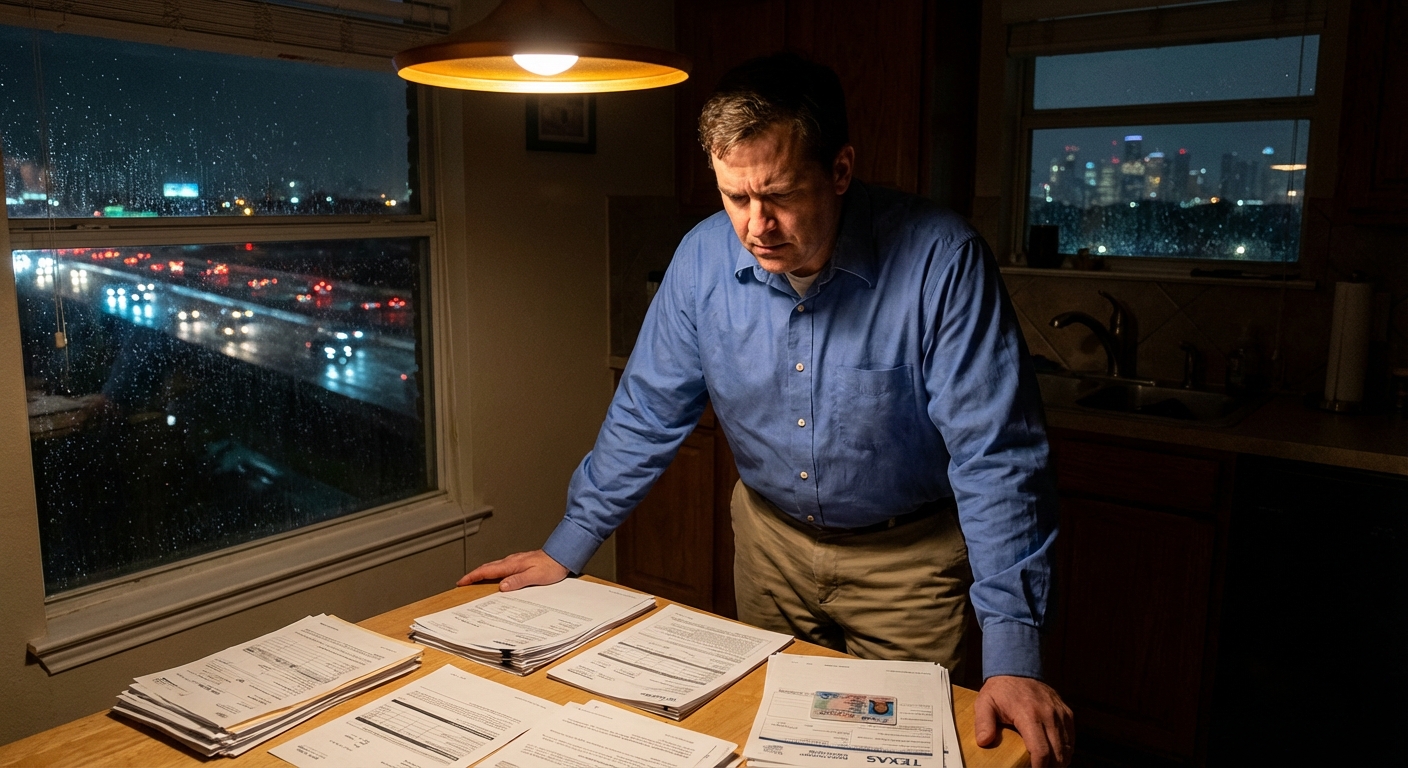
If you are like the Anxious Provider (Mike), your mind is racing: Will I lose my license, how will I get to the job site, what will my boss think, how much is this going to cost. The way to lower that panic is to turn it into a short list of actions.
Step 1: Understand the two cases you are facing
After a DWI arrest in Texas, you usually face:
- A criminal DWI case in a Harris County or nearby county court, which can involve fines, possible jail, probation, and a permanent record.
- An Administrative License Revocation (ALR) case with the Texas Department of Public Safety, which is about suspending your driver’s license.
Many people think the ticket or bond paperwork is the only thing that matters. A common misconception is that if you just show up for the criminal court date, the license will work itself out. It will not. The license case has its own clock, and if you miss that 15 day window, DPS can suspend your license even if your criminal case later goes well.
Step 2: Mark the 15 day ALR deadline on a calendar
From the date you received the DIC-25 temporary driving permit or notice of suspension, you have only 15 days to request an ALR hearing. If you do not request that hearing on time, your license suspension usually kicks in around the 40th day after the arrest or notice date, and there is no simple way to undo that missed deadline.
To see a detailed breakdown of this process and how to file, you can review how to request an ALR hearing and deadline, which walks through the ALR request and timeline in plain English.
You can also submit the hearing request directly through the Texas Department of Public Safety at the official portal titled Request an ALR hearing (official DPS portal). That site is where the state accepts administrative hearing requests, and it is often the fastest way to get your request in under the deadline.
For a bigger picture of everything to do in those first few days, including license and court steps, this first 72‑hour and 15‑day action checklist can help you stay organized.
Step 3: Preserve evidence while it is still fresh
Your defense starts now, not months later when your court date arrives. In the first 72 hours, you can help preserve useful evidence:
- Write down everything you remember about the stop, the field tests, and what the officer said.
- Save receipts from restaurants, bars, or stores that show what and when you were drinking or eating.
- Identify potential witnesses, like coworkers you left the job site with, friends or family who saw you before you drove, or anyone who saw the traffic stop.
- Preserve any texts, photos, or videos from the day or night of the arrest.
As a construction manager who starts work early and often drives between sites, you know how important accurate records are. Treat your DWI situation the same way: the sooner you gather details, the better chance a Texas DWI lawyer has to challenge the traffic stop, the field sobriety tests, or the breath or blood test.
How the Texas ALR process works and why the 15 day deadline is so critical
The ALR process can feel like a second, invisible case, but for someone who needs to drive to work and support a family, it is often the most urgent issue.
What is an ALR hearing in Texas
The Administrative License Revocation process is a civil procedure run by the Texas Department of Public Safety. DPS asks an administrative law judge to decide whether your driver’s license should be suspended because you either:
- Had a blood alcohol concentration of 0.08 or higher, or
- Refused to provide a breath or blood sample when the officer requested it.
The rules for this process are spelled out in Texas Transportation Code Chapter 524 (ALR statute text). You do not have to memorize that law, but it is helpful to understand that the hearing is not about guilt or innocence of DWI. It is about whether the officer had reasonable suspicion and probable cause, and whether you failed or refused the test under Texas law.
What happens if you miss the 15 day deadline
If you do not request an ALR hearing within 15 days, DPS will automatically suspend your license. The length of that suspension can vary, but for a first DWI with a failed breath or blood test, it is often around 90 days. If you refused the test, it can be closer to 180 days, and longer if you have prior alcohol related contacts.
For someone like you who manages crews and equipment around Houston, a 90 to 180 day suspension means you may not be able to legally drive to job sites, pick up materials, or travel for work. That quickly turns into missed hours, increased transportation costs, and uncomfortable conversations with your employer.
Why requesting an ALR hearing can help your defense
Even if you think the evidence is strong, requesting the ALR hearing is still important. The hearing can:
- Give your attorney a chance to question the arresting officer under oath.
- Reveal weaknesses in the stop, the field sobriety tests, or the breath or blood test procedure.
- Preserve testimony that may be useful later in criminal court.
Many drivers mistakenly believe that if they blew over 0.08, the hearing is pointless. In reality, how the test was administered, whether the machine was maintained properly, and whether the officer followed protocol can all be challenged. That information can be powerful when negotiating or litigating the criminal charge.
Texas DWI penalties, license suspension, and how they hit your job and finances
When you are worried about keeping your job and supporting your family, you need a clear picture of what is really at stake. The penalties for a first time DWI in Texas can include fines, possible jail, probation, license suspension, and long term costs like insurance increases.
Criminal penalties for a first DWI in Texas
For a common first offense DWI without special factors, Texas law allows for:
- Up to 180 days in jail, with a minimum of 3 days in some situations.
- Fines that can reach thousands of dollars once court costs and state surcharges are added.
- Probation that can last up to 2 years, often with conditions like classes, community service, and alcohol related restrictions.
Different facts such as a high BAC, an accident, or a child passenger can increase the level of offense and the potential penalties. For a deeper dive into specific ranges, enhancements, and how these laws work across different scenarios, you can review this overview of Texas DWI penalties and possible consequences.
License suspension and occupational licenses
On top of criminal penalties, the ALR process may suspend your license. In some cases, you may be able to apply for an occupational driver’s license, which is a restricted license that allows you to drive for essential needs like work and household duties. That process usually requires a court order, proof of insurance, and strict compliance with driving restrictions.
For someone who drives to Houston construction sites every day, an occupational license can be the difference between continuing to work and having to rely on rides or public transportation. It is not automatic, though; it requires planning, paperwork, and in many cases ignition interlock or other conditions.
How a DWI can affect your job and professional reputation
Construction managers and supervisors are often trusted with company vehicles, expensive equipment, and safety sensitive decisions. A DWI arrest can raise questions for an employer about reliability and risk. Some employers have policies that require reporting any arrest or loss of license. Others may run periodic background checks that can reveal a conviction later.
Practical steps you can take include reviewing your employee handbook, understanding whether your job requires a clean driving record, and planning how to handle any required disclosure in a calm and professional way. For more ideas on planning those conversations and limiting fallout, you can read about practical steps to protect your job and reputation.
Insurance costs can also rise significantly after a DWI, and if your employer pays for your vehicle or requires you to be covered on a company policy, that can become another layer of pressure. Having a clear understanding of your risks helps you plan rather than panic.
A realistic Houston story: how acting within 15 days changed the outcome
Consider a situation similar to what you may be facing now. A Houston construction foreman was stopped after leaving a late project meeting. He had a couple of beers with his crew. The officer said he failed the field sobriety tests and arrested him for DWI. He was released the next morning, exhausted and worried about his crew and his mortgage.
Instead of ignoring the paperwork, he marked the 15 day deadline, requested an ALR hearing, and gathered his receipts and text messages from the night. At the ALR hearing, the officer’s testimony about the driving pattern did not match the video, and there were questions about how the field tests were given on a gravel shoulder. Those issues later helped in negotiating the criminal case.
Every case is different, and there are never guaranteed results, but this kind of early, organized response is what often makes the difference between a case that quietly resolves and one that spirals into job loss and long term consequences.
For Ryan (Analytical Strategist): data, track record, and how strategy actually works
Ryan (Analytical Strategist), you may be less emotional and more focused on numbers. You want to know what percentage of ALR suspensions get upheld, how often videos contradict police reports, and what strategic steps reliably improve outcomes.
While exact odds vary from county to county and depend on facts like your BAC level and prior record, a structured approach has repeatable benefits. Requesting the ALR hearing within the 15 day window creates an opportunity to cross examine the officer and obtain discovery early. Systematically reviewing patrol car and body camera video often reveals inconsistencies with the narrative or issues with field sobriety instructions. In many Harris County cases, those details influence whether the prosecutor is open to reduced charges, diversion type options, or dismissals when evidence becomes too weak.
Think of the process like managing a complex job site: capturing data early, preserving records, and challenging assumptions can turn a seemingly straightforward DWI into a case with real defenses to work with.
For Jason (High-stakes VP) and Chris (Executive with resources): privacy, discretion, and direct involvement
Jason (High-stakes VP) and Chris (Executive with resources), your biggest fear may not be the fine itself but a public record, online gossip, or word getting back to clients or boards. You may also expect efficient, direct communication and a clear explanation of who is actually handling your case.
In Houston and surrounding counties, DWI charges are public record by default, but there are ways to manage visibility. Early intervention can sometimes position a case for outcomes that later allow for nondisclosure or, in rare situations, expunction if the case is dismissed or you are acquitted. Careful control of who is notified, how bond conditions are structured, and how court appearances are scheduled can also help protect your professional profile.
You should feel comfortable asking any Texas DWI lawyer how they protect client confidentiality, who will appear with you in court, and how often you will receive direct updates. For high responsibility professionals, that level of clarity can be just as important as the legal strategy itself.
For Tyler (Carefree Young Adult): why a “minor” DWI is not nothing
Tyler (Carefree Young Adult), if you are reading this thinking your first DWI is just a slap on the wrist, it is worth looking at some real world consequences. In Texas, a first DWI can stay on your record indefinitely. Background checks for jobs, apartments, and some schools will see it. Insurance rates can climb for years. If your license is suspended and you keep driving, you risk new charges that can rapidly turn one night into a series of criminal cases.
On top of that, an ALR license suspension can start just weeks after the arrest if you do not respond within the 15 day deadline. Missing that window can make it harder to finish school, get to work, or help your family. Even if you feel invincible now, taking the process seriously gives you more options down the road.
Key legal definitions and how Texas DWI law applies to you
Understanding some basic legal terms can help you make better decisions in the days after your arrest.
DWI vs DUI in Texas
In Texas, most adults face a charge called Driving While Intoxicated, or DWI. DUI often refers to a separate offense that applies mainly to drivers under 21 who are caught with any detectable alcohol in their system. If you are an adult construction manager, you almost certainly received a DWI charge, not a DUI. The penalties and long term effects of DWI are generally more serious.
Intoxication and BAC limits
Under Texas law, you can be considered intoxicated in two main ways:
- Your normal physical or mental faculties are impaired by alcohol or drugs, or
- Your blood alcohol concentration is 0.08 or higher.
This means you can be charged even if your BAC is below 0.08 if the officer and prosecutor believe your driving and behavior show impairment. It also means that even if you felt fine, a BAC reading at or above 0.08 can still support a charge, though the accuracy and reliability of that reading can be challenged.
Reasonable suspicion and probable cause
Police must have reasonable suspicion to stop your vehicle and probable cause to arrest you. Those standards are often contested in DWI cases. Was the lane change really unsafe, or did the officer misinterpret a common driving behavior. Were field sobriety tests properly explained and conducted on a safe, level surface, or did uneven pavement and fatigue play a role.
These technical points may sound abstract, but they translate directly into whether your license is suspended at the ALR hearing and whether your criminal charge can be reduced, dismissed, or taken to trial with a strong defense.
Immediate next steps checklist for Houston drivers after a DWI
To lower your stress and protect your ability to work and drive, use this simple checklist as a starting point. It is designed with someone like you in mind: someone who cannot afford to lose weeks of income or disrupt family responsibilities.
Within the first 24 hours
- Read your paperwork carefully. Look for the DIC-25 temporary driving permit, bonds, and any court date notices.
- Mark the ALR deadline. Count 15 days from the date of the notice and write that date on a calendar where you will see it every day.
- Write your memory of the night. Take 15 to 30 minutes to write a detailed timeline of what you did, drank, and experienced from several hours before the stop until your release.
Within the first 3 days
- Gather receipts and records. Save bar or restaurant receipts, credit card statements, and any text threads or photos from that night.
- Identify witnesses. Make a list of coworkers, friends, or family who interacted with you before or during the incident.
- Request the ALR hearing. Use the contact information on your DIC-25 or the DPS online portal to submit the hearing request before the 15th day.
- Consult with a Texas DWI attorney. An early consultation lets you review defense options, occupational license possibilities, and how to coordinate your work schedule with court dates.
Within the first 2 weeks
- Confirm your court date. Verify the time and location of your first setting in the Harris County courthouse or nearby county if you were arrested outside Houston.
- Review job related policies. Discreetly check your employee handbook for any requirement to report arrests or license changes.
- Plan transportation back up. Even if you expect to keep your license, having a backup plan for transportation can reduce stress if there are delays or temporary restrictions.
This checklist will not solve everything overnight, but it gives you a clear path so your family, your job, and your finances are protected as much as possible while the legal process unfolds.
FAQ: Common questions about Texas DWI next steps and the 15 day ALR deadline
What happens if I miss the 15 day ALR deadline after a Houston DWI arrest
If you miss the 15 day deadline to request an ALR hearing, the Texas Department of Public Safety will usually suspend your driver’s license automatically. The suspension often begins around the 40th day after the date of arrest or notice and can last 90 days or longer for a first offense, depending on whether you tested over 0.08 or refused testing. Once that window closes, it is very difficult to undo the suspension, though you may still explore an occupational license. Protecting that deadline is one of the most important early steps after an arrest.
Can I keep driving to work in Houston after a DWI arrest
In many cases, you can drive for a limited time on the temporary permit and while your ALR hearing is pending, as long as you requested it within 15 days. If your license is later suspended, you may be eligible for an occupational license that allows restricted driving for essential needs like work and family obligations. The exact rules depend on your record and the court’s order, so it is important to review your situation with a Texas DWI lawyer before assuming you can drive as usual. Planning ahead can help you avoid driving illegally and risking more charges.
Will my employer in Texas automatically find out about my DWI
Many employers do not receive automatic notice of a DWI arrest unless you hold a commercial driver’s license, work in certain regulated industries, or your job requires regular driving record checks. However, the charge is generally public record, and some employers have policies requiring you to report any arrest or loss of license. Carefully reviewing your employee handbook and planning a professional, factual explanation can reduce the risk of misunderstandings or sudden discipline.
How long does a DWI stay on my record in Texas
In Texas, a DWI conviction does not have a built in expiration date and can remain on your criminal record indefinitely. Some people may later qualify for nondisclosure if certain conditions are met, which limits who can see the record, but that is not guaranteed. Because of the long term impact, including on background checks and insurance, it is worth taking the time to fully understand your options before quickly pleading guilty just to get the case over with.
Is it possible to beat a DWI in Houston if I failed the breath or blood test
It is possible in some cases to challenge a DWI even when the breath or blood test shows 0.08 or higher, though there are no guarantees. Successful defenses often focus on whether the officer had a valid reason to stop you, whether the field sobriety tests were conducted correctly, and whether the testing equipment and procedures were accurate and reliable. Requesting the ALR hearing, preserving evidence, and obtaining video recordings early can all play important roles in evaluating defenses.
Why acting early matters more than anything
Across all these questions, one theme keeps coming up: timing. For a Houston driver who provides for a family, the decisions you make in the first 15 days after a DWI arrest can shape your ability to drive, work, and keep long term options open on your record.
Acting early lets you request the ALR hearing, preserve important evidence, and explore options like occupational licenses or diversion programs if they apply. It also gives you more time to coordinate with your employer, adjust schedules, and prepare for court dates so your job and income are disrupted as little as possible.
Trying to ignore the situation or waiting until the last minute can turn a difficult event into a crisis. Taking a few focused steps now, and consulting with a qualified Texas DWI attorney for guidance on your specific facts, can make the process more manageable for you and your family.
Deeper dive and interactive help for common DWI questions
If you want to walk through more detailed scenarios, legal terms, and what if questions at your own pace, an interactive Q&A resource for common DWI questions can be a helpful supplement. It is not a substitute for personalized legal advice, but it can help you better understand the terminology and options before you speak with a lawyer.
Video walkthrough: first steps after a Texas DWI arrest
For many people, watching a short explanation feels easier than reading long guides. The video below offers a brief walkthrough of immediate steps after a Texas DWI arrest, including what to say or not say and how to think about the 15 day ALR deadline. If you identify with the Anxious Provider (Mike), this can help you visualize the process and feel a little more in control of what happens next.
Butler Law Firm - The Houston DWI Lawyer
11500 Northwest Fwy #400, Houston, TX 77092
https://www.thehoustondwilawyer.com/
+1 713-236-8744
RGFH+6F Central Northwest, Houston, TX
View on Google Maps


No comments:
Post a Comment