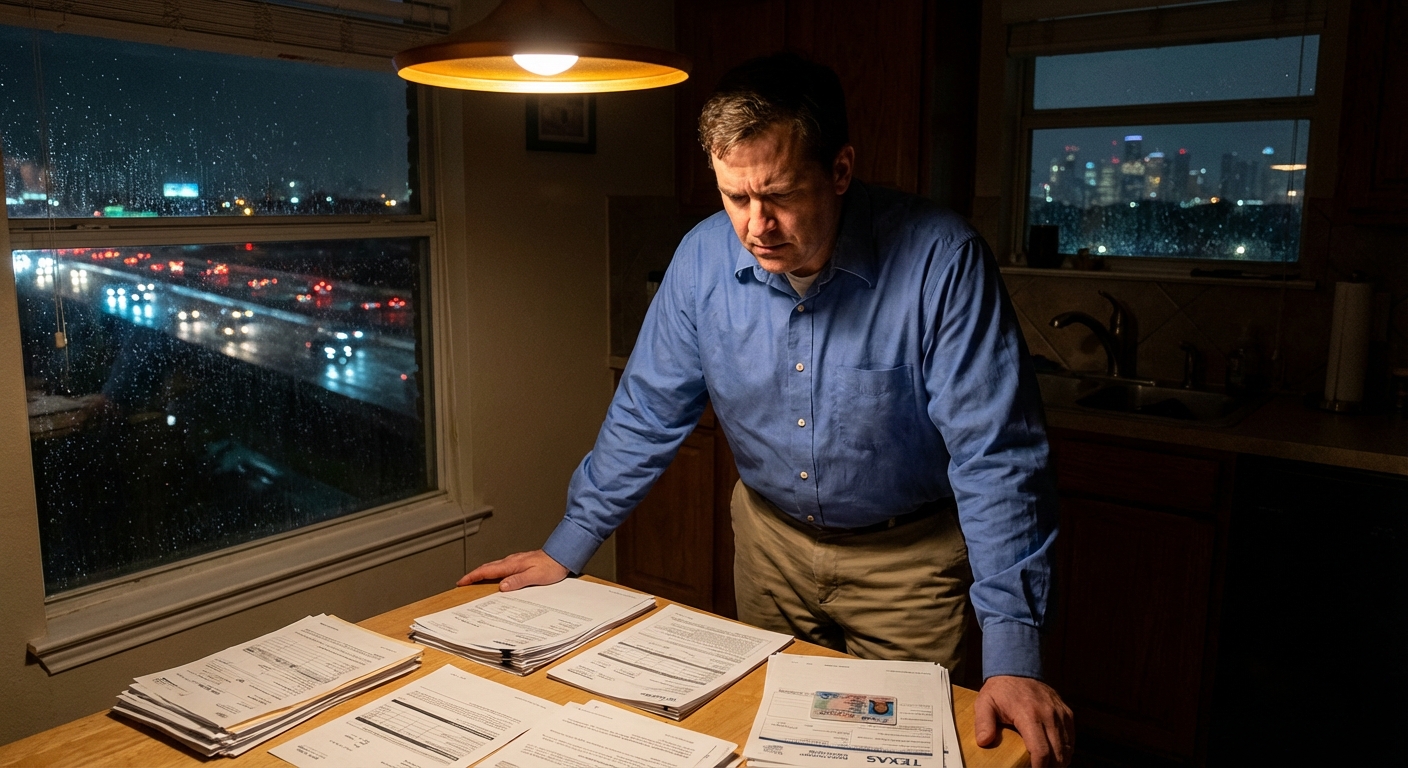
Houston DWI First 72 Hours and 15‑Day ALR Deadline: How to Protect Your License, Job, and Family
If you were just arrested for DWI in Houston, the most important thing to know is that you usually have only 15 days from the date of your arrest to request an ALR hearing and try to stop your automatic Texas driver’s license suspension. In the first 48 to 72 hours, the steps you take, or do not take, can make a big difference in your license, your job, and how strong your defense will be when your Harris County DWI case moves forward.
You might be a construction project manager or other working parent who depends on your truck or company vehicle every day. This guide walks you through those early hours in plain English, explains what the 15‑day ALR deadline really means, and shows you how people in your position can start protecting their license, income, and family while a Texas DWI charge is pending.
What Really Happens in the First 72 Hours After a Houston DWI Arrest
Right now, you may be tired, embarrassed, and trying to replay every moment of the stop. At the same time, your mind is jumping ahead to your job, your CDL or company truck, and what your boss will think if you lose your license. The first 72 hours are about stabilizing things so you do not miss key deadlines and do not accidentally make your situation worse.
Here is a realistic picture of what usually happens in those first few days after a Harris County DWI arrest for someone in your shoes:
- Release from jail. You are booked, photographed, and either post bond or are released on a personal bond. You get paperwork, including a temporary driving permit (if your license was taken) and a court date.
- Your license is at risk immediately. If you provided a breath or blood sample at or above the legal limit, or refused testing, the officer typically issues a Notice of Suspension and takes your plastic license. The notice acts as a temporary permit.
- The 15‑day ALR clock starts. From the date of service of that notice, you usually have only 15 days to request an administrative license revocation hearing.
- Your first court date is set. In Houston or another Harris County court, your first setting is often a few weeks out. That criminal court date is different from the ALR hearing, which is handled separately through the Texas Department of Public Safety.
If you are the main provider at home, even one week without a vehicle can threaten your job, overtime opportunities, and your ability to get kids to school or daycare. That is why the first 72 hours are so focused on protecting your ability to drive.
Immediate To‑Do List: Your First 48 to 72 Hours After a Texas DWI Arrest
To keep things manageable, think in terms of a short checklist. The goal is not to solve your whole case this week, it is to protect your license, meet deadlines, and gather information while it is still fresh.
1. Track Your 15‑Day ALR Deadline
Look at your DIC‑25 form or Notice of Suspension. The date on that paper is usually when the 15‑day clock starts. Many Houston drivers are surprised that the license issue is handled outside the criminal court, which is why guides on first 72‑hours checklist to protect your license and work emphasize marking this date immediately.
Missing that 15‑day ALR deadline is one of the most common and most damaging early mistakes. If you do nothing, your Texas driver’s license can be suspended automatically, often for at least 90 days for a first offense failure and 180 days or more for a refusal.
2. Request Your ALR Hearing
You can fight the automatic suspension through the ALR process. You may do this through a lawyer or directly through the Texas Department of Public Safety. Many people want more detail on how to request an ALR hearing and protect your license so they do not miss any step in this separate administrative case.
If you decide to submit the request yourself, you can use the official DPS portal to request an ALR hearing (how-to) and follow the instructions provided there. Be sure to keep proof of submission and any confirmation numbers. If you are working on job sites all day, handle this step at night or during a break so it is done well before the 15th day.
3. Write Down Your Memory of the Stop
Within the first couple of days, sit quietly and write out exactly what happened from before the traffic stop until you were released. Include what you had to drink, how much you ate, where you were driving, what the officer said, and how the field sobriety tests were given.
One Houston construction supervisor, for example, wrote down that he stood on uneven gravel during the walk and turn test. That detail later helped raise doubts about whether his balance problems were from alcohol or the surface. Small facts like that fade quickly if you do not capture them early.
4. Protect Your Job and Work Schedule
If your employer runs a background check or monitors your driving record, you may be nervous about what to say. In the first few days, focus on keeping your schedule stable and understanding any company policies about arrests or license status. Some companies only require disclosure if you are convicted or if your license is actually suspended.
As a project manager or foreman, you might be coordinating crews across Houston, Katy, and the Woodlands. Without a license, you could lose that role or be moved off field duties. Getting your ALR hearing requested and planning for transportation if a suspension later goes into effect are concrete ways to show you are handling the situation responsibly.
5. Learn the Basics About a Texas First‑Offense DWI
For many people reading this, it is a first DWI. Texas law treats a first offense seriously, but there are also defenses, diversion options, and ways to reduce the long‑term damage. A good starting point is to review practical first‑steps after a Texas first‑offense DWI arrest so you understand what penalties you could face and what early choices matter most.
When you know where your case fits in the range of possible outcomes, it is easier to sleep, keep working, and talk honestly with your family about what comes next.
Understanding the 15‑Day ALR Deadline and Texas License Suspensions
The ALR process is confusing because it runs on a different track from your criminal DWI case in Harris County court. Yet for many working parents, the ALR hearing is the part that hits home the hardest, because it controls whether you can drive to the jobsite or pick up your kids.
What Is an ALR Hearing in Texas?
An Administrative License Revocation hearing is a civil proceeding handled by the State Office of Administrative Hearings. It deals only with your driving privilege, not jail time or fines. The question is usually whether the officer had reasonable suspicion to stop you, probable cause to arrest you, and whether you either failed or refused a breath or blood test.
If you request the hearing on time, your temporary permit usually allows you to keep driving until the hearing and any decision are made. If you do not request it, your license suspension will typically start automatically 40 days after the date on your notice.
How the 15‑Day Deadline Works
The 15 days are calendar days, not business days. That means weekends and holidays count. Day one is usually the date you received the notice of suspension. For someone arrested late on a Friday night in Houston, that short time frame can sneak up quickly.
If you are not sure whether your notice date is correct or whether your request went through, that is the kind of narrow, deadline‑driven question a Texas DWI lawyer can review with you based on the exact forms you received.
Why the ALR Hearing Matters for Your Job
Even if your criminal DWI case in Harris County ends up reduced or dismissed, a missed ALR deadline can still leave you with a license suspension. That can affect your ability to work as a construction supervisor, truck driver, or any position that requires field travel or use of a company vehicle.
If your license is suspended, you may still be able to apply for an occupational license so you can drive for essential needs, like work and child care. However, that process adds time, expense, and stress, which is why resources on how to request an ALR hearing and timeline stress acting early rather than waiting until the suspension hits.
Texas Implied Consent, Test Refusals, and What They Mean for Your License
Many drivers in the Houston area are not aware of Texas implied consent laws until the moment an officer asks for a breath or blood test. By driving on Texas roads, you are considered to have given implied consent to testing for alcohol or drugs after a lawful arrest for DWI.
If you refuse, the officer can seek a warrant for a blood draw and your license may face a longer administrative suspension for refusal compared to a failure. The rules are laid out in the Texas law on implied consent and test refusal, which gives DPS authority to suspend your license even before your criminal case is decided.
This can be frustrating, because you may feel like you already cooperated by doing roadside tests or answering questions. The key point is that the implied consent rules are separate from field sobriety tests, and they directly impact your ALR case and potential suspension lengths.
Criminal DWI Case vs ALR Hearing: Two Tracks, One Life
It helps to picture your situation as two tracks that run side by side. On one track, the criminal DWI case in Houston or a nearby county deals with guilt, innocence, jail, fines, and probation. On the other, the ALR process decides your driving privilege.
The Criminal DWI Case in Harris County
In the criminal case, you will appear in court at scheduled times. The state must prove each element of the offense beyond a reasonable doubt. Issues like the legality of the stop, how field sobriety tests were conducted, and whether breath or blood tests were accurate all come into play.
For a first‑offense DWI in Texas, penalties can include up to 180 days in jail (often probated), fines, a driver’s license suspension, and surcharges or fees. For someone with a steady job and no prior record, there may also be options like deferred adjudication or reduction, depending on the facts and court policies.
The ALR Hearing
At the ALR hearing, the standard of proof is lower and the issues are narrower. The focus is on whether the officer followed proper procedures and whether there was enough evidence of intoxication or refusal to support suspending your license.
Even though the ALR hearing is “civil” and separate, the evidence that comes out there, including the officer’s testimony and video, can sometimes help your criminal defense later. That is one reason people who are very results‑focused, like Ryan Mitchell types, pay close attention to how the ALR hearing can reveal weaknesses in the state’s case.
Common Misconceptions Houston Drivers Have After a First DWI Arrest
Right after an arrest, it is easy to rely on rumors, old stories from friends, or what you see on social media. Here are a few big misconceptions that can hurt people who are trying to hold on to their jobs and family stability.
“If I ignore the ALR paperwork, it will just go away.”
This is false. Ignoring the ALR paperwork almost always leads to an automatic suspension. It does not make the case disappear and it often makes your daily life harder, especially if you commute across Houston for work.
“A first DWI is no big deal.”
For Kevin/ Tyler readers who may be younger or less aware of the stakes, a Texas DWI can lead to a permanent criminal record, thousands of dollars in fines and fees, higher insurance, and months or years of probation. Even when jail is avoided, the true cost over time can be much higher than people expect.
“If I passed some roadside tests, they cannot suspend my license.”
Field sobriety tests are only one part of the picture. Your license can still be suspended administratively based on a breath or blood test result at or above 0.08, or based on a refusal to provide a sample, even if you think you did fine on the walk and turn or one‑leg stand.
How a Texas DWI Can Affect Employment, Professional Licenses, and Family Life
For you as an “Anxious Provider,” the real fear is not a line in a statute. It is coming home and telling your spouse you might lose the job that supports your family, or that you may not be able to drive the kids to practice. Understanding these practical impacts helps you decide what to prioritize.
Employment and Company Vehicles
Many employers in the construction, oil and gas, and transportation fields require a valid license and clean driving record. A DWI arrest, even without a conviction yet, can trigger internal reviews or policy decisions, especially if you drive company trucks or supervise crews at different sites.
Some companies only take action if you are convicted or your license is actually suspended. That is another concrete reason to focus on the ALR deadline, possible occupational license options, and building a strong defense early so you can show your employer that you are actively addressing the problem.
Professional Licensing and “Elena Morales” Concerns
If you are more like Elena Morales, working as a nurse, teacher, or other licensed professional, a DWI can raise separate issues with your board or licensing agency. Some boards require self‑reporting of certain arrests or convictions. Others may only get involved if the DWI involves drugs, high BAC levels, or repeat offenses.
In addition, if you have childcare responsibilities, even a short license suspension can make daycare drop‑offs, school runs, and medical appointments extremely difficult. Planning ahead for temporary transportation and understanding when an occupational license might be available can protect both your career and your kids’ routines.
Privacy, Discretion, and “Jason Reynolds” Priorities
Readers who relate to Jason Reynolds often care about keeping a DWI arrest as low‑profile as possible. You may be a manager, executive, or long‑term employee who does not want rumors spreading at the office or on the jobsite.
While a DWI case is a matter of public record, many steps in the process can be handled quietly, with as few disruptions to your workday as possible. That might mean arranging court settings around your schedule and handling license paperwork efficiently so it does not interfere with your everyday responsibilities.
“Christopher Delgado” and Senior‑Level Attention
If you see yourself in Christopher Delgado, you might already know a lot about DWI law and mainly want to be sure that any strategy for your case receives senior‑level review and strict discretion. You are probably focused on long‑term record issues, professional reputation, and minimizing down‑time from work or travel.
For readers like this, using the ALR hearing to obtain discovery early, cross‑checking test results with independent experts, and planning for potential record‑sealing options down the road are usually at the top of the priority list.
Evidence, Defenses, and Strategic Steps Houston Drivers Can Take Early
While every Texas DWI case is different, there are patterns in how strong defenses are built. The decisions you make in the first couple of weeks can affect what evidence is available and how solid your options will be later.
Key Evidence in a Texas DWI Case
- Dash‑cam and body‑cam video. This shows how you were driving, how you performed on roadside tests, and how the officer behaved.
- Breath or blood test results and maintenance records. These can reveal problems with calibration, handling, or chain of custody.
- Police reports and witness statements. These describe why you were stopped, what you said, and whether there were signs of intoxication.
- Medical or physical conditions. Back problems, inner ear issues, or fatigue can affect balance and coordination.
For someone in your position, gathering contacts for potential witnesses, saving receipts from bars or restaurants, and documenting any injuries or conditions that could have affected your performance on tests are simple but powerful early steps.
Common Defense Themes
While this article cannot give case‑specific legal advice, some recurring defense themes in Texas DWI cases include:
- Challenging whether the officer had a valid reason to stop your vehicle in the first place.
- Questioning whether field sobriety tests were administered correctly and under fair conditions.
- Attacking the accuracy or reliability of breath or blood tests, including timing and equipment issues.
- Arguing that observed signs like red eyes or slurred speech had innocent explanations, such as fatigue, allergies, or stress.
Readers like Ryan Mitchell often want to see concrete examples that these strategies can work. While every case is unique and no specific outcome can be promised, there are plenty of real‑world situations where a careful review of video or test records led to reduced charges, dismissal, or acquittal.
Micro‑Story: How One Houston Project Manager Managed His DWI Case
Consider a simplified, anonymized example. A Houston construction project manager was arrested for DWI after leaving a client dinner. The officer said he failed the walk and turn test and noted a strong odor of alcohol. His job required daily trips to sites in Harris and Fort Bend counties, and he was terrified of losing his license.
Within 48 hours, he requested an ALR hearing, wrote down everything he remembered, and started gathering his schedule and bar receipts. At the hearing, the video showed that he did the test on a sloped shoulder with loose gravel. Later, when the criminal case moved forward, the same evidence helped raise doubts about whether his balance issues were from alcohol or the terrain.
Ultimately, while this example cannot predict any particular reader’s outcome, the combination of an early ALR request, preserved evidence, and careful review gave him options that would not have been available if he had waited or ignored the paperwork.
Extra Resources for Deeper Questions and Timelines
Not everyone wants to read statute sections or court rules. If you prefer a more interactive, step‑by‑step approach, you may find an interactive Q&A resource for common DWI questions and timelines helpful as a way to explore typical scenarios and timeframes in Texas DWI cases.
Remember that online tools and articles are starting points only. For decisions about deadlines, plea options, or trial strategy, it is important to talk directly with a qualified Texas DWI lawyer who can review the specific facts and documents in your case.
Frequently Asked Questions About the Houston DWI First 72 Hours and 15‑Day ALR Deadline
What happens to my Texas driver’s license if I miss the 15‑day ALR deadline?
If you miss the 15‑day ALR deadline, your Texas driver’s license is usually suspended automatically without a hearing. The suspension generally starts 40 days after the date on your Notice of Suspension, and you lose the chance to challenge the stop or test results in that administrative process.
Is a first DWI in Houston a felony or a misdemeanor?
Most first DWI charges in Houston and across Texas are Class B misdemeanors, not felonies. However, certain factors, such as a very high blood alcohol concentration or a crash with serious injury or a child passenger, can elevate charges and penalties.
How long can a Texas DWI stay on my record?
A Texas DWI conviction normally stays on your criminal record indefinitely unless later sealed or otherwise limited under specific laws. For many employers and background checks, this means a DWI can appear years after the case is over, which is why people often focus on damage control and long‑term options early.
Can I still drive to work in Houston if my license is suspended for DWI?
If your Texas license is suspended after a DWI arrest, you may be eligible for an occupational driver’s license that allows limited driving for essential needs such as work, school, and household duties. An occupational license has strict rules and usually requires a petition, court order, and compliance with any conditions set by the court and DPS.
How long does a Houston DWI case usually take?
A DWI case in Harris County can take several months to more than a year to resolve, depending on court schedules, the complexity of the evidence, and whether the case goes to trial. During this time, your ALR case and any license issues may move on a separate timeline, which is why tracking both tracks is important.
Why Acting Early on a Texas DWI Matters for Your Future
After a DWI arrest in Houston or a nearby county, it is normal to feel overwhelmed and ashamed. You may tell yourself to wait and see what happens at the first court date, but the reality is that some of the most important decisions, like requesting an ALR hearing and preserving evidence, happen in the first couple of weeks.
For an “Anxious Provider,” acting early is not about panic. It is about protecting your ability to keep working, supporting your family, and limiting long‑term damage to your record and reputation. Setting reminders for deadlines, gathering paperwork, and getting informed about your options are practical steps you can take right now without making any rushed choices about plea deals or trial.
Readers at every awareness stage, from Kevin/ Tyler who may not have thought much about the consequences, to Christopher Delgado who already understands the stakes, benefit from the same basic principle. The earlier you understand the ALR process, the criminal court timeline, and the evidence in your specific case, the more control you have over what comes next. For guidance tailored to your situation, consider speaking with a qualified Texas DWI lawyer who routinely handles Houston and Harris County DWI and ALR matters.
To get a clear, visual explanation of these early steps, you may also want to watch a short video walkthrough from a Houston DWI lawyer. The video below goes over what to do in the first 72 hours after a Texas DWI arrest, including requesting an ALR hearing, preserving evidence, and planning around your job and family responsibilities.
Butler Law Firm - The Houston DWI Lawyer
11500 Northwest Fwy #400, Houston, TX 77092
https://www.thehoustondwilawyer.com/
+1 713-236-8744
RGFH+6F Central Northwest, Houston, TX
View on Google Maps


No comments:
Post a Comment