Texas 15‑Day ALR Deadline After a DWI Arrest: How to Protect Your License, Job, and Family
If you were arrested for DWI in Texas, you have only 15 days from the date of your arrest to request an ALR hearing and try to stop your automatic driver’s license suspension. That short deadline is separate from your criminal DWI case and it is one of the most important early steps to protect your ability to drive to work and care for your family.
This guide walks you through what the Texas 15‑day ALR deadline means, how the license suspension process works, and the practical steps you can take right now to protect your job, your record, and your future if you were arrested in Houston or nearby counties.
1. What the Texas 15‑Day ALR Deadline Really Means for You
After a Texas DWI arrest, the officer usually takes your physical driver’s license and gives you a temporary driving permit. At the same time, the Department of Public Safety starts a separate process called Administrative License Revocation, or ALR. You have 15 days from the date you received the suspension notice to request a hearing in order to challenge that suspension.
If you miss that 15‑day ALR deadline, the suspension usually starts on the 40th day after the date on the notice. For someone like you, working long hours on job sites around Houston and needing to pick up kids or help with family, losing the ability to drive can feel like losing your grip on everything.
For a detailed, step by step checklist, you can review this clear 15‑day ALR deadline action plan that focuses on what to do in the first two weeks after a Houston DWI arrest.
A quick micro‑story: how missing the 15‑day deadline hurts
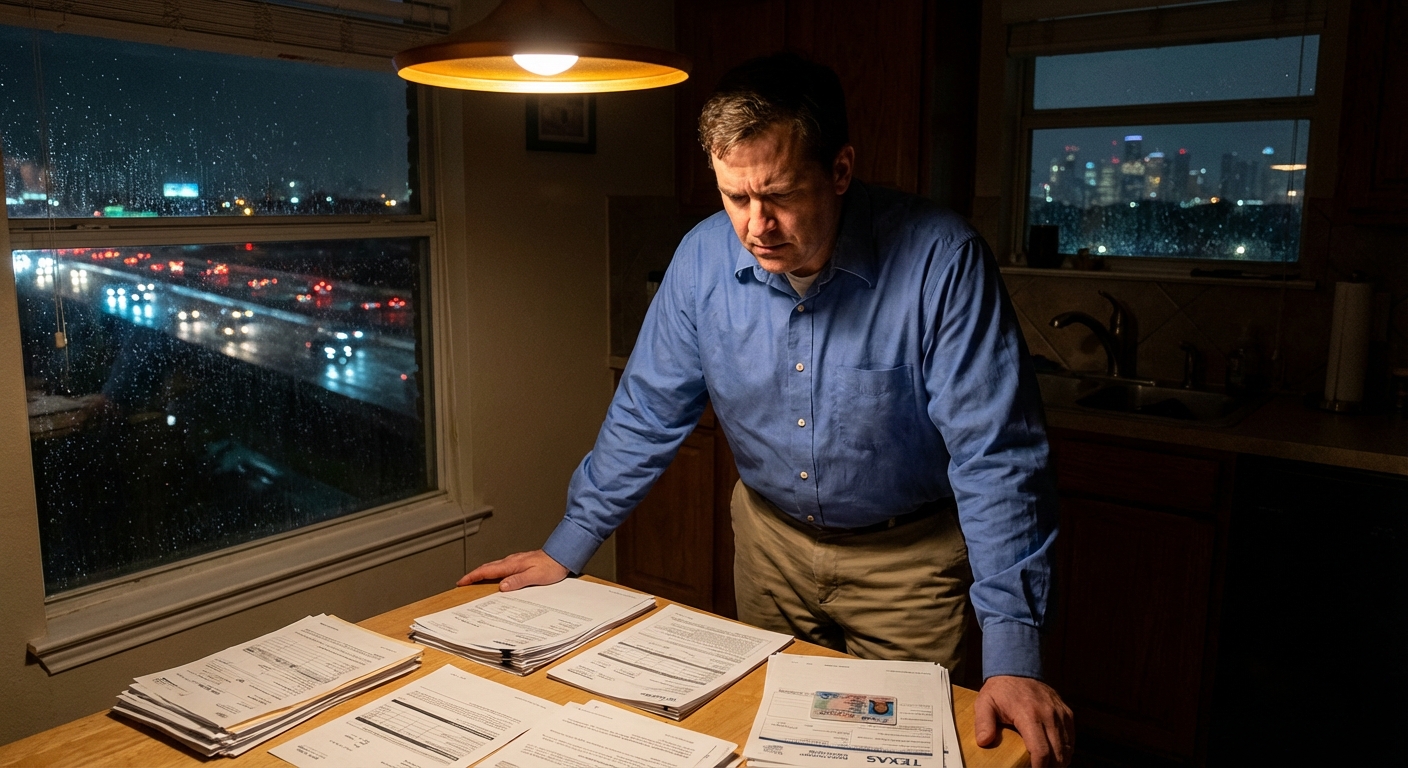
Imagine “Mike,” a construction project manager in his 30s in Harris County. He gets arrested for DWI after a work celebration on a Friday night. He bonds out Saturday morning, stuffs his paperwork in a drawer, and tells himself he will deal with it after the next big project deadline. By the time he looks closely at the fine print, it is day 18. DPS has already locked in his license suspension, and his employer is now worried about putting him in charge of company trucks. All of this happened before a judge ever heard a word about his actual DWI case.
You do not want Mike’s story to be yours. The ALR deadline is early and strict, but it is also one of the first chances to fight for your license.
2. Step One After a Texas DWI Arrest: Requesting Your ALR Hearing
The most urgent step after a DWI arrest is to request that ALR hearing within 15 days. This request is separate from your court date and separate from anything your bondsman does.
You can learn more about how to request an ALR hearing and beat the 15‑day deadline, including what form to use, where it goes, and what happens at the hearing itself.
How to submit the ALR hearing request
You have a few ways to request an ALR hearing:
- Online through the Texas Department of Public Safety
- By mail
- Sometimes by fax, depending on the instructions on your suspension notice
For online requests, the Official DPS portal to request an ALR hearing lets you submit your request directly. Make sure you keep a copy or screenshot of the confirmation page with the date.
What information you usually need
When you submit your ALR hearing request, you typically need:
- Your full name and driver’s license number
- Date of arrest and the county or city, such as Harris County or Houston
- Suspension notice information from the form the officer gave you
- Your current mailing address so DPS can send your hearing notice
If you are feeling overwhelmed by the paperwork, remember: you are not alone, and this is a normal reaction after a DWI arrest. Breaking it into one action at a time helps.
Why this hearing matters for your job and family
The ALR hearing is your chance to challenge whether the officer had a legal reason to stop you, arrest you, and either claim you refused testing or failed the breath or blood test. If DPS cannot prove its case at the hearing, the administrative suspension might be thrown out, which means you keep your full driving privileges for now.
Even when the suspension is not dismissed, having an ALR hearing can create a record that may help in your criminal case later. It can also buy you time to arrange work schedules, childcare, and backup transportation if a suspension does go into effect.
3. How ALR and Implied Consent Work Under Texas Law
Texas has an implied consent law. That means if you drive on Texas roads, you are considered to have agreed in advance to give a breath or blood sample if an officer arrests you for DWI. If you refuse the test after the arrest, DPS can move to suspend your license through the ALR process. This is laid out in the Texas statute on implied consent and test refusals.
When ALR is triggered
The ALR process can start in two main situations:
- You refuse to give a breath or blood sample after a lawful DWI arrest, or
- You take the test and your result is at or above the legal limit, typically 0.08 for most adult drivers
In either situation, the officer issues a temporary driving permit and a suspension notice. That is when your 15‑day clock starts to tick.
How long the ALR suspension can last
For many first DWI arrests, a refusal suspension is often around 180 days, while a failure suspension can be around 90 days. If you have prior alcohol or drug related suspensions, those numbers can go up, sometimes to a year or more. These are general ranges and not guarantees, but they show how serious the ALR process can be before you ever see a criminal court judge.
For someone in your position, even a 90 day loss of license can mean missed time at job sites, trouble supervising crews, and questions from your employer about your reliability.
4. Texas DWI Penalties, License Suspensions, and Your Ability to Work
ALR is only one side of the problem. The criminal DWI case in a Houston or Harris County court can also affect your license and your record. It helps to understand the big picture of possible penalties so you can plan ahead.
You can review a full overview of what penalties and license consequences you could face in Texas, including fine ranges, possible jail time, and driver’s license restrictions.
Typical criminal penalties for a first DWI in Texas
For a first DWI with no accident and no child in the car, Texas law often classifies it as a Class B misdemeanor. This can include:
- Up to 180 days in jail, with a minimum of 72 hours in some cases
- Fines that can reach thousands of dollars once court costs and surcharges are included
- Possible license suspension added on top of any ALR suspension, usually ranging from 90 days to 1 year
- Conditions like DWI education classes, ignition interlock devices, or community service
For someone managing projects and supervising crews, even a short jail sentence or a long license suspension can threaten your job position, promotion track, or even your ability to keep working in the field.
Long term impact on your record
In many situations, a DWI conviction in Texas stays on your criminal record for life. That can affect future background checks, professional licenses, and internal company promotions. This is one reason many people focus early on ways to challenge the case, seek dismissals or reductions when available, or explore record sealing options where the law allows.
5. Protecting Your Driver’s License and Your Job After a DWI Arrest
Your driver’s license is more than a plastic card. It is how you get to job sites around Houston, meet with clients, pick up your kids, and keep your life moving. When a DWI puts that at risk, it is normal to feel like everything is on the line.
For a deeper look at how your license and work life fit together after an arrest, you can read more about how to safeguard your license and employment fast so you can plan the next few months with more confidence.
Occupational driver’s licenses and work needs
If your license does get suspended, Texas law allows some drivers to apply for an occupational driver’s license. This is a special court ordered license that can let you drive for essentials such as work, school, and basic household duties. It can come with restrictions on time of day, routes, and vehicles you may drive.
For a construction project manager, an occupational license can be the difference between keeping your job and facing sudden unemployment. The rules are strict, but this option may help you continue to provide for your family while your case moves forward.
Do you have to tell your employer about the DWI?
Whether you must report a DWI arrest or license suspension to your employer depends on your company’s policies and your role. Many jobs that involve driving company vehicles, holding a commercial driver’s license, or working on certain secure sites come with reporting duties.
Even when you are not technically required to report, you may choose to speak with a supervisor if your court dates or license restrictions will affect your schedule. How and when to have that conversation is a personal decision. It often helps to understand your case status, ALR hearing date, and license options before you talk with anyone at work.
6. Correcting a Common Misconception About ALR and DWI Cases
Many drivers think that if they “beat” their criminal DWI case, the license issues will automatically disappear, or that if their criminal case is still pending, DPS cannot suspend their license yet. That is not correct. The ALR process is separate and can move forward even while your criminal case is still in its early stages.
Another misunderstanding is that refusing breath or blood testing always helps your case. In reality, a refusal can trigger a longer ALR suspension than a failed test, and the refusal can still be used against you in some ways. The details are very fact specific, so it is wise to get personalized legal advice from a qualified Texas DWI lawyer who understands both sides of the process.
7. Ryan Mitchell — Solution Aware: Understanding Evidence, Strategy, and Costs
Ryan Mitchell — Solution Aware readers tend to focus on evidence, strategy, and what this will really cost over time. If that sounds like you, it helps to think of your DWI case as two tracks: the ALR license track and the criminal court track. Both tracks depend heavily on the quality of the evidence and the strategy used to challenge it.
Why early evidence review matters
Key evidence in a Texas DWI case often includes dashcam or bodycam video, breath test logs, blood test lab records, and the officer’s reports. In some Harris County cases, careful review of this evidence reveals issues such as improper traffic stops, poorly given field sobriety tests, or problems with the way a breath or blood test was handled.
For example, in one Houston case, an adult driver with no prior record faced a first DWI with a reported breath test just over the legal limit. After a detailed review, there were questions about the maintenance records for the breath machine and the way the officer explained the tests. The final result was a reduction that avoided a DWI conviction on that driver’s record. Outcomes like this are not guaranteed, but they show why evidence and timing matter.
Thinking about costs in a realistic way
From a cost perspective, it is helpful to compare up front legal fees and time against the long term costs of a suspended license, missed work, higher insurance, and a permanent criminal record. For many working professionals, even a small increase in insurance and one missed project bonus can add up to thousands of dollars over a few years. Seeing the big picture can make the early decisions feel less overwhelming and more strategic.
8. Jason/Sophia — Product Aware: Discretion and High Stakes Concerns
Jason/Sophia — Product Aware readers already know that experienced DWI representation exists, and their focus is on track record and discretion. If your career involves public visibility, sensitive contracts, or professional licensing, you may worry about who finds out about your case and how it appears on background checks.
In Houston and nearby Texas counties, many professionals quietly resolve DWI cases through negotiated outcomes, pretrial programs, or other options when available under the facts and the law. While no result can ever be promised, it is fair to say that early, careful handling of your case can sometimes reduce the public footprint of the charges and limit who sees them over time. Discussing your privacy concerns up front with a qualified Texas DWI lawyer is an important part of building a plan that fits your life and your reputation.
9. Chris/Marcus — Most Aware: VIP‑Level Confidentiality and Access
Chris/Marcus — Most Aware readers tend to look for VIP‑level confidentiality and direct access. You may already have relationships with legal or professional advisors and you expect quick answers, clear next steps, and updates that respect your time.
In serious Houston DWI cases, especially those involving accidents or prior records, you may need rapid coordination between work schedules, court settings, and ALR hearings. Having a direct communication plan with counsel, agreed methods of contact, and clear expectations on who handles which appearances can help you stay focused on your responsibilities while still protecting your legal position.
10. Tyler/Kevin — Unaware: Real Costs, License Risk, and the 15‑Day Shock
Tyler/Kevin — Unaware readers often do not realize how fast things move after a Texas DWI arrest. You might think the first court date is weeks away, so there is time to decide what to do. The surprise is that license damage can start long before that if you ignore the ALR notice.
Here is the simple shock: if you do nothing, your license can be automatically suspended even before the judge hears your case. You may end up paying for rides, missing overtime, and facing higher insurance. Even one missed week of work or one lost contract can easily cost more than taking action early to protect your driving privileges.
11. Simple Timeline: What to Do in the First 30 Days After a Texas DWI Arrest
When you are already stressed and worried about your family, a clear timeline can help. Think of the first month in four short phases.
Days 1–3: Breathe and gather the basics
- Read every page of your arrest and bond paperwork.
- Find the suspension notice and circle the date written on it.
- Write down a basic timeline of what happened the night of the arrest while it is still fresh.
- Note your first court date and where you must appear, such as a Harris County criminal court.
In these first few days, your job is to calm your mind enough to see the next steps. Tell yourself that one mistake does not define you as a provider for your family.
Days 4–10: Request the ALR hearing and review options
- Submit your ALR hearing request before day 15, ideally online.
- Organize your work calendar around possible hearing and court dates.
- Start learning about DWI defenses, penalties, and license options in Texas.
This is the window where you move from panic to a plan. Taking one concrete step, like sending the ALR request, can reduce some of the pressure you feel at work and at home.
Days 11–30: Prepare for hearings and plan for work impact
- Make a folder, digital or paper, with all case documents.
- List out your driving needs for work, school, childcare, and other essentials.
- Consider how you would adjust if your license is temporarily restricted or suspended.
- Stay on top of mail from DPS and the court so you do not miss any notices.
By the end of the first 30 days, your goal is to know your hearing dates, your license status, and your main options so the rest of the process feels more controlled.
12. Frequently Asked Questions About the Texas 15‑Day ALR Deadline and Your License
What happens if I miss the 15‑day ALR deadline in Texas?
If you miss the 15‑day ALR deadline, DPS usually moves forward with suspending your driver’s license automatically. The suspension typically begins on the 40th day after the date on your suspension notice. You may still have options like an occupational license, but you lose the chance to challenge the suspension at an ALR hearing.
Does the Texas ALR process apply if my DWI was in Houston?
Yes, the ALR process is statewide, so it applies in Houston, Harris County, and every other Texas county. If a Houston area officer arrested you for DWI and issued a temporary driving permit or suspension notice, you still have only 15 days to request the ALR hearing. The hearing itself may be held in person or by phone, depending on DPS and local procedures.
Can I still drive while waiting for my ALR hearing in Texas?
In many cases, you can continue driving on the temporary permit until DPS makes a decision after the ALR hearing or until the temporary permit expires. The exact rules can vary based on the notice you were given and your prior record. It is important to read your paperwork closely so you know the specific dates that apply to you.
How long can my Texas license be suspended through ALR for a first DWI?
For many first time DWI arrests, a test refusal can lead to an ALR suspension of around 180 days, while a failed test can lead to around 90 days. If you have prior alcohol or drug related suspensions, the period can be longer, sometimes up to a year or more. These are general guidelines and the actual length for your case depends on your record and the details of the arrest.
Is the ALR hearing the same as my Houston DWI court date?
No, the ALR hearing and your Houston or Harris County DWI court date are separate. The ALR hearing is an administrative process with DPS that focuses on your driver’s license. Your court date deals with the criminal DWI charge itself. You need to track both sets of dates so you do not miss any deadlines or appearances.
13. Why Acting Early on Your Texas DWI and ALR Case Matters
Taking action in the first 15 days after a Texas DWI arrest can make a major difference in how the next year of your life looks. Requesting your ALR hearing on time, understanding your license options, and planning around work and family needs can help you keep your role as a provider while your case moves through the system.
One of the most important stances to remember is this: staying frozen by fear usually makes things worse. Every day you delay increases the chances of missed deadlines, lost paperwork, and rushed decisions. Giving yourself a simple checklist and timeline lets you protect what matters most, even while you deal with the stress and uncertainty of a DWI charge.
If you want a conversational resource that you can explore at your own pace, the interactive Q&A for common Texas DWI questions and timelines can help you better understand how deadlines, license issues, and court processes fit together in Texas.
14. Short Video Guide: Immediate Steps After a Texas DWI Arrest
If you prefer a short, plain English explainer, this video titled “Texas DWI Arrest? Houston DWI Lawyer Jim Butler Reveals How to Fight Back and Protect Your Case” walks through immediate actions after a Texas DWI arrest, including the ALR 15‑day hearing deadline, how to request a hearing, and practical ways to start protecting your license and job.
Watching this video can help you turn the panic of a recent arrest into a clearer, step by step plan for your next few weeks.
Butler Law Firm - The Houston DWI Lawyer
11500 Northwest Fwy #400, Houston, TX 77092
https://www.thehoustondwilawyer.com/
+1 713-236-8744
RGFH+6F Central Northwest, Houston, TX
View on Google Maps


No comments:
Post a Comment