Texas DWI Aftermath: Step‑by‑Step Roadmap To Protect Your License, Job, and Family
If you were just arrested for a Texas DWI, you have only 15 days from the date of your arrest to fight the automatic suspension of your driver’s license, and a first DWI in Texas can easily cost several thousand dollars in fines, fees, and increased insurance over time. That short deadline and the real financial hit are why your first moves in the next few days matter so much. This guide gives you a clear, practical roadmap so you can protect your license, your job, and your family as much as possible.
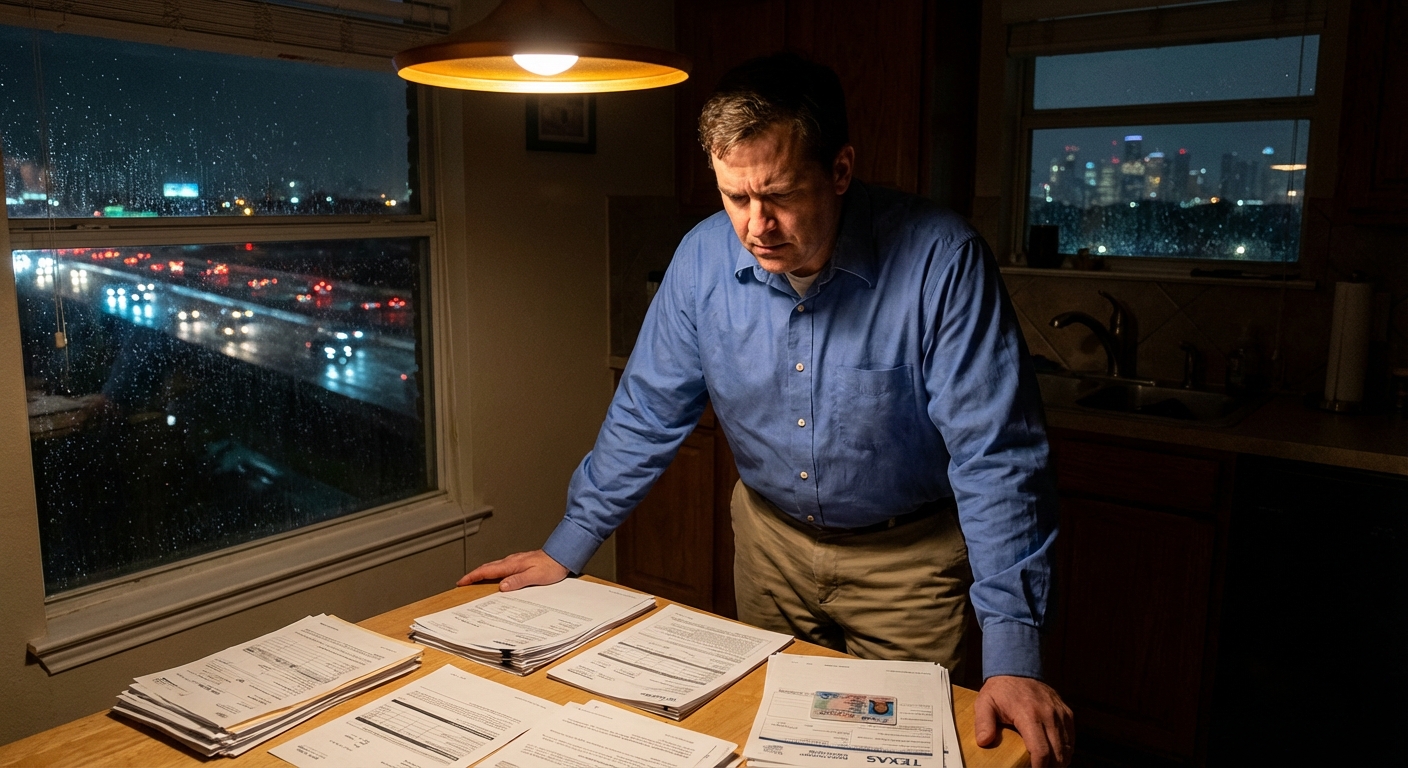
Mike, if you are a construction project manager in Houston who was just arrested, you are probably replaying the stop in your head and worrying about how this will affect your work truck, your next big project, and the look on your family’s faces. You are not alone, and you are not powerless. We will walk through what happens next in a Texas DWI case, what you must do in the next 15 days, and how to put a plan in place that focuses on your career, your finances, and your family.
Big Picture: What Really Happens After a Texas DWI Arrest
Right now it may feel like your life is over, but in reality you are at the very beginning of a process with many moving parts and many decision points. A DWI arrest in Houston or anywhere in Texas kicks off two main tracks:
- The criminal case in county court, where you face possible jail, fines, probation, and a criminal record.
- The civil license case, called Administrative License Revocation, or ALR, which can suspend your driver’s license even before any criminal conviction.
Most people focus on the criminal case and forget the license side until it is too late. For someone in your position who needs to drive to job sites and pick up kids, the ALR deadline is usually the most urgent problem to solve.
In Harris County and surrounding counties, your first court date often comes a few weeks after arrest. The ALR clock, however, starts immediately and does not wait for that court setting. Understanding this split will help you make better decisions in the next few days.
Immediate Next Steps Within the First 72 Hours
The first three days after a Texas DWI arrest are chaotic, but they are also when you can do the most to stabilize things. Think of this as an emergency checklist so you do not lose ground while you are still in shock.
1. Secure your paperwork and timeline
Gather every document you received when you were released: citation, bond paperwork, temporary driving permit, and any property receipts. On the temporary permit or notice of suspension, circle the arrest date and count 15 days forward. That is your ALR hearing request deadline.
For a deeper dive into how that deadline works and how it connects to your work and family driving needs, you can review this step‑by‑step ALR deadline and license protection guide. It explains how the civil license process fits into your overall defense strategy.
2. Write down what happened, while it is still fresh
Before memories fade, sit down in a quiet place and write out everything from that day, starting several hours before you were pulled over. Include:
- Where you were coming from and going
- What you drank, when, and how much food you had
- Why the officer said they stopped you
- What field sobriety tests you were asked to do and how they were explained
- Whether the ground was flat, if you were tired, injured, or wearing work boots or other difficult shoes
- What the officer said about breath or blood tests and any refusal or consent
Details that seem small now can become important later, such as weather, traffic, or how many times the officer changed their story. This is especially important if your job requires physical work or long shifts because fatigue or injuries can affect test performance.
3. Learn the basic rules of the Texas DWI process
You do not need to become a legal expert, but you do need a basic understanding of what you are facing. A simple way to get oriented is to read a practical guide on step‑by‑step actions after a DWI traffic stop. Even though your stop already happened, that guide can help you understand what officers are trained to look for and where mistakes often occur.
If you are an Uninformed young adult (Kevin Thompson) reading this after your first traffic stop, know that ignoring this arrest can lead to hundreds or even thousands of dollars in long term costs and an automatic suspension if you miss the 15 day deadline. Paying attention now can save you from years of financial and license problems.
The 15 Day ALR Deadline: How to Protect Your Texas Driver’s License
In Texas, if you failed or refused a breath or blood test, the officer likely took your plastic license and gave you a temporary permit that lasts 40 days or until there is an ALR decision. You have only 15 days from the date you received notice of suspension to request a hearing to challenge that automatic suspension.
Requesting this hearing is not just paperwork. It can preserve your right to drive, give your lawyer a chance to question the officer under oath, and sometimes lead to better outcomes in the criminal case. You can learn the nuts and bolts of how to request an ALR hearing and deadlines, including what information goes into the request and how hearing dates are scheduled.
If you prefer to see the state’s own language, the Texas Department of Public Safety provides an Official DPS portal to request an ALR hearing. Many people find it helpful to review that page to confirm the short timelines and the options for submitting a request.
For someone in construction or any job that requires driving across Houston and surrounding counties, losing your license suddenly can mean missed shifts, disciplinary write ups, or even job loss. That is why protecting your license is usually the first legal priority right after your arrest.
What happens if you miss the 15 day window
If no ALR hearing is requested within 15 days, Texas DPS will automatically suspend your driver’s license on the 40th day after the notice is served. For a first DWI with a failed test, that suspension is often 90 days. For a refusal, it is often 180 days. These are general ranges, and specific facts, prior history, and age can change the length.
A common misconception is that if you intend to plead guilty later, there is no point in fighting the ALR suspension. In reality, even people who eventually accept some responsibility can benefit from an ALR hearing, because the testimony and documents from that hearing often reveal weaknesses in the traffic stop or testing that can reduce penalties or improve the outcome.
Driving options during and after an ALR suspension
If your license is suspended, you may still qualify for an occupational driver’s license that allows limited driving for work, school, and essential household duties. Courts in Harris County and nearby counties often require proof of insurance, sometimes a logbook, and in some cases an ignition interlock device as conditions of this restricted license.
For someone like you who manages crews and has to visit multiple sites each day, an occupational license can be the difference between keeping and losing your job. The earlier your defense plan starts, the more time you have to gather the paperwork, insurance proof, and employer documentation needed for that option.
Understanding Texas DWI Charges, Penalties, and Real‑World Impact
Texas law treats driving while intoxicated seriously, but not every DWI carries the same level of punishment. The penalties depend on your blood alcohol concentration (BAC), prior record, and whether there were enhancements such as a child passenger or accident with injury.
Typical penalties for a first‑time Texas DWI
In broad terms, a standard first DWI in Texas (no accident, no serious injury, no child passenger, BAC under 0.15) is usually a Class B misdemeanor. Potential penalties can include:
- Up to 180 days in jail, with many first‑time offenders receiving probation instead of actual jail time
- Fines up to $2,000, plus court costs and surcharges
- Driver’s license suspension from 90 days up to 1 year, depending on ALR and the criminal case
- Annual “driver responsibility” charges or similar fees that can add hundreds of dollars per year
- Mandatory DWI education classes, possible community service, and possible ignition interlock
These numbers do not include hidden costs like lost work time for court dates, towing and storage fees, or intensive probation requirements. For a project manager or supervisor, repeated court appearances can also affect your reputation with supervisors and clients.
When a Texas DWI can become a felony
Some circumstances can increase a DWI to a more serious charge, such as:
- Third or more DWI, which can become a third degree felony
- DWI with a child passenger under 15, charged as a state jail felony
- Intoxication assault or intoxication manslaughter when serious injury or death occurs
If you are in the High-stakes executive (Jason Reynolds) category, where your professional license or executive role is on the line, a felony allegation can be career ending. Discreet early intervention and accurate assessment of the charge level are critical to protect your long term reputation.
How a DWI affects work, family, and everyday life in Houston
Even a misdemeanor DWI can ripple through your life for years. You might face:
- Employer background checks when you change jobs or seek promotion
- Stricter rules or loss of eligibility for company vehicles
- Higher auto insurance premiums for three to five years or more
- Child custody or visitation questions in family law cases
In Houston’s traffic heavy environment, not having a license can also strain your relationships, because family members may feel the burden of driving you to work, probation meetings, and court. Recognizing these impacts early is not about scaring you, it is about helping you prioritize what matters most and build a plan around it.
Texas Implied Consent, Breath and Blood Tests, and Refusal Consequences
Texas has “implied consent” laws. This means that by driving on Texas roads, you are considered to have given consent to a breath or blood test when an officer has reasonable suspicion to stop you and probable cause to arrest you for DWI. You still have choices, and those choices have consequences in both the criminal and license cases.
You can read the official language in the Texas statute explaining implied consent and refusal consequences, but here is the plain English version:
- If you refuse, your license suspension period on the ALR side is usually longer, but prosecutors may have less direct BAC evidence against you.
- If you provide a sample and it is 0.15 or higher, the criminal charge can be enhanced, and judges often require ignition interlock or stricter conditions.
- Blood draws can occur with or without a warrant in specific circumstances, and the chain of custody and lab procedures can be important defense issues.
Understanding what happened with your test, or refusal, is one of the first things an experienced Texas DWI lawyer will review. For you, the key is to keep all test related paperwork and recall exactly what warnings you were given and how.
Micro‑Story: How One Houston Professional Stabilized His Life After a DWI Arrest
Consider a scenario that may sound familiar. A mid‑30s project manager in Houston was stopped driving home after a team dinner. He had a few drinks over several hours and felt fine. The officer said he was drifting within his lane. He performed field sobriety tests on a dark, uneven shoulder while wearing work boots and was arrested.
He requested an ALR hearing within a week of his arrest, which kept his driving privileges intact while the case moved forward. At the ALR hearing, the officer’s testimony revealed inconsistent statements about the traffic violation and confusion over the instructions for one of the sobriety tests. Those issues later helped in plea negotiations, leading to reduced penalties and conditions that allowed him to keep his job and maintain driving for work with certain restrictions.
This is not a promise of any specific outcome, but it shows how acting quickly and using the ALR process strategically can limit damage to your career and family, especially when driving is a core part of your work.
Strategic Options and Defenses in Texas DWI Cases
Every DWI case is different, but several common defense themes show up again and again. The goal is not to “get away” with anything. The goal is to make sure the state can actually prove what it claims, under Texas law and using reliable evidence, and then use that reality to seek the best possible outcome for your future.
1. Challenging the traffic stop and initial detention
Officers must have a lawful reason to stop your vehicle and to extend that stop into a DWI investigation. This can include observed traffic violations, accidents, or reasonable suspicion based on driving behavior. Video from the patrol car and body cameras often plays a key role.
If you are the Analytical chooser (Ryan Mitchell) type who wants data, many Texas DWI defenses start with a frame‑by‑frame review of the stop video and comparison of the officer’s report to his ALR hearing testimony. In one representative Houston case, a careful review of dashcam footage and cross examination at the ALR hearing exposed that the driver did not actually cross the lane line as reported. That inconsistency helped suppress key evidence, leading to a more favorable resolution without jail time.
2. Questioning field sobriety tests
Standardized field sobriety tests were designed under controlled conditions and are highly sensitive to factors like fatigue, footwear, age, weight, and medical issues. On a dark roadside or in Houston heat, those conditions are rarely ideal.
For someone who spends long hours on concrete slabs or climbing scaffolding, a minor knee injury or back strain can easily affect balance. Thoroughly documenting your physical condition, work demands, and footwear can give context to test results that might otherwise seem damaging.
3. Scrutinizing breath and blood testing
Breath machines must be properly maintained and calibrated. Blood samples must be handled and analyzed according to strict protocols. Breakdowns in these processes can affect the reliability of a reported BAC number.
Issues that may be examined include:
- Maintenance and calibration records for the breath machine
- Whether the required observation period was followed
- How blood samples were stored and transported
- Whether lab technicians followed validated procedures
Your role is to keep track of any hospital visits, lab slips, or receipts, and to share them during your legal consultation so potential problems can be identified early.
4. Negotiating outcomes that focus on your future
Realistically, many Texas DWI cases are resolved through negotiated outcomes rather than contested trials. Depending on your record and the strength of the evidence, options might include reduced charges, alternative programs, or agreements that prioritize treatment and driving privileges over jail time, especially for first‑time offenders.
For someone in your position, discussions often focus on keeping a conviction that is as low level as possible, setting up an occupational license or driving plan that still permits work travel, and limiting the long term record impact. This is where a tailored, fact specific strategy makes a real difference.
How to Choose Counsel Who Understands Your Job, License, and Family Risks
Worrying about the cost of a lawyer is normal, especially when you are also thinking about fines, towing fees, and missed work. At the same time, the cost of poor representation, or no representation, can be much higher over time in lost opportunities, insurance, and long term record issues.
When evaluating a Texas DWI lawyer, consider:
- How clearly they explain the ALR process and the 15 day deadline
- Whether they ask about your specific job duties, driving needs, and family responsibilities
- Their experience handling DWI cases in Harris County and surrounding courts
- Whether they offer realistic, no‑nonsense expectations rather than guarantees
For more detail on this decision, you can review a practical guide on how to choose a DWI lawyer who protects your job. It walks through questions to ask and red flags to avoid so you can make a more confident choice.
If you are the VIP/Most aware (Christopher Delgado) type of reader, already familiar with DWI law basics and more concerned about privacy and public image, you may want to prioritize counsel who offers direct attorney access, low profile handling of court appearances when possible, and a thoughtful strategy for minimizing online and media exposure.
Special Considerations for High‑Stakes and VIP Clients
If you align with the High-stakes executive (Jason Reynolds) description, your main concern may be how a DWI arrest intersects with board positions, security clearances, or professional licensing. In those situations:
- Confidential communication and careful messaging become as important as the legal strategy itself.
- Court settings need to be planned around critical business events when possible.
- Collateral consequences, such as reporting obligations to licensing boards or employers, should be mapped out early.
For the VIP/Most aware (Christopher Delgado) reader, a key comfort point is knowing that your situation can be handled in a way that respects your privacy, limits unnecessary public exposure, and ensures you are dealing directly with counsel rather than being screened through multiple layers of staff.
Day‑by‑Day Roadmap: Your First Month After a Texas DWI Arrest
To make this more concrete, here is a general timeline many Houston area drivers follow in the weeks after an arrest. Your exact path may differ, but this gives you a sense of what “getting ahead of it” looks like.
Days 1–3
- Collect paperwork and mark your 15 day ALR deadline on a calendar.
- Write out a detailed memory of the stop, tests, and arrest.
- Begin researching the DWI process using practical resources, including an interactive Q&A for common Texas DWI questions if you want deeper background before speaking with a lawyer.
Days 4–10
- Consult with one or more Texas DWI lawyers to discuss facts, defenses, and your license situation.
- Ensure that an ALR hearing request is properly submitted before the 15th day.
- Notify your bonding company of any address or phone changes to avoid missing court notices.
Days 11–30
- Attend your first court date, where you will receive copies of the charge and future settings.
- Begin gathering documents that may help your defense, such as medical records, work schedules, and names of potential witnesses.
- Work with your lawyer on a plan that addresses both the criminal case and your driving needs, including occupational license planning if needed.
Seeing this as a series of steps can reduce the sense of overwhelm. You do not need to solve everything today. Your main jobs in the first week are to protect your license options, preserve evidence, and get reliable information.
Frequently Asked Questions About Texas DWI Aftermath and Your Next Steps
How long does a DWI stay on my record in Texas?
In Texas, a DWI conviction typically stays on your criminal record permanently. Some cases may qualify for limited relief, such as nondisclosure under certain conditions, but expungement is usually only available if the case is dismissed or you are found not guilty. This is why early strategy focused on reducing or dismissing charges when possible can have long term benefits.
Will I go to jail for a first DWI in Houston?
For a first time DWI in Houston or Harris County, many people receive probation instead of serving the full jail time that the statute allows. However, there is usually at least a short period of time in custody at the time of arrest, and judges may require some jail or community service as a condition of probation. Your prior record, BAC, and case facts play a big role in the outcome.
Can I still drive to work after my Texas DWI arrest?
Immediately after arrest, you may drive for a limited period using your temporary permit unless the court imposes different conditions. If your license is later suspended through ALR or the criminal case, you may be eligible for an occupational license that allows restricted driving for work, school, and essential tasks. Protecting your ALR rights and planning ahead for an occupational license are key steps if you rely on driving for your job.
What happens if I missed the 15 day ALR deadline?
If the 15 day window to request an ALR hearing has passed, Texas DPS will generally suspend your license on the 40th day after notice of suspension. You may still have options, such as pursuing an occupational license or addressing errors in notice, but the range of choices is narrower. It is important to speak with a Texas DWI lawyer quickly to review any remaining options.
How much does a Texas DWI really cost over time?
Beyond fines of up to $2,000 for a first DWI, you may face court costs, probation fees, alcohol education costs, ignition interlock expenses, and higher insurance premiums for years. When you add in missed work for court dates and potential limits on job opportunities, the long term cost can be several times higher than the initial fine. Investing early in a solid legal strategy can help control some of these long term financial impacts.
Why Acting Early on a Texas DWI Matters for Your Future
If you take nothing else from this guide, remember this: your choices in the first 15 days after a Texas DWI arrest can shape your license status, your court options, and your long term record. Missing deadlines or delaying decisions often closes doors that might otherwise have been open, especially when it comes to ALR hearings and limited driving privileges.
For someone like you who manages projects, supervises crews, or supports a family, a DWI is not just a legal case. It is a challenge that touches your work schedule, your reputation with supervisors, and your role at home. Getting informed, preserving your license rights, and building a realistic plan with a qualified Texas DWI lawyer gives you the best chance to keep your life as steady as possible while you work through this.
If you prefer to learn by watching rather than reading, there is also a short video that walks through these first steps and common mistakes to avoid.
Butler Law Firm - The Houston DWI Lawyer
11500 Northwest Fwy #400, Houston, TX 77092
https://www.thehoustondwilawyer.com/
+1 713-236-8744
RGFH+6F Central Northwest, Houston, TX
View on Google Maps


No comments:
Post a Comment