Texas DWI First 72 Hours: How to Protect Your License, Job, and Future After an Arrest
If you were just arrested for DWI in Texas, the most important thing to know in the first 72 hours is that you have only 15 days from the date of your arrest to request an ALR hearing or your driver’s license can be automatically suspended. In those first few days, what you say, what you sign, and whether you act on that deadline can have a huge impact on your license, your job, and how strong your defense will be. This guide walks you through a clear, practical roadmap for the first 72 hours after a Texas DWI arrest so you can start taking back control instead of just reacting in panic.
You may feel like one mistake is about to wreck your career, finances, and reputation. Especially if you drive to job sites, treat patients, manage a team, or support a family in Houston or around Harris County, losing your license may feel unthinkable. This article is designed to give you calm, step-by-step direction in plain English so you know what to do first, what to avoid, and how the Texas DWI and ALR process really works.
First 72 Hours After a Texas DWI Arrest: A Simple Action Plan
Right now your mind may be racing. You might be replaying the stop, wondering what will happen at work on Monday, and trying to read everything you can at once. Start with a focused, short checklist that covers the most urgent moves.
For a deeper breakdown of this window, you can also review this detailed step-by-step 72‑hour action plan to protect license, but here is the core roadmap in one place.
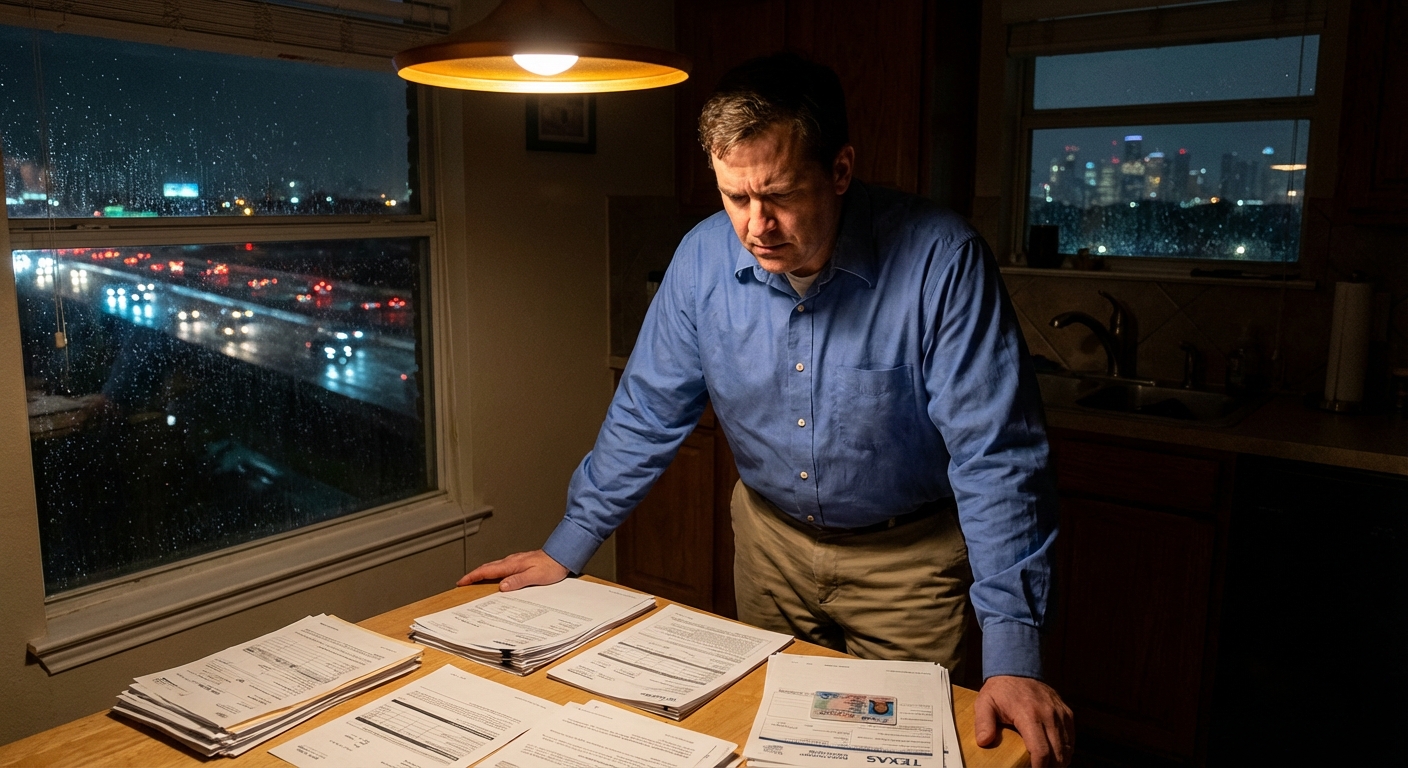
Step 1: Secure and organize your paperwork (same day if possible)
- Find your DWI charging documents, bond papers, and any temporary driving permit the officer gave you.
- Look for any Notice of Suspension or form that mentions “ALR” or “Administrative License Revocation.”
- Write the date of arrest at the top in big letters. Your 15 day ALR deadline is calculated from that date.
If you already feel overwhelmed, that is normal. Just getting your papers in one stack and circling the arrest date gives you a concrete starting point.
Step 2: Protect your license by tracking the 15 day ALR deadline
Texas uses a separate civil process called Administrative License Revocation to decide if your driver’s license will be suspended based on your breath or blood test outcome or refusal. You usually have just 15 days from the date of your arrest to ask for a hearing.
In Houston and across Texas, this request normally goes through the Department of Public Safety. You can see the official deadline rules and submit a hearing request through the Official DPS ALR hearing request portal and deadline info. Many people also find it helpful to review guidance on how to request an ALR hearing and protect your license before they submit anything, so they understand what they are asking for and how it fits into their defense.
For more context on how this 15 day window ties into your job and future court dates, you may also want to read about immediate steps to protect your job and license. The key point right now is simple: missing the 15 day deadline can lead to automatic suspension, even before your criminal case is resolved.
Step 3: Be careful what you say to others about the arrest
In the first 72 hours you will likely talk with family, friends, maybe a supervisor, and possibly an HR department. You may be tempted to “explain everything.” Slow down first.
- Do not post about your arrest on social media. Screenshots live forever and can show up later in your case.
- Be brief and factual at work. For example, “I am dealing with a legal matter and I am making sure it does not affect my responsibilities.” You do not have to discuss details with coworkers.
- Save detailed facts like drinking amounts, timelines, and test results for confidential conversations with a qualified Texas DWI lawyer.
If you are a mid career provider or professional, your instinct might be to over explain to prove you are responsible. Right now, less is more. Focus on protecting your legal position and your ability to keep working.
For a fuller walkthrough of what to do and what to avoid around the stop and arrest, you can review these step-by-step actions to take after a DWI stop so you better understand how your choices are viewed in court later.
Step 4: Capture your memory of the stop while it is fresh
Memories fade quickly, especially under stress. Within the first day or two, sit down in a quiet spot and jot down a timeline of what happened, from the moment you were first pulled over up through your release.
- Time and location of the stop
- Why the officer said they pulled you over
- Exactly what you were asked to do (field sobriety tests, portable breath test, etc.)
- Any comments about your driving, speech, or appearance
- Whether you agreed or refused breath or blood testing, and any paperwork you signed
Keep this timeline for yourself and your attorney, not for HR or friends. It can be extremely helpful later when your lawyer is analyzing the stop, arrest, and testing for possible defenses.
Step 5: Get early legal guidance before making big decisions
In the first 72 hours, many people feel tempted to ignore the situation, assume they are stuck with a conviction, or look for the cheapest quick outcome. If you drive for work, hold a professional license, or support a family, those shortcuts can cost you far more in the long run.
A qualified Texas DWI lawyer can help you understand what you are really facing, how the ALR hearing fits into your strategy, and whether your case has issues that might lead to a reduction or dismissal. For more background answers, some people also use an interactive Q&A resource for common Texas DWI questions to get oriented before they talk to a lawyer one-on-one.
Understanding Texas ALR: Why That 15 Day Deadline Matters So Much
The criminal DWI case and the Administrative License Revocation are two different tracks that can affect you at the same time. If you are worried about losing your job, understanding ALR is critical.
What triggers ALR in Texas
ALR is usually triggered by one of two things:
- You allegedly drove with a blood alcohol concentration of 0.08 or higher, or
- You refused to provide a breath or blood sample when lawfully requested after a DWI arrest.
If you refused or failed a test, the officer may have taken your physical license and handed you a temporary permit. That paper, along with the arrest date, is often your first clue that ALR is in motion.
Under Texas implied consent laws, licensed drivers agree in advance to provide a breath or blood sample in specific circumstances. You can review the legal language in the Texas statute text explaining implied consent and refusal consequences so you understand what the officer was relying on when they asked for a sample.
What happens if you do nothing about ALR
If you do not request a hearing by the 15th day after your arrest, Texas DPS typically issues a suspension that can start around 40 days from the date of the notice. For many first offenders, a failure or refusal can mean a suspension ranging from a few months up to two years, depending on prior history and whether you held a commercial license.
That may mean losing your ability to drive to job sites in Houston, getting kids to school, or reaching hospitals and clients in nearby counties. For a mid career provider, that can snowball quickly into lost shifts, missed appointments, or disciplinary action at work.
What an ALR hearing can do for you
Requesting an ALR hearing does not guarantee you will keep your license, but it gives you a chance to challenge the suspension and forces the state to prove certain facts. It can also generate valuable discovery, for example:
- Whether the officer had a lawful reason to stop you
- How the field sobriety tests were administered
- How the breath or blood testing was handled, and by whom
This information can help your lawyer spot weaknesses or inconsistencies that may also help in your criminal DWI case. In some situations, success in the ALR process can avoid or shorten a suspension, or improve your options for restricted driving.
Houston Example: How One Provider Used the First 72 Hours Wisely
Consider a realistic, anonymized scenario. A 42 year old project manager in Houston, who also coaches his child’s soccer team, is stopped driving home from a client dinner. He cooperates with the officer, takes field sobriety tests on the roadside, and is arrested. He refuses a blood draw at the station because he is scared and confused.
After release, he goes home and feels sick with worry. By the next afternoon, he has gathered his paperwork, circled his arrest date, and made a simple written timeline of everything he remembers. On day two, he learns about the ALR process and submits a timely hearing request. He also meets with a Texas DWI attorney who reviews his documents and explains that the officer’s reason for the initial stop is questionable and that the field tests were done on uneven ground.
Because he acted quickly, his lawyer is able to obtain dashcam video and other records before they are lost, challenge the suspension at the ALR hearing, and use the same weaknesses to negotiate a better outcome in the criminal case. The key point is not that every case ends this way, but that early, organized action in the first 72 hours can open options that are often lost when people wait.
Everyday Provider in Crisis: Balancing Your License, Job, and Family
If you are an Everyday Provider in Crisis, your biggest fear may not be jail, it is how this will ripple through your life. Maybe you supervise a team, work rotating shifts, or rely on your car to get to patients, offices, or job sites around Harris County. You might be the main source of income for your family and feel ashamed to even tell them what happened.
Here are a few grounding realities:
- A DWI arrest is serious, but it is not the same as a conviction.
- Your license is at risk, but there are structured steps you can take in the first 72 hours and beyond to protect it.
- Texas law has specific timelines and procedures. Once you understand those, the situation feels less chaotic and more manageable.
Instead of thinking, “My life is over,” try shifting to, “My case and my license are now a project I need to manage carefully.” You already manage complex work projects and family responsibilities. You can apply that same skill set to this situation by tracking dates, organizing documents, and getting informed help.
Analytical Professional: Data and Strategy for Evaluating Your Options
Analytical Professional: If your brain goes straight to data, outcomes, and strategy, you may be asking questions like “What are my odds?” or “How do I know if a lawyer is actually effective?” While no ethical attorney can promise a specific result, there are concrete points you can look at.
Penalty ranges and timelines
For a first time DWI in Texas, penalties can include up to 180 days in jail, fines that may reach several thousand dollars, and license suspensions typically ranging from 90 days up to a year for many drivers, with more severe ranges for prior DWIs or higher BAC levels. Court supervision, classes, and ignition interlock devices can also add costs and time commitments.
The criminal case itself often takes several months to more than a year to resolve in busy dockets like Harris County, depending on evidence issues, lab backlogs, and whether you fight the case or seek a negotiated resolution. The ALR process typically moves faster, so it is common to have ALR hearings and license decisions before the criminal case is finished.
Case result snapshot for context
| Texas DWI Scenario | Key Early Actions | Outcome Range (Illustrative Only) |
|---|---|---|
| First arrest, no accident, borderline BAC | Timely ALR request, early evidence review, challenge to stop or tests | Ranges from dismissal or reduction to probation with conditions |
| First arrest, high BAC, no prior record | ALR hearing, explore treatment options, negotiate conditions | Often probation with stricter terms, fines, possible interlock |
| Second or third DWI, or accident with injury | Intensive defense review, mitigation, careful license strategy | Exposure can include lengthy suspensions, higher fines, or even prison |
This table is not a prediction for your case, it just shows how early actions repeat across better outcomes. Analytical professionals often feel more in control once they have a framework like this and a plan for gathering the facts that matter most.
Status-Conscious Executive: Discretion and Minimizing Disruption
Status-Conscious Executive: If you are a senior manager, partner, or executive in Houston, your fears may center on reputation and confidentiality. You might worry about board members, investors, or clients learning about your arrest.
At a practical level, there are steps that can reduce visibility and disruption, such as careful scheduling of court dates, guidance on limited disclosures at work, and strategies to protect travel and driving needed for your role. Many executives also want to know how public records work and what shows up in background checks. These are questions a Texas DWI lawyer can address in a confidential setting so you can make a plan that protects both your legal position and your professional standing.
Think of this as a sensitive matter that needs to be managed like any other high stakes business risk, with measured, discreet steps rather than panic driven moves.
High-Status Insider: Senior-Attorney Involvement and Confidentiality
High-Status Insider: If you work in law, medicine, finance, or another insider field, you already know that not all representation looks the same. Your concern might be whether a senior attorney will actually handle the critical parts of your case, attend key hearings, and oversee strategy, instead of everything being passed down.
It is appropriate to ask direct questions in your consultations about who will attend your ALR hearing, who will cross examine officers, and how communication will work. You can also ask about policies on confidentiality and internal file access. A thoughtful Texas DWI defense often involves early, hands on review of videos, test records, and police reports by the person actually shaping the strategy, not just by support staff.
As someone who understands high stakes legal or regulatory work, you know that a clear plan and chain of responsibility matter as much here as they do in your own field.
Carefree Younger Adult: Myths, Reality, and Why This Matters More Than You Think
Carefree Younger Adult: If this is your first run in with the law, it is easy to assume “Everyone gets a DWI once” or “It will just drop off” like a speeding ticket. Those are dangerous myths.
- A Texas DWI conviction does not simply disappear after a few years. In many cases it can stay on your record permanently.
- Your license can be suspended even before your criminal case is over if you miss the ALR deadline.
- Future employers, landlords, and licensing boards can see DWI records and ask questions about them.
Taking this seriously now, during the first days after the arrest, can save you from a lot of future limits and regrets. It is not about scaring you, it is about making sure you understand how big a deal this is so you can do something about it.
Common Misconceptions About the First 72 Hours After a Texas DWI
When you are exhausted and scared, it is easy to rely on half true advice from friends or the internet. Here are a few myths that often cause harm in Houston DWI cases.
Myth 1: “If I just plead guilty fast, it will all go away.”
A quick guilty plea might feel like ripping off a bandage, but DWI convictions can carry long term consequences for your license, job opportunities, insurance, and travel. Pleading guilty before reviewing ALR options, evidence, or potential defenses means you could accept a conviction that might have been reduced, restructured, or even fought.
Myth 2: “I passed the roadside tests, so I am fine.”
Field sobriety tests are subjective and are not the end of the story. Even if you felt you did well, the officer’s written report may paint a different picture, and the state may still rely heavily on breath or blood test results, or on the officer’s observations.
Myth 3: “If I refused the test, the case is automatically weak.”
Refusing a breath or blood test can limit certain evidence, but it also can trigger ALR consequences and allow the prosecutor to argue that you refused because you knew you were intoxicated. Whether refusal helps or hurts depends on the full context of your stop, history, and the rest of the evidence, which is why a case specific review is important.
Key Texas DWI Penalties and License Consequences You Should Know
While this article focuses on the first 72 hours and the ALR 15 day deadline, it helps to understand the big picture of what is at stake if your case results in a conviction.
Criminal penalties at a glance
- First DWI (Class B misdemeanor in many cases): Up to 180 days in jail, fines that may reach several thousand dollars with fees and surcharges, possible license suspension, and conditions such as classes, community service, or interlock.
- Second DWI: Higher jail exposure, longer license suspensions, and increased fines.
- Felony level DWI (for example third offense or DWI with serious injury): Risk of significant prison time, long term license and employment impacts.
These ranges are not meant to scare you, they are meant to underline why steady, informed action in the first days and weeks matters. If you are trying to provide for your family or maintain a professional career, ignoring these potential outcomes is not an option.
License impacts and occupational licenses
If your license is suspended through ALR or a criminal DWI disposition, there are situations where you may qualify for an occupational or restricted license that lets you drive for work, school, and essential household activities. Eligibility and conditions depend on your history, the specific facts of your case, and whether any prior suspensions are on your record.
For someone whose livelihood depends on driving around Houston and surrounding counties, this can be a critical safety net. The process usually requires a court order, proof of insurance, and sometimes installation of an ignition interlock device. Again, early planning makes these options more realistic.
Frequently Asked Questions About the First 72 Hours After a Texas DWI Arrest
How long do I have to act after a Texas DWI arrest before my license is suspended?
In most Texas DWI cases, you have only 15 days from the date of your arrest to request an ALR hearing to challenge the proposed license suspension. If you miss that deadline, the suspension usually goes into effect automatically, often around 40 days after the notice was issued. Acting within this 15 day window is one of the most important steps in the first 72 hours.
What should I tell my employer after a DWI arrest in Houston?
What you tell your employer depends on your role, contract, and company policies, but a good rule is to be honest in a limited and professional way. Many people say something like they are “addressing a legal matter” and will make sure it does not interfere with their job duties, rather than sharing details of the arrest. If you hold a commercial driver’s license or professional license, you may have specific reporting duties that a Texas DWI lawyer can help you understand.
Can a Texas DWI be dismissed, or is a conviction automatic?
A DWI arrest in Texas does not automatically lead to a conviction. Some cases are dismissed, reduced, or resolved with outcomes that avoid a final DWI conviction, often based on problems with the stop, field sobriety tests, or breath and blood testing. While no specific result can be promised, early evidence review and a timely ALR request can improve your chances of a better outcome.
How long will a DWI stay on my record in Texas?
In many Texas situations, a DWI conviction can stay on your criminal record permanently and may be visible to employers, landlords, and licensing boards. Some related records, such as arrests or certain deferred outcomes, may be eligible for limited sealing or non-disclosure under specific conditions. This is one reason many Houston professionals choose to fight or carefully negotiate their cases instead of rushing into a plea.
Is it worth challenging the ALR suspension if I can get an occupational license?
Even if you might qualify for an occupational license, challenging the ALR suspension can still be worthwhile. A successful challenge may prevent or shorten a suspension and can create valuable testimony and records that help in the criminal DWI case. An occupational license is a backup tool, not a substitute for asserting your rights at the ALR stage.
Why Acting Early After a Texas DWI Arrest Matters So Much
In the days right after a DWI arrest, it may be hard to think beyond your next shift or school drop off. Yet those same early days are when key decisions about your license, driving privileges, and defenses are taking shape. Evidence like dashcam video, witness contact information, and detailed memories of the stop are all strongest in this window.
Taking simple steps in the first 72 hours, like organizing your paperwork, marking your 15 day ALR deadline, writing down your memories, and getting legal guidance, puts you in a much better position than doing nothing. It also helps you shift from helplessness to a more focused mindset, where your DWI case is one more serious problem you are actively working to solve, not a wave that is about to crash over your entire life.
Whether you are an Everyday Provider in Crisis, an Analytical Professional, a Status-Conscious Executive, a High-Status Insider, or a Carefree Younger Adult who just woke up to how serious this really is, you are not alone in this experience. Texas law gives you specific rights and timelines. The sooner you understand them and start using them, the better chance you have to protect your license, your job, and your future.
Watch: First 72 Hour Checklist After a Texas DWI Arrest
If you prefer to see this information explained in plain English, it can help to watch a short video that walks through the same early steps you are facing right now. The video below features Houston DWI lawyer Jim Butler discussing what to do in the first 72 hours after a Texas DWI arrest, what to say and avoid, and how those choices affect your license and your job.
Butler Law Firm - The Houston DWI Lawyer
11500 Northwest Fwy #400, Houston, TX 77092
https://www.thehoustondwilawyer.com/
+1 713-236-8744
RGFH+6F Central Northwest, Houston, TX
View on Google Maps


No comments:
Post a Comment