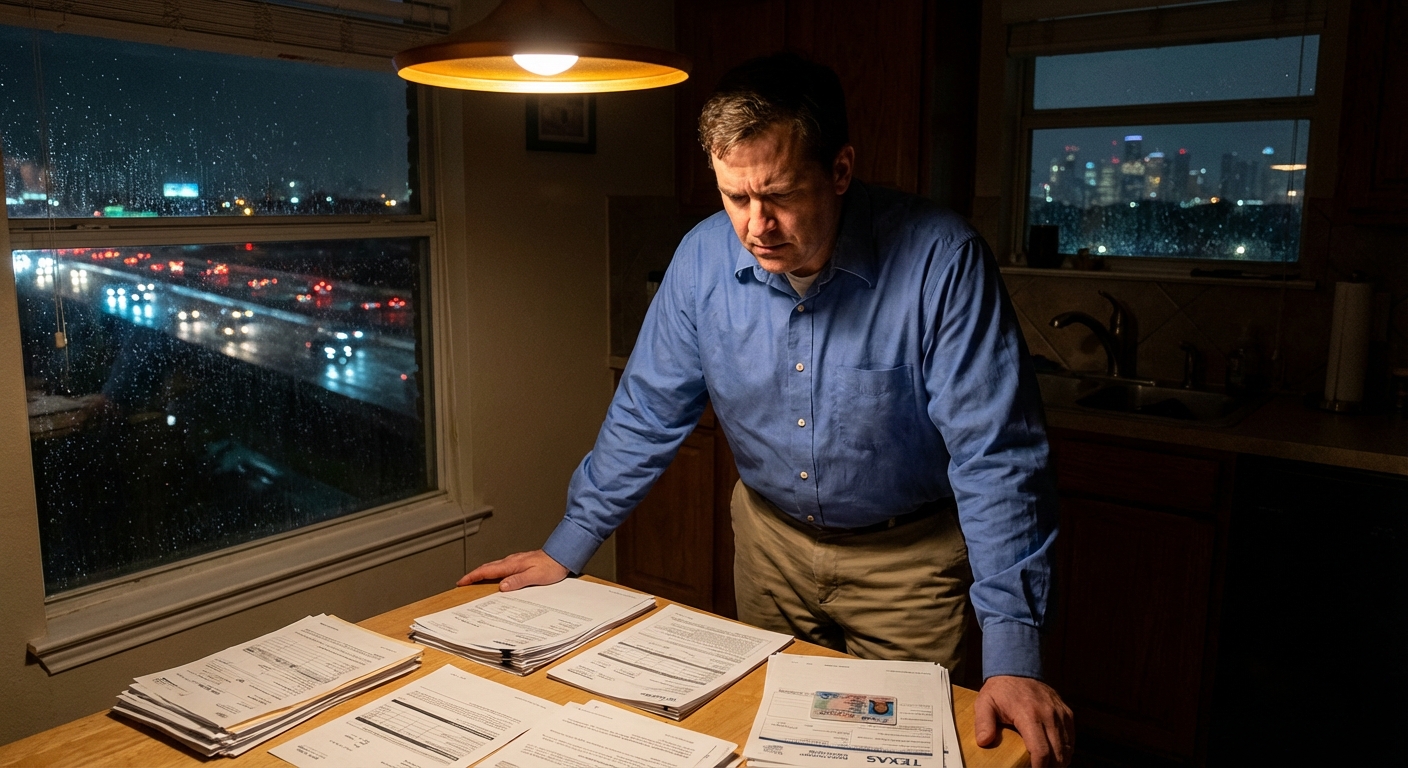
What To Do After A DWI Arrest In Houston: 15‑Day ALR Deadline, License Protection, And Next Legal Steps
If you were just arrested for DWI in Houston, your most important next step is to protect your license within 15 days by requesting an Administrative License Revocation, or ALR, hearing and then start building a defense to limit the criminal and career fallout. In Texas, a DWI arrest triggers two separate tracks at the same time, a criminal case in court and a civil license case with DPS, and how you act in the first days can shape your job, driving, and family life for months or years.
This guide walks you through what to do in the first hours and days after a Texas DWI arrest, how to meet the 15 day ALR deadline, what evidence to preserve, and how to think about your job and reputation if you are a working professional in the Houston area.
Step 1: Focus on the 15 Day ALR Deadline Before Your License Is Automatically Suspended
Right now, the clock is ticking. After a Texas DWI arrest, you usually have only 15 days from the date you received the temporary driving permit or notice of suspension to request an ALR hearing. If you miss that deadline, your license can be automatically suspended for a period that often ranges from 90 days to 2 years depending on your history and whether you refused or failed a breath or blood test.
For a busy construction project manager or other working professional, losing the ability to drive can threaten your job, your income, and even your role at home. Meeting this deadline is one of the fastest ways to keep options open. An ALR hearing request can delay the suspension and sometimes prevent it altogether if DPS cannot prove its case.
If you want a detailed play by play on the ALR process, you can review the exact 15‑day ALR hearing steps to protect your license so you understand the forms, addresses, and timelines involved.
To understand the paperwork and options more fully, the Butler Law Firm also explains how to request an ALR hearing and meet the 15‑day deadline in an in depth article that pairs with this guide.
Once you know the basic steps, it is smart to look at the official state side as well. The Texas Department of Public Safety provides an online portal that many drivers use as part of this process. The Official DPS portal to request an ALR hearing explains how requests are submitted and processed at the state level.
Immediate ALR action checklist
- Find the date on your temporary permit or suspension notice and circle the 15 day deadline on a calendar.
- Write down exactly where and when you were stopped, and whether you took or refused breath or blood testing.
- Submit your ALR hearing request in writing or online before the deadline and keep proof of submission.
- Gather any documents you received from the officer so a Texas DWI lawyer can review them with you.
Missing the 15 day ALR deadline is one of the most painful mistakes people make after a Houston DWI arrest. Once that window closes, there is usually no way to reopen it.
Step 2: Understand the Two Cases You Are Facing After a Texas DWI Arrest
A single DWI arrest in Texas actually creates two different legal problems. The first is the criminal DWI case in a Harris County or nearby county court. The second is the civil ALR case with DPS over your driver license. They run on different timelines and have different rules, but both can affect your job and your life.
- Criminal DWI case: decides guilt or innocence and any penalties such as fines, probation, jail time, and conditions like classes or ignition interlock.
- ALR license case: focuses only on your privilege to drive and asks whether the officer had grounds to stop, arrest, and request a specimen, and whether you failed or refused the test.
For someone who manages crews or projects across Houston, these two tracks can feel overwhelming. You may be trying to line up transportation to job sites, explain missed time to supervisors, and keep your family calm all at once. Breaking it into two clear tracks can help you focus and make better decisions under pressure.
Step 3: Preserve Evidence From the Traffic Stop Before It Disappears
Evidence from the traffic stop and arrest is often the backbone of a strong defense. That includes dash cam video, body cam footage, 911 calls, blood or breath test records, and even texts or photos from your own phone. Some of this evidence is automatically retained for only a limited period, so early preservation requests can make a real difference.
Right after your Houston DWI arrest, write a detailed timeline. Include where you were, what you ate and drank, how you felt, who you were with, what the officer said, and how the field sobriety tests were given. Small details like improper instructions or uneven pavement can affect the reliability of those roadside tests.
For a deeper walkthrough on what to do at the traffic stop and preserve important evidence, you can review the firm’s pull over guide and compare it to how your own stop actually went.
Practical evidence preservation steps you can take this week
- Save copies of your citation, temporary permit, and any bond paperwork in a safe folder.
- Make a list with contact info for any passengers, bartenders, or witnesses who saw you shortly before the stop.
- Write down the locations of any nearby businesses whose cameras may have recorded your driving or your time before the stop.
- Preserve any receipts or credit card records that show your drinking timeline and amounts.
In one anonymized Houston case, a project manager believed the situation was hopeless because his breath test showed over the legal limit. After early evidence work, counsel obtained bar receipts and surveillance video that showed he had finished drinking earlier than the officer assumed. Combined with problems in how the breath test machine was maintained, the case outcome ended up far better than the client expected.
Step 4: Think Strategically About Your Job, Employer, and Professional Reputation
As a mid career professional, you may be more afraid of losing your job than of the court fines. A Texas DWI can affect everything from security badges and company insurance to your ability to drive company vehicles or visit certain client sites. Each employer handles arrests differently, and in many cases you are not required to self report a first arrest unless a contract or policy specifically says so.
Before talking to HR or your supervisor, it is wise to understand the charges, potential license suspension dates, and any conditions of bond that might affect your work. That way, you can answer basic questions honestly without guessing. A well planned conversation can be the difference between being placed on leave and being allowed to keep working while your case is pending.
If you are trying to map out your next moves at work, you may find value in a practical checklist to safeguard your job and reputation that focuses on communication, timing, and documentation.
Employer and reputation considerations for Houston professionals
- Review your employee handbook or contract to see if it says anything about arrests, convictions, or license suspensions.
- Consider how a restricted or suspended license could affect your commute or job duties and explore backup plans like carpooling or reassignment.
- Think through who actually needs to know about the arrest and when, instead of sharing details widely in the moment.
- Keep records of your work performance and any positive feedback during this period, in case your job security is questioned later.
One common misconception is that a DWI arrest automatically costs you your job. In reality, many Houston area employers wait to see what happens with the case, especially for first time arrests. Showing that you are taking the situation seriously and managing court obligations responsibly can go a long way.
Options To Keep Driving: ALR Wins, Delays, And Occupational Licenses
Even if your license is at risk, you often have options to keep driving for essential needs such as work, school, and medical appointments. The first goal is to avoid or shorten any suspension through the ALR process. If that is not possible, many Texas drivers qualify for an occupational driver license, also called an essential needs license.
An occupational license can allow you to drive during certain hours or for specific purposes while your regular license is suspended, as long as you follow court ordered conditions. Some people must install ignition interlock devices or keep detailed logbooks. For someone who manages job sites across the Houston area, an occupational license can be the difference between staying employed and losing a position.
For a neutral overview of these rules, the Texas State Law Library provides a State law library guide to getting an occupational driver’s license that explains eligibility and basic procedures in plain language.
Analytical Strategist: Data, Outcomes, And Common Texas DWI Defenses
Analytical Strategist: If you are the type who wants numbers and strategy, it may help to know that many first time DWI cases in Texas do not end in straight convictions. Outcomes can include dismissals, reductions to lesser charges, pretrial diversion, or negotiated agreements with strict conditions. Exact percentages vary by county and by the facts of each case, and no ethical lawyer can promise a particular outcome.
Common defense themes in Texas DWI cases
- Reasonable suspicion and probable cause: Was there a valid legal basis for the stop and arrest, such as a clear traffic violation or specific indicators of intoxication.
- Field sobriety test issues: Were the roadside tests given on level ground, under proper lighting, with correct instructions and timing.
- Breath and blood test reliability: Were machines correctly maintained and calibrated, and were blood samples stored and analyzed according to scientific standards.
- Medical or fatigue factors: Do medical conditions, injuries, or exhaustion explain balance or speech issues better than intoxication.
Data driven readers often feel calmer once they realize that DWI cases are not decided only by a single number on a breath test. The process includes technical challenges, officer testimony, lab records, and sometimes independent experts. Looking at your case as a system of moving parts, rather than a single event, can help you make clearer decisions.
High Status Client & Elite Protectee: Discretion, Privacy, And High Touch Options
High-Status Client: If you hold a visible role in your company, industry, or community, you may be as worried about people seeing you in a Harris County courtroom as you are about the charges themselves. It is reasonable to ask about discrete scheduling, limited public exposure, and careful communication around your case. Many Texas DWI lawyers are used to coordinating with executive assistants, security teams, or in house counsel to keep details tightly managed.
Elite Protectee: If you require a higher level of privacy, it is appropriate to ask about private, high touch options and confidentiality practices during your first conversation with any lawyer. That might include secure document handling, limited point of contact channels, and careful coordination around appearances so they fit your security and privacy needs. Reputable firms should be comfortable explaining how they protect client information under Texas law and professional rules.
Healthcare Professional: License, Board, And HR Risks After A Texas DWI
Healthcare Professional: If you are a nurse, physician, pharmacist, or other licensed healthcare worker in the Houston area, a DWI arrest raises unique questions. In addition to the criminal and ALR cases, you may have reporting duties to a licensing board or employer, and those bodies are focused on patient safety and fitness to practice.
Boards often look at whether the incident appears isolated, whether there is any evidence of substance abuse, and whether you took responsible steps after the arrest. Documenting voluntary counseling, education, or support efforts can sometimes help show that you are addressing risk factors proactively. Before you report anything to a board or HR, it can be helpful to understand the likely criminal and license timelines so your description is accurate.
Carefree Young Adult: Why This One Night Matters More Than You Think
Carefree Young Adult: If this DWI arrest followed a night out that you thought was harmless, you may be tempted to just “see what happens” in court. In Texas, that approach can be costly. A DWI conviction can stay on your record permanently, raise insurance costs for years, and make it harder to pass background checks or rent certain apartments.
Even if you are not worried about a professional license yet, your future self might be. The 15 day ALR deadline applies to you as well, and if you miss it, your license can be suspended even if your criminal case later goes better than expected. Taking the process seriously now protects your options as your career and responsibilities grow.
Common Misconceptions About Texas DWI That Can Hurt Your Case
- “If I blew over the limit, there is nothing I can do.” In reality, breath and blood tests are not perfect. Problems with the stop, the arrest, the machine, or the sample handling can all affect how reliable that number really is.
- “First time DWI in Texas always means jail and job loss.” Penalties vary widely. Many first timers in Harris County receive probation or alternative programs instead of straight jail sentences, especially when there was no accident or injury, and many keep their jobs with careful planning.
- “If I ignore the ALR paperwork, it will work out in court later.” The ALR process is separate from the criminal case. Ignoring the ALR deadline can trigger a suspension even if the DWI case is later dismissed or reduced.
Micro Story: A Houston Project Manager Navigates His First DWI
Imagine a 36 year old construction project manager in Houston who is pulled over after a late site meeting and arrested for DWI. He spends a night in jail, posts bond, and is released with a stack of papers he barely reads. The next morning, he is sick with worry about how he will get to multiple job sites, whether his boss will find out, and how this could affect his kids and mortgage.
Within a few days, he learns about the 15 day ALR deadline and submits his hearing request with help. That step keeps him legally driving for several more weeks while the hearing is set. At the same time, he writes out his timeline, gathers receipts from the restaurant, and makes notes about the rough pavement and flashing construction lights near where the officer conducted field sobriety tests.
Months later, when footage and records are reviewed, it turns out the officer’s dash cam shows the project manager stepping off a broken curb during the walk and turn test, which explains part of what the officer saw. The ALR case is contested on that and other grounds, and while no one could promise that outcome on day one, his early actions gave his legal team more to work with and helped him keep his job while the case moved forward.
Frequently Asked Questions About The 15 Day Texas DWI ALR Deadline And Your Houston Case
How long do I have to request an ALR hearing after a DWI arrest in Texas?
In most Texas DWI cases, you have 15 days from the date you receive notice of suspension or a temporary permit to request an ALR hearing. If you miss this 15 day window, your license can be automatically suspended on the 40th day after the notice, and it is very hard to undo that suspension later.
Will my employer in Houston automatically find out about my DWI arrest?
Your employer is not automatically notified of every DWI arrest, although certain industries and positions have closer monitoring. Many Houston workers learn that their employer only finds out if they self report, if court dates affect their schedule, or if the company runs a new background check for some reason.
Can I keep driving to work in Texas if my license is suspended after a DWI?
Many drivers are able to keep driving to work through an occupational driver license that allows limited driving for essential needs. Eligibility and conditions depend on your record and the facts of the case, but courts often allow work, school, and medical travel for compliant drivers.
How long does a DWI stay on my record in Texas?
Under current Texas law, a DWI conviction often stays on your criminal record permanently and can be seen on most background checks. Some cases qualify for record sealing or nondisclosure in limited situations, but that is not automatic, and dismissals and reductions generally provide more flexibility than convictions.
Is a first DWI in Houston always a felony?
No, most first time DWI charges in Texas are Class B misdemeanors, which carry potential penalties like fines and up to 180 days in jail, though many first offenders receive probation instead. A DWI can become a felony in situations such as repeat offenses, cases involving serious injury, or driving with a child passenger.
Why Acting Early Matters After A Houston DWI Arrest
Acting quickly after a Texas DWI arrest is not about panic, it is about protecting your options before they quietly disappear. The 15 day ALR deadline, the short window to preserve dash cam and video evidence, and the timing of work conversations all benefit from early attention. Waiting to “see what happens” often means deadlines pass, evidence is overwritten, and your employer hears about the case before you are ready to explain it.
If you are in your 30s or 40s, supporting a family, and managing teams or projects around Houston, this one incident does not have to define your career. With clear steps, realistic expectations, and timely action, many people are able to limit the damage and move forward. A qualified Texas DWI lawyer can walk through your specific facts, explain likely timelines in your county, and help you choose a plan that lines up with your job, your driving needs, and your long term goals.
Short Video Walkthrough: What To Do Right After A Texas DWI Arrest
For a quick overview that matches this guide, you can watch a brief walkthrough from Houston DWI lawyer Jim Butler on what to do in the hours and days after a Texas DWI arrest. It explains key first steps, including the ALR deadline, in plain language that is easy to follow before you make major decisions.
Butler Law Firm - The Houston DWI Lawyer
11500 Northwest Fwy #400, Houston, TX 77092
https://www.thehoustondwilawyer.com/
+1 713-236-8744
RGFH+6F Central Northwest, Houston, TX
View on Google Maps


No comments:
Post a Comment