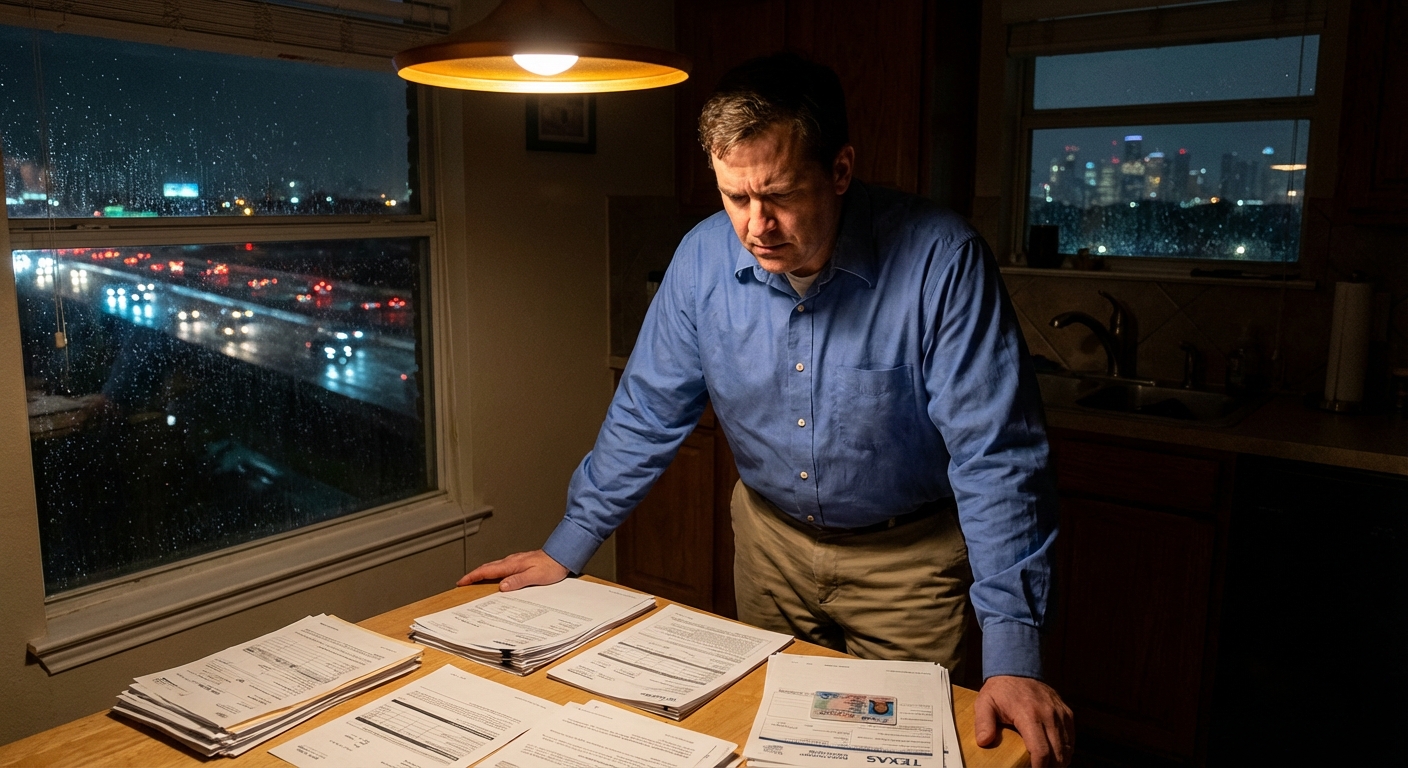
What To Do After A DWI Arrest In Houston To Protect Your License And Job
If you were just arrested for DWI in Houston, your next steps in the first few days can make the difference between keeping your license and job or facing a long suspension and a lasting criminal record. In Texas you have as little as 15 days from the date of your arrest to fight the automatic license suspension, and what you say, sign, and do right now can shape both your criminal DWI case and your ability to drive to work and support your family.
This guide walks you through what to do after a DWI arrest in plain language, with a focus on protecting your license, your job, and your family in Houston, Harris County, and nearby Texas counties. You will see simple checklists, timelines, and common mistakes to avoid so you can move from panic to a practical plan.
First Things First: What Your DWI Arrest Really Means For You
Right now you may be thinking, “My life is over.” It is not, but this is serious. A Texas DWI arrest usually triggers two separate cases against you: a criminal case in a Harris County or nearby county court, and a civil driver’s license case called Administrative License Revocation, or ALR.
Both cases affect your future in different ways. The criminal case can lead to fines, possible jail time, probation, and a criminal record. The ALR case can suspend your driver’s license even if your criminal case is later reduced or dismissed. If you are a mid-career provider supporting your family, losing your license even for a short time can threaten your job, overtime shifts, and your ability to get kids to school or appointments.
Here is a quick, realistic snapshot for a first-time DWI in Texas:
- Class B misdemeanor if your blood alcohol concentration (BAC) is between 0.08 and 0.149
- Up to 180 days in jail and up to a $2,000 fine (higher if BAC is 0.15 or more or you have prior convictions)
- License suspension from the ALR case that can range from 90 days to 1 year, depending on test results or refusal
- Thousands of dollars in fees, surcharges, and higher insurance over time
These are general ranges, not predictions. Your facts, your driving record, and how quickly you act will drive your outcome.
Step-By-Step: What To Do In The First 24–72 Hours After A DWI Arrest
In the first few days you do not need to solve everything. You do need to avoid mistakes and hit certain deadlines. Think of this as your emergency checklist for what to do after a DWI arrest in Houston.
1. Secure and organize your paperwork
After a DWI arrest, the officer usually gives you a DIC-25 “Notice of Suspension / Temporary Driving Permit” if you either took a breath or blood test or refused. This one piece of paper is easy to lose, but it is critical evidence and it shows your 15-day deadline to request an ALR hearing.
- Put your DIC-25 notice, any bond paperwork, and tow or release forms in one folder or envelope.
- Write the date of arrest in big numbers on the front. Count 15 days from that date. That is your ALR deadline.
- If you were released with bond conditions, read them today. Violating bond can land you back in jail.
2. Write down what happened while it is fresh
You may feel embarrassed or angry. Still, one of the most helpful things you can do for your future defense is to write a simple, honest timeline of the stop and arrest while you still remember it clearly.
- Where were you before the stop and how much did you actually drink, over what time period
- Exactly where you were pulled over and what the officer said first
- What field sobriety tests you did, and any physical issues that could affect them (bad knees, fatigue, work boots, uneven pavement)
- Whether the officer read you any rights or warnings before asking for a breath or blood test
- Anything that seemed off, like mixed instructions, confusion, or pressure to “just blow”
This is for you and your legal team later, not for your employer or friends. Keep it private.
3. Protect evidence that might help you
Evidence disappears quickly after a DWI arrest, sometimes within days. You may not realize how important simple items can be to your case.
- Save receipts or bank transactions showing what you ate and drank and when.
- Download or preserve any GPS or app data that shows your route and timing.
- Make a list of anyone who saw you shortly before the stop and could speak to how you looked or acted.
- Take photos of the location of the stop or roadside tests if lighting, traffic, or conditions were unusual.
If you want a deeper guide on what to do when you're pulled over for DUI and how those early minutes affect your case, save that resource for later today when you have a quiet moment.
4. Be careful about talking to others
You do not have to talk about your arrest with coworkers, supervisors, or casual friends right away. In fact, oversharing can harm your case and your job. Vent to one trusted person if you must, but avoid social media posts, group texts, or joking about your arrest. Screenshots and comments can and do show up later in court.
Your 15-Day Texas ALR Deadline: How To Protect Your License
In Texas, after a DWI arrest the Department of Public Safety can suspend your license through the Administrative License Revocation program. This is separate from the criminal case in Harris County or another local court. If you do nothing, the suspension usually kicks in 40 days after you receive the suspension notice. To challenge it, you must request a hearing within 15 days of the date you received the notice, which is usually your arrest date.
For a clear explanation direct from DPS, you can review the Texas DPS overview of the ALR license‑revocation program. But here is what it means in everyday language: if you let those 15 days pass, you lose your chance to fight the automatic suspension.
As someone who manages crews, projects, or shift work, losing your license even for 90 days can impact your ability to get to job sites on time, pick up tools or materials, or take overtime that requires driving.
How to request an ALR hearing in Texas
You have two main ways to request an ALR hearing. You or your lawyer can submit the request by mail or online. Many people use the online portal because it is faster and confirms your request right away.
- Note your 15-day deadline from your DIC-25 notice.
- Submit a written request for a hearing that includes your full name, date of birth, driver’s license number, and arrest date, or use the Official DPS portal to request an ALR hearing online.
- Keep a copy or screenshot of your submission and any confirmation number or email.
- Track mail dates if you send a paper request, and use certified mail if possible.
If you want a more detailed, step-by-step breakdown of how to request an ALR hearing in Texas and what happens at that hearing, read that guide once you have a few minutes and a notepad.
ALR hearing timelines and what to expect
Once DPS receives your request, your license usually stays valid until an administrative law judge decides your case or the case is resolved. Hearings are often set a few weeks to a few months after your request, depending on the county and docket. In Houston, ALR hearings are usually held in an administrative setting, not the same courthouse where your criminal case is pending.
At the hearing, DPS tries to prove the officer had a valid reason to stop and arrest you and that you either failed or refused a chemical test. Your side can challenge the stop, the tests, and the process. Even if you do not “win” the hearing, the testimony can be valuable later in your criminal DWI case.
For a more targeted look at the exact deadlines and steps, you can review an exact 15‑day ALR hearing checklist to act that focuses on what Houston drivers must do in the first two weeks.
How A DWI Can Affect Your Job, Insurance, And Future Income
For many people, the scariest part of a DWI arrest is not the possible fine. It is the fear that one mistake will wreck a career built over years. If you are a Practical Provider trying to keep projects moving and paychecks steady, you may be worried about losing your license, getting fired, or being labeled “unreliable.”
Job and employment risks in Texas after a DWI
Texas is an at-will employment state. That means many employers can let you go for a broad range of reasons, including a DWI arrest or conviction, especially if driving is part of your job. But in real life, many employers care more about honesty, safety, and whether you can still perform your duties.
- Some companies require you to report any arrest within a certain time frame.
- Others only ask about convictions, not arrests.
- Certain positions that involve driving company vehicles, handling hazardous materials, or working on federal contracts may have stricter rules.
Before you say anything at work, review your employee handbook and any HR policies. When you do talk, keep it brief and factual, and avoid guessing about outcomes. For more detailed strategies on protecting your paycheck and position, you can read a deeper guide on protecting your job after a DWI arrest in Texas.
Insurance and long-term financial impact
Many younger drivers think a DWI is just “an expensive ticket.” In reality, the long-term cost can shock you. For a first DWI in Texas, by the time you add fines, towing, impound fees, classes, ignition interlock costs, and higher insurance, the total impact can easily climb into the thousands of dollars over several years.
Young Unaware (Tyler/Kevin): If you are early in your career and think this is just a slap on the wrist, remember this: a single DWI can raise your insurance and cost you more than a used car over the next few years. It can also show up on background checks when you try to change jobs or apartments.
Common Misconceptions About First-Time DWI Arrests In Texas
Many Houston drivers share the same myths about DWI. Clearing them up now helps you make better decisions.
Misconception 1: “If it is my first DWI, they will just give me a warning.”
In Texas, a first-time DWI is still a criminal offense. Officers almost never “let you off” with a warning when they believe you are driving while intoxicated. Courts in Harris County take these cases seriously because of the safety risks on crowded roads like I-10, 290, and the Beltway. Even without prior convictions, you face criminal penalties and license consequences.
Misconception 2: “If I passed some of the field tests, I am safe.”
Field sobriety tests are not simple “pass or fail” exams like a school test. Officers look for many small clues, and they may still arrest you even if you feel you did well. Your performance, footwear, injuries, and the conditions at the scene can all be challenged later, but the arrest alone can still trigger an ALR case and a criminal charge.
Misconception 3: “I blew under 0.08, so I cannot be charged with DWI.”
Texas law allows prosecutors to charge DWI if they believe your normal physical or mental faculties were impaired by alcohol, drugs, or a combination, even without a 0.08 BAC test. While a BAC below 0.08 may help your defense, it does not automatically stop a DWI case from moving forward.
Data-Driven Snapshot For Planners: Timelines, Outcomes, And What Usually Happens
Analytical Strategist (Ryan/Daniel): If you like to see timelines and realistic outcome ranges, it helps to think in phases instead of one big, overwhelming problem.
Typical Houston-area DWI case timeline
- Days 1–15: Arrest, release, bonding out, ALR hearing request window, first setting in court often scheduled.
- Month 1–3: Early court appearances, discovery of police reports and videos, review of test results, possible ALR hearing held.
- Month 3–9: Negotiations, motion practice, or preparation for trial, depending on facts and goals.
- Beyond 9 months: Some cases resolve sooner, some later, especially if there are complex blood test issues or waiting on lab results.
Realistic outcome categories for a first DWI
Every case is unique, but outcomes often fall into a few broad categories. These are not promises, just common patterns in first-offense cases:
- Case dismissed for legal or evidentiary reasons.
- DWI reduced to a different charge, like Obstruction of a Highway in some situations.
- DWI conviction with probation and conditions such as classes, community service, and possibly an ignition interlock device.
- DWI conviction with jail time, which is more likely with high BAC, accidents, or priors.
For someone in your shoes trying to protect a career and family, the key question is usually: “How do I minimize the long-term damage?” That answer depends on evidence quality, your prior record, how quickly you act, and whether you follow through on court and license requirements.
Special Concerns For Licensed Professionals And High-Profile Careers
Professional licenses and healthcare workers
NICU Nurse (Elena): If you work in healthcare, teaching, or another licensed field, your DWI case may trigger reporting duties or board reviews. For example, nurses often have to report certain criminal charges or convictions to their licensing board, and an ALR suspension can raise questions about judgment or substance use.
Pay attention to ALR deadlines, because a license suspension on your driving record can be seen by credentialing departments. If your board or employer has self-report rules, get clarity on the exact timing and required language. Do not assume you have to share every detail or your personal feelings, focus on what the rules actually require.
High-Status Executive (Jason/Sophia/Marcus): confidentiality and discretion
High-Status Executive (Jason/Sophia/Marcus): If you hold a senior role or public-facing position, privacy may be one of your top concerns. Early steps often include limiting the number of people who know the details, controlling where mail and notices are sent, and making sure court appearances and conditions are managed with as little disruption to your schedule and public image as possible.
You can also ask clear questions about who will be working on the matter and how attorney involvement is structured so that sensitive information is handled with care at each stage.
Micro-Story: One Misstep After A Jobsite Happy Hour
Picture Mike, a construction manager in his 40s who oversees multiple crews across Houston. After a long week, he meets some coworkers at a bar near a jobsite. He has a few drinks over several hours and feels “okay to drive” since he spaced them out. On the way home, he is pulled over for drifting within his lane and “rolling” a stop sign.
He is tired, wearing heavy work boots, and standing on uneven gravel during field tests. He is arrested for DWI, spends the night in jail, and leaves the next morning with a stack of paperwork and a pounding headache of worry. He is terrified his boss will find out, his license will be gone, and he will not be able to visit multiple sites each day.
By acting within the first week to request an ALR hearing, organize his evidence, and get a plan in place, Mike gives himself a fighting chance to protect his license and job. This kind of situation happens every week in the Houston area. What separates a temporary crisis from a long-term problem is how quickly and thoughtfully you respond.
Immediate Next Steps Checklist For Houston Drivers After A DWI Arrest
You may feel overwhelmed, so here is a short, practical checklist you can work through today or this weekend.
- Start a folder: Collect all arrest, bond, and tow paperwork and keep it in one place.
- Mark the ALR deadline: Count 15 days from your arrest date and circle it on a calendar.
- Preserve your memory: Write down a timeline of the night and the stop while it is fresh.
- Save evidence: Gather receipts, contact information for witnesses, photos, and location details.
- Check work policies: Quietly review your employee handbook and any HR rules before talking to supervisors.
- Request the ALR hearing: Use the DPS forms or portal or ask a professional to help you meet the deadline.
- Stay off social media: Do not post, joke, or argue online about your arrest.
For readers who like to research on their own and ask detailed questions, a free interactive Texas DWI Q&A resource can help you explore common scenarios and laws from home before you speak with a lawyer one-on-one.
Frequently Asked Questions About What To Do After A DWI Arrest In Texas
How long does a DWI stay on my record in Texas?
In Texas, a DWI conviction typically stays on your criminal record permanently unless it is later sealed or otherwise limited under specific legal procedures. That is why early decisions about how to handle your first DWI case are so important. Even if you avoid jail, the record can affect jobs, housing, and insurance for many years.
Will my boss in Houston find out about my DWI arrest?
Whether your boss finds out about your DWI arrest depends on your job, company policies, and how your case is handled. Some employers learn about it through required self-reporting, background checks, or if your license status changes. In many jobs, your employer may only know what you choose to share, so it is important to read your handbook and think carefully about what to say and when.
Can I drive to work after a DWI arrest in Texas?
In many first-offense cases, you can keep driving for a limited time after a DWI arrest, especially if you have a temporary permit and request an ALR hearing within 15 days. If your license is later suspended, you may be able to obtain an occupational license that lets you drive to work, school, and essential tasks under certain conditions. The sooner you address the ALR case, the more options you may have.
Is a first-time Texas DWI always a felony?
No, a standard first-time DWI in Texas is usually charged as a Class B misdemeanor, not a felony. It can be enhanced to a higher level if certain factors are present, such as a very high BAC, a child passenger in the car, or someone being seriously injured. Even as a misdemeanor, the consequences can still be serious for your record, license, and job.
How long does it take to resolve a DWI case in Houston?
Many first-time DWI cases in the Houston area take several months to resolve, often anywhere from three to nine months, though some finish faster and others take longer. The timeline depends on lab results, court settings, motion hearings, negotiations, and whether the case goes to trial. Using that time wisely to build your defense usually matters more than trying to rush to the first offer.
Why Acting Early After A DWI Arrest Matters So Much
When you are exhausted from jail, paperwork, and worry, it is tempting to delay decisions and hope things “just work out.” But in a Texas DWI case, time is not neutral. Deadlines like the 15-day ALR hearing request move forward whether you act or not, and evidence that could help you can fade or disappear in days or weeks.
Acting early does not mean you must have every answer today. It means taking simple, concrete steps: secure your paperwork, protect your license by requesting an ALR hearing, avoid harmful statements, and start organizing the facts. Even if you never imagined you would be in this situation, you can still protect your role as the provider for your family by staying calm and getting informed now instead of later.
When you look back a year from now, you want to be able to say, “I did everything I could to keep this from taking over my life,” not, “I missed deadlines because I froze.” Early, informed action is one of the few things fully in your control after a Houston DWI arrest.
If you were just arrested, watch this quick video from Jim Butler for the immediate steps to protect your license, your job, and your case. It walks through common early mistakes, key deadlines like the 15-day ALR window, and practical tips you can use today even while you are still processing what happened.
Butler Law Firm - The Houston DWI Lawyer
11500 Northwest Fwy #400, Houston, TX 77092
https://www.thehoustondwilawyer.com/
+1 713-236-8744
RGFH+6F Central Northwest, Houston, TX
View on Google Maps


No comments:
Post a Comment