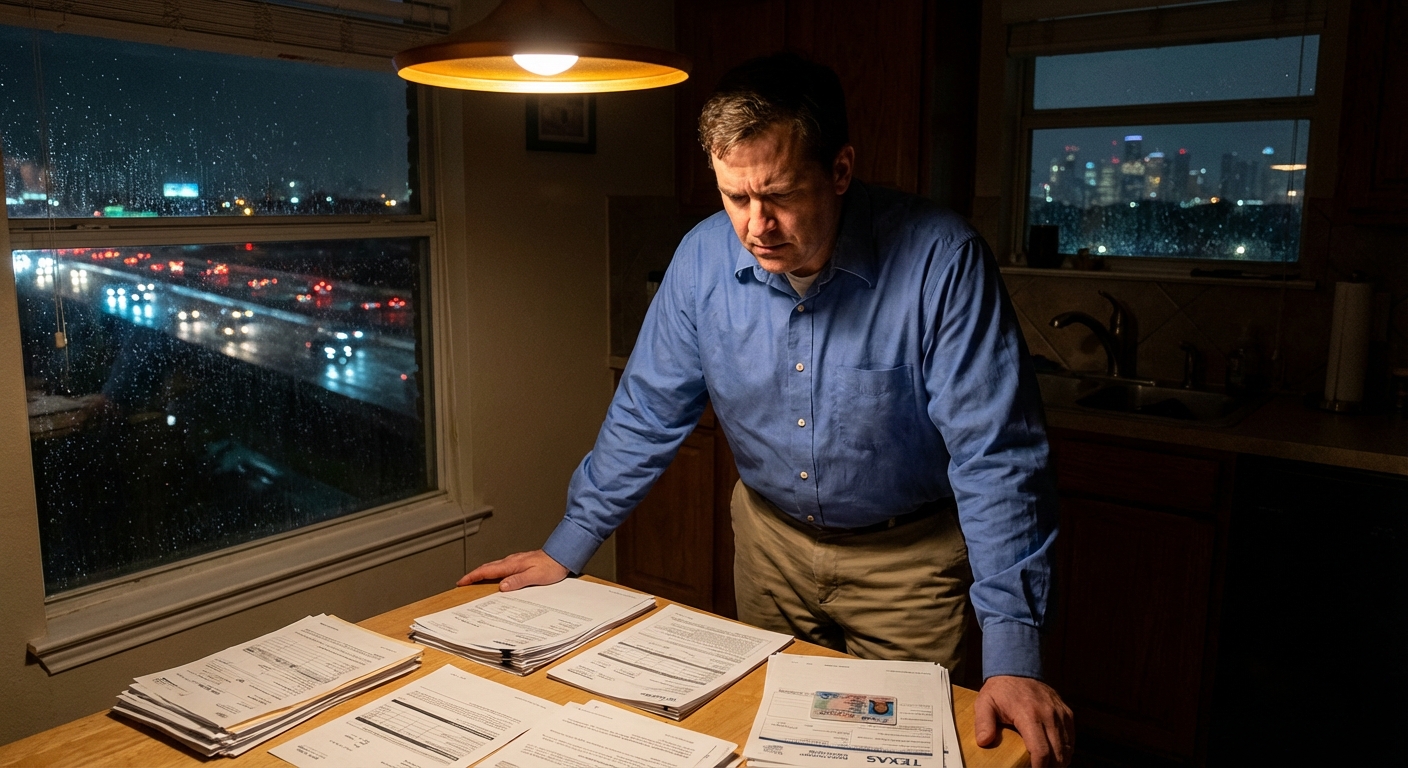
Houston DWI Arrest: 15‑Day ALR Deadline, License Survival, and Next Steps in Texas
If you were just arrested for DWI in Houston, you usually have only 15 days from the date of your arrest to request an Administrative License Revocation (ALR) hearing or your Texas driver’s license can be automatically suspended. In plain terms, the clock is already ticking, and what you do in the next few days can make the difference between keeping your ability to drive to work and facing a long suspension. This guide walks you through what that 15 day ALR deadline means, how the Texas DWI process works, and the simple steps you can take right now to protect your job, your license, and your future.
You might feel like your entire life is hanging by a thread. You are worried about paying bills, keeping your job, and how this will look on your record. This article is written for you, the hardworking provider who cannot afford to sit back and hope things work out. You will see clear timelines, real Texas rules, and practical options so you can start moving forward instead of just panicking.
First 72 Hours After a Houston DWI Arrest: What You Should Do Right Now
The first few days after your arrest are critical because the ALR 15 day clock starts the day you received the DIC‑25 notice of suspension or your temporary driving permit. If you do nothing, your license may go into automatic suspension for months. The key is to act quickly and in an organized way, even if you still feel shocked or embarrassed.
Here is a simple three step roadmap you can use in the first 72 hours:
- Step 1: Find your paperwork. Pull out the ticket, bond information, and any temporary driving permit or DIC‑25 form you were given. Check the arrest date and confirm when the 15 day period runs out.
- Step 2: Request or plan your ALR hearing. Either you or your lawyer must request an ALR hearing with Texas DPS within that 15 day window to challenge the suspension and lock in your chance to fight for your license.
- Step 3: Start building a defense file. Write down everything you remember about the stop, field tests, breath or blood test, and any witnesses. These details fade quickly, but they can be useful later for your defense and for the ALR hearing.
If you want a quick reference, this concise checklist for the 15‑day ALR deadline can help you track what needs to happen next so you do not lose your license by accident.
For many drivers in Harris County, the most urgent legal issue is not the court date, it is the license. You need to drive to work, get kids to school, and handle your responsibilities. Acting within this narrow 15 day window is one of the most important ways to protect that.
Understanding the Texas ALR Process and the 15 Day Deadline
The Administrative License Revocation system is a separate civil process that focuses only on your driving privileges, not your criminal guilt or innocence. In Texas, if you either fail a breath or blood test or refuse testing after a lawful DWI arrest, DPS moves to suspend your driver’s license under the ALR program.
Here is what usually happens in a Houston area DWI arrest:
- The officer arrests you for DWI based on probable cause, which may include driving behavior, field sobriety tests, and your statements.
- You are offered a breath or blood test. If you fail or refuse, the officer seizes your license and issues a temporary permit and notice of suspension.
- You then have 15 days from the date you received that notice to request an ALR hearing. If no request is received on time, the suspension generally kicks in around 40 days after the arrest.
The DPS hearing is not held at the criminal courthouse. It is a separate proceeding that focuses on issues like whether the officer had reasonable suspicion to stop you and probable cause to arrest you, and whether testing rules were followed. The ALR system is created by state law, including rules listed in Texas Transportation Code §524 (statute on ALR procedures), which sets out when and how DPS can suspend a license.
Many people make the mistake of thinking “I will worry about that at my court date.” That is a misconception. The ALR deadline is completely separate from your first court setting and can expire long before you ever appear before a judge.
If you feel overwhelmed by forms, you can still learn the basic steps of how to file an ALR hearing and save your license so you understand what your lawyer will be doing and what deadlines must be met.
How to Request an ALR Hearing in Texas
Requesting the ALR hearing is mainly about timing and accuracy. The request has to reach DPS within the 15 day window, and it must include your identifying information so DPS can match you with your suspension notice.
There are two common ways a hearing gets requested:
- You or your representative submit the request online or by mail directly to DPS.
- Your attorney sends a formal written request on your behalf, often asking for discovery such as the police report and breath test records at the same time.
For drivers who choose to handle the first step themselves, the Texas Department of Public Safety offers an online portal where you can Request an ALR hearing (official Texas DPS portal). Even if you use this portal, it is still important to keep proof of your submission date and to follow up on the status of your hearing notice.
You are not required to go through this process alone. Many Houston drivers prefer to have an attorney make the request so it is done correctly and on time, but it helps to know what is happening and why. You have the right to fight the suspension and make DPS prove the case against your license.
What Happens If You Miss the 15 Day ALR Deadline
If the 15 day window passes without a proper hearing request, DPS will usually move forward with an automatic suspension. For a first time DWI arrest, that suspension can often run from 90 days up to 1 year depending on whether you failed a test or refused one. For prior DWI histories or commercial drivers, the suspension periods can be longer and the stakes higher.
When your license is suspended, the impact is more than just a driving issue. You may face problems getting to work on time, making child exchanges, or reaching medical appointments. For someone who supports a family, even a 90 day suspension can snowball into missed shifts, warnings at work, and lost income.
In some situations, an occupational license can help you drive for essential needs such as work and school. However, getting an occupational license still takes time, court filings, and sometimes an ignition interlock device. It is a safety net, not a perfect replacement for your full driving privileges.
For a provider already stretched thin, it is far better to prevent the suspension when possible than to try to repair the damage later. That is why the 15 day ALR hearing request is so important.
Criminal DWI Case vs. ALR License Case: Two Tracks You Must Watch
After a Houston DWI arrest, you are really dealing with two separate cases at the same time. The first is the criminal DWI case in a Harris County or nearby county court, where you face possible fines, jail time, probation, and a criminal record. The second is the ALR civil case with DPS, which focuses only on your driver’s license.
These two tracks affect each other but do not depend on each other. You might win the ALR hearing and still have to fight the criminal charge, or your criminal case might get reduced while your license suspension still goes into effect. Keeping track of both is critical if your goal is to stay on the road and protect your record.
For the criminal side, a clear breakdown of Texas DWI penalties and timelines can help you understand possible outcomes like fines, probation, and interlock requirements. Knowing these ranges can reduce some of the fear of the unknown and help you ask better questions when you speak with a lawyer.
If you are working long hours and supporting others, it helps to see the full picture instead of being surprised later by hidden consequences. When you understand both tracks, you can make better choices about plea offers, defense strategies, and license protection.
Real Life Example: How Acting Within 15 Days Can Protect Your License
Consider a typical situation for a Houston provider. A 35 year old construction supervisor gets pulled over on 290 after a late shift and a few drinks with coworkers. He blows just over the legal limit, spends a night in jail, and is released the next morning with a temporary permit and a court date months away.
At first, he is too embarrassed to tell anyone and assumes he will figure it out closer to the court date. By the time he realizes the notice says “15 days,” that deadline has already passed. As a result, his license is suspended for several months. He has to rely on coworkers and rideshares just to reach job sites. After repeated late arrivals, his employer cuts his hours. The financial stress at home grows rapidly.
Now compare that to the same arrest where he acts within a couple of days. The ALR hearing is requested on time and the suspension is put on hold while the case is pending. His lawyer uses the hearing to question the officer under oath and obtain valuable testimony that later helps challenge parts of the criminal case. Even if the DWI is not dismissed, he may be in a better position for a reduction, and he has at least kept driving legally during the process.
Both stories start the same night, but the outcome changes because of what happened in those first 15 days. That is the power of understanding and using the ALR deadline.
How a Texas DWI Affects Your Job, Professional License, and Insurance
As a provider, you are not just worried about fines or court dates. You are worried about your job, your professional reputation, and whether this will follow you for years. In Texas, a DWI arrest and any resulting conviction can ripple into many parts of your life, especially for people in safety sensitive or licensed professions.
Employer Concerns
Some employers have policies that require you to report any arrest or conviction. Others may run random background checks, especially when promotions or transfers come up. In industries that involve driving company vehicles, working around heavy equipment, or caring for vulnerable people, a DWI can raise red flags.
Even if your employer is understanding, repeated missed shifts due to court, testing, or transportation problems can put your position at risk. When you protect your license and reduce the impact of the criminal case, you are also protecting your reliability in your boss’s eyes.
Professional and Occupational Licenses
Certain professionals, like nurses, teachers, commercial drivers, and some trades, must report criminal charges or convictions to their licensing boards. A single DWI is not always career ending, but it can trigger extra monitoring, mandatory treatment, or disciplinary reviews.
For example, if you are a nurse or health care worker like those described in the Analytical Strategist persona, you may need to know exact timelines, reporting duties, and typical outcomes. Looking at past case data, penalty ranges, and board guidelines can give you a clearer picture of risks and options so you can plan your next move instead of guessing.
Insurance and Financial Impact
Insurance companies often increase rates after a DWI, and some may cancel or refuse to renew your policy. Combined with fines, court costs, possible interlock expenses, and time off work, the total financial impact can reach thousands of dollars over a few years.
If you drive for work or rely on your car to reach job sites, these costs are not just personal. They can damage your ability to earn a living. That is why some Houston drivers look up practical steps to protect your license and job so they understand both the court side and the work side of a DWI case.
Key Texas DWI Penalties and License Suspensions
Knowing the general penalty ranges can help you understand what is at stake. Exact outcomes depend on your record, the facts of your case, and the county where you are charged, but here are some common ranges under Texas law for a first time DWI without special factors:
- Fines up to several thousand dollars, including state surcharges and court costs.
- Possible jail time, which is often managed through probation for first time offenders but still carries serious consequences.
- Driver’s license suspensions that can run from 90 days to 1 year on a first ALR suspension, and longer if you have prior alcohol related contacts.
- Ignition interlock requirements, especially if your blood alcohol level was high or you have prior DWIs.
These penalties are in addition to the hidden costs like lost work time, rideshares, and increased insurance. Seeing the full picture can be stressful, but it can also motivate you to take the early steps that give you the best chance to limit the damage.
For the Analytical Strategist: Data, Process, and What To Expect
If you fit the Analytical Strategist label, you probably want clear data and a transparent roadmap. You might be the kind of person who asks “What usually happens in cases like mine” and “How much is this really going to cost over the next few years.” While every case is unique, there are some useful patterns.
Many first time DWI cases in Harris County take several months to a year from arrest to final resolution. During that time, your lawyer may review videos, challenge the stop or testing, negotiate with prosecutors, and pursue hearings. Legal fees vary by case complexity, prior history, and whether there is a trial, but the real financial picture also includes fines, classes, interlock devices, insurance, and time off work.
Some analytical readers also look to professional backgrounds and third party listings when deciding whom to consult. Resources such as the Jim Butler attorney profile and professional listings can be part of that research process when you evaluate experience and focus in DWI defense, alongside reviews and case histories.
Regardless of whom you speak with, ask for a clear explanation of strategy, likely timelines, and fee structure so you know what to expect and can plan around work and family obligations.
For the Status-Conscious Executive: Discretion and Fast, Focused Handling
If you see yourself in the Status-Conscious Executive persona, your first thoughts after a DWI arrest might be “Who will find out” and “How do I keep this from blowing up my career or network.” You may worry less about fines and more about public records, online information, and who will see you in court.
In Houston and surrounding counties, many professionals quietly face DWI charges while trying to protect their reputation. They often look for counsel who can handle matters with discretion, schedule hearings around business travel, and provide direct access to an experienced senior attorney instead of passing the file down a chain of people. When you speak with any Texas DWI lawyer, it is okay to ask how they handle communication, who will actually appear with you, and what steps they take to keep things as private and streamlined as possible.
For the Wealthy Most-Aware: Privacy and Direct Senior-Attorney Access
If you match the Wealthy Most-Aware persona, you likely already know the basic DWI penalties and you may have had prior experience with the legal system. Your focus is more on total confidentiality, minimizing disruptions, and having direct contact with a senior lawyer who can manage a complex situation across multiple properties, businesses, or even multiple states.
In these circumstances, it is reasonable to discuss communication protocols, data security, and how sensitive information is handled. You can also ask how often you will speak directly with the lead attorney and what level of detail you will receive about strategy and risks. The goal is to ensure that, despite the seriousness of a Texas DWI charge, your privacy, schedule, and long term planning remain central considerations.
Common Defenses and Issues Raised in Texas DWI and ALR Cases
Every case is different, but certain legal and factual issues appear often in Houston DWI and ALR hearings. Identifying these early can shape how your defense is built and how your license case is handled.
- Reasonable suspicion for the stop. Did the officer have a valid reason to pull you over in the first place, such as speeding, weaving, or a traffic violation.
- Probable cause for arrest. Were field sobriety tests given correctly, and were your physical conditions or environment taken into account.
- Breath or blood test issues. Were testing machines maintained and calibrated, and were blood draws handled according to proper procedures.
- Video evidence. Does the dashcam or bodycam video match the officer’s written report.
- Witness statements. Are there passengers, bar staff, or others who can speak to your drinking level or how you were acting.
At an ALR hearing, your lawyer may cross examine the officer and create a transcript that can be useful later in the criminal case. Sometimes, problems in the stop or testing show up first in that hearing, giving you a better chance to challenge the evidence.
If you are the main provider in your home, it can be comforting to know that there are specific legal tools, not just vague promises, that can be used to test the state’s case and try to protect your license and your record.
For the Carefree Unaware: Why a Texas DWI Is More Serious Than It Looks
If you identify with the Carefree Unaware persona, you may be thinking “It was just one night” or “I know people who got DWIs and they are fine.” It is easy to assume that a first time DWI will blow over or that you can simply pay a fine and move on.
The reality in Texas is that DWI can trigger a chain of events that keeps costing you money and time for years. License suspensions, higher insurance, mandatory classes, and background checks are just a few of the long term effects. Ignoring the 15 day ALR deadline or hoping the case will just disappear can turn a bad night into a long running problem.
You do not have to become a legal expert, but you should at least understand the key deadlines and main risks so you can make an informed choice about how to handle your case.
Frequently Asked Questions About the 15 Day ALR Deadline and Texas DWI License Issues
Is the 15 day ALR deadline the same in Houston as the rest of Texas
Yes, the 15 day deadline to request an ALR hearing is a statewide Texas rule, not a special Houston rule. Whether you were arrested in Harris County or a nearby county, you normally have 15 days from the date you received notice of suspension to request a hearing with DPS.
What happens to my license if I request an ALR hearing in Texas
When you request an ALR hearing on time, your proposed license suspension is usually put on hold until the hearing is decided. If you win the hearing, DPS should not suspend your license for that arrest based on the ALR case. If you lose, the suspension period starts according to the decision and your driving record.
Can I get an occupational license in Houston if my DWI license is suspended
In many cases, Texas courts can grant an occupational license that allows limited driving for essential needs like work, school, and household duties. The process may involve filing a petition, obtaining a court order, carrying special insurance, and sometimes installing an ignition interlock device. An occupational license can help you keep working, but it often comes with strict rules and extra costs.
How long does a DWI stay on my record in Texas
Under current Texas law, a DWI conviction can stay on your criminal record for life unless it qualifies for and receives limited relief such as a nondisclosure in some situations. Arrests and cases that are dismissed or result in not guilty verdicts may be eligible for expunction or nondisclosure, but those procedures have their own rules and waiting periods.
Will my employer in Houston automatically fire me for a first time DWI
There is no single rule about how Houston employers react to a first time DWI. Some jobs, especially those involving driving, safety sensitive work, or professional licensing, may have strict policies that require reporting and can lead to discipline. Others may look more closely at your overall performance, honesty, and whether you handle the case responsibly and keep up with your work obligations.
Why Acting Early Matters When You Are the Provider
If you are the main provider in your family, you cannot afford to treat a DWI arrest as just another traffic ticket. The 15 day ALR deadline, the risk of months without a license, and the possibility of a permanent criminal record all land directly on your ability to work and support the people who rely on you.
Acting early lets you protect your license through a timely hearing request, gather evidence while it is still fresh, and map out a strategy that fits your work schedule and financial reality. It also helps you avoid hidden costs that show up when you wait too long, like last minute scramble for transportation or surprise insurance spikes.
For most people in your situation, the most important step is simple: do not let the 15 day ALR window pass without making a clear decision. Learn your options, look at how they affect your job and family, and speak with a qualified Texas DWI lawyer so you can make informed choices instead of rushing after deadlines have already expired.
If you are tempted to shrug it off, remember this warning for the Carefree Unaware reader: ignoring the ALR deadline can lead straight to license suspension, higher costs, and long term problems that hit your wallet and your freedom to drive much harder than you might expect after just one night.
To help you visualize these steps and hear them explained in plain language, you can also watch this short explainer from Houston DWI lawyer Jim Butler. It walks through what to do after a Texas DWI arrest, including ALR timelines, when to involve a lawyer, and common mistakes to avoid if you want to protect your case and your ability to drive.
Butler Law Firm - The Houston DWI Lawyer
11500 Northwest Fwy #400, Houston, TX 77092
https://www.thehoustondwilawyer.com/
+1 713-236-8744
RGFH+6F Central Northwest, Houston, TX
View on Google Maps


No comments:
Post a Comment