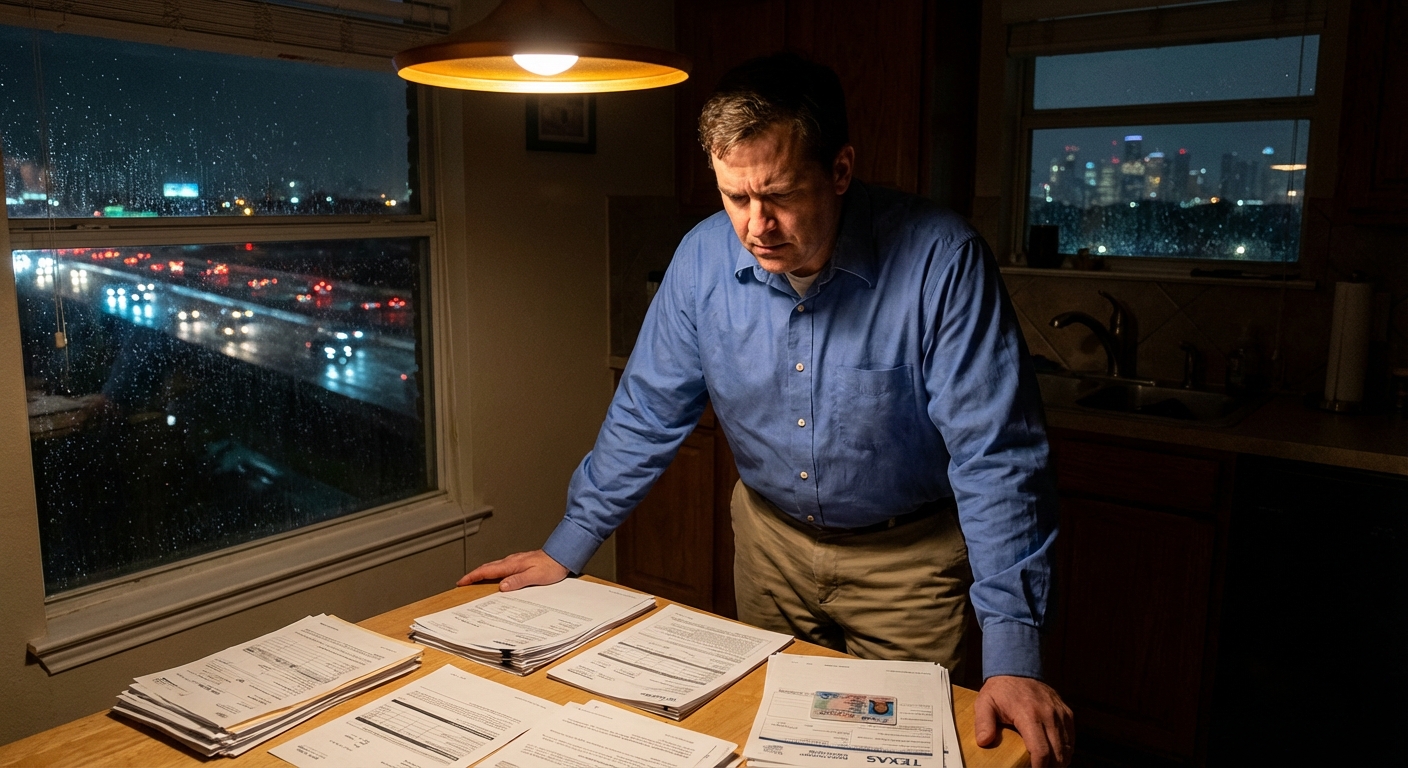
What To Do In The First 72 Hours After a Texas DWI Arrest in Houston
If you were just arrested for DWI in Texas, the first 72 hours are critical because your license, job, and case options can all be affected by what you do right now. In those first days you must protect your driver’s license, track important deadlines like the 15 day ALR hearing request, and start organizing the facts and documents that will shape your defense. Taking a clear, step by step approach can lower the risk to your job, your professional license, and your family’s stability.
This guide is written for a mid career professional in Houston or Harris County who is suddenly facing a first time DWI and is worried about work, kids, and what this means for the future. The focus here is simple, practical steps you can follow in the first 72 hours after a Texas DWI arrest so you can protect your license, your record, and your options.
First 72 Hours After a Texas DWI Arrest: A Practical Checklist
Right now you probably feel shocked, embarrassed, and unsure what to do next. You may be thinking about how to tell your spouse, whether your boss will find out, and what happens to your Texas driver’s license. In this window, staying organized matters more than trying to predict every outcome.
Here is a simple first 72 hour checklist that lines up with what Houston drivers actually face after a DWI arrest:
- Collect your paperwork such as the citation, bail bond documents, any property receipts, the temporary driving permit, and any blood or breath testing forms.
- Write down what happened from the moment you were pulled over until you were released, while it is still fresh in your mind.
- Check the clock on your license because you generally have only 15 days from the date of service of the Notice of Suspension to request an ALR hearing to fight the automatic suspension.
- Look up your first court date which may be set in a Harris County Criminal Court at Law or a nearby county court if the arrest happened outside Harris County.
- Protect your work schedule by noting court dates and ALR hearing windows so you can plan for time off or coverage.
- Start learning the basics about Texas DWI penalties, license suspension periods, and ignition interlock so you know what is at stake.
For a deeper walk through, you can review a step‑by‑step checklist for what to do after a traffic stop so you understand how the traffic stop, field tests, and arrest fit into the bigger picture of your case.
If you like to work from lists and timelines, you may also find this practical 72‑hour checklist to protect your license helpful as you organize everything that happened and prepare for what comes next.
As a working professional, using these first 72 hours to get your documents together and understand the process gives you a better chance to protect your license and reduce disruption at work and home.
Understanding the 15 Day ALR Deadline and Your Texas Driver’s License
The single most urgent deadline after a Texas DWI arrest is the administrative license revocation, often called the ALR deadline. When you are arrested for DWI in Houston or anywhere in Texas, your Texas driver’s license can be suspended separately from the criminal case. This happens through the Texas Department of Public Safety rather than through the criminal court.
In most cases, you have only 15 days from the date you received notice of suspension to request a hearing. If you miss that 15 day window, your license will usually go into suspension automatically, often for a period such as 90 days or longer depending on whether you refused or failed a breath or blood test.
To better understand the practical steps, you can review this detailed guide on how to request an ALR hearing and preserve your license which walks through the request process and how it fits into your defense strategy. For the official state process, the Texas Department of Public Safety maintains an Official DPS ALR hearing request and deadline portal where you can see how the hearing request is handled on the DPS side.
Missing the ALR deadline is one of the most common and most damaging mistakes people make in the days after a DWI arrest. If you depend on driving for your job, your kids, or caring for family members, treating this 15 day deadline like a hard work deadline can be the difference between keeping your routine and suddenly losing your license.
For more background, there is also a detailed guide to the 15‑day ALR deadline that explains how license suspension impacts employment and what steps can help protect your driving privileges.
How Test Refusal and Test Results Affect Your License and Case
After a DWI arrest in Texas, what you did with the breath or blood test has a big impact on your driver’s license and case options. Texas has an implied consent law that says if you drive on Texas roads, you are considered to have consented to a breath or blood test if an officer lawfully arrests you for DWI. Refusing that test often leads to longer license suspension periods, while failing the test can create strong evidence for the prosecutor.
For a legal reference, you can review the Texas statute on implied consent and test refusals which explains how refusals and test results affect your driving privileges. The key point for you is that both a refusal and a test over the legal limit can trigger an ALR suspension, and the length of that suspension can increase for repeat incidents.
In Harris County and nearby counties, prosecutors will look closely at the test result number, your driving behavior, and video from the stop to decide how aggressively to pursue the case. This is why saving dashcam or body camera footage and any medical information about you can matter in building a defense.
Micro Story: A Houston Provider Who Kept His Job and License
To make this more real, consider an example. A mid level healthcare provider in Houston, we will call him “Mark,” was stopped on the way home from a work event. His blood test came back just slightly over the legal limit. He was terrified that a DWI would end his hospital job and his professional license.
Within two days of his arrest, Mark gathered his paperwork, wrote out a detailed timeline, and requested an ALR hearing inside the 15 day deadline. The ALR hearing provided a chance to review the officer’s report and test procedures, and there were questions about how the blood draw was handled. Over time, this information became part of a defense strategy that helped Mark keep his Texas driver’s license and maintain his employment, although he did have to complete classes and pay fines.
Every case is different, and there are no guarantees, but the example shows how acting in the first 72 hours can help protect both your license and your career.
Key Texas DWI Penalties and Why They Matter for Your Career
Understanding the basic penalty range for a Texas DWI helps you see why early action on your case and license matters. The following table outlines some typical ranges for a first time DWI under Texas law. These numbers are general examples, not a prediction of what will happen in your specific case.
| Issue | Typical Range for First DWI in Texas | Why It Matters to You |
|---|---|---|
| Class of offense | Class B misdemeanor in many first offense cases | Still a criminal record that may appear in background checks |
| Jail range | From 3 days up to 180 days in county jail, though many first offenders receive alternatives | Any jail risk or probation affects scheduling, travel, and family responsibilities |
| Fines | Up to $2,000 in fines for a typical first DWI, plus court costs and possible state surcharges | Financial strain combined with towing, classes, and higher insurance costs |
| License suspension | Administrative suspension can range around 90 days or longer, depending on test refusal or failure | Not being able to drive can threaten your job, especially in Houston where driving is essential |
| Ignition interlock | Often required if the BAC is high or for repeat offenses | Can affect work vehicles and may raise questions with your employer |
If you are a professional who needs to drive between sites, visit patients, or travel for work, a license suspension can be just as damaging as the criminal case itself. In some fields, such as healthcare, education, and transportation, even a single DWI can trigger reporting requirements or internal reviews.
Common Misconceptions About a First DWI in Texas
Many people in your situation share the same assumptions after a first arrest. Clearing up these misconceptions helps you make better decisions in the first 72 hours.
- “It is just a traffic ticket.” A Texas DWI is a criminal charge, not a simple ticket, and it can stay on your record permanently if convicted.
- “If I passed most of the tests, the case will be dropped automatically.” Even if you feel you did well on field sobriety tests, prosecutors often rely on officer testimony, video, and test results and the case does not vanish without work.
- “If I refused the breath test, they have no case.” Refusal can still result in a license suspension and the state can try to prove intoxication based on driving behavior, statements, and officer observations.
- “I can wait until the court date to deal with this.” Your ALR deadline usually hits long before your first criminal court setting, which is why the first 15 days matter so much.
Recognizing these myths early reduces the chance that you ignore a deadline or miss a document that could help your defense.
Strategic Overview for the Analytical Strategist Reader
Analytical Strategist: If you like data, case examples, and clear options, it can help to think about your DWI in terms of decision points and potential outcomes. For example, in some Harris County DWI cases where the BAC was near the legal limit and there were issues with the traffic stop, the result may be a reduction of charges, a dismissal, or a not guilty verdict. In other cases with high BAC readings, accidents, or prior history, the realistic goal may be minimizing penalties, avoiding jail, and limiting license consequences.
While every case is unique, you can look at three main strategy areas in the first 72 hours:
- Evidence quality such as camera footage, test procedures, and medical records that might explain balance, speech, or confusion.
- Legal deadlines including the 15 day ALR hearing request and early court settings where conditions are set.
- Life impact such as job requirements, licensing board reporting rules, and family responsibilities that should shape any negotiated outcome.
Data driven readers often find it useful to build a simple timeline that starts with the date of arrest, marks the 15 day ALR request deadline, and lists the first two or three anticipated court dates. This makes the process feel more like a project you can manage and less like a crisis without direction.
Discretion and Privacy Notes for the High-Stakes Executive
High-Stakes Executive: If you are in a leadership or executive role in Houston or the surrounding area, your biggest fears may be reputation, confidentiality, and how quickly this situation can be contained. In the first 72 hours, focus on two things that affect your privacy: who has access to your case information and what shows up on public records or social media.
Booking photos, arrest records, and court settings can be public, but most of the conversations you have with a Texas DWI lawyer are protected by confidentiality rules. It is reasonable to ask about discreet scheduling, private communication channels, and how to minimize the spread of sensitive information. You may also want to limit who inside your company knows the full story until you understand how the case is likely to unfold.
If you want to explore details without attaching your name, you can use an interactive Q&A resource for common Texas DWI questions as a way to learn the basics and prepare better questions for a confidential legal consultation.
Directness for the Already-Decided Client Type Reader
Already-Decided Client: Some readers have already decided they want professional legal help and are mainly worried about execution and communication. If that is you, your first 72 hours should focus on being a good communicator and a good source of information so whoever helps you can act quickly.
That means gathering every piece of paper you received, listing any witnesses who saw you before or during the stop, and preparing a short, honest timeline of your day. Clear information in the first meeting often leads to better early decisions about ALR hearings, occupational licenses, and early negotiations in Houston or surrounding county courts. You can also ask specific questions about who will handle your case day to day and how you will be updated on critical deadlines.
A Wake-Up Call for the Unaware Young Adult Reader
Unaware Young Adult: If you are in your early twenties and this is your first serious run in with the law, it is easy to tell yourself that a first DWI will just disappear or that everyone gets one free mistake. In Texas, that is not how it works. A DWI conviction can remain on your record permanently, and a license suspension can start after just 15 days if you ignore the ALR deadline.
Even one DWI can lead to hundreds or thousands of dollars in fines, fees, and higher insurance costs. If you share a car with family or rely on driving to get to class or work, a license suspension can make daily life much more difficult. Treat the 15 day ALR deadline and the first 72 hours as serious, adult responsibilities, even if this is the first time you have ever been in trouble.
How a Texas DWI Affects Professional and Occupational Licenses
For mid career professionals in Houston, one of the biggest fears is how a DWI will affect a professional or occupational license. Different fields have different rules. Nurses, physicians, teachers, commercial drivers, and many other licensed professionals may face reporting obligations or board reviews if convicted of a DWI.
Sometimes the difference between a conviction and a reduced or alternative outcome is especially important because certain boards focus closely on alcohol related offenses. In the first 72 hours, it helps to quietly review any licensing board rules or employee handbooks that mention criminal charges or alcohol related conduct. This does not mean you must report immediately, but it allows you to understand what might be required if the case leads to a conviction or certain plea terms.
If you are a healthcare provider or licensed professional, you may want to make a private list of questions about your license for discussion with a Texas DWI lawyer so you do not accidentally create extra risk by guessing what your board requires.
Practical Steps to Protect Your Job After a Texas DWI Arrest
Your job supports your family, pays your mortgage or rent, and often provides health insurance. A DWI arrest puts that stability in question. While no article can tell you exactly what to say to your employer, there are practical steps you can consider in the first three days.
- Review your employment contract or handbook to see if it mentions arrests, criminal charges, or required disclosures.
- Map out potential schedule conflicts such as court dates or ALR hearings that may require time off.
- Think about transportation in case your license is temporarily suspended and you need to arrange alternate ways to get to work.
- Plan what to say if you decide or are required to inform a supervisor or HR representative.
In Houston and Harris County, many employers have dealt with DWI issues before and may be more concerned about honesty and reliability than about the fact of the arrest itself. Being prepared and informed in the first 72 hours can help you handle those conversations with more confidence.
Organizing Evidence and Information in the First 72 Hours
The early hours after a DWI arrest are when memories are freshest and evidence is easiest to gather. This is especially true for video, text messages, and receipts that may show where you were, what you drank or did, and how you were behaving before the stop.
Here are some simple evidence steps you can take right away:
- Save any text messages, social media posts, or photos from the evening that may help show your condition or activities.
- Gather receipts from restaurants, bars, or events that could show times and drink orders.
- Ask potential witnesses who saw you before or during the stop if they would be willing to write down what they observed.
- Write a detailed account of the stop, the questions the officer asked, and how you felt physically and mentally.
For some people, especially analytical professionals, treating this like an important work project can provide a sense of control. The more accurate and complete your information is, the easier it is to evaluate the strengths and weaknesses of the case.
Why Acting Early Matters More Than Hoping It Goes Away
Across many Texas DWI cases, one consistent pattern appears: those who act quickly in the first 72 hours usually have more options for their license, their job, and their criminal record than those who wait and hope for the best. Requesting the ALR hearing on time, organizing your evidence, and understanding your risk level are all steps that you control even when the situation feels out of control.
In the Houston area, county courts and DPS each move on their own timelines. That means you might see movement on your license before you see much action in the criminal case. Keeping both paths in view, and treating the 15 day ALR window as a hard deadline, can prevent surprises that affect your ability to work and care for your family.
Frequently Asked Questions About the First 72 Hours After a Texas DWI Arrest
What should I do first in the 72 hours after a DWI arrest in Houston?
In the first 72 hours, your main tasks are to collect your paperwork, record your memory of the stop, and pay close attention to the 15 day ALR deadline that affects your Texas driver’s license. You should also look up your first court date in Harris County or the county where you were arrested and start planning for work and family obligations around that date. Using a written checklist helps make sure you do not miss an important step while you are still in shock.
How does the 15 day ALR deadline affect my Texas driver’s license?
The 15 day ALR deadline is the time limit you usually have to request a hearing to challenge the automatic suspension of your Texas driver’s license after a DWI arrest. If you do not request that hearing in time, your license typically goes into suspension on the date listed in your notice, often for a period of months. This suspension is separate from any criminal penalties from the DWI case in court.
Will a first DWI in Texas automatically cost me my job?
A first DWI in Texas does not automatically mean you will lose your job, but it can create serious risks depending on your employer’s policies and your type of work. Some Houston employers focus mainly on schedule disruptions and whether you can still drive, while others such as hospitals, schools, or transportation companies may have stricter rules. Reviewing your employee handbook and planning how to handle court dates and possible license restrictions in the first 72 hours can reduce surprises.
How long can a Texas DWI stay on my record?
Under current Texas law, a DWI conviction can remain on your criminal record indefinitely, which means it may show up on background checks many years later. In some situations, there may be options such as certain types of record relief, but you should not assume that a DWI will simply fall off your record after a set number of years. This long term impact is one reason the early decisions you make about your case are so important.
What if I refused the breath or blood test during my DWI arrest?
If you refused the breath or blood test during your DWI arrest in Texas, your license suspension period through the ALR process is often longer than if you took and failed the test. Refusal does not make the case disappear, because prosecutors can still try to prove intoxication based on driving behavior and officer observations. It also does not stop the 15 day ALR clock, so you still need to pay close attention to that deadline in the first days after arrest.
Why Acting Early After a Texas DWI Protects Your Future
You cannot change what already happened on the night of your arrest, but you have real control over what happens in the days that follow. Using the first 72 hours to organize documents, protect your driver’s license, and understand your options gives you a better chance to protect your job, your professional license, and your family’s stability. Ignoring the problem or waiting until the first court date often leads to missed deadlines and fewer options.
Whether you see yourself as a Problem Aware Provider, an Analytical Strategist, a High Stakes Executive, an Already Decided Client, or an Unaware Young Adult who just got a harsh wake up call, the core message is the same. Take the situation seriously, respect the 15 day ALR deadline, and use clear, practical steps to reduce the damage a Texas DWI can do to your life.
Once you have completed the basic 72 hour checklist and marked your ALR deadline on the calendar, it becomes easier to think calmly about longer term issues like potential defenses, negotiation options, and how to repair the personal and professional impact of the arrest.
For a brief, plain language overview of these early steps, you can also watch a short video that walks through how Texas DWI cases start and what actions help protect your license and employment.
Butler Law Firm - The Houston DWI Lawyer
11500 Northwest Fwy #400, Houston, TX 77092
https://www.thehoustondwilawyer.com/
+1 713-236-8744
RGFH+6F Central Northwest, Houston, TX
View on Google Maps


No comments:
Post a Comment